
Warm Up Dix Hills Without a Flue or a Permit.
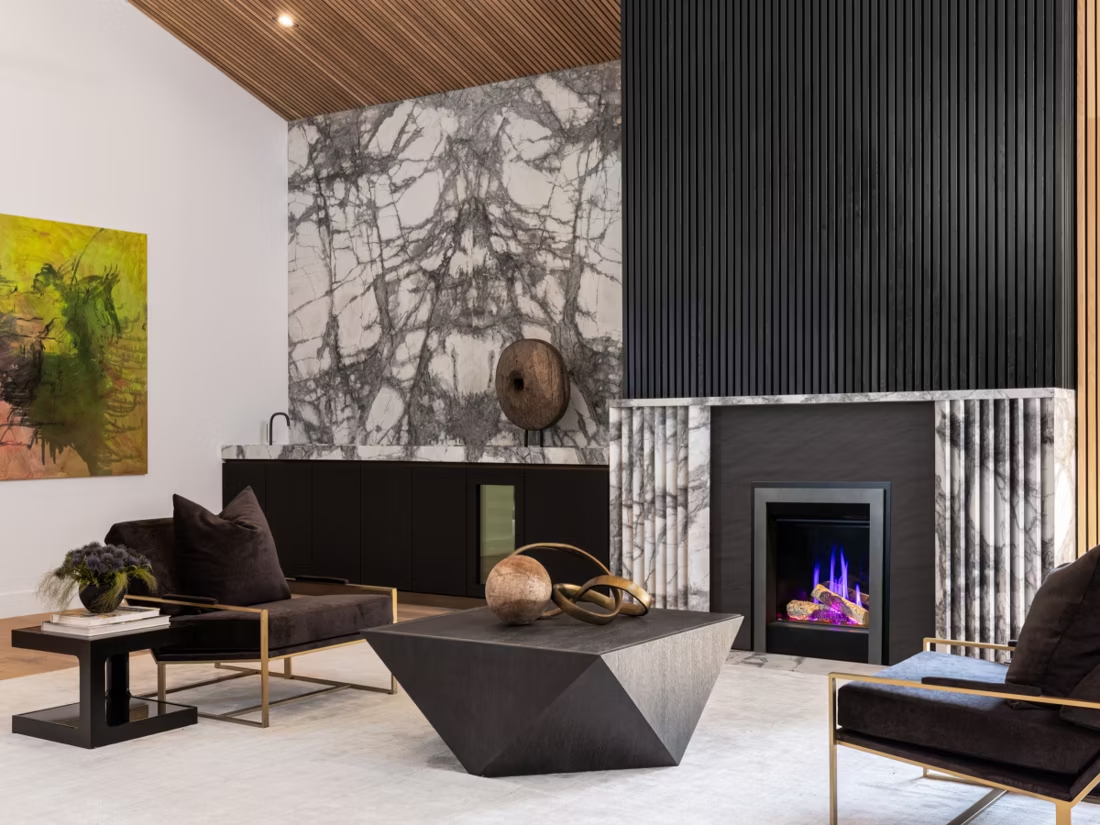
No chimney, no gas line, no venting—just a real-looking flame and supplemental heat for split-levels, basements, and family rooms across Dix Hills.
Every Project Starts From One of These Five Situations
The easiest hearth upgrade on Long Island.
Dix Hills sees real winter chill—average lows around 24°F and roughly 5,200 heating degree days a year—but that's a milder profile than colder cities like Buffalo, NY, where HDD tops 6,800. On Long Island, the fuel decision usually isn't about surviving extreme cold; it's about fitting heat into a suburban split-level or colonial without tearing into a wall for a chimney or gas line. That's exactly where electric fireplaces earn their place in Dix Hills homes.
Suffolk County homes here are served by the Long Island Power Authority, with PSEG Long Island managing the grid day to day. LIPA's residential rate—around $0.2457 per kWh—runs noticeably higher than the national average, which shapes how homeowners actually use these units: mostly for ambiance and supplemental warmth in a finished basement or family room, not as a primary heat source. A plug-in unit needs nothing more than an outlet. A hardwired wall-mount or built-in linear unit needs a licensed electrician and, in some cases, a permit through the Town of Huntington Building Department—but never a chimney, a flue, or annual gas service.
Three steps. No salesperson until you're ready.
Tell us about your project
Your zip code, your situation, and the fuel you're leaning toward—or let the answers point you to one.
See what's actually available
The brands dealers within 100 miles genuinely carry—real options, never a catalog mirage.
Get your dealer & Project Guide
A trusted local dealer, plus the free Project Guide & Parts List that names every component of the job.
Frequently Asked Questions
How much does an electric fireplace cost to install in Dix Hills?
A freestanding or insert-style plug-in electric fireplace runs $200 to $600 for the unit itself, with no installation cost beyond plugging it into an existing outlet. Wall-mount or built-in linear units that need a dedicated 20-amp circuit typically run $1,500 to $3,500 installed, once you factor in a licensed Suffolk County electrician's time. Recessed units built into new framing or a renovated family room—common in Dix Hills' split-levels and colonials—can reach $4,000 or more with custom trim and mantel work.
Do I need a permit for an electric fireplace in Dix Hills?
Plug-in freestanding units need no permit at all—it's an appliance, not a fixture. Built-in or wall-mounted units that require new circuit wiring may need an electrical permit through the Town of Huntington Building Department, and your electrician typically pulls that as part of the job. Either way, there's no chimney inspection, no venting permit, and no gas-line sign-off, since there's no combustion involved.
What will an electric fireplace actually cost to run on my LIPA bill?
PSEG Long Island bills residential customers around $0.2457 per kWh under LIPA's rate structure—higher than the roughly $0.16 national average. A typical 1,500-watt heater setting running four hours an evening costs about $1.47 a day, or roughly $44 a month if used as regular supplemental heat. Most Dix Hills homeowners run the flame effect alone most nights, which draws only 30-40 watts and costs pennies, and switch on the heat function only when they want extra warmth in a family room or finished basement.
What's the difference between an electric insert, a wall-mount, and a mantel package?
An electric insert drops into an existing fireplace opening or a media-console cutout—a common choice for Dix Hills homes with an old, unused masonry fireplace that's expensive to keep venting. A wall-mount unit hangs like a flat-screen TV and needs no surrounding structure, popular in finished basements and rec rooms. A mantel package pairs an insert with a surrounding cabinet or mantel shelf, giving you a furniture-style focal point without any construction. All three plug in or hardwire without a flue.
Can an electric fireplace actually heat a room, or is it just for looks?
A 1,500-watt electric fireplace can meaningfully supplement heat in a room of roughly 400 to 500 square feet—enough to take the edge off a chilly family room or finished basement on a 24°F night. It won't replace your furnace or heat pump as whole-home heat, and it shouldn't try to; Dix Hills still gets real cold snaps during nor'easters. Most homeowners here use electric units for zone heating in one specific room while central heat handles the rest of the house.
Are wood stoves or pellet stoves an option in Dix Hills?
Realistically, no—wood and pellet stoves are essentially not applicable to Dix Hills the way they are further upstate. There's no Forest Service cutting-permit office nearby, suburban lot sizes and setbacks make chimney installations difficult, and most homeowners association and insurance policies on Long Island discourage solid-fuel appliances. A small number of standalone homes on larger Suffolk County lots do install wood inserts for backup heat, but it's the exception, not the norm—electric and gas cover the vast majority of Dix Hills hearth projects.
Electric vs. gas fireplace—which is right for my Dix Hills home?
Gas fireplaces deliver real BTU heat output and the look of an actual flame, but they need a gas line and proper venting, which adds cost and construction complexity, especially in a finished basement. Electric fireplaces skip all of that—no gas line, no venting, no combustion byproducts—at the tradeoff of lower heat output and a electric-look flame that, while realistic on modern units, isn't a true fire. For a rental, a condo-style attached home, or a basement without easy chimney access, electric is usually the simpler and cheaper path. For a primary living room where you want serious supplemental heat, gas is worth the extra install cost.
How much maintenance does an electric fireplace need?
Very little. LED flame elements are rated for 20,000+ hours of use, which works out to years of nightly use before any component needs attention. There's no annual chimney sweep, no gas technician visit, and no creosote or soot to manage—just an occasional dusting of the vent louvers and, on older resistance-heat models, a bulb swap. That low-maintenance profile is a big part of why electric units are popular in Dix Hills rentals and secondary living spaces.
Where can I get help picking the right unit and installer in Dix Hills?
Find My Fireplace isn't a retailer—we don't sell or ship units. We match you with a trusted local Long Island hearth dealer who knows Suffolk County code requirements, can size the right unit for your room, and handles any electrical permitting through the Town of Huntington Building Department if your project needs it. Tell us about your space and we'll point you toward someone who actually installs these locally.
Can I put a TV above my fireplace?
Yes—with an asterisk. Fireplaces are hot and TVs don't like heat. Either put a mantel between them to deflect rising warmth, or choose a fireplace with heat-management technology that creates a cool zone on the wall above—the wall stays around 125 degrees, barely warm, while the room still gets full heat. If you like clean lines and don't want a mantel, heat management is the answer.
Do electric fireplaces actually produce heat?
Yes—most put out around 4,800–5,000 BTUs from a standard outlet, which comfortably warms a bedroom, office, or den as a comfort-zone heater. What they won't do is carry a whole house the way wood, gas, or pellet can. Think of electric as ambiance-first with honest supplemental heat: flames on with no heat in July, flames plus warmth in January.
Can I install a fireplace myself?
If you're putting a fire in your house on purpose, it's best to work with an expert. Unless you're genuinely experienced in framing, gas line, vent pipe, and the national code on clearances to combustibles, have a professional do it—and ideally the same company that sells you the fireplace, so warranty, service, and liability all live under one roof.
Can a fireplace actually lower my heating bill?
Yes—by creating a comfort zone. A furnace heats every square foot of the house just to warm the one room you're in; a gas fireplace on low burns roughly a sixth of the gas a typical furnace does. Set the furnace around 55–60 degrees as a baseline, then heat the rooms your family actually uses. Families who heat this way commonly save $20–$60 a month.
Nearby Dealers
Hearth shops serving Dix Hills and the surrounding area.
Electric Service in Dix Hills
An electric fireplace's heater draws about 1,500 watts—pennies per hour at local rates.
Fishers Island Utility Co Inc
Long Island Power Authority
Find your electric fireplace in Dix Hills.
Tell us about your room and we'll send a free Project Guide & Parts List for your Dix Hills electric fireplace project, plus a match with a trusted local dealer.
Find Your Fireplace →