
Find the right gas fireplace for your Catskills home.
Reliable, instant heat for Delaware County's cold mountain winters—from Delhi and Stamford to Margaretville, Roxbury, Walton, and every hamlet in between. Get matched with a local dealer who knows what actually works up here.
Every Project Starts From One of These Five Situations
Dependable heat for a rural, mountainous county.
Delaware County sits in the heart of the Catskills, IECC climate zone 6A, where winters are long and homes are often spread far apart on dirt or gravel roads. With roughly 2,795 year-round residents scattered across a county that also carries a heavy seasonal population—weekend and vacation homes tied to Catskills tourism around Roxbury, Margaretville, and Andes—heating needs here run the gamut from full-time farmhouses to camps that sit empty most of the week. A gas fireplace or insert that lights instantly and holds a set temperature matters in both cases.
Municipal natural gas lines are limited in Delaware County outside a handful of villages, so most gas fireplace installs here run on propane—delivered and stored in a tank on the property, the same setup many local homes already use for their furnace or range. That makes gas a practical companion to wood heat rather than a replacement for it: plenty of Delaware County homeowners burn local oak, maple, birch, or ash for backup and ambiance while relying on a propane fireplace or insert for the everyday, no-hassle heat in the main living space.
Three steps. No salesperson until you're ready.
Tell us about your project
Your zip code, your situation, and the fuel you're leaning toward—or let the answers point you to one.
See what's actually available
The brands dealers within 100 miles genuinely carry—real options, never a catalog mirage.
Get your dealer & Project Guide
A trusted local dealer, plus the free Project Guide & Parts List that names every component of the job.
Frequently Asked Questions
How much does a gas fireplace installation cost in Delaware County?
For most Delaware County homes running on propane, a direct-vent gas fireplace or insert installation typically runs in the $3,500 to $9,000 range, depending on the unit, the venting path, and whether a new propane line or tank hookup is needed. An insert going into an existing masonry fireplace with propane already on site tends to land on the lower end. New construction or a fireplace going into a room without existing venting or fuel supply—common with camps and vacation homes around Roxbury and Andes that are being upgraded from wood-only heat—runs higher once tank placement, line runs, and venting are factored in. Homes on long rural driveways in towns like Hancock or Colchester may see a modest additional charge for the propane line trenching alone.
Can I convert my existing wood fireplace to gas?
Yes, and it's a common project in Delaware County's older farmhouses and camps that came with a masonry fireplace but no reliable way to keep a fire going overnight. A gas insert sized to fit your existing firebox uses a stainless liner run up your current chimney, so you keep the look of the original hearth while gaining instant, thermostat-controlled heat. Since most of the county runs on propane rather than piped natural gas, the conversion usually includes coordinating with a local propane supplier for tank placement or an upgraded line if your existing tank is undersized for the fireplace's BTU draw.
Is natural gas available in Delaware County, or is it all propane?
Piped natural gas service is limited to a small number of village centers in Delaware County; most of the county—including the rural stretches around Walton, Sidney, Franklin, and Stamford—runs on propane for heating appliances. If your home already has a propane tank for your furnace, water heater, or range, adding a gas fireplace is usually a straightforward tie-in. If you're starting from scratch, your installer will coordinate with a regional propane supplier on tank sizing and placement as part of the project.
Will my gas fireplace work during a power outage?
Most direct-vent gas fireplaces with intermittent pilot ignition (IPI) include a battery backup that keeps the unit running when the power drops—a real consideration in a county where winter storms and downed lines on rural roads can knock out power for hours or longer, especially in the more remote stretches near Hancock and Deposit. Valor fireplaces take a slightly different approach: their pilot generates its own electricity through the thermocouple, so there's no battery to check or replace. Ask your local dealer about the ignition system on any unit you're considering if outage performance matters to you.
What's the difference between a gas fireplace, gas insert, and gas stove?
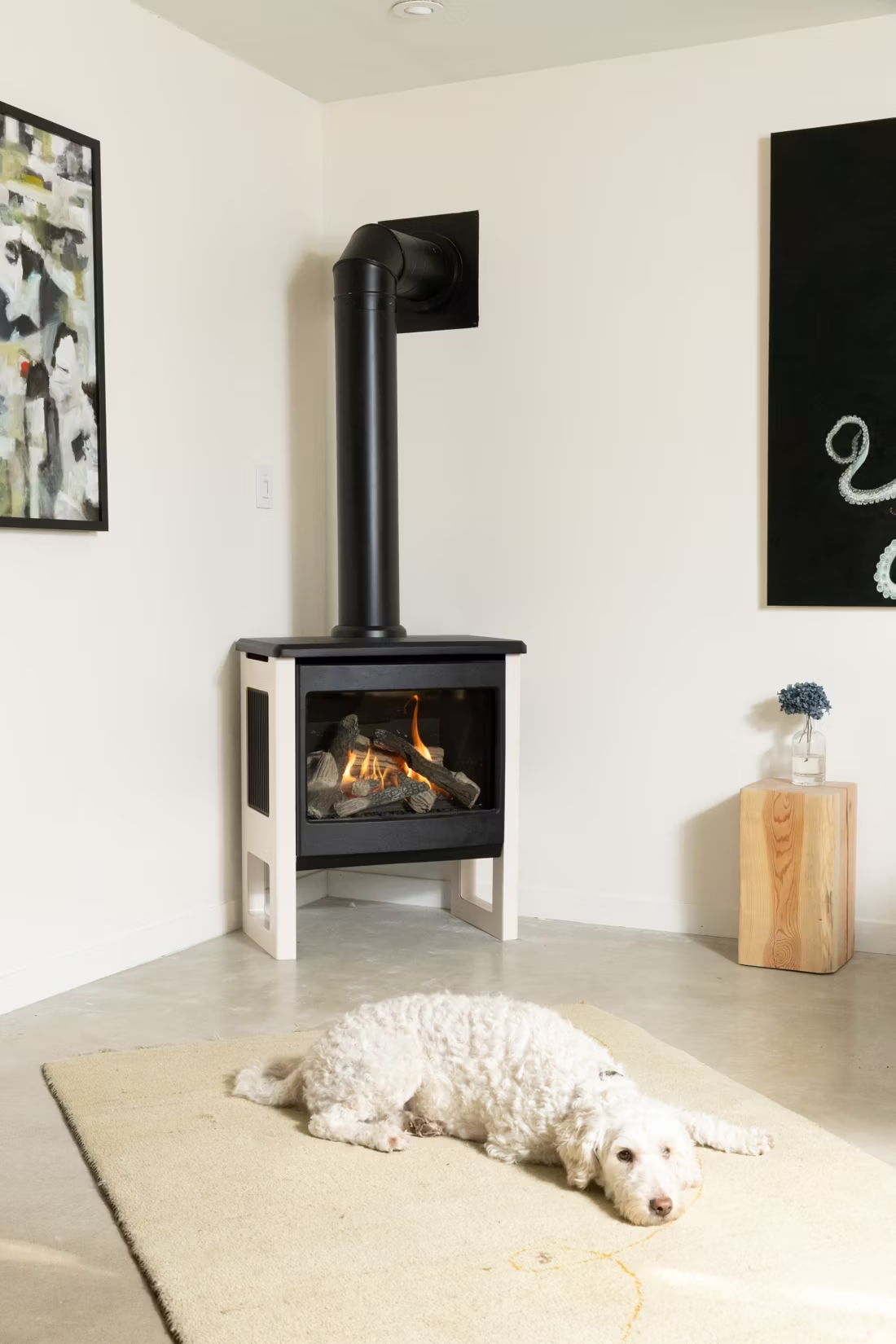
A gas fireplace is a fully built-in unit framed into a wall—the right choice for new construction or a remodel without an existing hearth. A gas insert slides into an existing masonry fireplace opening and uses the existing chimney as its vent path, which is common in Delaware County's older homes around Delhi and Walton that already have a wood fireplace they want to modernize. A gas stove is freestanding, sitting on its own hearth pad like a wood stove would—a good fit for camps and cabins without a built-in fireplace at all. A local dealer can tell you which fits your existing structure without demolition.
Do I need a permit to install a gas fireplace in Delaware County?
Yes—gas fireplace installations fall under the NYS Uniform Fire Prevention and Building Code, and in Delaware County that permit is issued through your local town's code enforcement office rather than a single county building department, since permitting here is handled town by town (Delhi, Middletown, Walton, Hancock, and the rest each have their own code officer). Propane line work also requires a qualified installer for the fuel connection. Most hearth dealers serving the county coordinate the permit and inspection as part of the installation, so you're not tracking down your town's code office yourself.
What's the difference between vented and vent-free gas fireplaces?
Vented gas fireplaces exhaust combustion byproducts outside through a sealed direct-vent or B-vent system—they're the standard, code-friendly choice and what most Delaware County installers recommend by default. Vent-free (ventless) units burn fuel directly into the room and are legal in New York under specific room-size and ventilation rules, but they release some water vapor and combustion byproducts indoors, which matters more in a tightly sealed, well-insulated Catskills home built for a 6A climate than it would in a drafty older farmhouse. For most primary living spaces, a vented direct-vent unit is the safer, more universally recommended option—ask your dealer to walk through both if you're weighing a smaller camp or outbuilding installation.
How often should my gas fireplace be serviced?
Plan on an annual inspection, ideally before the heating season starts in the fall. A technician checks the burner, pilot assembly, propane connections, and venting, and cleans the glass and interior—a shorter visit than a wood chimney sweep, but just as important for safety, particularly for units that sit idle most of the week in seasonal Catskills homes and then get run hard on cold weekends. Expect to pay roughly $150 to $250 for a standard annual service call from a local hearth or propane technician.
Gas vs. wood—which is right for my home in Delaware County?
Wood—plentiful locally in oak, maple, birch, and ash—offers lower fuel cost if you're cutting or sourcing your own, the classic fire experience, and heat that doesn't depend on electricity or a propane delivery truck making it up a snowy rural road. Gas offers instant, consistent heat with no wood handling, which matters for the county's many part-time and vacation homes where nobody's around to tend a fire mid-week. A lot of Delaware County households run both: wood as the primary or backup heat source they trust in a real outage, and a propane fireplace or insert in the main living space for everyday convenience.
Can I put a TV above my fireplace?
Yes—with an asterisk. Fireplaces are hot and TVs don't like heat. Either put a mantel between them to deflect rising warmth, or choose a fireplace with heat-management technology that creates a cool zone on the wall above—the wall stays around 125 degrees, barely warm, while the room still gets full heat. If you like clean lines and don't want a mantel, heat management is the answer.
Is my gas fireplace wasting gas?
If it was installed more than 15 years ago, probably. Older gas fireplaces keep a standing pilot light burning all the time, and that little flame can cost a couple hundred dollars a year. Newer models use pilot-on-demand ignition—the pilot lights only when you use the fireplace and goes out when you turn it off.
Can a fireplace actually lower my heating bill?
Yes—by creating a comfort zone. A furnace heats every square foot of the house just to warm the one room you're in; a gas fireplace on low burns roughly a sixth of the gas a typical furnace does. Set the furnace around 55–60 degrees as a baseline, then heat the rooms your family actually uses. Families who heat this way commonly save $20–$60 a month.
What is an in-home preview and do I need one?
It's a visit where a hearth professional measures your space, confirms the model you picked actually works in your home, and walks the specs—framing, gas line, venting, finish work—before anything is ordered. Some details you just can't know until you see the house. Never make a down payment without one; it's the single most-skipped step that burns buyers.
Get your Delaware County gas fireplace project plan.
Tell us about your home and I'll match you with a trusted local dealer and send over a free Project Guide & Parts List—the exact parts, vent kit, and recommended installer for your gas fireplace or insert project.
Find Your Fireplace →