
Add Real Warmth Without Adding a Chimney.
Zone heat for Deer Park's tight Suffolk County lots—no venting, no gas line, no masonry work. Find the right unit and get matched with a trusted local dealer.
Every Project Starts From One of These Five Situations
Heat that fits a Deer Park lot, no chimney required.
Deer Park sits in the Town of Babylon on Long Island, at climate zone 4A with a moderate winter heating season and average winter lows near 25°F—noticeably milder than upstate cities like Buffalo, where winters run colder and longer. Most homes here are mid-century capes, colonials, and split-levels on quarter-acre lots, and wood-burning setups are essentially off the table: there's no local cutting-permit infrastructure, insurance carriers on Long Island are increasingly wary of solid-fuel appliances, and tight lot lines make chimney clearances a real constraint. Gas is the standard whole-home heating fuel for most Deer Park homes, which is exactly where electric fireplaces earn their keep—as supplemental zone heat in a family room, finished basement, or primary bedroom without touching the furnace or the gas line.
Long Island Power Authority (LIPA) is the utility serving Deer Park, and residential rates here—around $0.2457 per kWh—run well above the national average, which shapes how electric fireplaces get used locally. Rather than heating a whole house, most Deer Park homeowners run a 1,500-watt electric insert or wall-mounted unit for a few hours in the room they're actually using, which keeps the electric bill in check while still delivering real, adjustable heat. It's also the fastest install path in town: no permit wrangling for a plug-in unit, and even a hardwired built-in typically clears in a single visit from a licensed electrician.
Three steps. No salesperson until you're ready.
Tell us about your project
Your zip code, your situation, and the fuel you're leaning toward—or let the answers point you to one.
See what's actually available
The brands dealers within 100 miles genuinely carry—real options, never a catalog mirage.
Get your dealer & Project Guide
A trusted local dealer, plus the free Project Guide & Parts List that names every component of the job.
Frequently Asked Questions
How much does an electric fireplace installation cost in Deer Park?
Plug-in electric inserts and freestanding units—the kind that slide into an existing mantel or media console—run $300 to $1,200 installed, with most of that cost being the unit itself since no wiring changes are needed. Built-in wall units or larger inserts that require a dedicated 20-amp circuit run higher, typically $1,500 to $3,000, once you factor in a licensed electrician and any wall-opening or trim carpentry. Homes converting an old decorative wood fireplace to an electric insert usually land in the $800 to $2,000 range depending on whether new wiring needs to be run to the firebox.
Do I need a permit to install an electric fireplace in Deer Park?
A plug-in electric fireplace that uses a standard 120-volt outlet doesn't require a permit—it's treated like any other appliance. If you're installing a built-in unit that needs a new dedicated circuit or panel work, that electrical work falls under the Town of Babylon's permitting process, and any licensed electrician doing the install will typically pull that permit as part of the job. There's no building or fire-code review specific to electric units the way there is for wood or gas appliances, which is part of why electric is often the fastest option to get installed in Deer Park.
Will an electric fireplace actually heat my Deer Park home?
Most electric fireplaces top out around 5,000 to 9,000 BTUs, enough to comfortably heat a single room—a family room, primary bedroom, or finished basement—but not a whole house through Deer Park's moderate winter heating season. They're built and marketed as zone heaters: you run the flame effect for ambiance year-round and switch on the heater element to take the chill off a specific room without firing up the furnace. For a Deer Park split-level with gas as the primary heat source, an electric unit in the room you actually spend time in is a practical way to turn the thermostat down elsewhere.
What does it cost to run an electric fireplace on my LIPA bill?
At LIPA's residential rate of roughly $0.2457 per kWh, a typical 1,500-watt electric fireplace costs about $0.37 an hour to run on the heat setting. Used for 4 to 5 hours a night in a family room, that's roughly $50 to $60 a month during the coldest stretch of winter—noticeably more than the same appliance would cost in a lower-rate part of the country, since Long Island's electric rates run well above the national average. Running the flame effect alone without the heater draws only a few watts and costs pennies a month, which is why many Deer Park homeowners leave it on for ambiance and reserve the heat setting for actual cold nights.
Electric vs. gas fireplace—which makes sense for a Deer Park home?
Gas fireplaces and inserts deliver more real heat output and work during a power outage isn't guaranteed, but they need a gas line and venting, plus a higher upfront installation cost. Electric units install in an afternoon with no venting, no gas line, and no masonry work, but they're strictly zone heaters and go dark the moment the power drops—a real consideration on Long Island, where nor'easters and hurricane remnants regularly knock out LIPA service for days. Many Deer Park homeowners run gas as the primary heat source in the main living area and add an electric unit in a bedroom or basement where running a gas line isn't practical.
Can I put an electric insert into my existing wood-burning fireplace?
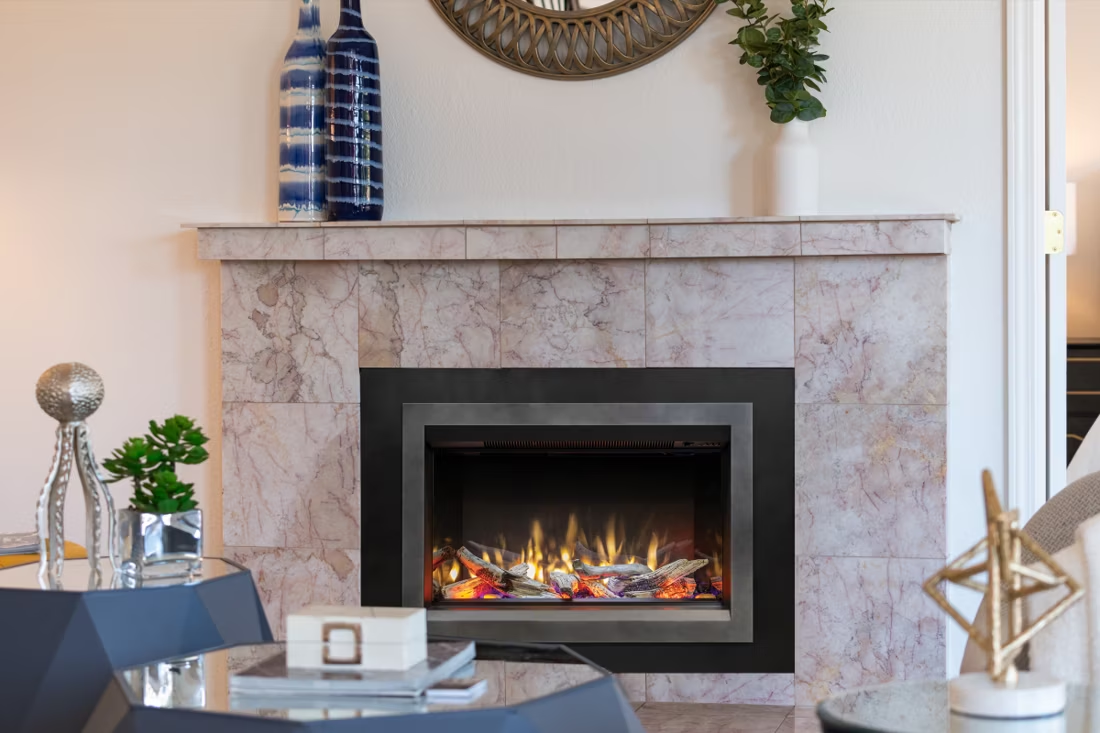
Yes, and it's one of the more common projects for older Deer Park capes and colonials built with a decorative wood-burning firebox that's rarely or never used. An electric insert slides into the existing opening, uses the same footprint, and typically needs a new outlet or dedicated circuit run to the firebox—no chimney liner, no venting changes, and no cutting permit to worry about. It's a straightforward way to get a working fireplace back without the upkeep, ash cleanup, or insurance questions that come with an active wood-burning unit.
What about wood stoves or pellet stoves in Deer Park?
Both are genuinely uncommon here. Deer Park's quarter-acre suburban lots, lack of any local wood-cutting permit infrastructure, and increasingly strict homeowner's insurance underwriting on solid-fuel appliances mean very few Town of Babylon homes install a new wood or pellet stove. You'll occasionally see a legacy wood stove in an older farmhouse-style property, but for the vast majority of Deer Park homeowners, gas and electric are the practical paths—gas for primary heat, electric for flexible, no-venting zone heat.
What's the difference between an electric insert, a wall-mount unit, and a mantel package?
An electric insert is built to slide into an existing fireplace opening or a custom-framed cavity, giving you a finished, built-in look. A wall-mount unit hangs directly on the wall like a large flat-screen TV, with no surround needed—popular in Deer Park family rooms and basements where there's no existing firebox. A mantel package pairs a smaller electric unit with a freestanding mantel surround, which works well as a standalone piece of furniture in a bedroom or den without any wall modification at all. All three plug in or hardwire depending on wattage, and a local dealer can tell you which fits your specific wall and room layout.
Will my electric fireplace work if LIPA power goes out?
No—electric fireplaces require power to run both the heater element and the flame effect, so they go dark along with everything else during an outage. This matters on Long Island, where storm-related LIPA outages have historically stretched for several days after major nor'easters or hurricane remnants. If backup heat during outages is a priority, a gas unit with a standing pilot or battery-backup ignition is the better complement—many Deer Park homes pair a gas fireplace for storm resilience with an electric unit elsewhere in the house for everyday convenience and lower installation cost.
Can I put a TV above my fireplace?
Yes—with an asterisk. Fireplaces are hot and TVs don't like heat. Either put a mantel between them to deflect rising warmth, or choose a fireplace with heat-management technology that creates a cool zone on the wall above—the wall stays around 125 degrees, barely warm, while the room still gets full heat. If you like clean lines and don't want a mantel, heat management is the answer.
Does an electric fireplace need a vent or chimney?
No—that's its superpower. An electric fireplace needs a wall and an outlet, period. No vent pipe, no gas line, no clearances to design around, which is why it works in bedrooms, offices, apartments, and walls where venting a gas or wood unit would be impractical or impossible. Installation is typically the simplest and least expensive of any fireplace type.
How much should I budget for a fireplace?
For an average home—covering the fireplace, the vent pipe, and basic installation—a budget between $3,900 and $5,500 gives you a lot of options across wood, gas, and pellet. By the time you add finish work, gas line, and electrical, the average complete installation lands between $5,000 and $12,000 all-in. In a remodel or new build, a good rule is to put about 2.5% of the total project cost toward the fireplace.
Does a fireplace add value to my home?
On average, a fireplace adds back to the home about the same amount you spent installing it. Add the monthly savings from heating the rooms you actually use instead of the whole house—often hundreds of dollars a year—and the value case is strong before you even count what a fire does for how your family uses the room.
Nearby Dealers
Hearth shops serving Deer Park and the surrounding area.
Electric Service in Deer Park
An electric fireplace's heater draws about 1,500 watts—pennies per hour at local rates.
Fishers Island Utility Co Inc
Long Island Power Authority
Find your electric fireplace in Deer Park.
Tell us a bit about your home and we'll put together a free Project Guide & Parts List—the right electric fireplace or insert for your room, the exact parts needed, and a trusted local Deer Park dealer to install it.
Find Your Fireplace →