
Warm rooms fast, no chimney required, in Clinton County.
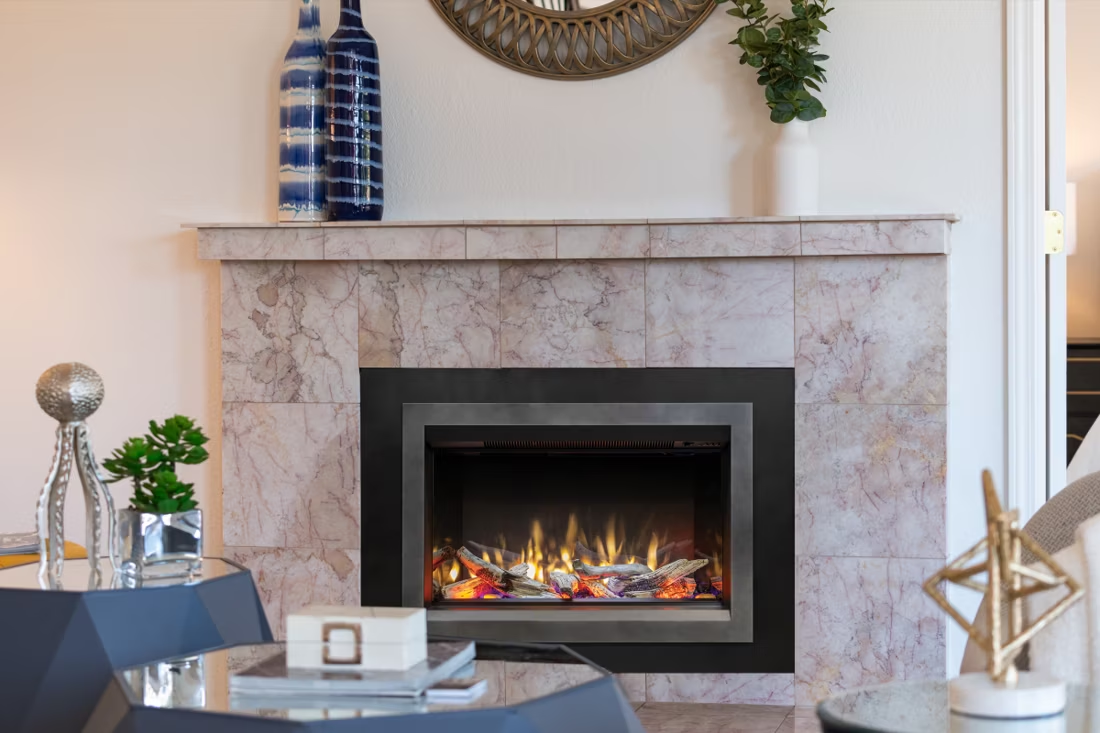
From lakeside camps on Champlain to apartments near SUNY Plattsburgh, electric fireplaces bring instant, ventless heat to rooms a woodstove or gas line can't easily reach. Find the right unit and connect with a trusted local dealer.
Every Project Starts From One of These Five Situations
Convenient heat for a genuinely cold county.
Clinton County runs from the western shore of Lake Champlain up into the Adirondack foothills, with Plattsburgh as its hub and the Quebec border less than 20 miles north. Winters here are long and serious—average lows near 10°F, roughly 7,304 heating degree days a year, and lake-effect snow that piles up from November through April. Wood has always been the backbone of home heating in this part of the North Country, with abundant local oak, maple, birch, and ash, and no air quality restrictions on burning to speak of. Electric fireplaces don't try to compete with that as a primary heat source. What they do well is fill in the gaps: a finished basement, a bedroom over an unheated garage, a lake camp with no chimney, or a rental unit near campus where a wood or gas appliance isn't practical or allowed.
Most of Clinton County is served by National Grid, while the City of Plattsburgh runs its own municipal utility, the Plattsburgh Municipal Lighting Department, which often means somewhat lower per-kWh rates for city residents thanks to hydro power contracts through the New York Power Authority. Either way, electric resistance heat is one of the more expensive ways to heat a whole house through a 7,300-HDD winter—which is why electric fireplaces in this county are almost always installed as supplemental or zone heat, paired with a primary heat source, rather than as the only thing keeping a home warm in January.
Three steps. No salesperson until you're ready.
Tell us about your project
Your zip code, your situation, and the fuel you're leaning toward—or let the answers point you to one.
See what's actually available
The brands dealers within 100 miles genuinely carry—real options, never a catalog mirage.
Get your dealer & Project Guide
A trusted local dealer, plus the free Project Guide & Parts List that names every component of the job.
Frequently Asked Questions
How much does an electric fireplace installation cost in Clinton County?
A plug-in electric insert or freestanding unit typically runs $200 to $1,200 for the appliance itself, and since it uses a standard household outlet, there's often no real 'installation' beyond setting it in place. A built-in wall-mounted or recessed electric fireplace runs higher—often $1,500 to $3,500 including the unit, a licensed electrician to run a dedicated circuit, and any surround or mantel carpentry. Because there's no chimney, flue, or gas line involved, electric installs in Clinton County are generally the fastest and least disruptive of any fireplace project, even in older Plattsburgh homes with plaster walls and knob-and-tube wiring that complicate other trades.
Can an electric fireplace actually heat a Clinton County home through the winter?
Not as a primary heat source, and any honest local dealer will tell you the same. Most electric fireplace heaters top out around 5,000-6,000 BTU, and with average winter lows around 10°F and roughly 7,304 heating degree days a year, that's not enough to carry a home through a North Country winter on its own. Electric fireplaces work best as zone heat for a single room, or as supplemental warmth alongside a wood stove, pellet stove, or propane furnace that handles the bulk of the heating load. If you're trying to solve whole-home heat, a local dealer can point you toward wood or pellet options better suited to this climate.
Do I need a permit to install an electric fireplace in Clinton County?
A plug-in electric fireplace that runs off an existing outlet generally doesn't require a permit. A built-in unit that needs a new dedicated circuit typically does require an electrical permit, since that work has to be done by a licensed electrician and inspected. Permitting is handled at the town or city level rather than the county—in Plattsburgh, that means the City of Plattsburgh Code Enforcement office; in the surrounding towns (Peru, Beekmantown, Chazy, and others), it runs through each town's code enforcement officer. A local dealer who's pulled permits in your specific town before can usually tell you exactly what's needed before you commit.
How much does it cost to run an electric fireplace in Clinton County?
Running cost depends on your utility and how you use the unit. Most of Clinton County is served by National Grid, while City of Plattsburgh residents get power through the Plattsburgh Municipal Lighting Department, which often runs somewhat cheaper thanks to hydro contracts through the New York Power Authority. A typical electric fireplace on its heater setting draws around 1,500 watts—roughly the same as a space heater—so running it for a few hours a night in a den or bedroom adds a modest amount to a monthly bill, but running it as a house's main heat source through a North Country winter would get expensive fast given how many heating degree days this county racks up.
Electric fireplace vs. wood stove—which fits my Clinton County home?
Wood is the traditional answer here for good reason: local oak, maple, birch, and ash are widely available, there are no air quality restrictions on burning in Clinton County, and a wood stove keeps working when the power goes out during a winter storm off Lake Champlain. Electric fireplaces can't do any of that—they're entirely dependent on grid power—but they win on convenience and placement. If you want real heat output and storm-outage resilience, wood is the better fit. If you want ambiance and supplemental warmth in a room where a chimney isn't feasible—a condo, an apartment near SUNY Plattsburgh, a finished basement—electric is the simpler, cleaner option.
Electric fireplace vs. pellet stove—which makes more sense here?
Pellet stoves burn compressed wood pellets from regional brands like Energex, Hamer Pellet Fuel, and Greene Team Pellet Fuel, and they put out significantly more heat than an electric fireplace—enough to serve as a primary or near-primary heat source in a well-insulated Clinton County home. The catch is that pellet stoves also need electricity to run their auger and blower, so neither option keeps working in a power outage without a battery backup or generator. If heat output matters more than simplicity, pellet wins. If you want the lowest-hassle option for a single room with zero venting and zero fuel handling, an electric fireplace is easier to live with day to day.
Will my electric fireplace still work during a power outage?
No—electric fireplaces are fully dependent on grid power, and Clinton County sees its share of outages during ice storms and heavy lake-effect snow events, particularly in the more rural parts of the county away from Plattsburgh. If backup heat during outages matters to you, either pair an electric fireplace with a wood stove or propane unit that doesn't rely on the grid, or plan for a generator that can carry the fireplace's circuit. This is one of the main reasons local dealers rarely recommend electric as a whole-home solution in this climate.
Where do electric fireplaces make the most sense in Clinton County?
The best fits tend to be places where venting a wood or gas appliance isn't practical: seasonal camps along the Lake Champlain shoreline that don't want a full chimney build, rental apartments and condos near SUNY Plattsburgh where landlords won't allow an open flame, finished basements without existing masonry, and bedrooms or additions where a homeowner wants ambiance and a little supplemental warmth without adding to the home's primary heating system. Local dealers see a lot of these installs in secondary living spaces rather than main gathering rooms.
Electric fireplace vs. gas fireplace—which should I choose?
Gas fireplaces—running on propane in most of rural Clinton County, since natural gas service is limited outside Plattsburgh—put out real, sustained heat and can be configured to run on battery backup during an outage, but they need a gas line or propane tank and proper venting. Electric fireplaces skip all of that: no gas line, no venting, no permit for a plug-in unit, but also meaningfully less heat and total dependence on grid power. For a homeowner who wants genuine backup-capable heat, gas is usually the better call. For someone who just wants a clean, low-commitment fireplace look in a room where running gas isn't worth the cost, electric is the simpler path.
Can I put a TV above my fireplace?
Yes—with an asterisk. Fireplaces are hot and TVs don't like heat. Either put a mantel between them to deflect rising warmth, or choose a fireplace with heat-management technology that creates a cool zone on the wall above—the wall stays around 125 degrees, barely warm, while the room still gets full heat. If you like clean lines and don't want a mantel, heat management is the answer.
Do electric fireplaces actually produce heat?
Yes—most put out around 4,800–5,000 BTUs from a standard outlet, which comfortably warms a bedroom, office, or den as a comfort-zone heater. What they won't do is carry a whole house the way wood, gas, or pellet can. Think of electric as ambiance-first with honest supplemental heat: flames on with no heat in July, flames plus warmth in January.
What is an in-home preview and do I need one?
It's a visit where a hearth professional measures your space, confirms the model you picked actually works in your home, and walks the specs—framing, gas line, venting, finish work—before anything is ordered. Some details you just can't know until you see the house. Never make a down payment without one; it's the single most-skipped step that burns buyers.
Can a fireplace actually lower my heating bill?
Yes—by creating a comfort zone. A furnace heats every square foot of the house just to warm the one room you're in; a gas fireplace on low burns roughly a sixth of the gas a typical furnace does. Set the furnace around 55–60 degrees as a baseline, then heat the rooms your family actually uses. Families who heat this way commonly save $20–$60 a month.
Stove and Fireplace Dealers in Clinton County
Find your electric fireplace in Clinton County.
Tell us a bit about your home and where you want the heat, and we'll put together a free Project Guide & Parts List—the exact unit, any electrical work needed, and a trusted local Clinton County dealer to install it.
Find Your Fireplace →