
Reliable Heat for Chenango Bridge's Long, Cold Winters.
With a long, cold heating season and winter lows averaging 16°F along the Chenango River, instant, dependable heat matters here. We'll match you with a local dealer who can size and install the right gas fireplace, insert, or stove for your home.
Every Project Starts From One of These Five Situations
Instant heat for Southern Tier winters.
Chenango Bridge sits in the Town of Fenton along the Chenango River just north of Binghamton, at about 941 feet elevation in climate zone 6A. With a long, cold heating season and average winter lows around 16°F, the heating season here runs long—not far off from what homeowners in Burlington, VT deal with each winter. Many of the area's homes are older farmhouses framed with the same oak, maple, birch, and ash that fills local woodlots, but a growing number of homeowners are moving to gas for the convenience and consistency it offers over tending a fire through a Southern Tier winter.
Natural gas infrastructure is uneven in this pocket of Broome County—some streets closer to Binghamton have access to gas mains, while much of the immediate Chenango Bridge area runs on propane, delivered and tanked by regional suppliers. NYSEG serves the area's electric needs. Either fuel path works for a gas fireplace or insert; what matters is having a local installer who knows which lines run where and can size the unit, venting, and gas supply correctly the first time.
Three steps. No salesperson until you're ready.
Tell us about your project
Your zip code, your situation, and the fuel you're leaning toward—or let the answers point you to one.
See what's actually available
The brands dealers within 100 miles genuinely carry—real options, never a catalog mirage.
Get your dealer & Project Guide
A trusted local dealer, plus the free Project Guide & Parts List that names every component of the job.
Frequently Asked Questions
How much does a gas fireplace installation cost in Chenango Bridge?
Most gas fireplace and insert installations in the Chenango Bridge area run somewhere between $4,000 and $10,000, depending on the unit, whether you're on propane or natural gas, and how much venting or gas line work is involved. A gas insert going into an existing masonry fireplace with a propane tank already on the property tends to land on the lower end. New construction, a fresh gas line run from the street, or a first-time propane tank installation push costs toward the higher end. A local dealer will give you a firm number after seeing your home.
Can I convert my existing wood fireplace to gas?
Yes, and it's a common project in this part of Broome County, where a lot of the older housing stock still has the original masonry fireplace built when oak and maple were the default heat source. A gas insert typically slides into that existing firebox with a stainless liner run up the chimney, so you keep the look of the fireplace but get push-button heat. Whether the unit runs on propane or natural gas depends on what's already reaching your property—your installer can confirm which fuel makes sense before you buy anything.
Is my home better suited to natural gas or propane?
It depends on exactly where your house sits. Parts of the corridor closer to Binghamton have natural gas mains; much of Chenango Bridge and the surrounding Town of Fenton relies on propane tanks serviced by regional delivery companies. If your water heater or range already runs on one or the other, matching your fireplace to that existing fuel is usually the simplest and cheapest path. If you're building new or don't yet have gas service of any kind, a local dealer can help you weigh a propane tank installation against the cost of extending a gas line.
Will my gas fireplace work if the power goes out?
Most will, with the right ignition system. Units with intermittent pilot ignition (IPI) run on a small battery backup that kicks in the moment the power drops, so the fireplace still lights on demand. That matters here—ice and wind can knock out power along the Chenango River valley for a day or more in a hard winter storm. Valor's gas fireplaces go a step further: the pilot's thermocouple generates its own electricity, so there's no battery to remember or replace. Ask your local dealer about the ignition system on any unit you're considering, especially if backup heat is a priority for you.
What's the difference between a gas fireplace, gas insert, and gas stove?
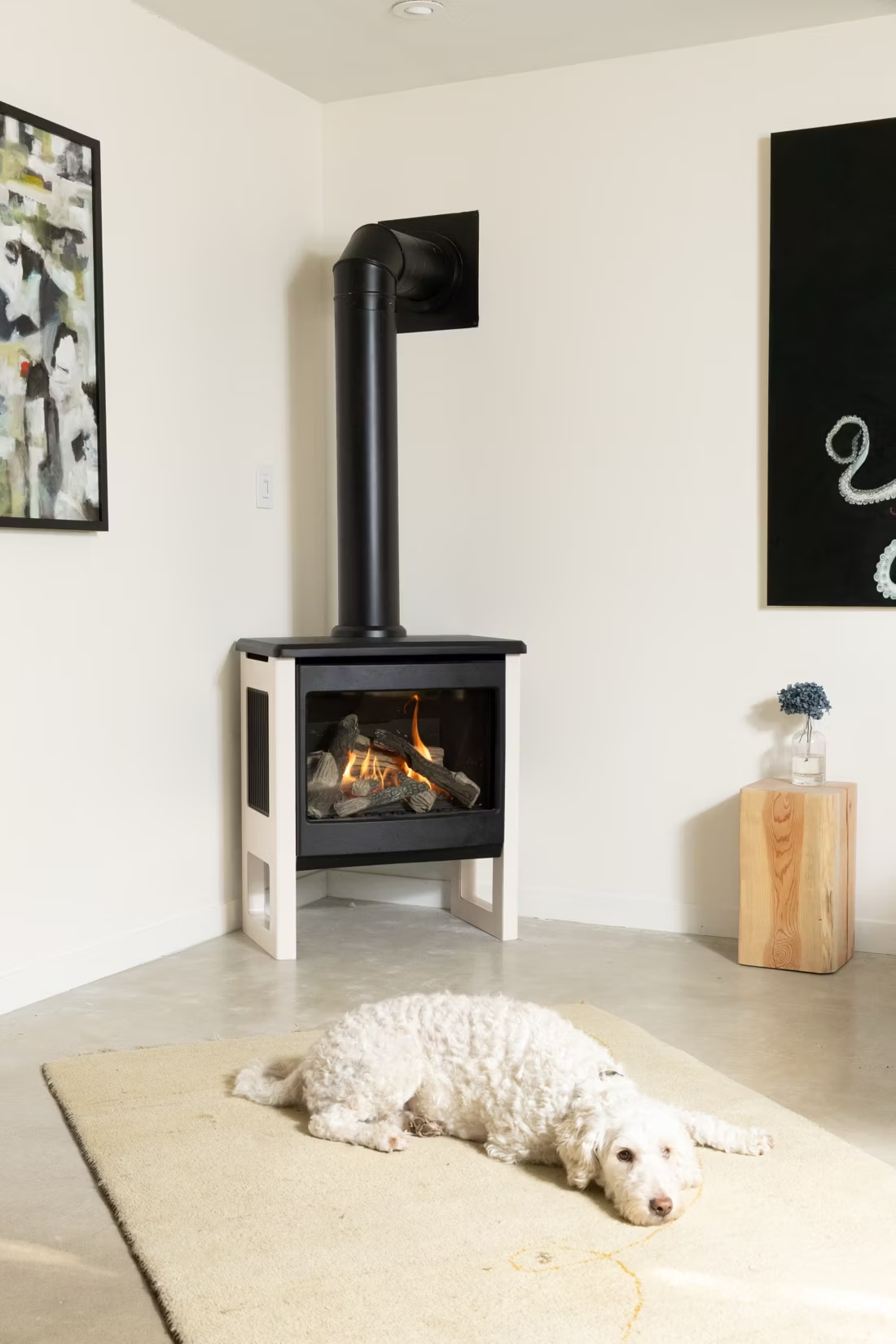
A gas fireplace is a fully built-in unit framed into a wall, typically chosen for new construction or a remodel. A gas insert is built to drop into an existing masonry firebox—the more common upgrade in Chenango Bridge's older homes, since it reuses the chimney you already have. A gas stove is a freestanding cast-iron or steel unit that sits on the floor like a wood stove but runs on gas or propane, a good option if you don't have an existing fireplace and don't want to frame one in. A local dealer can walk your space and tell you which fits.
Do I need a permit to install a gas fireplace in Chenango Bridge?
Yes. Because Chenango Bridge falls under the Town of Fenton, permitting for new gas fireplace or insert installations runs through the Town of Fenton Building Department in coordination with Broome County code requirements, and any propane or gas line work needs to be done by a licensed gas fitter. Most established hearth dealers in the area handle the permit application and inspection scheduling as part of the installation, so you're not left coordinating separate trades yourself.
Should I get a vented or vent-free gas fireplace?
Vented, direct-vent units are the standard recommendation for a climate like this one. They pull combustion air from outside and exhaust it back outside through sealed venting, so they don't affect indoor air quality regardless of how tightly your house is sealed against the cold. Vent-free units are legal in New York but come with strict room-sizing and ventilation rules, and in a 6A climate with a long heating season, you're running the appliance for many more hours a year than in a milder region—which is exactly the scenario where a sealed, vented system makes the most sense. Ask your dealer to walk through both if you want to see the tradeoffs firsthand.
How often does a gas fireplace need to be serviced?
Plan on an annual inspection, ideally in late summer or early fall before the heating season starts in earnest. A technician checks the burner, pilot assembly, venting, and gas connections, and cleans the glass and interior. Given how many hours a gas fireplace runs during a Chenango Bridge winter compared to warmer climates, staying current on service matters more here than in places with a short heating season. Most local service providers charge in the $150 to $250 range for a standard annual visit.
Gas vs. wood—which makes more sense for my home?
Wood is still a strong option here—local oak, maple, birch, and ash are all readily available, wood heat works without electricity, and the fuel cost can be low if you're sourcing your own. But with a long, cold heating season stretching well into spring, a lot of homeowners in Chenango Bridge want a heat source they can turn on without loading a firebox on a January morning, and that's where gas wins: instant heat, no ash, no chimney sweeping, and consistent output all winter. Plenty of homes here run both—gas in the main living space for daily convenience, wood elsewhere for backup and ambiance.
Why is a fireplace insert so efficient?
An insert does two things: it seals the chimney completely, so you stop losing air you already paid to heat, and it radiates warmth into the room through the firebox and glass. Most add a heat-exchange fan that pulls cool room air underneath, wraps it around the hot firebox, and pushes it back out warm. Your home is more efficient before you've even lit the first fire.
Can I put a TV above my fireplace?
Yes—with an asterisk. Fireplaces are hot and TVs don't like heat. Either put a mantel between them to deflect rising warmth, or choose a fireplace with heat-management technology that creates a cool zone on the wall above—the wall stays around 125 degrees, barely warm, while the room still gets full heat. If you like clean lines and don't want a mantel, heat management is the answer.
Does a fireplace add value to my home?
On average, a fireplace adds back to the home about the same amount you spent installing it. Add the monthly savings from heating the rooms you actually use instead of the whole house—often hundreds of dollars a year—and the value case is strong before you even count what a fire does for how your family uses the room.
Can a fireplace actually lower my heating bill?
Yes—by creating a comfort zone. A furnace heats every square foot of the house just to warm the one room you're in; a gas fireplace on low burns roughly a sixth of the gas a typical furnace does. Set the furnace around 55–60 degrees as a baseline, then heat the rooms your family actually uses. Families who heat this way commonly save $20–$60 a month.
Nearby Dealers
Hearth shops serving Chenango Bridge and the surrounding area. Every listing shows whether it is a WhyFire partner, a dealer we have verified as authorized for the brands we recommend, or a local business carrying hearth products. No manufacturer pays for placement. How we verify dealers →
Countryside Stove & Chimney
Johnson's Pools & Spas, LLC
Find your gas fireplace in Chenango Bridge.
Tell us about your home and heating goals, and we'll match you with a trusted local dealer along with a free Project Guide & Parts List—a plan for your gas fireplace project in Chenango Bridge with the exact parts, including the vent kit, and the dealer we recommend.
Find Your Fireplace →