
A Small but Real Option in a Natural-Gas City.
Pellet stoves aren't the default heat source in Albany's rowhouses and brownstones, but for the right home, one still makes sense. We'll help you figure out if yours is one of them.
Every Project Starts From One of These Five Situations
Albany runs on natural gas, not pellets.
Albany sits at just 225 feet elevation along the Hudson, with winters that average a 16°F overnight low and rack up a heating season nearly as long as it is cold—cold enough to demand serious heat, though not in the same league as Burlington, Vermont, a few hours up I-87. What sets Albany apart isn't the climate, it's the housing stock and the utility footprint. Much of the city—from the brownstones near Washington Park to the rowhouses in Center Square and the newer construction out toward 12203 and 12205—was built with natural gas service already run to the block. That infrastructure, combined with dense lot lines that leave little room for pellet storage or hopper-fill deliveries, is a big part of why pellet stoves never became a mainstream choice here the way they did in more rural parts of upstate New York.
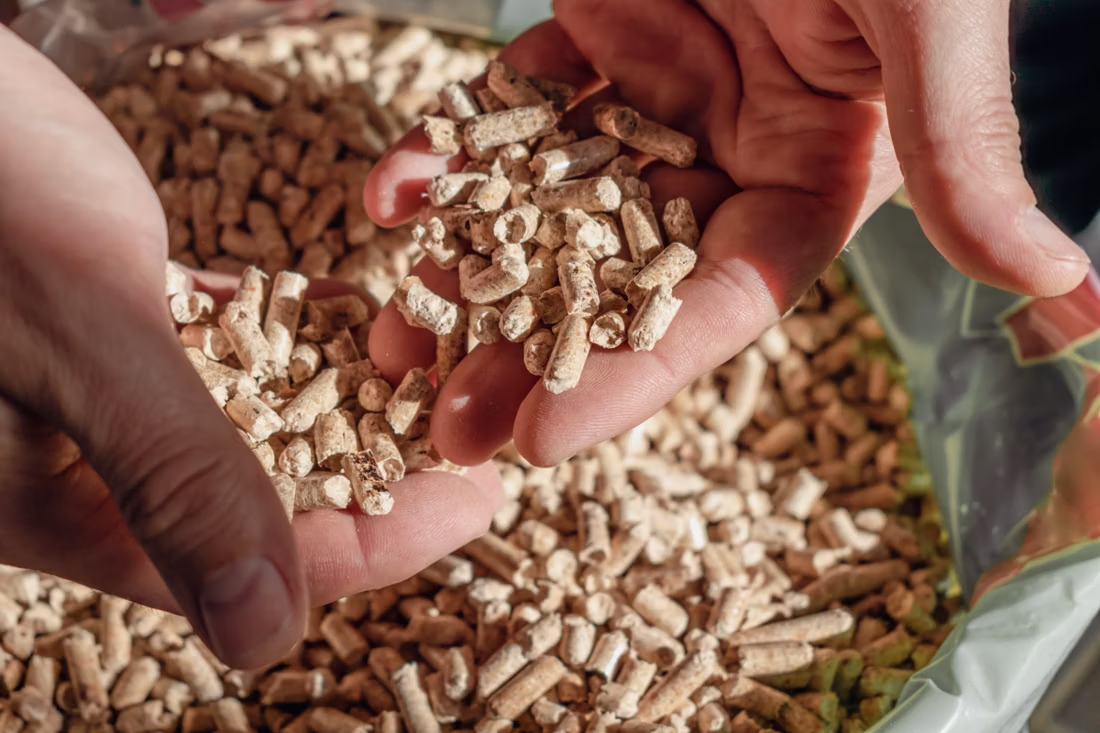
That doesn't mean pellet heat is off the table. A small number of Albany homeowners—often in older homes without existing gas service, or those who want a backup heat source that doesn't depend on a wood-cutting permit or a cord of split oak—install a pellet stove or insert, sourcing fuel from regional producers like Energex, Hamer Pellet Fuel, or Greene Team Pellet Fuel, all of which distribute into the Capital Region. It's a niche choice here, not a common one, and we'll tell you that straight rather than pretend otherwise. If a pellet appliance genuinely fits your home, a trusted local dealer can size it correctly and get it installed to code; if it doesn't, they'll tell you that too.
Three steps. No salesperson until you're ready.
Tell us about your project
Your zip code, your situation, and the fuel you're leaning toward—or let the answers point you to one.
See what's actually available
The brands dealers within 100 miles genuinely carry—real options, never a catalog mirage.
Get your dealer & Project Guide
A trusted local dealer, plus the free Project Guide & Parts List that names every component of the job.
Frequently Asked Questions
Are pellet stoves actually common in Albany?
Not especially, and we won't pretend otherwise. Albany's housing stock—dense rowhouses, brownstones, and a natural gas network that reaches most of the city's zip codes—means gas fireplaces and inserts are the far more common upgrade. Pellet stoves show up in a smaller slice of homes: older houses without gas service, garages and workshops used seasonally, or homeowners specifically looking for a solid-fuel backup that doesn't require the wood-cutting and storage logistics of a cordwood stove. If you're one of those homeowners, a local dealer can still spec and install a pellet unit correctly—it's just not the default recommendation for most Albany addresses the way it might be in a rural part of Rensselaer or Schoharie County.
What does a pellet stove installation typically cost in Albany?
Nationally, a pellet stove installation—unit, venting, and hearth pad—typically runs $3,000 to $6,500, with inserts into an existing masonry fireplace often landing in the middle of that range once a liner and venting kit are included. Albany doesn't have the volume of pellet installers that a place like Burlington, Vermont does, so expect fewer competing quotes and, in some cases, technicians traveling from outside the immediate Capital Region. A local dealer will give you a firm number after seeing your chimney or wall configuration, but budget on the higher end if new venting through a masonry chimney or an exterior wall is required.
Should I get a pellet stove or a gas insert instead?
For most Albany homes, gas wins on convenience: if your block already has natural gas service—which covers a large share of the city, including most of downtown and the near suburbs—a direct-vent gas insert or fireplace gives you instant, thermostat-controlled heat with no fuel deliveries or hopper refills. Pellet stoves make more sense if you don't have gas service, want a heat source that isn't tied to the gas utility, or specifically want the look and ambiance of a real flame with a hopper's worth of automated feed. If your home already has a working chimney and no gas line, a pellet insert can be a reasonable middle ground between wood and gas—worth discussing with a local dealer who's seen both options installed in older Albany housing stock.
Where can I buy pellet fuel in Albany?
Regional producers Energex, Hamer Pellet Fuel, and Greene Team Pellet Fuel all distribute into the Capital Region, and you'll find their bags at hearth retailers and some hardware and farm supply stores around Albany, Colonie, and the surrounding suburbs. Because pellet stoves are less common here than in more rural upstate counties, don't expect big-box pellet aisles the way you might in central New York—plan on ordering ahead of the season, especially by early fall, since local supply doesn't move at the volume of a market like Buffalo or Syracuse.
Do I need a permit to install a pellet stove in Albany?
Yes—a new pellet stove or insert installation requires a building permit through the City of Albany Building Department (or the applicable town building department if you're outside city limits, such as Colonie or Bethlehem). The permit process typically confirms proper clearances, venting termination points, and hearth pad specifications. Because pellet installs are less frequent here than gas conversions, it's worth confirming with your dealer that they've pulled Albany-specific permits before—code officials in a smaller-volume category can sometimes ask more questions the first time around.
Will my pellet stove still work if the power goes out?
Not without a backup plan. Pellet stoves rely on an electric auger to feed fuel and a blower to distribute heat, so a power outage from Niagara Mohawk (National Grid) shuts the unit down unless you've added a battery backup or small generator setup. At Niagara Mohawk's residential rate of roughly 16.7 cents per kWh, running a backup isn't expensive, but it's an extra step many wood-stove owners don't have to think about. If reliable heat during an ice storm or grid outage is a priority, that's worth weighing against a wood-burning option or a gas unit with a standing pilot, both of which keep working without electricity.
What pellet stove brands are worth looking at?
Harman, built in nearby Pennsylvania, has a strong service and parts presence throughout the Northeast, which matters if something needs a warranty repair a few years down the road. Enviro and St. Croix are also well represented among Northeast dealers and offer a range of stove and insert sizes suited to smaller Albany rowhouse floor plans as well as larger suburban homes. A local dealer will steer you toward whichever brand they service directly—with a niche appliance like this, parts and repair support matter more than brand name.
How often does a pellet stove need cleaning or service?
Plan on cleaning the burn pot and ash area every few days to weekly during regular use, and a full professional service—including the exhaust fan, hopper, and venting—once a year, ideally before heating season starts in October or November. Pellet stoves produce far less creosote than a wood stove, but the mechanical components (auger motor, igniter, blower) need the kind of annual check a cordwood stove doesn't. Given how few technicians in the Albany area specialize in pellet equipment specifically, it's worth booking that annual service early rather than waiting until a cold snap in December.
Pellet vs. wood—does either make sense for an Albany home?
Both are genuinely niche choices in Albany, and for similar reasons: dense city lots with natural gas already piped in, limited storage space for cordwood or pellet bags, and a housing stock that skews toward gas and electric heat. Between the two, wood offers the advantage of working without electricity and pairs with locally available oak, maple, birch, and ash—but it demands more storage space and a chimney rated for solid fuel. Pellet trades that flexibility for cleaner burning and automated feed, at the cost of needing power to run. If you have the space and a suitable chimney, either can work; most Albany homeowners considering solid fuel at all end up choosing based on which one their existing chimney or storage situation actually supports.
What's the difference between an insert and a zero-clearance fireplace?
An insert is a fireplace that slides into a pre-existing wood-burning fireplace—if you don't have one, there's nothing to insert it into. A zero-clearance fireplace is built into a framed wall, which makes it the answer for remodels and new construction. Simple test: existing masonry fireplace means insert; blank or framed wall means zero-clearance.
Why is my open fireplace making my house colder?
Open fireplaces suck—literally. As the fire burns, it consumes air your furnace already paid to heat and pulls it out through the chimney, so the house is actually colder after the fire goes out than before you lit it. An insert fixes this: it seals the chimney, puts fixed glass across the front, and turns that hole in your house into a real heat source.
How much should I budget for a fireplace?
For an average home—covering the fireplace, the vent pipe, and basic installation—a budget between $3,900 and $5,500 gives you a lot of options across wood, gas, and pellet. By the time you add finish work, gas line, and electrical, the average complete installation lands between $5,000 and $12,000 all-in. In a remodel or new build, a good rule is to put about 2.5% of the total project cost toward the fireplace.
What is an in-home preview and do I need one?
It's a visit where a hearth professional measures your space, confirms the model you picked actually works in your home, and walks the specs—framing, gas line, venting, finish work—before anything is ordered. Some details you just can't know until you see the house. Never make a down payment without one; it's the single most-skipped step that burns buyers.
Preferred Dealer in Albany
Marked Preferred because they run on WhyFire's software—so they can show you real pricing and book your appointment right here. No manufacturer pays for placement. How we verify dealers →
Pellet Brands Stocked Around Albany
Manufacturers will point you to the nearest stocking dealer.
Find your pellet stove in Albany.
Tell us about your home and heating goals, and if a pellet stove genuinely fits, we'll match you with a trusted local dealer and send over a free Project Guide & Parts List—the exact equipment, vent kit, and installer recommendation for your Albany address.
Find Your Fireplace →