
Stay Warm Through Albany County's Coldest Nights.
Wood, gas, pellet, and electric fireplace resources for every city and town in Albany County—from the Hudson River lowlands around the Capital City out to the Helderberg hill towns of Berne and Rensselaerville. Find the right unit and connect with a trusted local hearth retailer.
Every Project Starts From One of These Five Situations
Four-season heating in New York's Capital Region.
Albany County sits at the crossroads of the Hudson and Mohawk valleys, with terrain ranging from the river flats around the city of Albany up into the Helderberg Escarpment past 1,500 feet in the county's western towns. Winters here run cold and long—6,357 heating degree days and an average winter low near 16°F put Albany County in the same general heating burden as Burlington, Vermont, just up the interstate. The season typically stretches from October through April, and a solid stretch of single-digit nights is normal most winters. Hardwood is abundant and cheap to source: oak, maple, birch, and ash from local woodlots are the standard firewood mix, and they're part of why wood stoves remain common in the rural western towns even as gas service has become the default in denser parts of the county.
What you'll find on this hub: hearth retailers, service technicians, and fuel suppliers covering every community in the county—from the City of Albany and its close-in suburbs of Colonie, Guilderland, and Bethlehem, to river towns like Cohoes, Watervliet, and Ravena, out to the hill towns of Berne, Knox, Westerlo, and Rensselaerville. Pick your fuel below to drill into local dealers, installation costs, and recommended units. Whether you're heating a Colonie split-level or a farmhouse in the Helderbergs, this is the starting point.
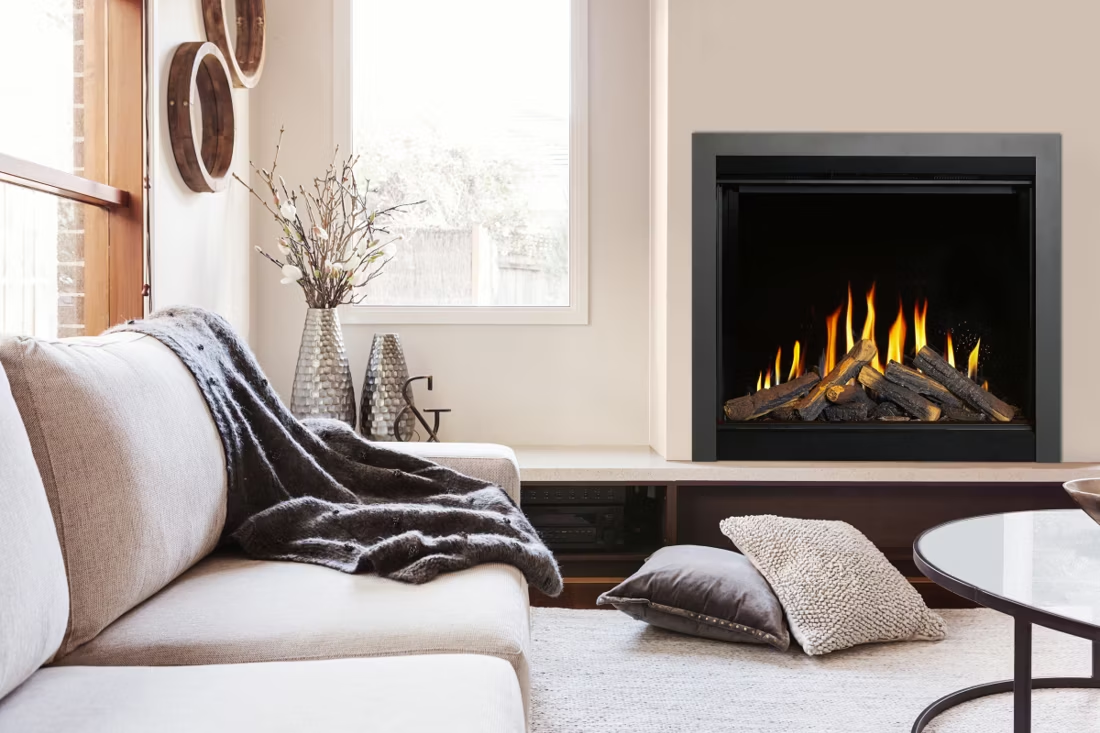
Four fuels. One honest answer for Albany County.
Three steps. No salesperson until you're ready.
Tell us about your project
Your zip code, your situation, and the fuel you're leaning toward—or let the answers point you to one.
See what's actually available
The brands dealers within 100 miles genuinely carry—real options, never a catalog mirage.
Get your dealer & Project Guide
A trusted local dealer, plus the free Project Guide & Parts List that names every component of the job.
Frequently Asked Questions
Which fuel works best in Albany County?
It depends on the home and the neighborhood. In the City of Albany and the denser suburbs—Colonie, Guilderland, Bethlehem—natural gas service through National Grid makes gas fireplaces and inserts the easiest option: no wood handling, consistent heat through a 6,357-HDD winter, and simple venting through an existing chimney or direct-vent wall. Out in the western hill towns like Berne, Knox, and Rensselaerville, wood remains the practical choice—oak, maple, birch, and ash are cheap and plentiful from local woodlots, and a catalytic stove will hold a fire through a single-digit overnight without much trouble. Pellet is a strong middle option countywide, with regional brands like Energex, Hamer Pellet Fuel, and Greene Team Pellet Fuel giving reliable local supply without needing your own woodlot. Electric works well as a supplemental heater in bedrooms, sunrooms, or apartments, but it's not what most Albany County homeowners rely on to get through January.
Do I need a permit to install a fireplace in Albany County?
In almost every case, yes. Wood stoves, wood inserts, gas fireplaces, gas inserts, gas stoves, and pellet stoves all typically require a building permit, and gas installs need a separate permit and licensed gas-fitter for the line work. Because Albany County is made up of one city and many towns, permitting isn't centralized—the City of Albany issues its own permits through its buildings department, while Colonie, Guilderland, Bethlehem, and the smaller hill towns each handle permits through their own local building departments. Electric fireplaces generally skip the permit process unless it's a built-in unit requiring new wiring or a dedicated circuit. Most local hearth retailers manage the permit application as part of the installation quote, so you typically aren't filing paperwork yourself.
Are there air quality restrictions on wood burning in Albany County?
No—Albany County doesn't have the winter inversion or wildfire-smoke issues that trigger burn advisories in places like the Klamath Basin or parts of the Mountain West. There's no county-wide burn ban or curtailment program here. That said, new wood stove installations still need to meet current EPA 2020 NSPS emissions standards, and some of the denser suburban towns—Colonie and Guilderland in particular—have local nuisance ordinances covering outdoor wood boilers and excessive visible smoke from neighboring properties. If you're installing an outdoor wood-fired appliance rather than an indoor stove or insert, it's worth checking your specific town's code before you buy.
Can one local hearth retailer handle all four fuel types?
Many Capital Region hearth retailers carry three or four fuel types, since Albany County's mix of urban gas service and rural wood-burning tradition means dealers need breadth to serve the whole county. A retailer based near Colonie or Latham will often stock working displays across wood, gas, and pellet, with electric units as a smaller line. Dealers closer to the Helderberg towns tend to lean harder into wood and pellet, reflecting what actually sells out that way. If you're not sure which fuel fits your home, a multi-fuel dealer can walk you through the trade-offs in person rather than guessing from a spec sheet.
How does service work in the rural western part of Albany County?
Most chimney sweeps and gas/pellet technicians are based in or near the City of Albany and travel out to Berne, Knox, Westerlo, and Rensselaerville for service calls—expect a modest travel fee for the farther towns, and plan for a longer scheduling window than you'd get in Colonie or Guilderland. Pre-season service, ideally scheduled in August or September before the oak and maple start seasoning down, is far easier to book than an emergency call in the middle of a January cold snap. Homeowners in the hill towns often keep a backup heat source on hand—a wood stove alongside a pellet unit, or vice versa—since a single hard freeze can strand a service appointment for a week or more.
What's the typical cost range for fireplace installation across all fuel types in Albany County?
Costs vary by fuel and by how much venting or gas line work is involved. Wood stove or insert installation: roughly $4,000–$8,500 for a typical job, more if a full masonry chimney liner is needed. Gas fireplace, insert, or stove: about $4,000–$10,000 depending on whether a new gas line has to be run from an existing National Grid service or an existing line can be tapped. Pellet stove or insert: generally $4,000–$7,000 installed. Electric fireplace: $200–$3,000 for the unit itself, plus $300–$1,000 in labor for anything beyond a simple plug-in installation, such as a built-in wall unit. For details tied to actual local retailer pricing, see the county + fuel pages above.
Can I install a fireplace myself?
If you're putting a fire in your house on purpose, it's best to work with an expert. Unless you're genuinely experienced in framing, gas line, vent pipe, and the national code on clearances to combustibles, have a professional do it—and ideally the same company that sells you the fireplace, so warranty, service, and liability all live under one roof.
What is an in-home preview and do I need one?
It's a visit where a hearth professional measures your space, confirms the model you picked actually works in your home, and walks the specs—framing, gas line, venting, finish work—before anything is ordered. Some details you just can't know until you see the house. Never make a down payment without one; it's the single most-skipped step that burns buyers.
Does a fireplace add value to my home?
On average, a fireplace adds back to the home about the same amount you spent installing it. Add the monthly savings from heating the rooms you actually use instead of the whole house—often hundreds of dollars a year—and the value case is strong before you even count what a fire does for how your family uses the room.
Should the dealer who sells my fireplace also install it?
Ideally, yes. A fireplace project involves vent pipe, gas line, electrical, and often tile or stone. Hire three or four separate trades and you own the liability and the game of telephone between them. One company selling and installing means one accountable party, start to finish—ask about factory training, on-time completion records, and what happens if an inspection fails.
Stove and Fireplace Dealers in Albany County
Listings include WhyFire partner dealers, dealers we have verified as authorized for the brands we recommend, and established local businesses that carry hearth products. Every listing shows which one it is. The ones marked Preferred run on WhyFire's software, so they can show you real pricing and book your appointment right here. No manufacturer pays for placement. How we verify dealers →
Razzano Kitchen & Bath
Upstate Backyard Kitchens
Troy's Landscape Supply
Mjm Services Inc
Adirondack Stoves
Countryside Stove & Chimney
The Reynolds Group
Adirondack Hearth, Home & More
Dr. Soot 'n Cinder
Find your fireplace in Albany County.
Pick your fuel below, and we'll match you with a trusted local dealer and put together a free Project Guide & Parts List—the exact parts, including the vent kit, and the local dealer we recommend for your home.
Find Your Fireplace →