
Warm, Reliable Heat at 7,000 Feet—Even Without a Gas Line.
Tano Road sits at over 7,000 feet in the high desert north of Santa Fe, where winter lows average 18°F and piped natural gas never reached the ranchettes and custom homes out here. Propane fills that role—and the right gas fireplace or insert delivers real heat with none of the wood-hauling.
Every Project Starts From One of These Five Situations
Clean heat for the high desert—without piped gas lines.
At 7,052 feet with a winter heating load about like Helena, Montana's, Tano Road's winters run closer to Helena, Montana than to nearby downtown Santa Fe. The community is unincorporated, spread across large lots off dirt and gravel roads, and—like much of rural Santa Fe County—was never reached by a municipal natural gas main. What locals call "gas heat" here almost always means propane, delivered and stored in a tank on the property rather than piped in from a utility.
Many homes in this part of Santa Fe County were built with traditional adobe kiva fireplaces—beautiful, but notoriously inefficient at altitude. Converting one to a sealed gas insert keeps the rounded plaster look while adding real, controllable heat that doesn't depend on someone tending a fire through a cold, windy night. One wrinkle worth knowing up front: gas appliances need to be de-rated or specifically sized for elevations above roughly 2,000 feet, so a unit sized for a Rio Grande valley home won't perform the same 5,000 feet higher. Public Service Co. of New Mexico serves electric here, but propane suppliers, not a gas utility, are who your installer will be coordinating tank placement and delivery with.
Three steps. No salesperson until you're ready.
Tell us about your project
Your zip code, your situation, and the fuel you're leaning toward—or let the answers point you to one.
See what's actually available
The brands dealers within 100 miles genuinely carry—real options, never a catalog mirage.
Get your dealer & Project Guide
A trusted local dealer, plus the free Project Guide & Parts List that names every component of the job.
Frequently Asked Questions
How much does a gas fireplace installation cost in Tano Road?
Because there's no piped natural gas out here, most installations include propane-specific work: an above- or below-ground tank (if the property doesn't already have one), a longer supply line run given the size of most Tano Road lots, and altitude-derated equipment. Expect a direct-vent propane insert into an existing kiva or masonry fireplace to run roughly $5,000 to $9,500, and a new built-in gas fireplace with fresh line work and a tank install to land closer to $8,000 to $14,000. Homes that already have a propane tank serving a furnace or range are usually on the lower end since the supplier and tank sizing are already in place.
Can I convert my existing kiva fireplace to gas?
Yes, and it's one of the more common projects for this part of Santa Fe County. A gas insert or log set can go into the traditional rounded adobe kiva fireplace found in many Tano Road homes, using a stainless liner run up the existing flue. The plaster surround stays intact, but you get sealed combustion, a thermostat, and heat output that a traditional open kiva—which loses most of its heat straight up the chimney—was never designed to deliver. Plan on $5,000 to $8,500 for a typical kiva conversion, propane tank and line work included if not already present.
Do I need natural gas, or is propane the only option in Tano Road?
Propane is effectively the only option. There's no natural gas utility serving Tano Road or the surrounding unincorporated areas of Santa Fe County—homeowners here rely on tank propane for any gas-fired appliance, fireplace included. Your installer will work with a regional propane supplier to size and place a tank (or connect to an existing one) as part of the fireplace project. Nearly every gas fireplace, insert, and stove on the market today is available in a propane configuration, so fuel availability isn't a limiting factor on which unit you can get—it just changes who shows up to hook up the fuel supply.
Will my gas fireplace work during a power outage?
Most will, with the right ignition system. Units with IPI (intermittent pilot ignition) run on battery backup that kicks in automatically when the power drops, so the fireplace still lights on demand. Valor fireplaces go a step further—their pilot assembly generates its own electricity through a thermocouple, so there are no batteries to remember at all. That distinction matters more in Tano Road than in town: rural power lines at 7,000 feet are more exposed to winter wind and ice, and outages here can run longer than a typical Santa Fe city outage. Ask your local dealer which ignition system is on any unit you're considering.
What's the difference between a gas fireplace, gas insert, and gas stove?
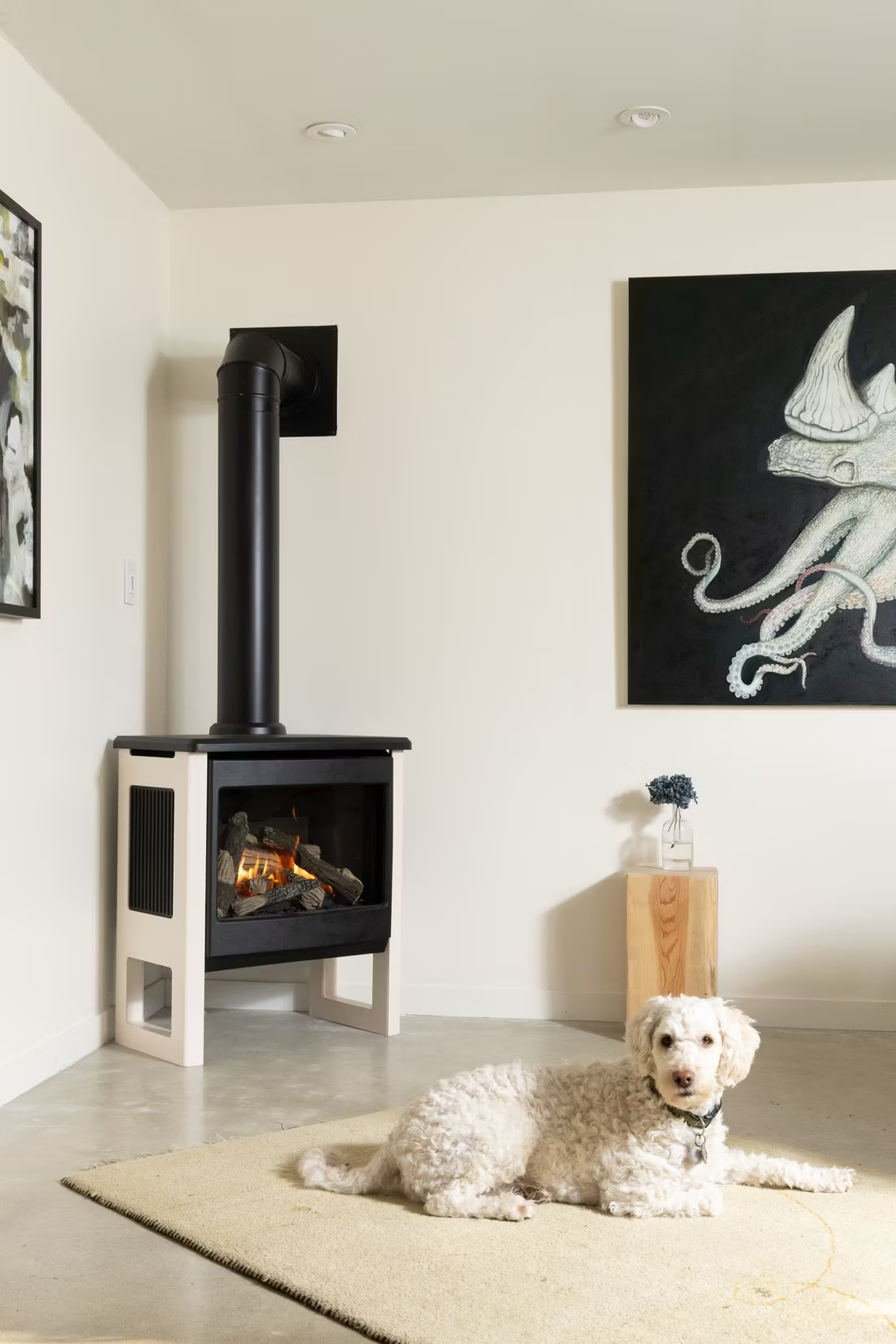
A gas fireplace is a fully built-in unit framed into a wall—the right call for new construction or a great room remodel without an existing hearth. A gas insert drops into an existing masonry or kiva fireplace opening, using the existing flue as the vent path with a liner. A gas stove is freestanding, sitting on its own hearth pad, and works well in a room without any existing fireplace at all. For Tano Road's older adobe homes with a kiva already in the corner, an insert is usually the simplest and least invasive upgrade. Newer custom builds without an existing hearth are better suited to a built-in fireplace or a freestanding stove.
Do I need a permit to install a gas fireplace in Tano Road?
Yes. Tano Road is unincorporated, so building permits go through the Santa Fe County Building & Land Use Department rather than a city office. A new gas fireplace or insert install typically needs a building permit and sign-off on the propane line work by a licensed gas-fitter. Most established local hearth dealers pull these permits as part of the installation and coordinate inspection with the county, so you're not left managing the propane supplier, the installer, and the inspector separately.
What's the difference between vented and vent-free gas fireplaces?
Vented (direct-vent) units draw combustion air from outside and exhaust it back outside through a sealed pipe—the cleanest, most universally code-compliant option. Vent-free units burn fuel directly into the room, releasing some moisture and combustion byproducts indoors, and are legal in New Mexico within room-size and ventilation limits. Given that Tano Road already deals with winter temperature inversions and periodic wildfire smoke settling into the valley, most local homeowners lean toward direct-vent units—they don't add anything to already-compromised indoor air on a bad smoke day. A local dealer can walk through both if you want to weigh the tradeoffs for a specific room.
How often should my gas fireplace be serviced?
Plan on an annual inspection, ideally in early fall before the coldest stretch hits. A technician checks the burner, pilot assembly, propane line connections, and venting, and cleans the glass and interior. This matters more at altitude than it might elsewhere—a unit that isn't properly tuned for 7,000 feet can run rich or burn inefficiently, and a yearly check catches that early. Expect to pay around $150 to $250 for a standard annual service call.
Gas vs. wood—which makes more sense for a Tano Road home?
Wood is genuinely abundant here—pinyon, juniper, and ponderosa pine are all locally common, and Forest Service cutting permits through the Santa Fe National Forest, Carson National Forest, or Cibola National Forest run just $5 to $20 per cord during the May-to-October season. Wood heat also keeps working with zero power or propane delivery, which matters on a property this remote. Gas, on the other hand, means no hauling or splitting, more consistent heat output, and a fireplace that lights instantly on a cold morning without kindling. Many Tano Road homeowners end up with both: a gas insert in the main living space for daily convenience, and a wood stove or the existing kiva kept in service as backup heat if a winter storm knocks out both power and propane delivery at once.
Is my gas fireplace wasting gas?
If it was installed more than 15 years ago, probably. Older gas fireplaces keep a standing pilot light burning all the time, and that little flame can cost a couple hundred dollars a year. Newer models use pilot-on-demand ignition—the pilot lights only when you use the fireplace and goes out when you turn it off.
Can I put a TV above my fireplace?
Yes—with an asterisk. Fireplaces are hot and TVs don't like heat. Either put a mantel between them to deflect rising warmth, or choose a fireplace with heat-management technology that creates a cool zone on the wall above—the wall stays around 125 degrees, barely warm, while the room still gets full heat. If you like clean lines and don't want a mantel, heat management is the answer.
What is an in-home preview and do I need one?
It's a visit where a hearth professional measures your space, confirms the model you picked actually works in your home, and walks the specs—framing, gas line, venting, finish work—before anything is ordered. Some details you just can't know until you see the house. Never make a down payment without one; it's the single most-skipped step that burns buyers.
Can a fireplace actually lower my heating bill?
Yes—by creating a comfort zone. A furnace heats every square foot of the house just to warm the one room you're in; a gas fireplace on low burns roughly a sixth of the gas a typical furnace does. Set the furnace around 55–60 degrees as a baseline, then heat the rooms your family actually uses. Families who heat this way commonly save $20–$60 a month.
Nearby Dealers
Hearth shops serving Tano Road and the surrounding area. Every listing shows whether it is a WhyFire partner, a dealer we have verified as authorized for the brands we recommend, or a local business carrying hearth products. No manufacturer pays for placement. How we verify dealers →
Tierra Woodstoves
Rocky Mountain Chimney Sweep
Find your gas fireplace in Tano Road.
Tell us about your home and your existing kiva or hearth, and we'll put together a free Project Guide & Parts List—the right propane fireplace or insert, the exact vent kit and parts needed, and a trusted local dealer who installs at altitude in Santa Fe County.
Find Your Fireplace →