
Zone heat with no gas line to run in South River.
At 5,555 feet with winter lows averaging 17°F, South River homes need real heat, not just ambiance. An electric insert or built-in gives you supplemental warmth in a room without a flue—I'll match you with a trusted local dealer who wires it right.
Every Project Starts From One of These Five Situations
Electric fills the gaps between wood loads.
South River is a small community of under 1,600 people tucked into the high desert of San Juan County, close enough to the Colorado line that winters run more like Durango's than Albuquerque's—average lows of 17°F and a long heating season that stretches well past six months. Most homes here still lean on wood cut from the surrounding pinyon, juniper, and ponderosa pine stands, or on pellets from regional brands like Forest Energy and Lignetics, as their primary heat source. Electric fireplaces play a different role: they show up in additions, sunrooms, back bedrooms, and outbuildings that were never built with a chimney or a hearth to begin with.
Jemez Mountains Electric Cooperative serves the area at a residential rate of about $0.1536 per kWh, which is enough that running resistance heat as a whole-home solution through a South River winter gets expensive fast. Where electric earns its keep is zone heating—warming the one room you're actually using without firing up a wood stove or running central heat through the whole house. It also skips the venting, chimney, and combustion-air requirements that come with gas or wood, which matters in a rural stretch of San Juan County where not every property has easy access to a gas line or a mason.
Three steps. No salesperson until you're ready.
Tell us about your project
Your zip code, your situation, and the fuel you're leaning toward—or let the answers point you to one.
See what's actually available
The brands dealers within 100 miles genuinely carry—real options, never a catalog mirage.
Get your dealer & Project Guide
A trusted local dealer, plus the free Project Guide & Parts List that names every component of the job.
Frequently Asked Questions
How much does it cost to install an electric fireplace in South River?
Plug-in electric inserts that use an existing outlet run as little as $300 to $600 installed, since there's no venting and often no new wiring required. A built-in wall unit or a larger insert that needs its own dedicated 20-amp circuit runs higher, typically $1,200 to $2,500, especially on older South River properties where a licensed electrician has to run new line from the panel. Because Jemez Mountains Electric Cooperative serves a spread-out rural area, expect the electrician's trip and any panel work to factor more into the quote than the fireplace unit itself.
Is electric heat enough to keep a South River home warm all winter, or do I still need wood?
On its own, probably not as your only heat source. With winter lows averaging 17°F and a long heating season that stretches well past six months, running electric resistance heat around the clock at Jemez Mountains Electric Cooperative's $0.1536 per kWh rate adds up quickly. Most South River households burn pinyon, juniper, or ponderosa pine—cut under San Juan National Forest permits for $5 to $20 a cord—as their primary heat, and add an electric insert in a room the wood stove doesn't reach well, like a converted garage or a back addition.
Do I need a permit to install an electric fireplace in South River?
A plug-in unit that uses an existing outlet generally doesn't require a permit. If you're adding a built-in wall unit or insert that needs a new dedicated circuit, the electrical work itself typically needs a permit through San Juan County, since it's licensed-electrician work regardless of the fireplace. Most local dealers who handle electric fireplace installs in the county coordinate that paperwork as part of the job, so you're not tracking it down separately.
Will an electric fireplace actually lower my electric bill compared to heating the whole house?
It can, if you use it the way it's designed to be used—heating one occupied room instead of running central heat or a whole-house system through spaces that are empty most of the day. At Jemez Mountains Electric Cooperative's residential rate of $0.1536 per kWh, a 1,500-watt unit running a few hours an evening costs a modest amount and can let you turn down the thermostat elsewhere in the house. Where it stops saving money is if you try to use it as your only heat source through a full South River winter—at that point the kWh usage catches up with you.
What size electric fireplace makes sense for a South River home?
Most electric inserts and built-ins are rated for 400 to 1,000 square feet, which covers a single room comfortably—that's the typical use case here, whether it's a sunroom addition, a converted garage, or a bedroom that runs cold at 5,555 feet elevation. If you're trying to heat an open living area that also gets wood or pellet heat, a mid-size 1,500-watt unit is usually plenty as a supplement. A local dealer can size it against your specific room's insulation and window exposure rather than square footage alone.
Will my electric fireplace still work if the power goes out?
No—electric fireplaces need grid power to run, and rural co-op lines like Jemez Mountains Electric Cooperative's can go down during winter wind and snow events in the San Juan Basin, sometimes for hours at a stretch. That's the main reason most South River homes keep a wood stove or insert as their real backup heat, since a supply of pinyon or juniper split from a National Forest cutting permit doesn't depend on the grid. Treat electric as convenient supplemental heat, not outage insurance.
What's the difference between an electric insert and a built-in electric fireplace?
An electric insert is sized to slide into an existing fireplace opening or a framed cavity, which works well if you're converting an old masonry firebox that's no longer used for wood. A built-in electric fireplace is designed to be framed into a wall from scratch, which is more common in South River additions and new construction where there's no existing hearth. Both plug into standard outlets in smaller sizes or require a dedicated circuit for larger units—your dealer will spec that based on the wattage you need.
Does my house need special wiring for an electric fireplace?
Small plug-in units under about 1,500 watts usually run fine on an existing 15-amp household circuit, as long as it's not already loaded down with other appliances. Larger built-in units typically call for their own dedicated 20-amp circuit, which means a licensed electrician running new wire from the panel—a real consideration in some of South River's older homes where panel capacity is limited. Your local installer will check your panel and existing circuits before recommending a unit size.
Electric vs. pellet—which makes more sense for a South River home?
Pellet stoves burning regional brands like Forest Energy or Lignetics put out more heat per hour than a typical electric insert and can serve as genuine primary heat through a long, demanding winter, but they still need electricity to run the auger and blower, so they're not outage-proof either. Electric fireplaces cost less upfront, need no fuel storage, and install almost anywhere without venting, but they're better suited to zone heating a single room than to carrying a whole South River house through January. Several local households run pellet for the main living space and an electric insert in a secondary room that doesn't need full-time heat.
Can I put a TV above my fireplace?
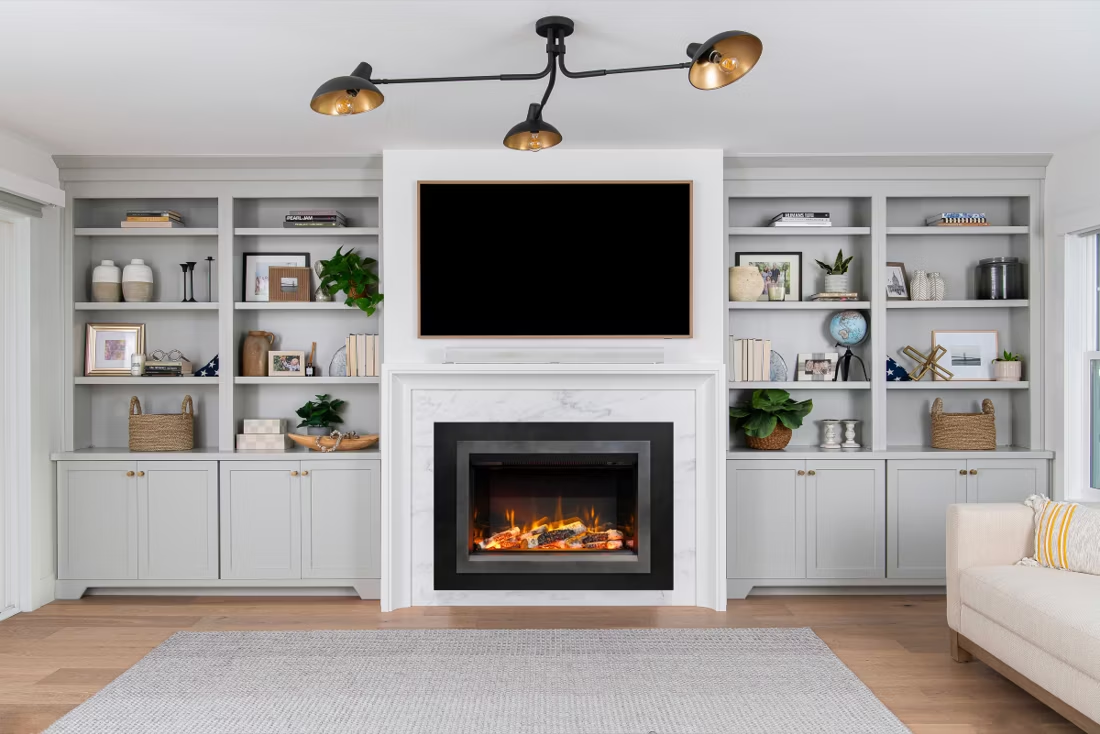
Yes—with an asterisk. Fireplaces are hot and TVs don't like heat. Either put a mantel between them to deflect rising warmth, or choose a fireplace with heat-management technology that creates a cool zone on the wall above—the wall stays around 125 degrees, barely warm, while the room still gets full heat. If you like clean lines and don't want a mantel, heat management is the answer.
Do electric fireplaces actually produce heat?
Yes—most put out around 4,800–5,000 BTUs from a standard outlet, which comfortably warms a bedroom, office, or den as a comfort-zone heater. What they won't do is carry a whole house the way wood, gas, or pellet can. Think of electric as ambiance-first with honest supplemental heat: flames on with no heat in July, flames plus warmth in January.
Does a fireplace add value to my home?
On average, a fireplace adds back to the home about the same amount you spent installing it. Add the monthly savings from heating the rooms you actually use instead of the whole house—often hundreds of dollars a year—and the value case is strong before you even count what a fire does for how your family uses the room.
Can a fireplace actually lower my heating bill?
Yes—by creating a comfort zone. A furnace heats every square foot of the house just to warm the one room you're in; a gas fireplace on low burns roughly a sixth of the gas a typical furnace does. Set the furnace around 55–60 degrees as a baseline, then heat the rooms your family actually uses. Families who heat this way commonly save $20–$60 a month.
Nearby Dealers
Hearth shops serving South River and the surrounding area. Every listing shows whether it is a WhyFire partner, a dealer we have verified as authorized for the brands we recommend, or a local business carrying hearth products. No manufacturer pays for placement. How we verify dealers →
Bob's Fireplace
San Juan Hearth
Electric Service in South River
An electric fireplace's heater draws about 1,500 watts—pennies per hour at local rates.
Jemez Mountains Elec Coop, Inc
Get your free Project Guide & Parts List for an electric fireplace in South River.
Tell me about your room, your panel, and whether you're supplementing wood or pellet heat, and I'll match you with a trusted local dealer and send a free Project Guide & Parts List sized right for your South River home.
Find Your Fireplace →