
Add instant, no-vent warmth to your Shiprock home.
No chimney, no gas line, no permit headaches—just plug in and add heat or ambiance to a room in your Shiprock home. Find the right unit and connect with a trusted local dealer.
Every Project Starts From One of These Five Situations
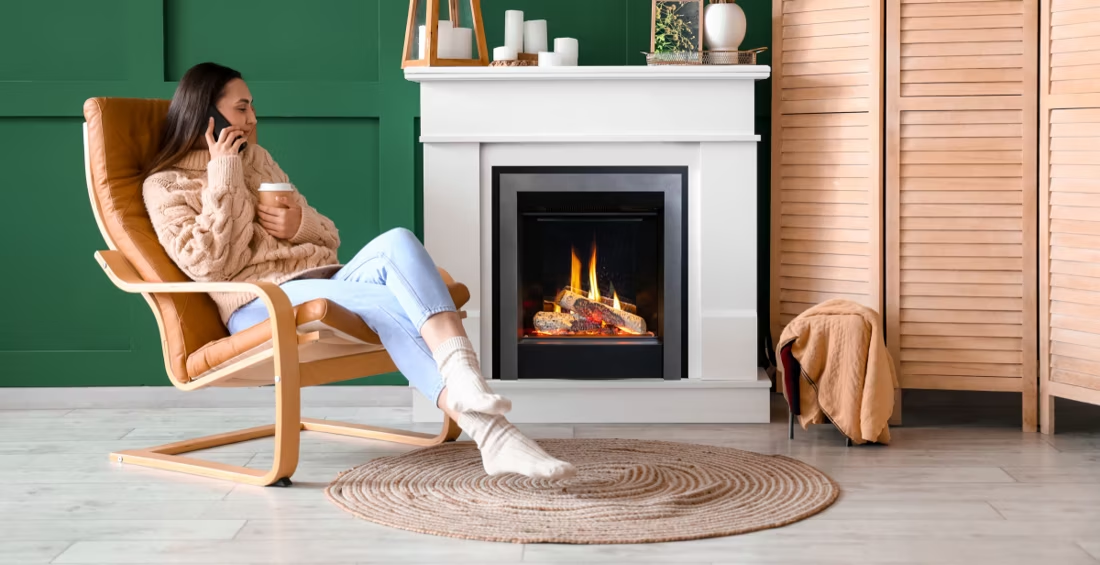
Zone heat and glow without wood smoke or gas lines.
Shiprock sits at nearly 4,950 feet on the Navajo Nation in San Juan County, where winter lows average 16°F and the area endures a long, cold heating season—a cold, dry, high-desert climate closer to Bismarck, ND than to most of the Southwest. Pinyon, juniper, and ponderosa pine cut under San Juan National Forest permits (May through October, $5 to $20 per cord) remain the backbone of home heating here, and most households run a wood stove as their primary source of warmth through the winter.
Electric service comes from the Navajo Tribal Utility Authority at roughly 16.6 cents per kWh, and reliability across the reservation varies—some outlying areas still wait on grid extension, while homes in the Shiprock townsite generally have stable service. Where power is dependable, an electric fireplace is a practical add: no venting, no chimney, no gas-fitter, and a fast install in a bedroom, addition, or manufactured home that a wood stove or gas line can't easily reach. Most homeowners here use electric as supplemental zone heat and ambiance alongside a wood stove, not as the sole source of heat through a Four Corners winter.
Three steps. No salesperson until you're ready.
Tell us about your project
Your zip code, your situation, and the fuel you're leaning toward—or let the answers point you to one.
See what's actually available
The brands dealers within 100 miles genuinely carry—real options, never a catalog mirage.
Get your dealer & Project Guide
A trusted local dealer, plus the free Project Guide & Parts List that names every component of the job.
Frequently Asked Questions
How much does an electric fireplace cost to install in Shiprock?
A plug-in electric fireplace insert or freestanding unit typically runs $300 to $1,500 installed, since it just needs a standard outlet and no venting or gas work. A built-in wall unit or a linear electric fireplace that requires framing and a dedicated 20-amp circuit runs higher, often $1,500 to $3,500, depending on whether an electrician needs to run new wiring. Because NTUA service and home wiring vary a lot across Shiprock—from older mobile homes to newer construction—a local dealer will confirm your panel capacity before recommending a unit.
Can an electric fireplace actually heat my home through a Shiprock winter?
Not as the sole source, realistically. A standard 1,500-watt electric fireplace puts out roughly 5,000 BTU—enough to noticeably warm a bedroom or living room, but well short of what's needed for whole-home heat at 16°F average lows through a long, cold winter like Bismarck, ND's. Most Shiprock households pair an electric unit with a wood stove burning pinyon or juniper as the primary heat source, using the electric fireplace for supplemental warmth in a specific room or for ambiance when the wood stove is doing the heavy lifting elsewhere in the house.
Do I need a permit to install an electric fireplace in Shiprock?
A plug-in unit that draws from an existing outlet needs no permit at all. A built-in electric fireplace that requires new wiring or a dedicated circuit does need an electrical permit, and the jurisdiction depends on whether your property sits on Navajo trust land or fee land within San Juan County—a licensed electrician working with NTUA can confirm which applies to your address. Most local hearth dealers coordinate this as part of a built-in install so you're not tracking down the right office yourself.
Electric vs. wood—which makes more sense for my Shiprock home?
Wood remains the practical primary heat source here: pinyon and juniper are locally abundant, cutting permits through San Juan National Forest run $5 to $20 per cord, and a wood stove keeps running during a power outage—a real consideration given how spread out NTUA's service area is. Electric fireplaces can't provide backup heat during an outage since they need power to run, but they win on convenience: no ash, no chimney maintenance, and instant on-off operation for a room where you want quick, clean warmth. Many homes here run both—wood stove for the house, electric fireplace for a specific room or a second home on the property.
What will an electric fireplace cost to run on my NTUA bill?
At NTUA's residential rate of about 16.6 cents per kWh, a 1,500-watt electric fireplace costs roughly 25 cents an hour to run on high—cheap for occasional use in the evening, but it adds up if you're running it for many hours a day as a primary heat source. Most units let you dial down to a lower wattage setting for ambiance-only use, which cuts the operating cost significantly if you mainly want the flame effect without much heat output.
What types of electric fireplaces are available?
Inserts are built to slot into an existing fireplace opening or a custom cabinet cutout. Wall-mount and linear units hang flat against a wall like a large TV and work well in newer construction or a remodel. Freestanding stoves and mantel packages mimic a traditional wood stove or fireplace look without any of the venting. For a Shiprock home, freestanding and insert units tend to be the easiest retrofit since they don't require any framing changes.
Are electric fireplaces a good option for manufactured or older mobile homes?
Often yes, and it's one of the more common installs we see requested in areas with a lot of manufactured housing. Since there's no venting, chimney, or combustion byproducts to manage, an electric fireplace sidesteps the clearance and structural concerns that come with adding a wood stove to a mobile home. The main thing to check is whether the home's electrical panel has capacity for a dedicated circuit if you're going with a higher-wattage built-in unit—a local dealer or electrician can verify this in a few minutes.
What should I look for when choosing an electric fireplace?
Check the heater wattage and its rated square footage coverage—most 1,500-watt units are rated for around 400 square feet, which is realistic for supplemental heat in one room, not a whole house. Look for a thermostat with a separate flame-only setting so you can run the visual effect without the heater in warmer months. Remote control and adjustable flame brightness are common conveniences. If you want it to look convincing next to a real wood stove elsewhere in the house, LED flame quality varies a lot between budget and mid-range units—worth seeing in person before you buy.
Electric vs. pellet stove—which fits my Shiprock home better?
Pellet stoves from brands like Forest Energy or Lignetics burn compressed wood pellets and can genuinely heat a home, but they need a hopper refilled regularly, produce some ash, and require venting through a wall or roof. Electric fireplaces need none of that—just an outlet—but they're heat-limited to a single room and won't run during a power outage. If you want real whole-home heat with a lower burn commitment than cordwood, pellet is worth a look. If you want an easy, low-cost way to add warmth and glow to one room without any venting work, electric is the simpler path.
Can I put a TV above my fireplace?
Yes—with an asterisk. Fireplaces are hot and TVs don't like heat. Either put a mantel between them to deflect rising warmth, or choose a fireplace with heat-management technology that creates a cool zone on the wall above—the wall stays around 125 degrees, barely warm, while the room still gets full heat. If you like clean lines and don't want a mantel, heat management is the answer.
Do electric fireplaces actually produce heat?
Yes—most put out around 4,800–5,000 BTUs from a standard outlet, which comfortably warms a bedroom, office, or den as a comfort-zone heater. What they won't do is carry a whole house the way wood, gas, or pellet can. Think of electric as ambiance-first with honest supplemental heat: flames on with no heat in July, flames plus warmth in January.
Can I install a fireplace myself?
If you're putting a fire in your house on purpose, it's best to work with an expert. Unless you're genuinely experienced in framing, gas line, vent pipe, and the national code on clearances to combustibles, have a professional do it—and ideally the same company that sells you the fireplace, so warranty, service, and liability all live under one roof.
How much should I budget for a fireplace?
For an average home—covering the fireplace, the vent pipe, and basic installation—a budget between $3,900 and $5,500 gives you a lot of options across wood, gas, and pellet. By the time you add finish work, gas line, and electrical, the average complete installation lands between $5,000 and $12,000 all-in. In a remodel or new build, a good rule is to put about 2.5% of the total project cost toward the fireplace.
Nearby Dealers
Hearth shops serving Shiprock and the surrounding area. Every listing shows whether it is a WhyFire partner, a dealer we have verified as authorized for the brands we recommend, or a local business carrying hearth products. No manufacturer pays for placement. How we verify dealers →
Bob's Fireplace
Slavens True Value Hardware
Choice Building Supply
Electric Service in Shiprock
An electric fireplace's heater draws about 1,500 watts—pennies per hour at local rates.
Navajo Tribal Utility Authority
Find your electric fireplace in Shiprock.
Tell us about your home and we'll match you with the right electric fireplace or insert, plus a free Project Guide & Parts List—the exact unit, any electrical work needed, and a trusted local dealer to install it.
Find Your Fireplace →