
Instant Ambiance, No Chimney Needed, in Roswell.
Roswell's mild Pecos Valley winters mean you don't need a wood-burner or a gas line to get real warmth and a real flame. Find the right electric unit and connect with a trusted local dealer.
Every Project Starts From One of These Five Situations
Mild Pecos Valley winters make electric an easy fit.
Roswell sits at 3,617 feet in the Pecos Valley, and while the high desert can throw the occasional hard freeze, the numbers tell the real story: an average winter low around 23°F and a winter heating load that's less than half what a genuinely cold-climate city like Bismarck, North Dakota sees in a typical winter. Most Roswell homes don't need a furnace-replacing wood stove or a full gas retrofit—they need supplemental warmth in a den, bedroom, or converted garage, plus the visual comfort of a real flame.
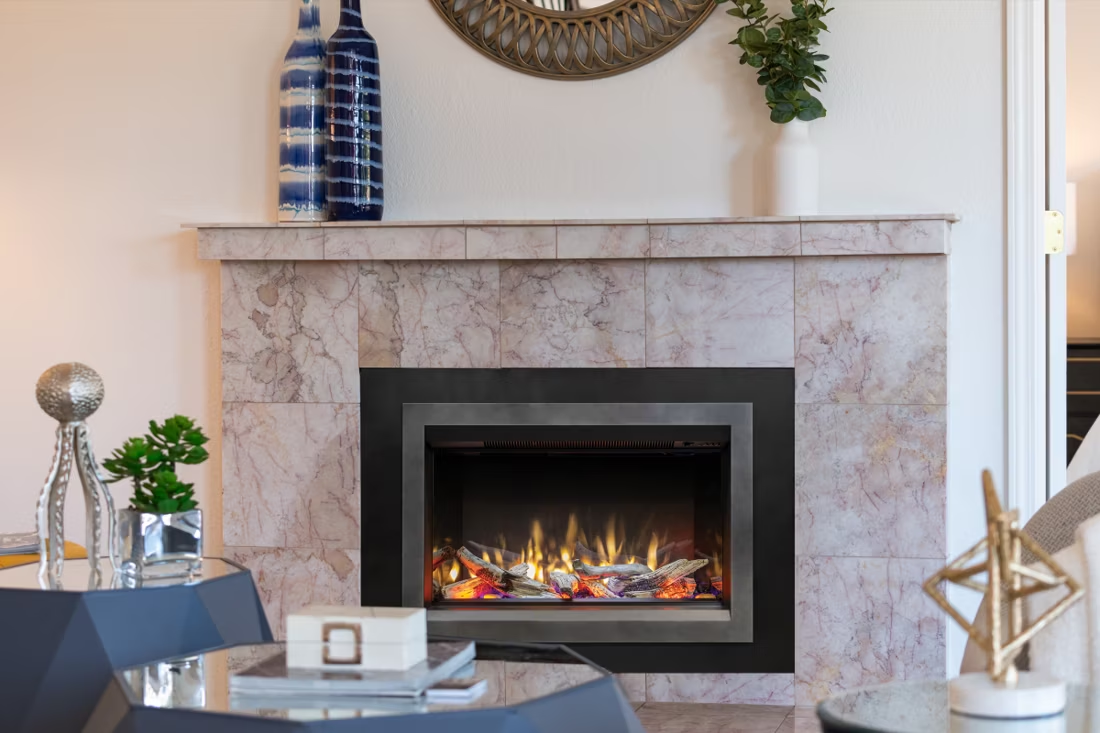
That's exactly what electric fireplaces are built for. There's no chimney to maintain, no venting to route through a roof, and no combustion byproducts to worry about—which matters in a region where wildfire smoke already shows up in the air quality picture some summers and falls. An electric insert or wall-mount unit plugs into an existing outlet or a simple dedicated circuit, heats a single room effectively, and runs on demand without a match, a woodpile, or a propane tank. For a lot of Roswell households, that's a better match for how the home is actually heated day to day.
Three steps. No salesperson until you're ready.
Tell us about your project
Your zip code, your situation, and the fuel you're leaning toward—or let the answers point you to one.
See what's actually available
The brands dealers within 100 miles genuinely carry—real options, never a catalog mirage.
Get your dealer & Project Guide
A trusted local dealer, plus the free Project Guide & Parts List that names every component of the job.
Frequently Asked Questions
How much does it cost to install an electric fireplace in Roswell?
Plug-in electric inserts and freestanding units are the cheapest path—often $300 to $800 for the unit itself, with no professional installation required since they run on a standard 120V outlet. Built-in wall-mount or linear electric fireplaces that get recessed into a wall or custom surround typically run $800 to $1,800 installed, and that's mostly carpentry and finish work rather than complex electrical. If a unit draws more than 1,500 watts and needs its own dedicated 20-amp circuit, add an electrician's time for that circuit run—figure another $300 to $600 depending on how far the panel is from the install location. There's no venting, flue, or chimney cost to budget for, which is the main reason electric installs in Roswell tend to land well below wood or gas projects.
What does it actually cost to run an electric fireplace with local electricity rates?
It depends on which utility serves your address. Inside Roswell proper, Southwestern Public Service Company bills around $0.1335 per kWh, while homes served by Otero County Electric Cooperative or Lea County Electric Cooperative in the surrounding county pay closer to $0.1765 per kWh. A typical 1,500-watt electric fireplace running on high costs roughly $0.20 to $0.26 per hour depending on which utility you're on. Most owners run the heater setting only during the coolest evening hours and use the flame-only mode the rest of the time, which draws just a few watts. Over a mild Roswell winter, that adds up to a modest monthly cost compared to running central heat harder.
Do I need a permit to install an electric fireplace in Roswell?
In most cases, no. Because electric fireplaces don't involve a flue, chimney, or gas line, the City of Roswell and Chaves County generally don't require a building permit for a plug-in unit or a simple built-in recessed into an existing wall. The one exception is if you're adding a new dedicated electrical circuit to support a higher-wattage unit—that electrical work should be done by a licensed electrician and may require an inspection under the National Electrical Code. Ask any local dealer whether the model you're considering needs its own circuit before you commit to a wall location.
Insert, wall-mount, or mantel package—which electric fireplace fits my home?
Electric inserts are built to slide into an existing fireplace opening or a cabinet cutout, which makes them a good fit if your Roswell home already has a masonry firebox you'd like to modernize without dealing with wood ash or venting. Wall-mount linear units hang like a large flat panel and work well in newer construction or remodels where there's no existing fireplace at all. Mantel packages combine a freestanding electric firebox with a surround and shelf, which suits renters or homeowners who want the look without any wall modification. A local dealer can walk your space and tell you which format actually fits your wall studs, outlet placement, and sightlines.
Does electric heat make sense for Roswell's climate, or is it mostly for looks?
Both, honestly. A typical 1,500-watt electric fireplace puts out around 5,000 BTU, which is enough to noticeably warm a single room of 400 to 500 square feet—plenty for zone heating a den or bedroom on a 23°F night, which is close to Roswell's average winter low. It's not going to replace central heat in a whole house the way a wood stove might in a colder, higher-elevation town, but Roswell's mild winter heating needs mean most homes don't need that. Plenty of owners run the flame effect year-round for ambiance and only switch on the heater during the handful of genuinely cold snaps each winter.
Does it matter which electric utility serves my Roswell address?
It affects your running cost more than your equipment choice. Homes on Southwestern Public Service's grid inside city limits pay noticeably less per kWh than homes out toward the county line served by Otero County Electric Cooperative or Lea County Electric Cooperative. If you're on the higher co-op rate, it's worth prioritizing a unit with a programmable thermostat and eco settings so the heater cycles off once the room reaches temperature rather than running continuously. The fireplace itself works identically regardless of provider—it's purely a matter of watching the electric bill.
Is an electric fireplace a good option during Roswell's wildfire-smoke season?
Yes, and it's one of the more overlooked advantages locally. Roswell and the surrounding Chaves County high desert see periods of wildfire smoke drift in dry, windy stretches of the year, and open burning or wood-stove use can add to particulate levels on already-bad air days. An electric fireplace produces zero combustion byproducts—no smoke, no embers, no need to worry about ember-related fire risk during red flag conditions. For homeowners who want the visual comfort of a fire without contributing to smoke or fire risk during dry spells, electric is the cleanest option available.
Electric vs. pellet stove—which fits a Roswell home better?
Pellet stoves burning regional brands like Forest Energy or Lignetics put out real, sustained heat and can serve as a primary heat source in a cold snap, but they require a vent through an exterior wall, a hopper you refill regularly, and periodic ash cleanup. Electric fireplaces skip all of that—no venting, no fuel deliveries, no combustion—in exchange for lower maximum heat output. Given Roswell's relatively mild heating demand, most homeowners who aren't trying to offset a whole-house heating bill find electric simpler to live with day to day, while pellet remains the better choice for anyone wanting a genuine backup heat source during winter storms or power-adjacent needs.
Electric vs. wood fireplace—which makes more sense here?
Wood heat has deep roots in this part of New Mexico, with pinyon, juniper, and ponderosa pine all common as local firewood species, and it works well as a genuine backup heat source if the power goes out. But it also means chimney maintenance, ash cleanup, and burning during a season when wildfire smoke is already a regional concern. Electric fireplaces sidestep all of that, trading backup-heat capability for zero maintenance, zero emissions, and a lower upfront cost. For a primary living space where you mainly want ambiance and light supplemental warmth, electric is usually the simpler call in Roswell's mild climate; for a rural property that loses power in storms, a wood stove still has a real advantage.
Can I put a TV above my fireplace?
Yes—with an asterisk. Fireplaces are hot and TVs don't like heat. Either put a mantel between them to deflect rising warmth, or choose a fireplace with heat-management technology that creates a cool zone on the wall above—the wall stays around 125 degrees, barely warm, while the room still gets full heat. If you like clean lines and don't want a mantel, heat management is the answer.
Does an electric fireplace need a vent or chimney?
No—that's its superpower. An electric fireplace needs a wall and an outlet, period. No vent pipe, no gas line, no clearances to design around, which is why it works in bedrooms, offices, apartments, and walls where venting a gas or wood unit would be impractical or impossible. Installation is typically the simplest and least expensive of any fireplace type.
Can a fireplace actually lower my heating bill?
Yes—by creating a comfort zone. A furnace heats every square foot of the house just to warm the one room you're in; a gas fireplace on low burns roughly a sixth of the gas a typical furnace does. Set the furnace around 55–60 degrees as a baseline, then heat the rooms your family actually uses. Families who heat this way commonly save $20–$60 a month.
Does a fireplace add value to my home?
On average, a fireplace adds back to the home about the same amount you spent installing it. Add the monthly savings from heating the rooms you actually use instead of the whole house—often hundreds of dollars a year—and the value case is strong before you even count what a fire does for how your family uses the room.
Nearby Dealers
Hearth shops serving Roswell and the surrounding area. Every listing shows whether it is a WhyFire partner, a dealer we have verified as authorized for the brands we recommend, or a local business carrying hearth products. No manufacturer pays for placement. How we verify dealers →
Chaves County Door & Supply
Foxworth-Galbraith Lumber
The Stove And Spa Store
Electric Service in Roswell
An electric fireplace's heater draws about 1,500 watts—pennies per hour at local rates.
Southwestern Public Service Co
Otero County Electric Coop Inc
Lea County Electric Coop, Inc
Find your electric fireplace in Roswell.
Tell us a bit about your home and we'll match you with a trusted local dealer, plus a free Project Guide & Parts List with the exact unit and parts recommended for your Roswell space.
Find Your Fireplace →