
Add heat to any room in Rio Rancho—no chimney required.
Zone heat for the mesa's mild high-desert winters, without venting, gas lines, or wood smoke. Find the right unit and connect with a trusted local dealer.
Every Project Starts From One of These Five Situations
Mild high-desert winters, maximum flexibility.
Rio Rancho sits on the mesa above the Rio Grande valley at 5,505 feet, in climate zone 5B with a moderate overall winter heating load and an average winter low around 24°F. That's a real winter, but nowhere near the brutal cold of places like Bozeman, Montana or Fargo, North Dakota—most Rio Rancho homes need supplemental heat for specific rooms and shoulder-season chill rather than a single appliance carrying the whole house through months of sub-zero nights.
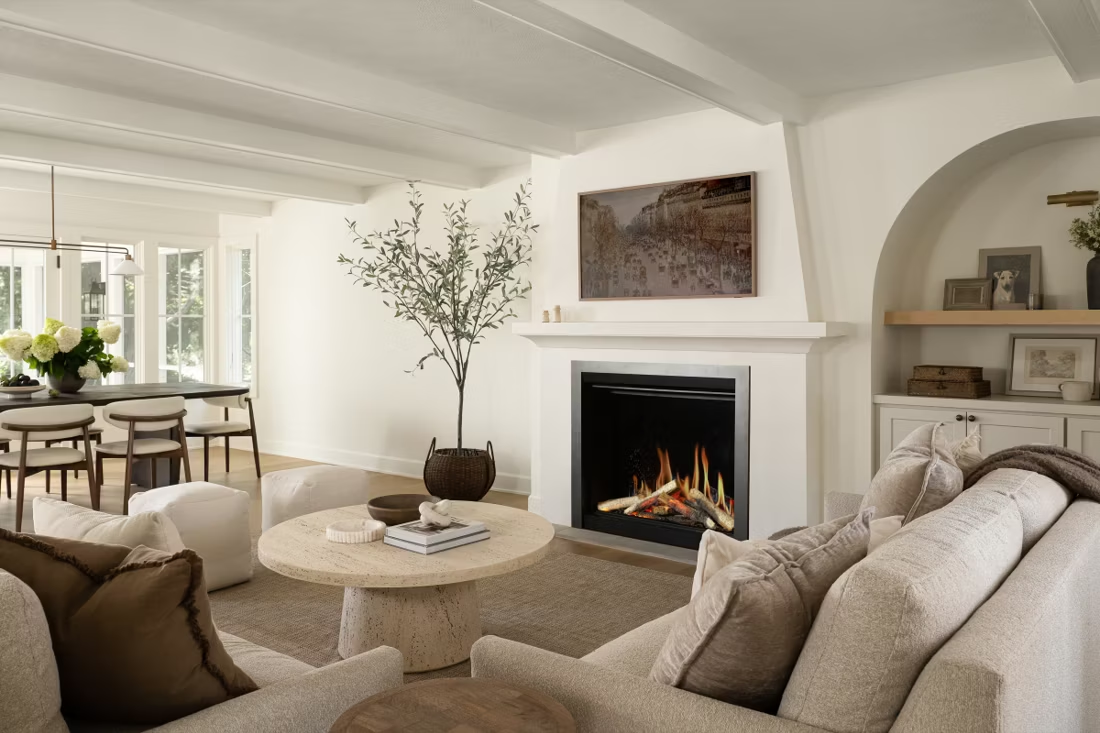
That's exactly the situation electric fireplaces are built for. With no chimney, no gas line, and often no permit at all for a plug-in unit, an electric insert or wall-mounted fireplace can go into a primary bedroom, a home office, or a great room addition in an afternoon. Jemez Mountains Electric Coop serves much of the area at roughly 15.36 cents per kWh, so running a typical electric heater unit costs pennies per hour—and during wildfire-smoke air quality days, when wood burning gets discouraged across Sandoval County, electric heat produces zero emissions and zero smoke, indoors or out.
Three steps. No salesperson until you're ready.
Tell us about your project
Your zip code, your situation, and the fuel you're leaning toward—or let the answers point you to one.
See what's actually available
The brands dealers within 100 miles genuinely carry—real options, never a catalog mirage.
Get your dealer & Project Guide
A trusted local dealer, plus the free Project Guide & Parts List that names every component of the job.
Frequently Asked Questions
How much does it cost to install an electric fireplace in Rio Rancho?
Plug-in electric fireplace inserts and freestanding stoves that use a standard 120V outlet typically run $500 to $1,500 installed, since there's no venting or gas work involved—most of that cost is the unit itself plus a mantel or surround if you want a built-in look. Larger wall-mounted or built-in electric fireplaces that need a dedicated 240V circuit run higher, often $1,800 to $3,000, once an electrician is involved to run new wiring. Compare that to the venting and chimney work a wood or gas install in Rio Rancho typically requires, and electric is consistently the lowest-cost path to real supplemental heat in a room.
Do I need a permit to install an electric fireplace in Rio Rancho or Sandoval County?
In most cases, no. A plug-in electric fireplace that uses an existing outlet doesn't trigger a building permit because there's no venting, gas line, or structural work involved. If you're adding a dedicated 240V circuit for a larger built-in unit, the electrical work itself may need a permit through the City of Rio Rancho's development services office, and any licensed electrician doing the install should pull that as a matter of course. This is one of the real advantages of electric over wood or gas in Rio Rancho—you skip the inspection and clearance requirements entirely for a standard plug-in unit.
How much does it actually cost to run an electric fireplace here?
At the Jemez Mountains Electric Coop residential rate of about 15.36 cents per kWh, a typical 1,500-watt electric fireplace heater costs roughly 23 cents an hour to run on high heat. Leave it on for a four-hour evening and you're looking at under a dollar. Most owners run these units on a thermostat cycle rather than full blast the whole time, which brings real-world costs down further. That makes electric heat a cheap way to warm a single room without running central heat through the whole house on a mild 24-degree Rio Rancho evening.
Electric vs. wood—which makes more sense for my Rio Rancho home?
Wood is still a legitimate option here—pinyon, juniper, and ponderosa pine are all common locally, and Forest Service cutting permits through Cibola National Forest and Santa Fe National Forest run just $5 to $20 per cord during the May-to-October season. But wood means stacking, hauling, chimney maintenance, and smoke, and Sandoval County does see wildfire-smoke air quality concerns in dry years when burning is discouraged. Electric fireplaces sidestep all of that: no fuel to store, no emissions, and heat you can turn on with a remote. For a primary heat source in a rural property, wood still has advantages including off-grid operation during outages. For zone heat in an established Rio Rancho neighborhood, electric is usually simpler and cheaper.
Electric vs. gas—which is right for my home?
Gas fireplaces deliver more visible flame and higher heat output, but they require a gas line, venting, and a $4,000-plus install in most cases, plus an annual service check. Electric units skip all of that—no gas line, no venting, and most plug-in models install in under a day for a fraction of the cost. The tradeoff is heat output: electric fireplaces are built for zone heating a single room, not for carrying a whole house through winter. If you already have gas service to the house and want a true focal-point fireplace with real flame, gas is worth the investment. If you want supplemental warmth in a bedroom, office, or apartment without construction, electric is the more practical answer in Rio Rancho.
Can an electric fireplace actually heat a room, or is it just for looks?
A quality electric fireplace with a 1,500-watt heater can genuinely warm a room in the 300 to 400 square foot range, which covers most bedrooms, home offices, and dens in Rio Rancho homes. Given the area's average winter low of 24°F and a moderate overall winter heating season, that's often enough to let you turn down the thermostat on the central system and heat only the room you're using. What it won't do is replace central heat for a whole house—electric fireplaces are zone heaters, not whole-home furnaces, and most local dealers will tell you that up front rather than oversell a unit's capacity.
What's the difference between a plug-in insert, a wall-mounted unit, and a built-in electric fireplace?
A plug-in electric insert drops into an existing fireplace opening or a simple cabinet cutout and runs off a standard outlet—the easiest and cheapest option, common in Rio Rancho homes converting an unused wood-burning fireplace. A wall-mounted unit hangs like a flat-screen TV and works well in newer construction or a remodel where you want a linear, modern look. A built-in electric fireplace is framed into a wall during construction or renovation, often paired with custom mantels or shiplap surrounds, and usually needs that dedicated 240V circuit for full heat output. A local dealer can walk you through which format fits your specific wall and room layout.
Are electric fireplaces a good fit for rentals, condos, or HOA-restricted homes in Rio Rancho?
Yes, and this is one of the strongest use cases for electric heat in a fast-growing city like Rio Rancho, where a lot of newer subdivisions and townhome communities have HOA rules restricting wood burning or exterior venting modifications. Because a plug-in electric fireplace doesn't touch the chimney, roofline, or gas meter, it typically doesn't require HOA approval the way a gas line extension or new vent penetration would. Renters can take a freestanding electric stove or insert with them when they move, which isn't an option with a built-in wood or gas unit.
What's the best electric fireplace for Rio Rancho's climate and wildfire-smoke season?
Look for a unit with a realistic flame effect and a true 1,500-watt heater rating rather than a decorative-only model—brands like Dimplex, Napoleon, and Amantii are widely carried by hearth dealers in the Albuquarque metro and hold up well as daily-use supplemental heaters. Because Rio Rancho and the rest of Sandoval County see wildfire-smoke advisories in dry summers and falls, an all-electric unit gives you flame ambiance and real heat without adding a single particle of smoke to the air, which matters on the days local air quality officials ask residents to avoid outdoor burning altogether.
Can I put a TV above my fireplace?
Yes—with an asterisk. Fireplaces are hot and TVs don't like heat. Either put a mantel between them to deflect rising warmth, or choose a fireplace with heat-management technology that creates a cool zone on the wall above—the wall stays around 125 degrees, barely warm, while the room still gets full heat. If you like clean lines and don't want a mantel, heat management is the answer.
Does an electric fireplace need a vent or chimney?
No—that's its superpower. An electric fireplace needs a wall and an outlet, period. No vent pipe, no gas line, no clearances to design around, which is why it works in bedrooms, offices, apartments, and walls where venting a gas or wood unit would be impractical or impossible. Installation is typically the simplest and least expensive of any fireplace type.
Can I install a fireplace myself?
If you're putting a fire in your house on purpose, it's best to work with an expert. Unless you're genuinely experienced in framing, gas line, vent pipe, and the national code on clearances to combustibles, have a professional do it—and ideally the same company that sells you the fireplace, so warranty, service, and liability all live under one roof.
Does a fireplace add value to my home?
On average, a fireplace adds back to the home about the same amount you spent installing it. Add the monthly savings from heating the rooms you actually use instead of the whole house—often hundreds of dollars a year—and the value case is strong before you even count what a fire does for how your family uses the room.
Nearby Dealers
Hearth shops serving Rio Rancho and the surrounding area. Every listing shows whether it is a WhyFire partner, a dealer we have verified as authorized for the brands we recommend, or a local business carrying hearth products. No manufacturer pays for placement. How we verify dealers →
Western Building Supply
Banker Insulation
Mountain West Sales, Inc.
Builders Materials Inc.
HeatSource
Kinney Brick
Electric Service in Rio Rancho
An electric fireplace's heater draws about 1,500 watts—pennies per hour at local rates.
Jemez Mountains Elec Coop, Inc
Find your electric fireplace in Rio Rancho.
Tell us a bit about your home and we'll match you with the right electric fireplace, insert, or wall unit—plus a free Project Guide & Parts List and a trusted local dealer to install it.
Find Your Fireplace →