
The Easiest Fireplace Upgrade in Rio Rancho Estates.
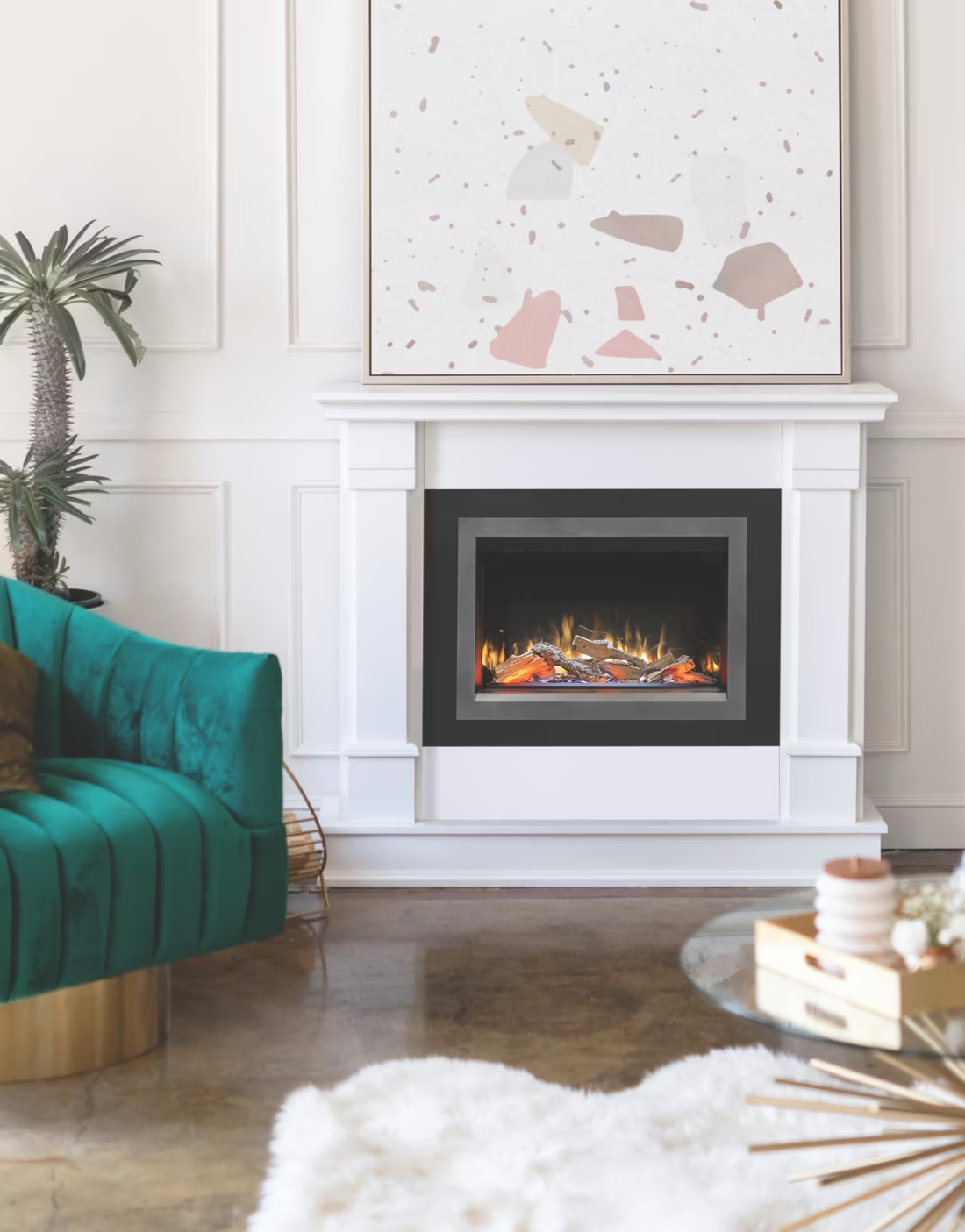
No chimney, no gas line, no wildfire-season smoke—just plug in or wire up and get real fireplace ambiance on the high desert mesa. Find the right unit and connect with a trusted local dealer.
Every Project Starts From One of These Five Situations
Heat and ambiance without adding to wildfire smoke season.
Rio Rancho Estates sits at just over 6,000 feet on the mesa west of the Sandia Mountains, where winters are milder than the mountain towns to the north—average lows around 24°F and a moderate heating season for the year. Most homes here are single-story ranch or manufactured construction without an existing masonry chimney, which means retrofitting a wood or gas fireplace usually means building venting from scratch. An electric unit sidesteps that entirely: no flue, no gas line, no structural changes.
The area's main air-quality concern isn't winter inversion—it's wildfire smoke, which can blanket Sandoval County for stretches during dry summers and falls. That makes a combustion-free option genuinely appealing here even for homeowners who like the idea of pinyon or juniper burning in a stove. Electric service comes through Public Service Co of NM at roughly 15.6 cents per kWh, and most fireplace units—from a simple plug-in insert to a built-in wall unit—run on a standard or lightly upgraded circuit. You get real flame-effect ambiance and supplemental room heat without a single match struck or a load of firewood hauled in.
Three steps. No salesperson until you're ready.
Tell us about your project
Your zip code, your situation, and the fuel you're leaning toward—or let the answers point you to one.
See what's actually available
The brands dealers within 100 miles genuinely carry—real options, never a catalog mirage.
Get your dealer & Project Guide
A trusted local dealer, plus the free Project Guide & Parts List that names every component of the job.
Frequently Asked Questions
How much does it cost to install an electric fireplace in Rio Rancho Estates?
Plug-in electric inserts or freestanding stoves start around $300–$800 installed, since they typically just need an existing 120V outlet—no electrician required. Built-in wall or linear electric fireplaces, which often need a dedicated circuit or minor framing to sit flush in a wall, run $1,200–$2,500 including the electrical work. Because there's no venting, chimney, or gas line involved, electric is consistently the least expensive fireplace category to install in this area—a fraction of what a wood or gas retrofit costs in a home without an existing chimney.
Do I need a permit to install an electric fireplace here?
A basic plug-in electric fireplace or insert generally doesn't require a permit since it uses an existing outlet and involves no new wiring. If you're installing a built-in unit that needs a new circuit, a 240V line, or any wall modification, that electrical work falls under the Sandoval County Building and Planning Department, which covers unincorporated areas including Rio Rancho Estates, and should be pulled by a licensed electrician. Your local dealer can tell you which category your chosen unit falls into before you buy.
What does an electric fireplace cost to run on my electric bill?
With PNM's residential rate around $0.1557 per kWh, a typical 1,500-watt electric fireplace running on its heat setting draws about 1.5 kWh per hour—roughly 23 cents an hour. Most homeowners here use the flame effect for ambiance most evenings and only kick on the heater element occasionally, so a realistic monthly cost lands in the $10–$25 range for regular evening use. That's well below what supplemental space heating from a wood stove or gas unit costs to fuel and maintain.
Can an electric fireplace actually heat a room, or is it just for looks?
Most electric fireplaces include a heater rated around 4,700–5,100 BTU (roughly 1,500 watts), enough to comfortably supplement heat in a single room of 300–400 square feet—a good fit for the moderate winters here, where lows average 24°F rather than the deep-single-digit nights you'd see farther north. It won't replace your home's primary heating system, but for a den, bedroom, or the coldest room in a manufactured home, it's a legitimate supplemental heat source you can run without a chimney or gas hookup.
How does electric compare to a wood stove, given how much wood is around here?
Sandoval County has real access to cordwood—pinyon, juniper, and ponderosa pine are all common locally, and cutting permits through Cibola National Forest or Santa Fe National Forest run about $5 to $20 per cord during the May-to-October season. Wood offers cheaper fuel and works during power outages. But wildfire smoke is the area's dominant air-quality concern, and a growing number of homeowners here would rather not add combustion smoke to a household during a smoky summer or fall, and don't want to build chimney venting into a home that doesn't already have it. Electric wins on install simplicity and zero emissions; wood wins on off-grid heat and lower fuel cost per BTU.
What are my options—insert, built-in, or freestanding?
An electric insert slides into an existing fireplace opening, useful if your home already has a masonry firebox you want to convert away from wood or gas. A built-in (linear or traditional) electric fireplace is designed to be framed into a wall during a remodel—the cleanest, most furniture-grade look, but it needs some carpentry and often a dedicated circuit. A freestanding electric stove or mantel unit needs no installation beyond finding an outlet, which makes it the easiest option for renters or anyone not ready to modify a wall. Local dealers carry all three; which one fits depends on whether you're renovating or just adding heat and ambiance to an existing room.
How much maintenance does an electric fireplace need?
Very little compared to wood or gas. There's no chimney to sweep, no gas line to inspect, and no creosote buildup to worry about. Maintenance is mostly dusting the unit, occasionally replacing the LED flame bulbs (most last years), and keeping the heater's air intake and vents free of dust so the blower doesn't strain. There's no annual inspection requirement the way there is for wood-burning or gas appliances in Sandoval County.
Are there rebates available through PNM for an electric fireplace?
PNM's residential efficiency programs are generally aimed at heat pumps, insulation, and high-efficiency HVAC rather than fireplace-specific units, so don't expect a rebate for a standard electric fireplace insert. That said, because electric fireplaces use so little energy relative to central heating, they don't meaningfully move your PNM bill either way. If efficiency incentives matter to your decision, ask your local dealer whether any current model qualifies under PNM's broader appliance rebate programs—availability changes year to year.
Is electric a good fit for a manufactured or mobile home in Rio Rancho Estates?
Yes—it's often the best fit. Many homes in Rio Rancho Estates are manufactured or single-story construction without masonry chimneys, and running new venting through a manufactured home's roof or wall system for wood or gas can be complicated and costly. A plug-in or lightly wired electric fireplace avoids that problem entirely while still giving you a real flame-effect focal point and supplemental warmth. It's also the easiest option to take with you if you move.
Can I put a TV above my fireplace?
Yes—with an asterisk. Fireplaces are hot and TVs don't like heat. Either put a mantel between them to deflect rising warmth, or choose a fireplace with heat-management technology that creates a cool zone on the wall above—the wall stays around 125 degrees, barely warm, while the room still gets full heat. If you like clean lines and don't want a mantel, heat management is the answer.
Does an electric fireplace need a vent or chimney?
No—that's its superpower. An electric fireplace needs a wall and an outlet, period. No vent pipe, no gas line, no clearances to design around, which is why it works in bedrooms, offices, apartments, and walls where venting a gas or wood unit would be impractical or impossible. Installation is typically the simplest and least expensive of any fireplace type.
Can I install a fireplace myself?
If you're putting a fire in your house on purpose, it's best to work with an expert. Unless you're genuinely experienced in framing, gas line, vent pipe, and the national code on clearances to combustibles, have a professional do it—and ideally the same company that sells you the fireplace, so warranty, service, and liability all live under one roof.
Does a fireplace add value to my home?
On average, a fireplace adds back to the home about the same amount you spent installing it. Add the monthly savings from heating the rooms you actually use instead of the whole house—often hundreds of dollars a year—and the value case is strong before you even count what a fire does for how your family uses the room.
Nearby Dealers
Hearth shops serving Rio Rancho Estates and the surrounding area. Every listing shows whether it is a WhyFire partner, a dealer we have verified as authorized for the brands we recommend, or a local business carrying hearth products. No manufacturer pays for placement. How we verify dealers →
Western Building Supply
Banker Insulation
Builders Materials Inc.
Mountain West Sales, Inc.
HeatSource
Kinney Brick
Electric Service in Rio Rancho Estates
An electric fireplace's heater draws about 1,500 watts—pennies per hour at local rates.
Public Service Co Of Nm
Find your electric fireplace in Rio Rancho Estates.
Tell us a bit about your home and we'll put together a free Project Guide & Parts List—the right electric fireplace or insert for your space, plus a trusted local dealer to install it.
Find Your Fireplace →