
Propane Warmth for La Cienega's High-Desert Winters.
There's no natural gas main out here—propane is how La Cienega homes get clean, instant heat. Find the right unit for your adobe home and connect with a trusted local dealer.
Every Project Starts From One of These Five Situations
Clean heat without a gas line in the ground.
La Cienega sits along the Santa Fe River at 6,176 feet—elevation that rivals a mountain town like Bozeman, Montana—with winter lows averaging 20°F and a long, cold heating season that stretches from early fall well into spring. It's a community of adobe and territorial-style homes, many built with traditional rounded-corner kiva fireplaces, where pinyon and juniper smoke has scented winter evenings for generations. But La Cienega is unincorporated Santa Fe County, well outside the natural gas mains that serve central Santa Fe, so when homeowners here say 'gas fireplace,' they almost always mean propane.
Propane is delivered and stored in a tank on the property rather than piped in, which changes a few things about planning a project—tank placement, delivery contracts, and appliance sizing all factor in. The upside is real: propane gas log sets and inserts fit beautifully into an existing kiva fireplace, deliver heat at the flip of a switch during a January cold snap, and don't add smoke to the air during the winter inversion days when the Santa Fe basin traps wildfire smoke and wood smoke alike close to the ground.
Three steps. No salesperson until you're ready.
Tell us about your project
Your zip code, your situation, and the fuel you're leaning toward—or let the answers point you to one.
See what's actually available
The brands dealers within 100 miles genuinely carry—real options, never a catalog mirage.
Get your dealer & Project Guide
A trusted local dealer, plus the free Project Guide & Parts List that names every component of the job.
Frequently Asked Questions
How much does a propane fireplace installation cost in La Cienega?
Most propane fireplace or insert installations in the La Cienega area run $4,500 to $11,000, depending on the unit and whether you're fitting it into an existing kiva fireplace or building new. If you don't already have a propane tank on the property, add $1,500 to $3,000 to purchase a tank outright, or expect a $150 to $400 annual lease fee if you go through a regional propane supplier instead. Homes with an existing tank and gas line already run to the fireplace location are on the lower end of the range; new construction or a fireplace going into a room without existing infrastructure will run higher once tank placement, line burial, and venting are figured in.
Can I convert my kiva fireplace to gas?
Yes, and it's a common request from local retailers serving this part of Santa Fe County. Traditional adobe kiva fireplaces have a rounded firebox that doesn't match standard rectangular insert dimensions, so most conversions use a custom-fit propane log set or a small direct-vent insert designed to work within the kiva's shape rather than a full-size rectangular unit. A qualified installer will assess whether your existing flue can be lined for direct venting or whether the conversion needs a different venting path. This preserves the traditional look of the fireplace while giving you real, controllable heat instead of an open-hearth fire that pulls warm air up the chimney.
Do I need natural gas, or is propane the only option here?
Propane is the standard choice in La Cienega—there's no natural gas utility infrastructure reaching this part of unincorporated Santa Fe County, unlike homes closer to central Santa Fe that can tap into piped gas. Propane is delivered by regional suppliers and stored in an above-ground or buried tank sized to your appliance load. Nearly every gas fireplace, insert, or stove on the market can be configured to run on propane instead of natural gas—your installer sets the correct orifice and regulator for the fuel type, so fuel choice shouldn't limit which models you consider.
Will my propane fireplace work if the power goes out?
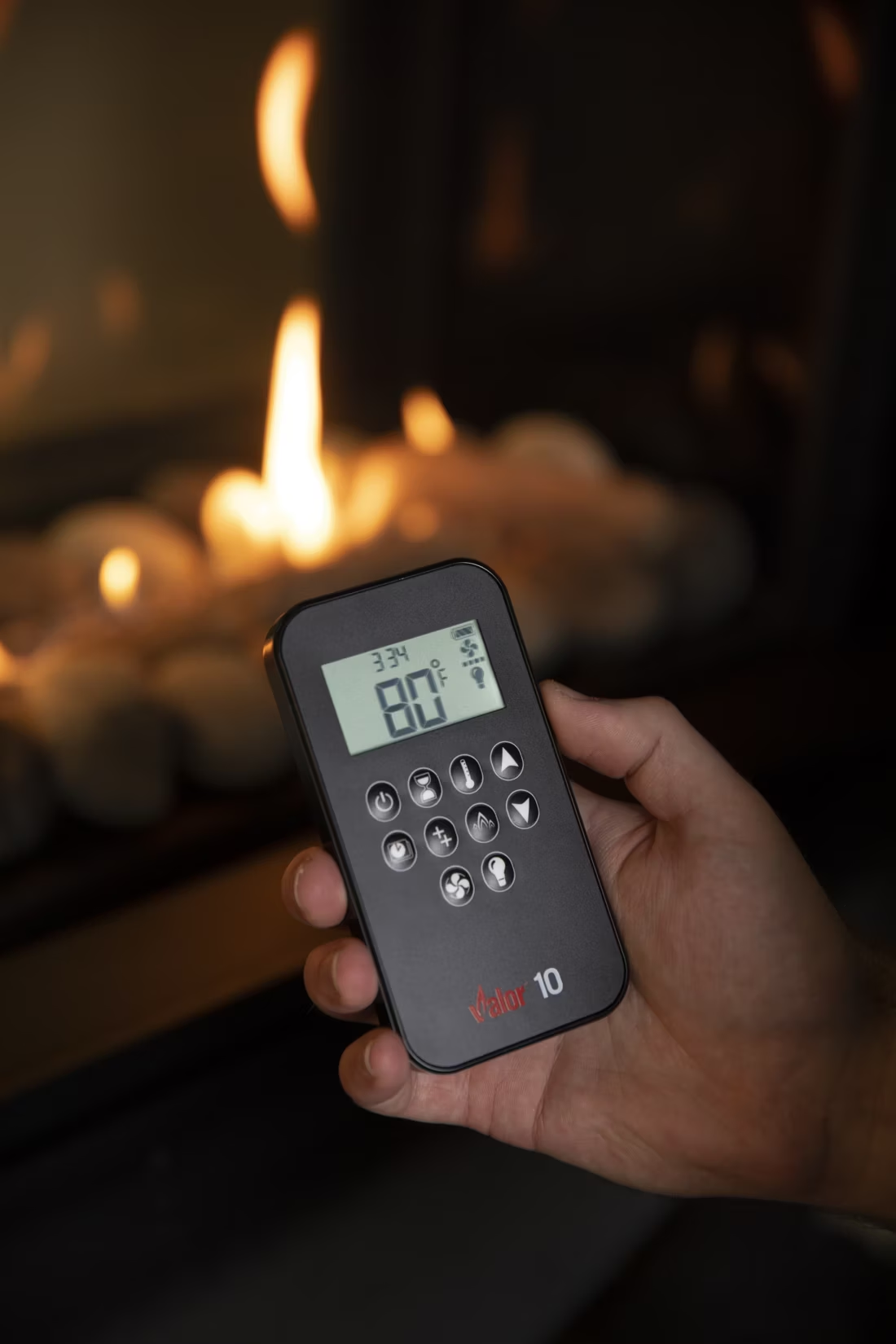
Most modern propane fireplaces will, which matters here given how often high-desert winter storms take down power lines along rural Santa Fe County roads. Units with intermittent pilot ignition (IPI) run on a small battery backup that keeps the unit lightable during an outage. Valor fireplaces go a step further—their pilot assembly generates its own electricity through the thermocouple, so there's no battery to remember to replace. Ask your local dealer about the ignition system on any unit you're considering, especially if you're planning this as backup heat as much as everyday ambiance.
What's the difference between a gas fireplace, insert, and stove for a home like mine?
A built-in gas fireplace is framed into a wall—the right choice for new construction or a major remodel. A gas insert drops into an existing masonry or kiva firebox and uses the existing flue as its venting path, which is the more common route for La Cienega's older adobe homes. A freestanding gas stove sits on the floor on its own hearth pad and doesn't require an existing fireplace opening at all—useful in a great room or converted outbuilding where there's no chimney to work with. For most homes here with an existing kiva or territorial-style fireplace, an insert sized to the opening is the straightforward answer.
What permits do I need for a propane fireplace or tank in La Cienega?
Since La Cienega is unincorporated, building permits go through Santa Fe County Building & Development Services rather than a city building department. You'll need a permit for the fireplace or insert installation itself, and propane tank placement has its own setback rules—NFPA 58 generally requires tanks to sit a minimum distance from structures, property lines, and ignition sources depending on tank size. A licensed LP-gas installer handles the tank hookup and typically coordinates the permitting with the county as part of the job, which is one reason to avoid a DIY propane line run.
Are vent-free propane fireplaces a good option at this elevation?
They're legal in New Mexico, but elevation matters more here than in most places. At 6,176 feet, gas appliances burn differently than at sea level because of lower oxygen density, and many vent-free units require a high-altitude conversion kit or aren't rated for reliable, clean combustion above roughly 4,500 to 5,000 feet without one. Direct-vent units, which draw combustion air from outside and exhaust it back out through sealed venting, sidestep this problem entirely and are the more commonly recommended choice for La Cienega homes. If you're set on a vent-free unit, make sure your installer confirms it's rated—or can be kitted—for your elevation before it goes in.
How often does a propane fireplace need to be serviced?
Plan on an annual inspection, ideally before the first cold snap in the fall. A technician checks the burner, pilot assembly, gas connections, and venting, and cleans the glass and interior—a much lighter lift than chimney sweeping for a wood-burning kiva fireplace, but just as important given how much winter use these units see in a house with such a long, cold heating season. Most service calls in the Santa Fe area run $150 to $250 for a standard annual inspection.
Propane vs. wood—which makes more sense for a La Cienega home?
Wood has deep roots here—pinyon, juniper, and ponderosa pine are all cut locally, and permits through the Santa Fe National Forest, Cibola National Forest, or Carson National Forest run a modest $5 to $20 per cord during the May-to-October cutting season. Wood also keeps working when the power's out, which matters for backup heat. But wood smoke adds to the winter inversion problem that already traps smoke low over the Santa Fe basin on cold, still days, and tending a fire daily isn't for everyone. Propane offers instant, adjustable heat with none of the ash or smoke, at the cost of needing a tank on the property and paying for fuel delivery. Many homes here run both: a wood-burning kiva fireplace kept for ambiance and emergency backup, with a propane insert or stove doing the daily heavy lifting.
Why is a fireplace insert so efficient?
An insert does two things: it seals the chimney completely, so you stop losing air you already paid to heat, and it radiates warmth into the room through the firebox and glass. Most add a heat-exchange fan that pulls cool room air underneath, wraps it around the hot firebox, and pushes it back out warm. Your home is more efficient before you've even lit the first fire.
Why is my open fireplace making my house colder?
Open fireplaces suck—literally. As the fire burns, it consumes air your furnace already paid to heat and pulls it out through the chimney, so the house is actually colder after the fire goes out than before you lit it. An insert fixes this: it seals the chimney, puts fixed glass across the front, and turns that hole in your house into a real heat source.
How much should I budget for a fireplace?
For an average home—covering the fireplace, the vent pipe, and basic installation—a budget between $3,900 and $5,500 gives you a lot of options across wood, gas, and pellet. By the time you add finish work, gas line, and electrical, the average complete installation lands between $5,000 and $12,000 all-in. In a remodel or new build, a good rule is to put about 2.5% of the total project cost toward the fireplace.
What is an in-home preview and do I need one?
It's a visit where a hearth professional measures your space, confirms the model you picked actually works in your home, and walks the specs—framing, gas line, venting, finish work—before anything is ordered. Some details you just can't know until you see the house. Never make a down payment without one; it's the single most-skipped step that burns buyers.
Nearby Dealers
Hearth shops serving La Cienega and the surrounding area. Every listing shows whether it is a WhyFire partner, a dealer we have verified as authorized for the brands we recommend, or a local business carrying hearth products. No manufacturer pays for placement. How we verify dealers →
Rocky Mountain Chimney Sweep
Tierra Woodstoves
Find your gas fireplace in La Cienega.
Tell us about your home and your existing fireplace or hearth, and we'll put together a free Project Guide & Parts List—sized for your elevation and altitude requirements—and match you with a trusted local dealer who installs propane systems in this part of Santa Fe County.
Find Your Fireplace →