
Steady Warmth for Cold Nights in the Jemez Valley.
Propane-fired warmth built for the high-desert winters of the Jemez Valley—matched with a local dealer who knows tribal land, propane delivery, and venting at 5,555 feet.
Every Project Starts From One of These Five Situations
Where natural gas lines don't reach, propane picks up the load.
Jemez Pueblo sits at 5,555 feet in the foothills of the Jemez Mountains, along the Jemez River on the trust lands of the Pueblo of Jemez (Walatowa) in Sandoval County. Winters here bring an average low of 19°F and a heating season that's notably colder and longer than a typical Albuquerque winter an hour south, though nowhere near the brutal totals of places like Duluth, MN or Fargo, ND. Snow dusts the red rock canyons around Valles Caldera and Jemez Springs from December through March, and homes here need heat that holds up through it.
There's no natural gas utility serving Jemez Pueblo—the nearest mains run through Bernalillo and Rio Rancho, well outside the reservation boundary. Propane fills that role instead, delivered by tank from regional suppliers, and it's the standard 'gas' fuel for fireplaces, inserts, and stoves here. Electric service comes from Jemez Mountains Electric Cooperative at roughly 15.4 cents per kWh, which factors into whether a homeowner leans toward propane heat or an electric fireplace for supplemental warmth. Because Jemez Pueblo is sovereign tribal trust land, building and mechanical permitting for most homes routes through the Pueblo's own land use and public works offices rather than Sandoval County—worth confirming with your installer before work begins, especially if your home sits on trust versus fee land.
Three steps. No salesperson until you're ready.
Tell us about your project
Your zip code, your situation, and the fuel you're leaning toward—or let the answers point you to one.
See what's actually available
The brands dealers within 100 miles genuinely carry—real options, never a catalog mirage.
Get your dealer & Project Guide
A trusted local dealer, plus the free Project Guide & Parts List that names every component of the job.
Frequently Asked Questions
How much does a gas or propane fireplace installation cost in Jemez Pueblo?
Because there's no natural gas main here, most installations are propane-fueled, and the cost typically runs $3,500 to $9,000 depending on the unit and whether a propane tank and line already exist. A direct-vent propane insert going into an existing adobe or masonry fireplace with a tank already on the property sits toward the lower end. A new freestanding propane fireplace or built-in unit that requires a fresh tank set and buried gas line run can push toward the higher end. Local dealers serving the Jemez Valley will size the tank and venting during an in-home visit before quoting a firm number.
Can I convert my wood fireplace to gas?
Yes, and it's a common upgrade for the traditional adobe kiva-style fireplaces found in many Jemez Pueblo homes. A propane insert or log set can be fitted into that rounded corner hearth, using a stainless liner run up the existing flue, while preserving the look of the original fireplace. Expect the conversion to run in a similar $3,500-$8,000 range, with cost depending mostly on whether you already have a propane tank on-site or need a new one set and plumbed.
Is natural gas or propane available for fireplaces in Jemez Pueblo?
Propane is the fuel here—no natural gas utility line reaches Jemez Pueblo or the surrounding Jemez Valley. Homeowners either have an existing propane tank (often shared with a water heater or range) or need a new tank installed and filled by a regional propane supplier. Nearly every gas fireplace, insert, or stove sold for this area is configured to run on propane rather than natural gas, so make sure any unit you're considering is set up (or convertible) for propane before you buy.
Will my gas fireplace still work if the power goes out?
Most will, with the right ignition system. Units with IPI (intermittent pilot ignition) run on battery backup that kicks in automatically when the grid drops—worth having in the Jemez Mountains, where winter storms can knock out Jemez Mountains Electric Cooperative lines along the canyon roads for hours at a time. Valor fireplaces take a different approach: their pilot generates its own electricity through the thermocouple, so there's no battery to remember or replace. Either way, ask your dealer about the ignition system before you buy if outage backup matters to you.
What's the difference between a gas fireplace, insert, and stove?
A gas fireplace is a built-in unit framed into a wall, typically used in new construction or a remodel. A gas insert drops into an existing masonry or adobe fireplace opening—including the rounded kiva-style hearths common in older Pueblo homes—and uses the existing chimney as a vent path. A gas stove is a freestanding cabinet unit that sits on the floor like a wood stove but burns propane. For homes here with an existing adobe fireplace, an insert usually makes the most sense; new builds or additions are better suited to a built-in unit.
Do I need a permit to install a gas fireplace in Jemez Pueblo?
It depends on whether your home sits on Pueblo trust land or fee land. For most homes within the Pueblo of Jemez reservation, permitting for gas line and mechanical work routes through the Pueblo's own land use and public works offices rather than Sandoval County. For properties on fee land near the reservation boundary, Sandoval County Building Dept has jurisdiction. Either way, propane line work should be done by a licensed gas-fitter, and a reputable local installer will confirm the correct permitting path before scheduling work.
Should I get a vented or vent-free gas fireplace?
Vented, direct-vent units are the better call at Jemez Pueblo's 5,555-foot elevation. Vent-free appliances rely on oxygen depletion sensors calibrated for sea-level combustion, and their performance and safety margins get less predictable at altitude. Direct-vent units draw combustion air from outside and exhaust it back outside through sealed pipe, so altitude doesn't change how they burn. New Mexico permits vent-free units, but most dealers serving the Jemez Valley steer high-elevation customers toward direct-vent for that reason.
How often does a propane fireplace need servicing?
Plan on an annual inspection, ideally before the first cold snap in November. A technician should check the burner, pilot assembly, propane line connections, and tank regulator, and clean the glass and interior. Because propane tanks and regulators are part of the system here (unlike a natural gas hookup), it's worth having the tank and line checked at the same time, not just the fireplace itself. Expect to pay somewhere in the $150-$250 range for a standard annual visit from a local service provider.
Gas vs. wood—which makes more sense for a home in Jemez Pueblo?
Wood heat has deep roots here—pinyon, juniper, and ponderosa pine are all cut locally, and permits through the Santa Fe and Cibola National Forest run just $5 to $20 per cord for cutting between May and October. For households that want that self-sufficiency, or a backup heat source that doesn't depend on propane deliveries or grid power, wood stoves remain a practical choice. Gas (propane) wins on convenience: no hauling, stacking, or ash cleanup, instant heat at the flip of a switch, and a cleaner-burning appliance for a primary living space. Many homes in the Jemez Valley keep both—propane for daily use, wood for backup and tradition.
Can I put a TV above my fireplace?
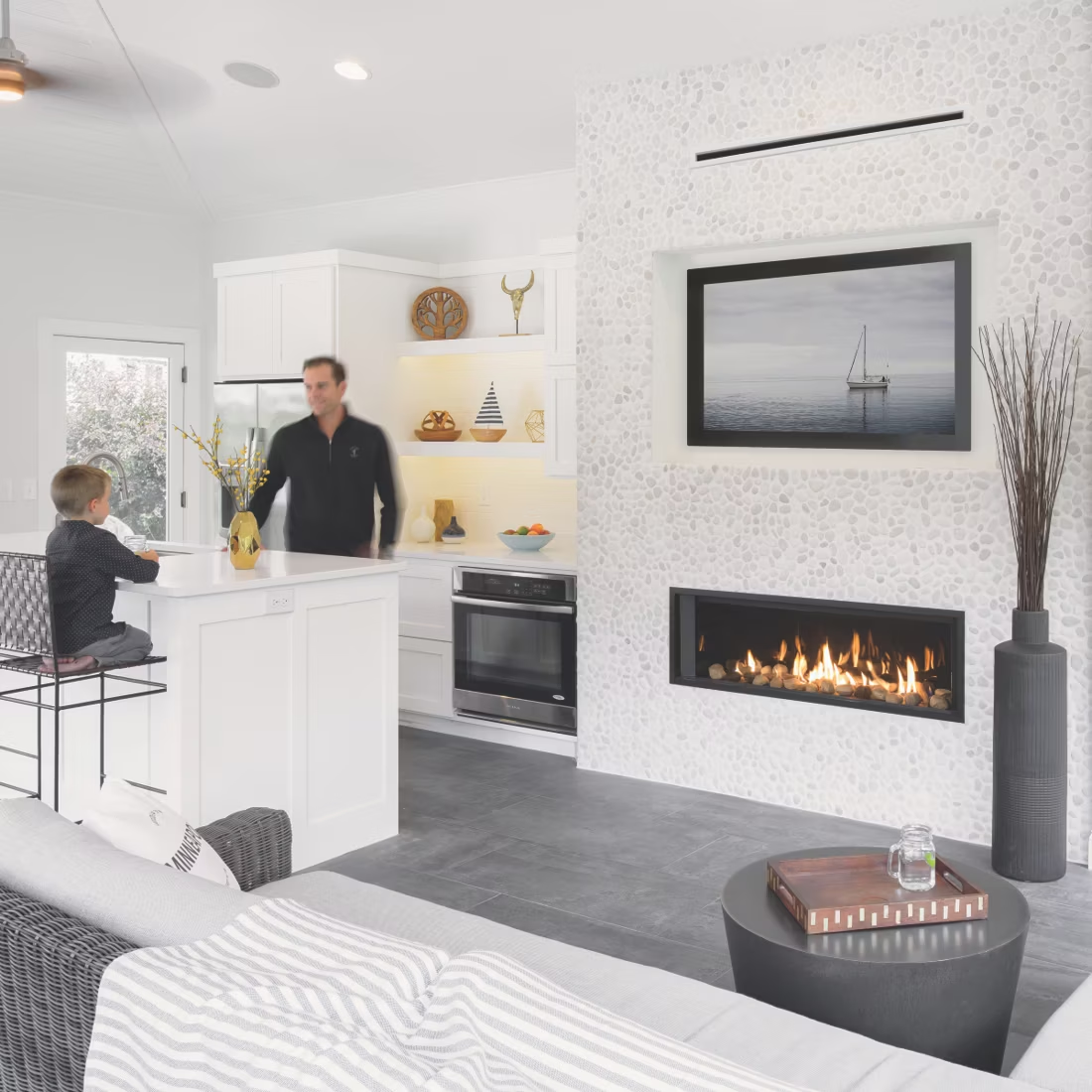
Yes—with an asterisk. Fireplaces are hot and TVs don't like heat. Either put a mantel between them to deflect rising warmth, or choose a fireplace with heat-management technology that creates a cool zone on the wall above—the wall stays around 125 degrees, barely warm, while the room still gets full heat. If you like clean lines and don't want a mantel, heat management is the answer.
What's the difference between an insert and a zero-clearance fireplace?
An insert is a fireplace that slides into a pre-existing wood-burning fireplace—if you don't have one, there's nothing to insert it into. A zero-clearance fireplace is built into a framed wall, which makes it the answer for remodels and new construction. Simple test: existing masonry fireplace means insert; blank or framed wall means zero-clearance.
What is an in-home preview and do I need one?
It's a visit where a hearth professional measures your space, confirms the model you picked actually works in your home, and walks the specs—framing, gas line, venting, finish work—before anything is ordered. Some details you just can't know until you see the house. Never make a down payment without one; it's the single most-skipped step that burns buyers.
Can I install a fireplace myself?
If you're putting a fire in your house on purpose, it's best to work with an expert. Unless you're genuinely experienced in framing, gas line, vent pipe, and the national code on clearances to combustibles, have a professional do it—and ideally the same company that sells you the fireplace, so warranty, service, and liability all live under one roof.
Nearby Dealers
Hearth shops serving Jemez Pueblo and the surrounding area. Every listing shows whether it is a WhyFire partner, a dealer we have verified as authorized for the brands we recommend, or a local business carrying hearth products. No manufacturer pays for placement. How we verify dealers →
Western Building Supply
Banker Insulation
Mountain West Sales, Inc.
Builders Materials Inc.
HeatSource
Rocky Mountain Chimney Sweep
Find your gas fireplace in Jemez Pueblo.
Tell us about your home and propane setup, and we'll match you with a local dealer serving the Jemez Valley—plus a free Project Guide & Parts List with the exact parts, including the vent kit, for your project.
Find Your Fireplace →