
Electric heat that fits Hatch's mild desert winters.
No chimney, no gas line, no venting—just plug-in or simple-circuit warmth for Hatch homes and casitas. Find the right unit and connect with a trusted local dealer.
Every Project Starts From One of These Five Situations
Hatch doesn't need a wood-fired furnace to stay warm.
Hatch sits at about 4,058 feet in the Mesilla Valley along the Rio Grande, better known nationally as the Chile Capital of the World than for brutal winters. With a fairly short, mild heating season and winter lows averaging 29°F, the village runs far milder than northern cold-climate towns like Fargo, ND, where the winter heating load can run three or four times higher. That changes the calculus on heat: most Hatch homes need supplemental warmth for a handful of cold nights, not a furnace built to survive a polar winter.
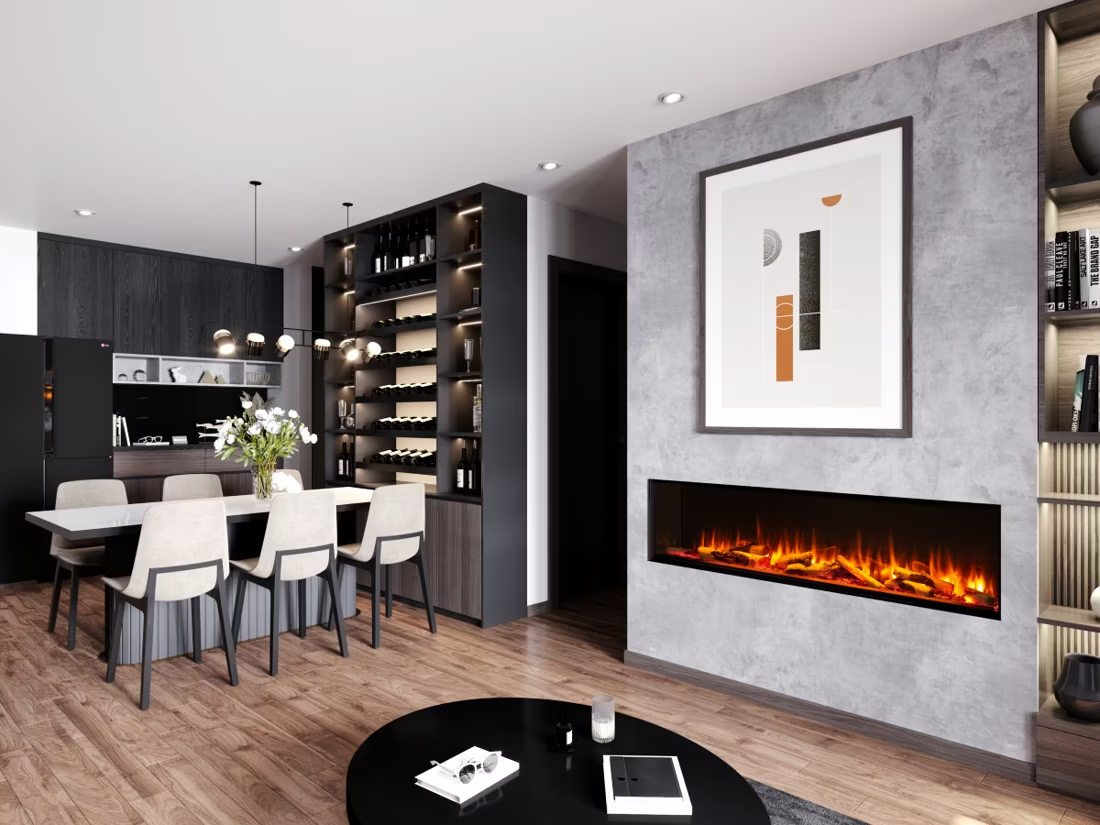
That's exactly where electric fireplaces earn their keep. Many homes around Hatch's chile fields are older adobe or territorial-style construction that was never built with a masonry chimney, and the valley is dotted with detached casitas and guest studios that don't have gas service. An electric insert or built-in unit plugs into an existing outlet or a simple dedicated circuit—no flue, no gas line trenching, no combustion byproducts. Sierra Electric Cooperative serves the area at a residential rate around $0.1557 per kWh, which keeps the cost of running a zone heater modest even though electricity here isn't the cheapest in the state.
Three steps. No salesperson until you're ready.
Tell us about your project
Your zip code, your situation, and the fuel you're leaning toward—or let the answers point you to one.
See what's actually available
The brands dealers within 100 miles genuinely carry—real options, never a catalog mirage.
Get your dealer & Project Guide
A trusted local dealer, plus the free Project Guide & Parts List that names every component of the job.
Frequently Asked Questions
How much does an electric fireplace installation cost in Hatch?
A simple plug-in electric fireplace or wall-mount insert often runs $300 to $1,200 for the unit itself, since it uses a standard 120V outlet and needs no electrician. Built-in units that require a dedicated 20-amp or 240V circuit typically land between $800 and $2,500 once you factor in a licensed electrician's time—a real consideration in Hatch's older adobe homes, where panel capacity and existing wiring runs can be limiting. A local dealer can look at your panel and walk you through the actual number during an in-home visit.
Do I need a chimney or vent to install an electric fireplace in Hatch?
No. Electric fireplaces produce heat without combustion, so there's no flue, chimney, or exterior venting required. That makes them a practical fit for Hatch's adobe and territorial-style homes that were never built with a masonry chimney, and for the guest casitas scattered around the valley's chile farms where running gas line or a wood stove flue to a detached structure isn't realistic.
Will an electric fireplace heat my whole house in Hatch?
Not usually as a whole-home primary heat source, though Hatch's winters are mild by regional standards. With a fairly short, mild heating season and winter lows averaging 29°F, the village is nowhere near as demanding as a place like Bismarck, ND, so a 1,500-watt electric insert can comfortably supplement a bedroom, sunroom, or casita during a cold snap. Most Hatch households still lean on existing propane, wood, or forced-air heat for the coldest stretches of December and January, using the electric unit as everyday zone heat.
What's the difference between a plug-in and a built-in electric fireplace?
A plug-in unit—a freestanding stove-style heater or a simple insert—runs off a standard 120V outlet and can be swapped out without any electrical work. A built-in electric fireplace recesses into a wall or cabinetry and is often wired to a dedicated circuit for higher heat output, installed by a licensed electrician alongside the dealer's finish carpentry. For casitas and rental units around Hatch, plug-in units are popular because they require no rewiring; for a primary living room remodel, a built-in unit gives a more finished look.
Do I need a permit to install an electric fireplace in Hatch?
A simple plug-in electric fireplace generally doesn't trigger a permit since no new wiring, gas line, or venting is involved. If you're installing a built-in unit that needs a new dedicated circuit or a panel upgrade, that electrical work falls under Doña Ana County's building and electrical permitting and should be pulled by a licensed electrician. Local dealers serving the Hatch and Mesilla Valley area typically know which units require sign-off and which don't.
What will it cost to run an electric fireplace on Sierra Electric Cooperative rates?
Sierra Electric Cooperative serves the Hatch area at a residential rate of roughly $0.1557 per kWh. A typical 1,500-watt electric fireplace running on high draws about 1.5 kWh per hour, so a four-hour evening of use costs under a dollar in electricity—inexpensive compared to heating a whole house, which is part of why these units work best as a zone heater for a den, bedroom, or casita rather than a substitute for your main propane or wood heat.
Are electric fireplaces a good fit for casitas and guest houses around Hatch?
Yes—this is one of the most common uses in the Mesilla Valley. Guest casitas and detached studios near Hatch's chile fields often lack gas service or an existing chimney, and running a wood stove flue or propane line to a small outbuilding can cost more than the fireplace itself. A plug-in or simple 240V electric unit adds ambiance and real supplemental heat to these spaces without any of that infrastructure work.
Electric vs. wood or propane—which makes sense for my Hatch home?
Wood is available locally—pinyon, juniper, and ponderosa pine are common species cut under permit through Lincoln National Forest—and propane is the standard heating fuel for most Hatch homes without natural gas service. Electric fireplaces aren't trying to replace either as primary heat, but they offer real advantages: no smoke output during wildfire-smoke season, which is a genuine summer concern in Doña Ana County, no ash or creosote, and no fuel storage. For a low-maintenance accent fire or supplemental heat in a room addition, electric is often the simplest choice; for true off-grid backup heat, wood or propane still wins.
Will my electric fireplace work during a power outage?
No—electric fireplaces need power to run and will shut off during an outage like any other electric appliance. That matters in Hatch, where Sierra Electric Cooperative's rural distribution lines can mean longer restoration times after a bad storm than you'd see closer to Las Cruces. If backup heat during outages is a priority, pair an electric fireplace with a wood stove or propane heater for resilience, and treat the electric unit as your everyday convenience option.
Can I put a TV above my fireplace?
Yes—with an asterisk. Fireplaces are hot and TVs don't like heat. Either put a mantel between them to deflect rising warmth, or choose a fireplace with heat-management technology that creates a cool zone on the wall above—the wall stays around 125 degrees, barely warm, while the room still gets full heat. If you like clean lines and don't want a mantel, heat management is the answer.
Does an electric fireplace need a vent or chimney?
No—that's its superpower. An electric fireplace needs a wall and an outlet, period. No vent pipe, no gas line, no clearances to design around, which is why it works in bedrooms, offices, apartments, and walls where venting a gas or wood unit would be impractical or impossible. Installation is typically the simplest and least expensive of any fireplace type.
What is an in-home preview and do I need one?
It's a visit where a hearth professional measures your space, confirms the model you picked actually works in your home, and walks the specs—framing, gas line, venting, finish work—before anything is ordered. Some details you just can't know until you see the house. Never make a down payment without one; it's the single most-skipped step that burns buyers.
Does a fireplace add value to my home?
On average, a fireplace adds back to the home about the same amount you spent installing it. Add the monthly savings from heating the rooms you actually use instead of the whole house—often hundreds of dollars a year—and the value case is strong before you even count what a fire does for how your family uses the room.
Nearby Dealers
Hearth shops serving Hatch and the surrounding area. Every listing shows whether it is a WhyFire partner, a dealer we have verified as authorized for the brands we recommend, or a local business carrying hearth products. No manufacturer pays for placement. How we verify dealers →
Western Stoves And Fireplaces
Rawson Builders Supply
Mountain Ridge Ace Hardware
A Better Chimney
Sun Valley Do-It Center
Hi Tech Home Services
The Stove And Spa Store
K.d. Scholten Co.
Southwest Chimney Sweeps Inc
Jack White Building Specialties
Electric Service in Hatch
An electric fireplace's heater draws about 1,500 watts—pennies per hour at local rates.
Sierra Electric Coop, Inc
Find your electric fireplace in Hatch.
Tell us a bit about your home or casita and we'll send you a free Project Guide & Parts List—the right electric fireplace or insert for your space, matched with a trusted local dealer near Hatch.
Find Your Fireplace →