
Find electric heat built for Harding County's wind-scoured plains.
No gas line, no chimney, no new venting—just supplemental warmth for the ranch homes and doublewides scattered across Mosquero, Roy, and the open country between. Find the right unit and connect with a trusted local dealer.
Every Project Starts From One of These Five Situations
A no-vent option for the county's ranch homes.
Harding County is one of the least populated counties in the country—302 people spread across roughly 2,100 square miles of high plains in northeastern New Mexico, with Mosquero as the county seat and Roy as the other real town. Sitting near 6,000 feet on open, wind-driven grassland, winters here run cold and exposed in the way Bismarck, North Dakota winters do—it's the wind chill more than the raw temperature that drives people to add heat wherever they can. There's no natural gas infrastructure anywhere in the county; propane tanks and electric baseboard or wall heat, delivered over long rural line runs from the local electric cooperative, are what most homes have always run on.
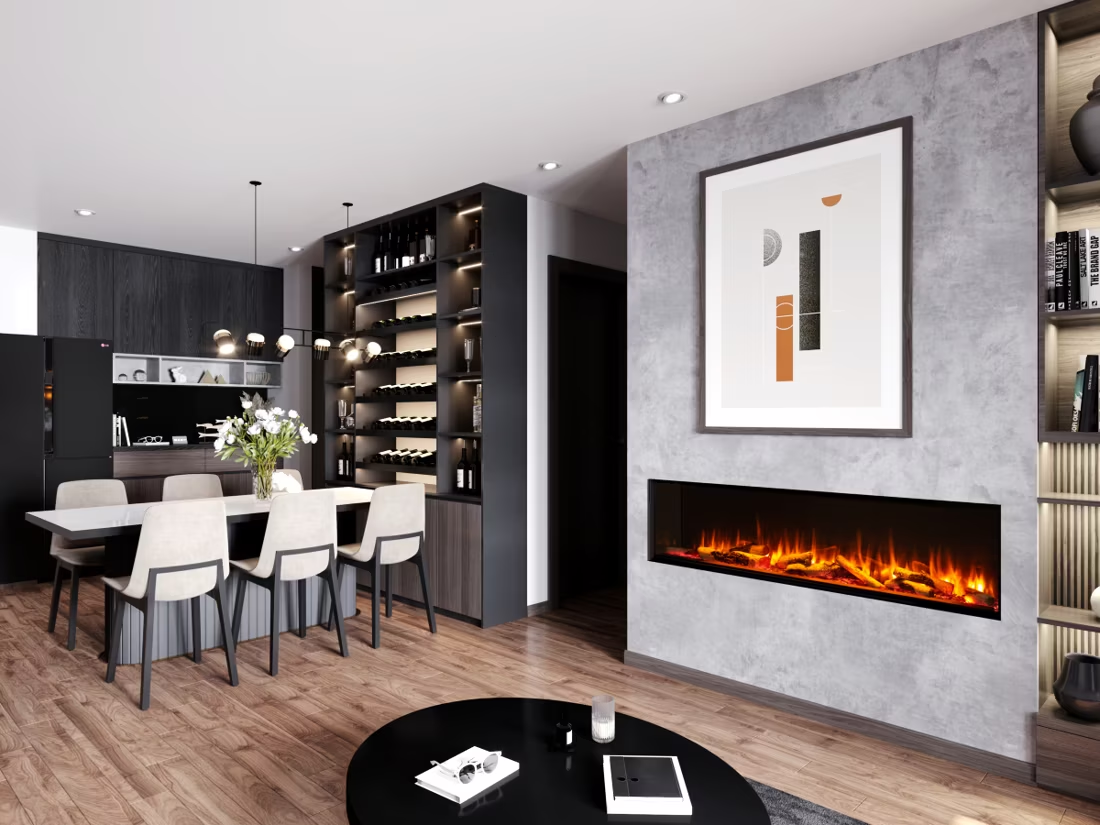
That infrastructure reality is exactly why electric fireplaces fit so well here. A large share of Harding County's housing stock is manufactured or modular ranch homes, where running new masonry or a propane line to add a fireplace to a den or bedroom isn't practical or affordable. An electric insert or wall unit needs a standard outlet or, for larger models, a dedicated circuit—no chimney, no gas permit, no combustion venting. It goes in in an afternoon and adds real supplemental warmth to a single room without touching the rest of the house. It also matters on the county's periodic bad-air days: wildfire smoke drifting off the pinyon-juniper hills and ponderosa stands to the west occasionally makes wood burning unwelcome, and an electric unit gives you smoke-free heat regardless of what's happening outside.
Three steps. No salesperson until you're ready.
Tell us about your project
Your zip code, your situation, and the fuel you're leaning toward—or let the answers point you to one.
See what's actually available
The brands dealers within 100 miles genuinely carry—real options, never a catalog mirage.
Get your dealer & Project Guide
A trusted local dealer, plus the free Project Guide & Parts List that names every component of the job.
Frequently Asked Questions
How much does an electric fireplace installation cost in Harding County?
Most electric fireplace and insert installations in Harding County run $300 to $1,200. Plug-in units that use a standard 120V outlet sit at the low end—there's no wiring work involved beyond making sure the circuit can handle the load. Larger built-in wall units or electric inserts that require a dedicated 20-amp circuit run higher, since an electrician needs to pull new wire, sometimes back to the panel in an older ranch house. Because dealers and licensed electricians typically travel in from Springer, Las Vegas, or Clayton to reach Mosquero or Roy, expect a modest trip charge folded into the quote—worth asking about upfront given the distances involved out here.
What size electric fireplace do I need for my home?
Electric units are almost always supplemental heat rather than a home's primary source, so sizing is less about square footage and more about which room you want warmed. A compact insert or wall unit (750-1,500 watts) comfortably heats a bedroom or small den in one of the county's manufactured homes. Larger great rooms in ranch houses may want a unit closer to 1,500 watts, or two smaller units placed in separate living spaces. Given how spread out homes are here and how far a service call travels, it's worth having a dealer walk through your specific floor plan rather than guessing—oversizing an electric unit doesn't hurt performance the way it can with wood, but it does waste money on a bigger unit than you need.
Where can I find an electric fireplace dealer near me in Harding County?
With only a few hundred residents spread across the county, there's no hearth retailer physically based in Mosquero or Roy. Homeowners here are typically served by dealers out of Springer, Las Vegas, or Tucumcari who cover the northeastern New Mexico plains as part of their regular territory. That's actually fine for electric fireplaces specifically—since there's no gas line or chimney work involved, a dealer can often size the unit, order it, and coordinate a single install visit rather than multiple trade trips, which keeps travel costs down compared to a wood or gas project.
Do I need a permit to install an electric fireplace in Harding County?
A simple plug-in electric fireplace that uses an existing outlet generally doesn't require a permit. If you're installing a built-in wall unit or an insert that needs a new dedicated circuit, that electrical work typically does require a permit through the county, since it involves running new wire and tying into the panel. Any licensed electrician doing the circuit work should pull the permit as part of the job—it's worth confirming that's included before the work starts, especially with the travel distances involved in getting an inspector out to rural parts of the county.
What's the difference between an electric fireplace, insert, and wall unit?
An electric insert is built to slide into an existing masonry or wood-burning fireplace opening, giving an old hearth a heat source again without touching the chimney. A wall-mounted or built-in electric fireplace is designed for a room without an existing fireplace—it can be recessed into a wall or simply mounted on the surface. A freestanding electric stove or mantel unit is the most flexible option, since it just needs floor space and an outlet and can be moved if you rearrange a room. For Harding County's mix of older ranch houses with existing fireplace openings and newer manufactured homes with none, the right choice comes down to what's already in the room.
Will my electric fireplace work during a power outage?
No—electric fireplaces require power to run, and that's worth being honest about in a county where high winds and ice can knock out rural cooperative lines for hours or longer at a time. For Harding County homes where an electric fireplace is being installed as the only supplemental heat source, it's worth keeping a backup plan—a propane heater, a wood stove, or at minimum an emergency plan for extended outages—since the electric unit will go dark along with everything else on the circuit. Many local homeowners use electric for everyday convenience and keep propane or wood as the outage backup.
What does an electric fireplace cost to run each month?
A typical electric fireplace or insert draws 1,000 to 1,500 watts on high heat. Run a few hours a night through a Harding County winter, that adds a modest but real amount to a monthly electric bill from the local rural cooperative—generally in the range of $15 to $40 a month depending on how often it runs and local electric rates. That's considerably cheaper to operate than most people expect, and far simpler to budget for than propane deliveries, which fluctuate more with market pricing and delivery distance out here.
Electric vs. propane—which makes more sense for my Harding County home?
Propane is what most Harding County homes rely on for whole-house heat, since there's no natural gas line anywhere in the county and propane tanks are the standard workaround. But propane appliances need tank space, delivery access, and periodic refills that get more expensive the farther out your ranch sits. An electric fireplace sidesteps all of that—no tank, no delivery schedule, no combustion byproducts to vent—which makes it a practical add for a single room even in a house that's otherwise propane-heated. Most homeowners here end up with both: propane for the whole house, electric for the room where they spend the most time.
Electric vs. wood—which is right for my home?
Wood has deep roots in this part of New Mexico—pinyon, juniper, and ponderosa pine are all available locally, and a wood stove keeps working when the power lines go down in a windstorm, which happens more than a few times a winter out here. But wood means chimney work, ash cleanup, and burning restrictions on the wildfire-smoke days that hit the county in dry stretches. Electric skips all of that: no smoke, no venting, no permit hassle for a simple plug-in unit, at the cost of going dark in an outage. For a supplemental room heater in a home that already has propane or wood covering the whole-house load, electric is usually the easier, cleaner add.
Can I put a TV above my fireplace?
Yes—with an asterisk. Fireplaces are hot and TVs don't like heat. Either put a mantel between them to deflect rising warmth, or choose a fireplace with heat-management technology that creates a cool zone on the wall above—the wall stays around 125 degrees, barely warm, while the room still gets full heat. If you like clean lines and don't want a mantel, heat management is the answer.
Does an electric fireplace need a vent or chimney?
No—that's its superpower. An electric fireplace needs a wall and an outlet, period. No vent pipe, no gas line, no clearances to design around, which is why it works in bedrooms, offices, apartments, and walls where venting a gas or wood unit would be impractical or impossible. Installation is typically the simplest and least expensive of any fireplace type.
Can I install a fireplace myself?
If you're putting a fire in your house on purpose, it's best to work with an expert. Unless you're genuinely experienced in framing, gas line, vent pipe, and the national code on clearances to combustibles, have a professional do it—and ideally the same company that sells you the fireplace, so warranty, service, and liability all live under one roof.
What is an in-home preview and do I need one?
It's a visit where a hearth professional measures your space, confirms the model you picked actually works in your home, and walks the specs—framing, gas line, venting, finish work—before anything is ordered. Some details you just can't know until you see the house. Never make a down payment without one; it's the single most-skipped step that burns buyers.
Find your electric fireplace in Harding County.
Tell us a bit about your home and we'll match you with the right electric fireplace, insert, or wall unit—plus a free Project Guide & Parts List and a trusted local dealer who can install it.
Find Your Fireplace →