
Clean, smoke-free heat for Grant County's high-desert nights.
Instant, smoke-free heat for Grant County homes—from New Mexico Gas Company service in Silver City to propane tanks out toward Mimbres, Cliff, and the Gila high country. We'll match you with a trusted local dealer who can size, permit, and install the right unit.
Every Project Starts From One of These Five Situations
Instant warmth without the wildfire haze.
Grant County stretches from the high desert grasslands around Bayard and Hurley at roughly 5,700 feet up into the pinyon, juniper, and ponderosa pine foothills of the Gila National Forest, with peaks in the Mogollon Range topping 10,000 feet. It's a mild climate as high-desert winters go—average winter lows sit around 32°F and the county's winter heating load runs less than half what a genuinely cold-winter town like Bozeman, Montana racks up. That mildness doesn't mean heat isn't needed; it means the heating season is shorter and the appliance choice matters more for comfort and control than for sheer survival.
New Mexico Gas Company runs natural gas lines through Silver City, Bayard, and Santa Clara, making a direct-vent gas fireplace or insert a straightforward retrofit for homes already on the system. Head out toward Mimbres, Pinos Altos, Cliff, or the unincorporated stretches near the Gila, and propane tanks are the norm instead. Either fuel gets you instant, thermostatically controlled heat—and during the wildfire-smoke seasons that regularly bring air quality advisories to the Gila region, a gas unit adds warmth and ambiance to a room without contributing a single wisp of smoke of its own.
Three steps. No salesperson until you're ready.
Tell us about your project
Your zip code, your situation, and the fuel you're leaning toward—or let the answers point you to one.
See what's actually available
The brands dealers within 100 miles genuinely carry—real options, never a catalog mirage.
Get your dealer & Project Guide
A trusted local dealer, plus the free Project Guide & Parts List that names every component of the job.
Frequently Asked Questions
How much does a gas fireplace installation cost in Grant County?
Costs vary with the unit, venting path, and whether you're on natural gas or propane, but most Grant County installations land somewhere between $4,000 and $9,500. A direct-vent gas insert dropped into an existing masonry fireplace with a gas line already run—common in older Silver City homes—sits toward the lower end. New construction or a fireplace added where no gas line exists costs more once trenching and line work are added in. Homes outside the New Mexico Gas Company service area that need a new propane tank set should budget for that as a separate line item from the supplier. A local dealer will give you a firm number after an in-home walkthrough.
Can I convert my existing wood fireplace to gas?
Yes, and it's a common request in the county's older adobe and frame homes around Silver City and Santa Clara that still have an open masonry fireplace built for burning pinyon or juniper. A gas insert with a stainless liner run up the existing flue lets you keep the original fireplace opening while swapping ash and creosote for a flip-of-a-switch flame. Expect the job to run $4,000 to $8,500 depending on chimney condition and whether the flue needs relining before the liner goes in. Homes already on natural gas service typically cost less than those that need a new propane line or tank.
Do I need natural gas to install a gas fireplace, or can I use propane?
It depends on where in Grant County you're located. New Mexico Gas Company provides natural gas service through Silver City, Bayard, and Santa Clara, so if you already have a gas range or water heater in one of those areas, adding a fireplace on the same line is usually simple. Outside those service areas—Mimbres, Pinos Altos, Cliff, the Gila valley, and other outlying communities—propane is the standard fuel, delivered and stored in an above-ground tank. Nearly every gas fireplace on the market can be configured for either fuel; your installer sets the correct orifice and regulator for whichever you have.
Will my gas fireplace work during a power outage?
Most modern gas fireplaces keep working when the power goes out, which matters in Grant County during summer monsoon storms and the occasional winter line outage in the more remote parts of the county. Units with IPI (intermittent pilot ignition) run on battery backup that kicks in automatically—just remember to keep fresh batteries in the unit. Valor fireplaces skip the battery question altogether: their pilot assembly generates its own electricity through a thermocouple, so the fireplace lights and runs with zero battery dependence. Ask your local dealer about the ignition system on any model you're considering, especially if you're out past reliable cell coverage near Pinos Altos or the Gila.
What's the difference between a gas fireplace, gas insert, and gas stove?
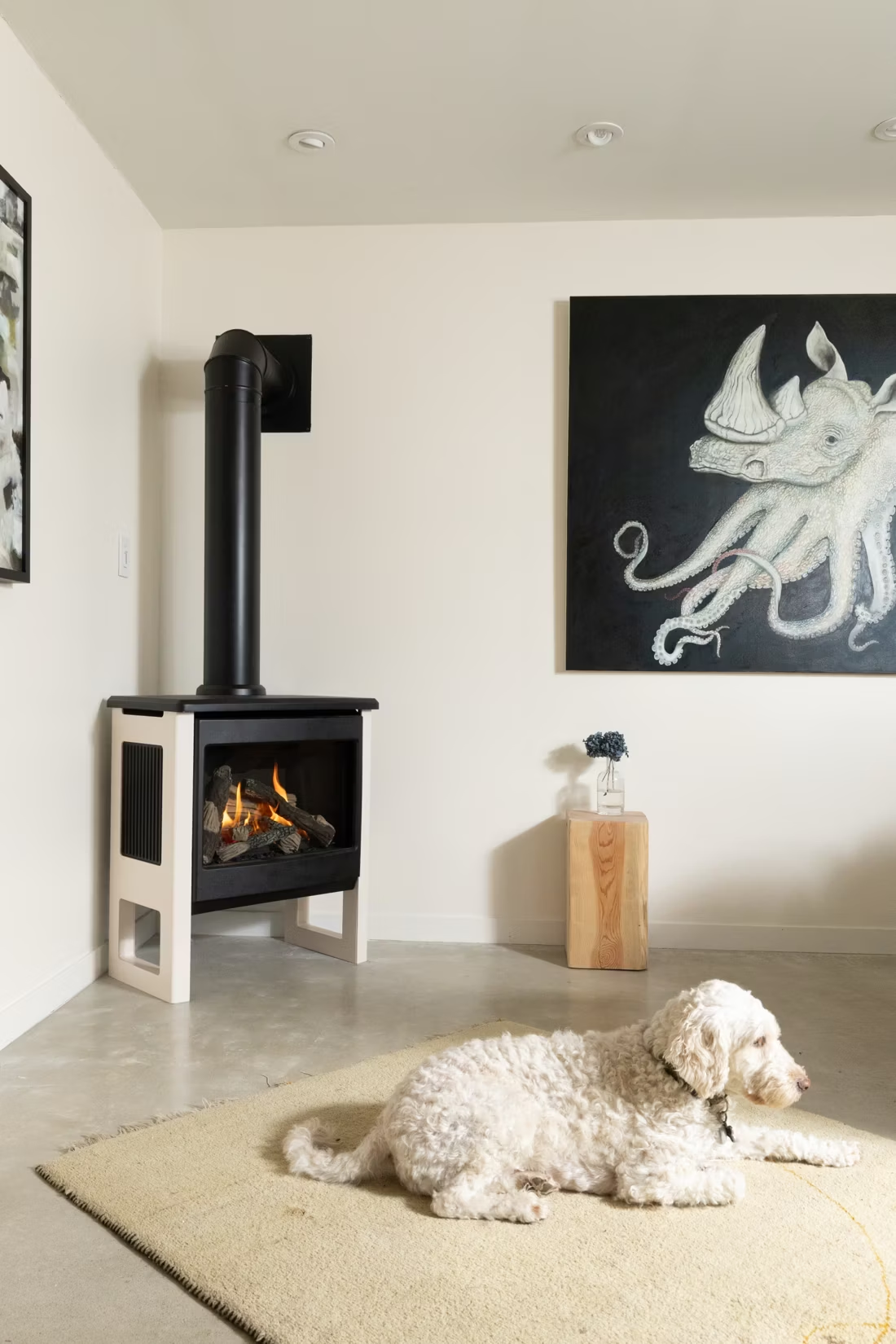
A gas fireplace is a fully built-in unit framed into a wall—the right call for new construction or a room without an existing hearth. A gas insert is built to slide into an existing masonry fireplace opening, turning an old wood-burning hearth into a sealed, high-efficiency gas unit using the same chimney for venting. A gas stove is a freestanding cabinet-style unit that sits on the floor and vents through a wall or ceiling, similar in footprint to a wood stove. For the many older homes around Silver City and Bayard with an existing fireplace, an insert is usually the most cost-effective upgrade.
Do I need a permit to install a gas fireplace in Grant County?
Yes. New gas fireplace installations in Grant County require a building permit, and the gas line work itself needs a licensed gas-fitter and a separate gas permit. Inside the Town of Silver City, permits run through the town's building department; in unincorporated Grant County—including Bayard, Santa Clara, and the rural county—permits go through the Grant County building office. A reputable local dealer coordinates the gas line, venting, and inspection sign-offs as part of the installation, so you're not left managing multiple trades yourself.
What's the difference between vented and vent-free gas fireplaces?
Vented (direct-vent) gas fireplaces draw combustion air from outside and exhaust it back outside through a sealed pipe—the cleanest and most universally code-compliant option. Vent-free units burn without any outside venting and release some combustion byproducts into the room, so they carry stricter sizing and ventilation rules. Both are legal in New Mexico, but there's a wrinkle specific to Grant County's terrain: homes at higher elevation—Pinos Altos, the upper Mimbres valley, or anywhere above about 6,000 feet—often need a high-altitude orifice or derate kit for the burner to combust properly with less oxygen in the air. Flag your elevation for your dealer up front so the unit you get is set up correctly the first time.
How often should my gas fireplace be serviced?
An annual inspection is the standard recommendation for any gas fireplace or insert. A technician checks the burner, pilot assembly, venting, and gas connections, and cleans the glass and interior—a lighter job than sweeping a wood chimney, but still important for safety and for keeping the unit running efficiently. Local gas appliance technicians typically charge in the $150 to $250 range for this visit.
Gas vs. wood—which is right for my home?
Wood—split from pinyon, juniper, or ponderosa pine cut under a Gila National Forest permit ($5 to $20 per cord, May through October)—remains a genuine option for Grant County homeowners who want lower fuel costs and heat that works without electricity. Gas trades that self-sufficiency for instant on-off convenience, no ash or creosote, and, importantly during dry, smoky summers, zero additional smoke output at a time when the Gila region is already dealing with wildfire-driven air quality advisories. Many Grant County homes end up with both: wood for backup heat and traditionalists, gas for the room you actually live in day to day.
What's the difference between an insert and a zero-clearance fireplace?
An insert is a fireplace that slides into a pre-existing wood-burning fireplace—if you don't have one, there's nothing to insert it into. A zero-clearance fireplace is built into a framed wall, which makes it the answer for remodels and new construction. Simple test: existing masonry fireplace means insert; blank or framed wall means zero-clearance.
Is my gas fireplace wasting gas?
If it was installed more than 15 years ago, probably. Older gas fireplaces keep a standing pilot light burning all the time, and that little flame can cost a couple hundred dollars a year. Newer models use pilot-on-demand ignition—the pilot lights only when you use the fireplace and goes out when you turn it off.
Does a fireplace add value to my home?
On average, a fireplace adds back to the home about the same amount you spent installing it. Add the monthly savings from heating the rooms you actually use instead of the whole house—often hundreds of dollars a year—and the value case is strong before you even count what a fire does for how your family uses the room.
Can a fireplace actually lower my heating bill?
Yes—by creating a comfort zone. A furnace heats every square foot of the house just to warm the one room you're in; a gas fireplace on low burns roughly a sixth of the gas a typical furnace does. Set the furnace around 55–60 degrees as a baseline, then heat the rooms your family actually uses. Families who heat this way commonly save $20–$60 a month.
Stove and Fireplace Dealers in Grant County
Find your gas fireplace in Grant County.
Tell us about your home and we'll match you with a trusted Grant County dealer and send over a free Project Guide & Parts List—the exact parts, vent kit, and recommended installer for your gas fireplace project.
Find Your Fireplace →