
Propane Heat That Works at 6,700 Feet.
There's no natural gas main out here—but a properly sized propane fireplace or insert still delivers instant, reliable heat through Eldorado's cold high-desert nights. We'll match you with a local dealer who installs it right.
Every Project Starts From One of These Five Situations
Propane, not pipeline gas, heats this high desert community.
Eldorado at Santa Fe sits at 6,684 feet in the pinyon-juniper hills southeast of the city, an unincorporated Santa Fe County subdivision with winter lows averaging around 20°F and a heavy winter heating load—comparable in severity to mountain towns like Bozeman, Montana. Because Eldorado grew up outside Santa Fe's municipal utility footprint, no natural gas main reaches most of the community. When homeowners here say they want a 'gas fireplace,' what they almost always end up installing runs on propane.
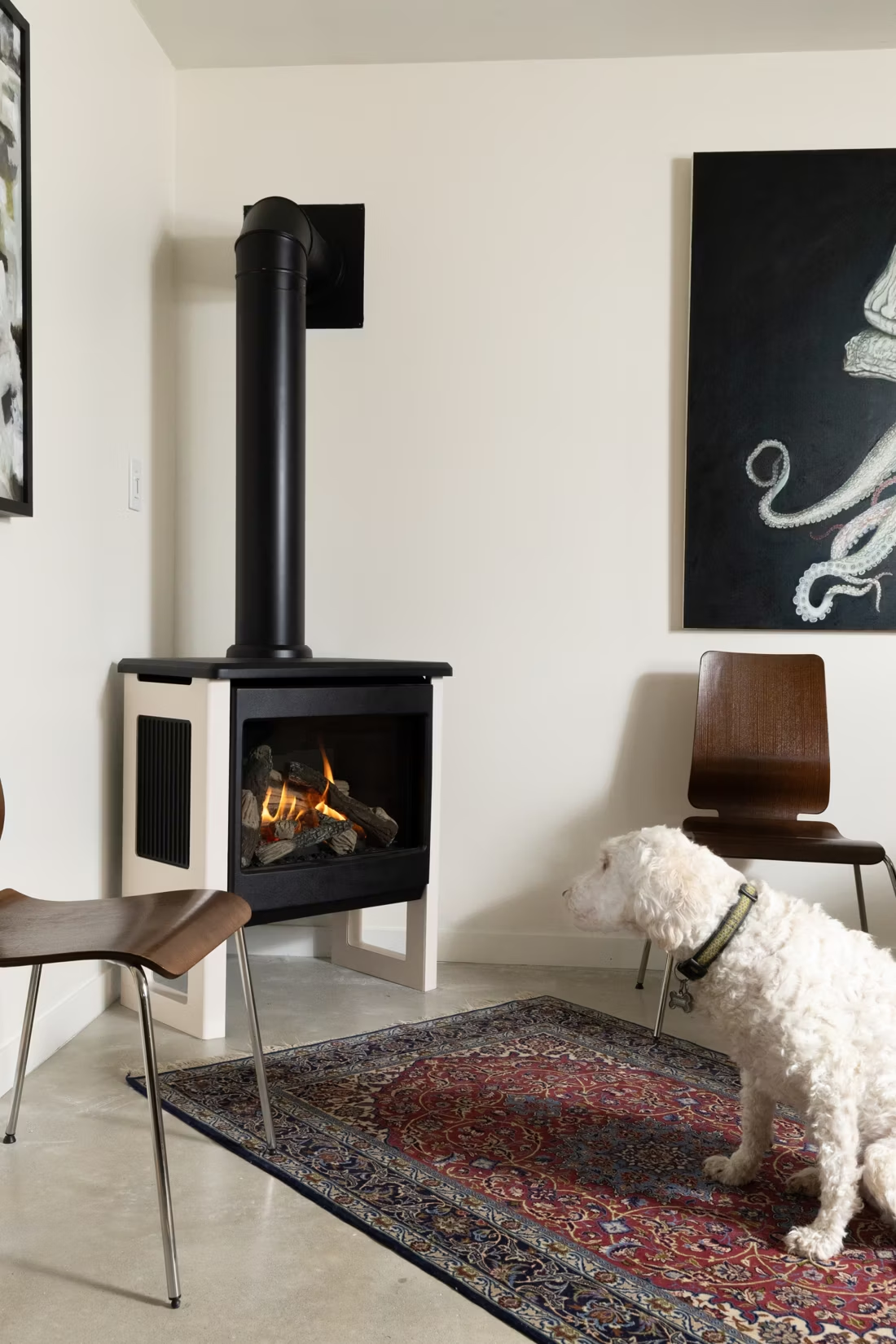
That's not a downgrade—modern propane direct-vent fireplaces and inserts perform identically to natural gas units, just with a tank (owned or leased) instead of a buried pipe. Given local electric rates from Mora-San Miguel Electric Cooperative (about $0.1557/kWh), propane heat is often cheaper to run than electric resistance backup during a long Eldorado winter, and unlike a furnace tied to the grid, a propane fireplace with battery-backed ignition keeps working when co-op power drops during a mountain storm.
Three steps. No salesperson until you're ready.
Tell us about your project
Your zip code, your situation, and the fuel you're leaning toward—or let the answers point you to one.
See what's actually available
The brands dealers within 100 miles genuinely carry—real options, never a catalog mirage.
Get your dealer & Project Guide
A trusted local dealer, plus the free Project Guide & Parts List that names every component of the job.
Frequently Asked Questions
How much does a propane fireplace installation cost in Eldorado?
Most propane fireplace or insert installations in Eldorado run $5,000 to $12,000 all-in. The lower end covers a direct-vent insert going into an existing masonry fireplace where a propane tank is already on the property. The higher end applies to new construction or remodels needing a fresh tank set (usually a 250 or 500-gallon buried or above-ground tank from a regional propane supplier), a new gas line run from tank to appliance, and full venting. Because there's no municipal gas main out here, tank placement and line length are the biggest cost variables—a local dealer will scope that during a site visit.
Can I convert my existing wood-burning fireplace to propane gas?
Yes, and it's a common project in Eldorado's older adobe and territorial-style homes. A propane insert slides into your existing masonry firebox, vents through a stainless liner run up your current chimney, and connects to a propane line from an outdoor tank. Expect $5,500 to $9,500 depending on liner length and whether a new tank needs to be set. The conversion keeps your existing hearth and mantel while eliminating wood-hauling and ash cleanup—a real consideration at this elevation where dry pinyon and juniper burn fast and hot.
Is natural gas available in Eldorado at Santa Fe, or is it all propane?
It's propane. Eldorado is an unincorporated Santa Fe County subdivision, and natural gas mains from the City of Santa Fe's system don't extend out to this part of the county. Nearly every 'gas' fireplace installed here runs on propane delivered by a regional supplier and stored in a tank on the property. The good news is that modern propane-configured direct-vent fireplaces perform exactly like natural gas units—same flame, same heat output, same instant on-off operation. Your installer will simply orifice and regulate the unit for propane instead of natural gas.
Will my propane fireplace still work if the power goes out?
Yes, if you choose the right ignition system. Units with IPI (intermittent pilot ignition) run on AA battery backup that kicks in automatically when co-op power drops—worth having given how exposed overhead lines are to wind and snow loading in the hills around Eldorado. Valor fireplaces go a step further: their pilot generates its own electricity through the thermocouple, so there are no batteries to remember at all. Either way, ask your local dealer which ignition system is in the unit you're considering—this matters more here than in town, since Mora-San Miguel outages in outlying areas can run longer than in central Santa Fe.
What's the difference between a gas fireplace, insert, and stove for my Eldorado home?
A built-in gas fireplace is framed into a wall—the right call for new construction or a major remodel. A gas insert drops into an existing masonry firebox, using a liner run through your current chimney, and is the most common upgrade for Eldorado's older homes with existing hearths. A gas stove is freestanding, sitting on its own hearth pad, and works well in open-concept great rooms or additions without an existing fireplace. All three can run on propane with the correct regulator setup—your local dealer will match the format to your existing structure.
Do I need a permit for a propane fireplace or tank in Eldorado?
Yes. As an unincorporated community, Eldorado falls under Santa Fe County's building permit jurisdiction rather than the city's—both the fireplace/appliance installation and the propane tank placement typically require permits and inspection, with setback requirements from the tank to structures, property lines, and ignition sources. Most established propane suppliers and hearth installers in the Santa Fe area handle this paperwork as part of the job, so you're not coordinating the tank company and the county separately.
Should I get a vented or vent-free propane fireplace given winter inversions here?
Vented (direct-vent) is the better call for Eldorado. Vent-free propane units burn directly into the room and release some combustion byproducts indoors—manageable under strict New Mexico sizing rules, but a harder sell given the Santa Fe area's winter temperature inversions, which already trap wood smoke and particulates close to the ground on cold, still nights. A sealed direct-vent unit draws combustion air from outside and exhausts it back outside, keeping your indoor air clean regardless of what's happening in the inversion layer. Nearly every dealer serving this area defaults to direct-vent for exactly this reason.
How often does a propane fireplace need servicing?
Plan on an annual inspection, ideally before the first cold snap in October or November. A technician checks the burner, pilot assembly, gas connections, and venting, and cleans the glass and firebox interior. Propane systems also warrant a periodic check of the regulator and tank fittings, especially if the tank sees ground movement or freeze-thaw cycling at this elevation. Expect to pay somewhere in the $150–$250 range for a standard annual service call from a local hearth or propane technician.
Propane fireplace or wood stove—which makes more sense in Eldorado?
Both have real advocates here. Propane means instant heat with no hauling, stacking, or ash—appealing given how spread out Eldorado properties are and how far some driveways are from a woodpile. Wood means lower fuel cost if you're willing to cut your own: pinyon, juniper, and ponderosa pine are the local standards, and permits from the Santa Fe National Forest, Cibola National Forest, or Carson National Forest run just $5 to $20 per cord during the May-through-October cutting season. Wood also keeps working with zero electricity or propane delivery, which matters if a winter storm closes roads before a propane truck can get out to your place. Many Eldorado households end up with both—propane for daily convenience, wood as backup.
Why is my open fireplace making my house colder?
Open fireplaces suck—literally. As the fire burns, it consumes air your furnace already paid to heat and pulls it out through the chimney, so the house is actually colder after the fire goes out than before you lit it. An insert fixes this: it seals the chimney, puts fixed glass across the front, and turns that hole in your house into a real heat source.
Why is a fireplace insert so efficient?
An insert does two things: it seals the chimney completely, so you stop losing air you already paid to heat, and it radiates warmth into the room through the firebox and glass. Most add a heat-exchange fan that pulls cool room air underneath, wraps it around the hot firebox, and pushes it back out warm. Your home is more efficient before you've even lit the first fire.
Can a fireplace actually lower my heating bill?
Yes—by creating a comfort zone. A furnace heats every square foot of the house just to warm the one room you're in; a gas fireplace on low burns roughly a sixth of the gas a typical furnace does. Set the furnace around 55–60 degrees as a baseline, then heat the rooms your family actually uses. Families who heat this way commonly save $20–$60 a month.
How much should I budget for a fireplace?
For an average home—covering the fireplace, the vent pipe, and basic installation—a budget between $3,900 and $5,500 gives you a lot of options across wood, gas, and pellet. By the time you add finish work, gas line, and electrical, the average complete installation lands between $5,000 and $12,000 all-in. In a remodel or new build, a good rule is to put about 2.5% of the total project cost toward the fireplace.
Nearby Dealers
Hearth shops serving Eldorado at Santa Fe and the surrounding area. Every listing shows whether it is a WhyFire partner, a dealer we have verified as authorized for the brands we recommend, or a local business carrying hearth products. No manufacturer pays for placement. How we verify dealers →
Rocky Mountain Chimney Sweep
Tierra Woodstoves
Find your gas fireplace in Eldorado at Santa Fe.
Tell us about your home and your propane setup, and we'll put together a free Project Guide & Parts List—the right fireplace or insert, the vent kit it needs, and a trusted local dealer who installs it correctly at this elevation.
Find Your Fireplace →