
Clean, instant heat for El Rancho's high-desert winters.
At 5,639 feet along the Rio Grande corridor, winter nights in El Rancho average 16°F. Find the right propane fireplace or insert and get matched with a trusted local installer.
Every Project Starts From One of These Five Situations
Convenience finds a place among the piñon smoke.
El Rancho sits at 5,639 feet in Santa Fe County's high desert, tucked between the Sangre de Cristo and Jemez ranges near Pojoaque and Española. With winters that start early and linger late, and average winter lows around 16°F, the heating season here runs long. Wood heat is woven into the culture—the smell of piñon and juniper smoke drifting over the valley is practically a season marker in Northern New Mexico—but plenty of households here run gas in the main living spaces, especially in adobe-style homes where a single wood stove struggles to even out heat across thick-walled rooms with high ceilings.
El Rancho is unincorporated, and there's no natural gas main serving the community, so "gas fireplace" here almost always means propane—delivered and stored in a tank on the property, then plumbed to the appliance. That's a normal setup throughout this stretch of Santa Fe County, and it means your installer needs to coordinate with a propane supplier as well as run gas line and venting. Building permits for hearth appliances in unincorporated areas like El Rancho, Chimayó, and Pojoaque go through the Santa Fe County Building & Land Use Department, which also tracks setback requirements for above-ground propane tanks.
Three steps. No salesperson until you're ready.
Tell us about your project
Your zip code, your situation, and the fuel you're leaning toward—or let the answers point you to one.
See what's actually available
The brands dealers within 100 miles genuinely carry—real options, never a catalog mirage.
Get your dealer & Project Guide
A trusted local dealer, plus the free Project Guide & Parts List that names every component of the job.
Frequently Asked Questions
How much does a propane fireplace installation cost in El Rancho?
Most propane fireplace or insert installations in this part of Santa Fe County run $4,000 to $9,500, depending on the unit, the length of gas line run from tank to appliance, and whether venting has to be routed through thick adobe or stucco walls. If the property doesn't already have a propane tank and regulator set, add tank delivery and setup costs from a local propane supplier—that's a separate contract from the hearth installer, though most dealers coordinate the two. Converting an existing masonry or kiva fireplace into a gas insert tends to land on the lower end since the chimney or flue is often reusable for venting.
Can I convert my adobe kiva fireplace to gas?
Yes, and it's a common request in El Rancho and the surrounding Pojoaque valley. Traditional corner kiva fireplaces can usually accept a gas log set or a small direct-vent gas insert, though the rounded adobe firebox sometimes needs minor modification to accept a liner or vent kit. A local hearth installer familiar with adobe construction will check the existing flue's condition and clearances before recommending a specific insert size—kiva fireboxes vary a lot in dimension from house to house, so this isn't a one-size project.
Do I need natural gas, or is propane the only option here?
Propane is the standard fuel for gas fireplaces in El Rancho. There's no natural gas distribution line reaching this unincorporated part of Santa Fe County, so homeowners install a propane tank on the property—usually a 120- or 250-gallon above-ground tank—and run a dedicated line to the fireplace. Most fireplace and insert models sold for this market come propane-ready or convert easily with the correct orifice kit, so fuel choice rarely limits which unit you can pick.
Will a propane fireplace still work during a power outage?
In most cases, yes. Units with intermittent pilot ignition (IPI) run on a small battery backup that kicks in when the power drops, so the fireplace lights and operates normally even during an outage. Valor fireplaces take a different route—their pilot assembly generates its own electricity through the thermocouple, so there's no battery to check or replace at all. Given how exposed this stretch of Santa Fe County can be to winter storm outages along rural power lines, that self-powering detail matters more here than it does in town.
Gas fireplace, insert, or stove—which fits an El Rancho home?
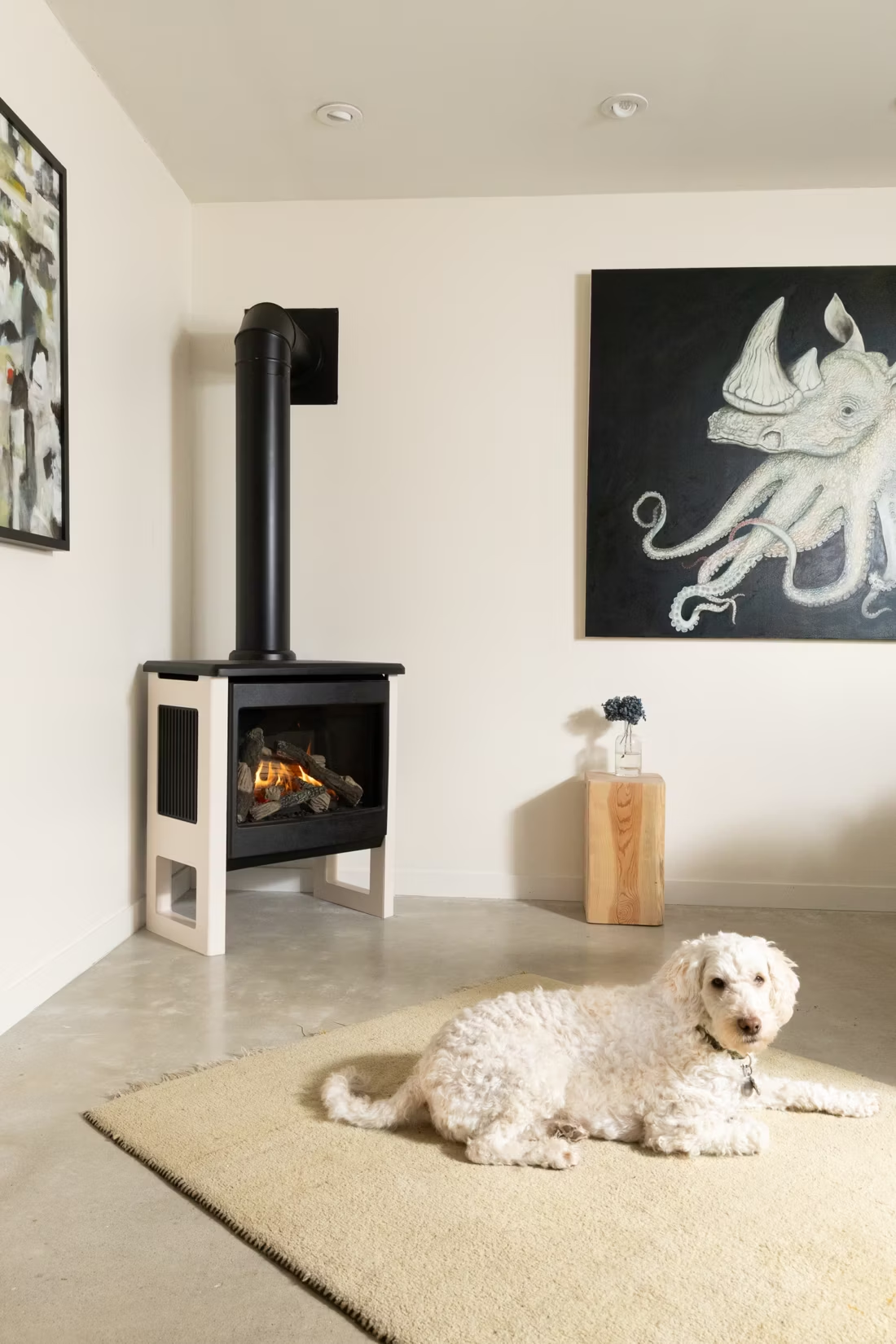
A gas insert is usually the right call if you already have a masonry or kiva fireplace—it drops into the existing opening and uses the flue for venting while dramatically boosting heat output. A built-in gas fireplace makes more sense for new construction or an addition without an existing firebox. Freestanding gas stoves are less common here but work well in smaller casitas or converted outbuildings where a full fireplace enclosure isn't practical. Most El Rancho projects our local dealers see are insert conversions into an existing adobe fireplace.
What permits does a propane fireplace need in El Rancho?
Because El Rancho is unincorporated, permitting runs through the Santa Fe County Building & Land Use Department rather than a city office. You'll typically need a building permit for the fireplace or insert installation and, if you're adding or upsizing a propane tank, the county also enforces minimum setback distances from structures and property lines. A local propane-certified installer will usually pull these permits as part of the job rather than leaving you to file separately.
Does El Rancho's elevation affect how a propane fireplace performs?
It does. Propane appliances are rated at sea level, and manufacturers generally recommend derating input BTU by around 4% for every 1,000 feet above 2,000 feet of elevation. At 5,639 feet, that works out to roughly a 15% adjustment, which affects orifice sizing and expected heat output. This is exactly the kind of detail a local installer who regularly works at Santa Fe-area elevations will already account for—it's also why ordering a fireplace online without a local fitting can leave you with a unit that underperforms in the room.
How often does a propane fireplace need servicing?
Plan on an annual inspection, ideally before the heating season ramps up in October. A technician checks the burner, pilot assembly, gas connections, and venting, and confirms the regulator is delivering the right pressure—propane systems are more sensitive to pressure drift than natural gas. Local propane suppliers in the Santa Fe/Española area often bundle a fireplace check into their annual tank inspection visit, which is worth asking about when you set up delivery service.
Gas vs. wood—which makes more sense for a home in El Rancho?
Wood is deeply rooted here—piñon, juniper, and ponderosa pine are all locally available, and Forest Service cutting permits through the Santa Fe National Forest run just $5 to $20 per cord during the May-to-October season. But this part of the Rio Grande valley also deals with winter temperature inversions that trap wood smoke close to the ground, plus periodic wildfire smoke in late spring and summer—both of which push some households toward gas for at least their main living space. Propane offers instant, thermostatically controlled heat without adding to inversion-season smoke, while wood stays useful as backup heat during outages and for the ambiance many Northern New Mexico homes are built around. A lot of El Rancho homes end up running both: a kiva fireplace with gas logs for daily convenience, and a wood stove elsewhere for backup and tradition.
What's the difference between an insert and a zero-clearance fireplace?
An insert is a fireplace that slides into a pre-existing wood-burning fireplace—if you don't have one, there's nothing to insert it into. A zero-clearance fireplace is built into a framed wall, which makes it the answer for remodels and new construction. Simple test: existing masonry fireplace means insert; blank or framed wall means zero-clearance.
Why is my open fireplace making my house colder?
Open fireplaces suck—literally. As the fire burns, it consumes air your furnace already paid to heat and pulls it out through the chimney, so the house is actually colder after the fire goes out than before you lit it. An insert fixes this: it seals the chimney, puts fixed glass across the front, and turns that hole in your house into a real heat source.
Can I install a fireplace myself?
If you're putting a fire in your house on purpose, it's best to work with an expert. Unless you're genuinely experienced in framing, gas line, vent pipe, and the national code on clearances to combustibles, have a professional do it—and ideally the same company that sells you the fireplace, so warranty, service, and liability all live under one roof.
Does a fireplace add value to my home?
On average, a fireplace adds back to the home about the same amount you spent installing it. Add the monthly savings from heating the rooms you actually use instead of the whole house—often hundreds of dollars a year—and the value case is strong before you even count what a fire does for how your family uses the room.
Nearby Dealers
Hearth shops serving El Rancho and the surrounding area. Every listing shows whether it is a WhyFire partner, a dealer we have verified as authorized for the brands we recommend, or a local business carrying hearth products. No manufacturer pays for placement. How we verify dealers →
High Desert Hearth Products
Tierra Woodstoves
Rocky Mountain Chimney Sweep
Find your gas fireplace in El Rancho.
Tell us about your home and we'll match you with a local propane and hearth installer who works at Santa Fe County elevations—plus a free Project Guide & Parts List with the exact vent kit and parts your project needs.
Find Your Fireplace →