
Instant Warmth for High Desert Nights in Doña Ana.
Clean, on-demand heat for the Mesilla Valley's cool desert evenings—propane or natural gas, sized right and installed by a trusted local dealer.
Every Project Starts From One of These Five Situations
Comfort heat built for a mild desert climate.
Doña Ana sits at just under 4,000 feet in the Mesilla Valley of the Chihuahuan Desert, where winters are short and mild by national standards—an average winter low near 30°F and a mild winter heating season overall, a fraction of what a place like Fargo, ND logs in a single season. Traditional adobe homes in this part of Doña Ana County were built around corner kiva fireplaces burning pinyon and juniper, and plenty of households still cut their own wood under Lincoln National Forest permits. But for day-to-day comfort heat, more homeowners here are turning to gas.
Doña Ana is a small unincorporated village of about 1,300 people just north of Las Cruces, and natural gas mains don't reach every property the way they do in the city—many homes here run on propane instead, with El Paso Electric providing the grid power that ignition systems and blowers depend on. A gas fireplace or insert gives you real flame and instant heat without loading wood, without the ash, and without adding to the wildfire smoke that already settles into the valley some summers and falls. It's a good match for a climate where you want heat on demand for a chilly December evening, not a furnace running around the clock.
Three steps. No salesperson until you're ready.
Tell us about your project
Your zip code, your situation, and the fuel you're leaning toward—or let the answers point you to one.
See what's actually available
The brands dealers within 100 miles genuinely carry—real options, never a catalog mirage.
Get your dealer & Project Guide
A trusted local dealer, plus the free Project Guide & Parts List that names every component of the job.
Frequently Asked Questions
How much does a gas fireplace installation cost in Doña Ana?
Costs vary more here than in cities with citywide natural gas, mostly because of the propane tank question. A gas insert going into an existing kiva or masonry fireplace with a propane line already run typically lands in the $3,500 to $7,000 range. A new direct-vent gas fireplace built into a wall, or a project that requires setting a new propane tank and running line to it, tends to run $6,500 to $10,000. A local hearth dealer can give you a firm number once they've seen your home and your current propane or gas setup.
Can I convert my kiva or wood fireplace to gas?
Yes, and it's a common project in this part of Doña Ana County, where many older adobe homes were built with corner kiva fireplaces designed for pinyon and juniper. A gas log set or a sealed gas insert can go into that existing masonry opening, often reusing the flue with a stainless liner. It keeps the traditional Southwestern look of the fireplace while giving you instant, controllable heat instead of managing a wood fire. Expect a local dealer to check flue condition and clearances before quoting the conversion.
Should I use natural gas or propane for my fireplace?
In the village of Doña Ana, that decision is usually made for you by what's already at the property. Natural gas mains don't extend to every lot out here the way they do closer to Las Cruces, so propane is the more common fuel—either an existing tank or a new one set by a local propane supplier. If your home already has natural gas for a water heater or range, extending a line to a new fireplace is usually the more affordable path. Either fuel runs the same fireplace models; your installer just sets the correct orifice for the gas type.
Will a gas fireplace still work if the power goes out?
Most will, with a caveat. Units with intermittent pilot ignition (IPI) run on AA batteries that kick in automatically, so the fireplace lights and operates normally even when El Paso Electric service is interrupted. Older standing-pilot models work without power at all. The one thing to check is whether your blower needs household power—the flame will still burn without it, but you'll lose the fan-forced heat distribution. Ask your local dealer which ignition system a given unit uses before you buy.
What's the difference between a gas fireplace, insert, and stove?
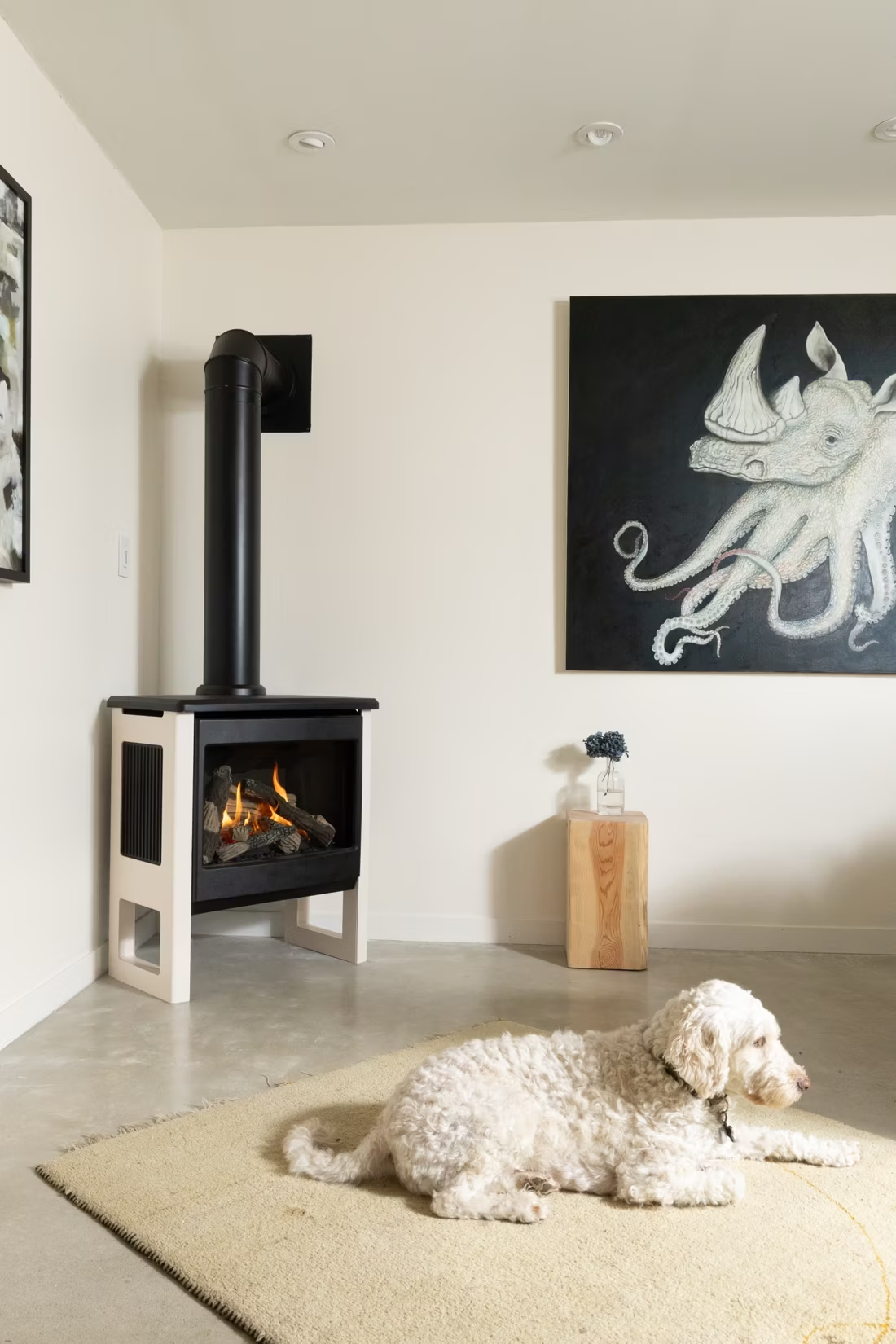
A gas fireplace is a built-in unit installed into framing or a masonry opening—the right choice for new construction or a room without an existing hearth. A gas insert is sized to slide into an existing masonry or kiva fireplace opening, sealing it up and using the existing chimney or flue as the vent path. A gas stove is a freestanding cabinet unit, less common in adobe-style homes here but an option where there's no existing fireplace and running a direct-vent pipe through an exterior wall is easier than building one in. For most Doña Ana homes with an existing kiva fireplace, an insert is the simplest upgrade.
Do I need a permit to install a gas fireplace in Doña Ana?
Yes. Doña Ana is unincorporated, so permitting runs through Doña Ana County's building and code enforcement office rather than a city building department. A new gas fireplace or insert typically needs both a building permit and a mechanical/gas permit, and any new propane line work should be done by a licensed gas-fitter. Most hearth dealers who work regularly in the county handle this paperwork as part of the installation, which is worth confirming before you hire anyone.
What's the difference between vented and vent-free gas fireplaces?
Vented (direct-vent) units draw combustion air from outside and exhaust it back outside through sealed pipe—they're the standard recommendation almost everywhere, including here. Vent-free units burn fuel directly into the room and are legal in New Mexico with room-size and oxygen-sensor requirements, but they release some combustion byproducts indoors. One detail specific to Doña Ana's elevation: at nearly 4,000 feet, some gas appliances need a high-altitude conversion kit or orifice adjustment to burn correctly, since burners are usually calibrated for sea level. A local installer familiar with the Mesilla Valley will know which models need that adjustment and which come pre-set for altitude.
How often should a gas fireplace be serviced?
Plan on an annual inspection, ideally in early fall before you start using it regularly through the cooler months. A technician checks the burner, pilot assembly, gas connections, and venting, and cleans the glass. It's a quicker visit than a wood chimney sweep—most appointments run under an hour—but it matters for safety and keeps the manufacturer's warranty intact. Local hearth and propane service companies in the Las Cruces area typically handle this for homes throughout Doña Ana County.
Gas or wood—which makes more sense in Doña Ana?
With such a mild winter heating season and winter lows averaging around 30°F, few homes here truly need wood as a primary heat source the way a colder climate might. Wood still has a following—pinyon and juniper are locally cut under Lincoln National Forest permits for $5 to $20 a cord, and the smell of pinyon smoke is part of the culture in this part of the valley. But wildfire smoke is already a seasonal air quality concern in the region, and gas gives you real flame and instant heat without adding to that or handling ash. For most households, gas ends up as the practical daily-use choice, with wood reserved for those who want the tradition of a kiva fire on a cold evening.
Why is my open fireplace making my house colder?
Open fireplaces suck—literally. As the fire burns, it consumes air your furnace already paid to heat and pulls it out through the chimney, so the house is actually colder after the fire goes out than before you lit it. An insert fixes this: it seals the chimney, puts fixed glass across the front, and turns that hole in your house into a real heat source.
Can I put a TV above my fireplace?
Yes—with an asterisk. Fireplaces are hot and TVs don't like heat. Either put a mantel between them to deflect rising warmth, or choose a fireplace with heat-management technology that creates a cool zone on the wall above—the wall stays around 125 degrees, barely warm, while the room still gets full heat. If you like clean lines and don't want a mantel, heat management is the answer.
What is an in-home preview and do I need one?
It's a visit where a hearth professional measures your space, confirms the model you picked actually works in your home, and walks the specs—framing, gas line, venting, finish work—before anything is ordered. Some details you just can't know until you see the house. Never make a down payment without one; it's the single most-skipped step that burns buyers.
Can a fireplace actually lower my heating bill?
Yes—by creating a comfort zone. A furnace heats every square foot of the house just to warm the one room you're in; a gas fireplace on low burns roughly a sixth of the gas a typical furnace does. Set the furnace around 55–60 degrees as a baseline, then heat the rooms your family actually uses. Families who heat this way commonly save $20–$60 a month.
Nearby Dealers
Hearth shops serving Doña Ana and the surrounding area. Every listing shows whether it is a WhyFire partner, a dealer we have verified as authorized for the brands we recommend, or a local business carrying hearth products. No manufacturer pays for placement. How we verify dealers →
Western Stoves And Fireplaces
Rawson Builders Supply
Hi Tech Home Services
K.d. Scholten Co.
Southwest Chimney Sweeps Inc
Jack White Building Specialties
Find your gas fireplace in Doña Ana.
Tell us about your home and current setup—propane or natural gas—and we'll match you with a trusted local dealer plus a free Project Guide & Parts List, including the right vent kit for your install.
Find Your Fireplace →