
Plug-In Warmth Built for Cannon AFB Living.
No chimney, no permit, no lease violation—just supplemental heat that fits military housing and moves with you at your next PCS.
Every Project Starts From One of These Five Situations
The easiest fireplace to install, own, and take with you.
Cannon AFB sits on the flat high plains of eastern New Mexico at roughly 4,294 feet, just outside Clovis, in climate zone 4B with a moderate winter heating season. That's a moderate heating load—nowhere near what a place like Bismarck ND or Fargo ND sees—but winter nights still average around 26°F, cold enough to want extra warmth in a bedroom, den, or converted garage. The Llano Estacado around Curry County is open plains, not forest, so firewood isn't a local resource the way it is in the pinyon-juniper foothills a few hours west. There's no local cutting permit office, no cordwood culture, and wildfire smoke is already a seasonal air quality concern here—which is part of why wood and pellet stoves are essentially a non-factor in this market.
Electric fits the rhythm of life around the base far better. Cannon AFB housing (and much of off-base Clovis) turns over on a military timeline, and most on-base leasing offices restrict or prohibit open-flame, solid-fuel appliances outright. An electric fireplace sidesteps all of that: no chimney, no gas line, no fire-marshal sign-off, and in many cases no more than plugging into an existing outlet. Power comes from Southwestern Public Service Co. or Farmers Electric Cooperative depending on where you live in Curry County, with residential rates around 13.35 and 12.87 cents per kWh—reasonable enough that running a supplemental electric unit a few hours a night costs a few dollars, not a few hundred.
Three steps. No salesperson until you're ready.
Tell us about your project
Your zip code, your situation, and the fuel you're leaning toward—or let the answers point you to one.
See what's actually available
The brands dealers within 100 miles genuinely carry—real options, never a catalog mirage.
Get your dealer & Project Guide
A trusted local dealer, plus the free Project Guide & Parts List that names every component of the job.
Frequently Asked Questions
How much does an electric fireplace or insert cost to install near Cannon AFB?
Freestanding and wall-mounted plug-in electric fireplaces typically run $150 to $500 for the unit itself, with zero install cost beyond hanging it and plugging it in—no permit, no venting, no gas line. Built-in electric inserts or full mantel packages that need a dedicated 120V or 240V circuit and some carpentry to frame the surround usually land between $1,500 and $4,000 installed. Because there's no combustion and no chimney involved, electric is consistently the lowest-cost hearth option available in the Cannon AFB and Clovis area, which is a big part of its appeal for renters and PCS-cycle families.
Are electric fireplaces allowed in Cannon AFB base housing?
Generally yes, and that's exactly why they're the dominant hearth product in this market. Base housing leases and most off-base rental agreements around Clovis prohibit open-flame, wood-burning, or gas-fueled appliances without landlord sign-off, but plug-in and hardwired electric units don't produce combustion byproducts or require venting, so they typically fall outside those restrictions. Always confirm with your housing office or property manager before installing a wall unit that requires cutting into drywall, but a freestanding electric fireplace is almost always a safe, lease-friendly choice.
What does it actually cost to run an electric fireplace on my utility bill?
Most electric fireplace heaters draw about 1,500 watts on the high setting. Run four hours a night, that's roughly 6 kWh a day. At Southwestern Public Service Co.'s residential rate of about 13.35 cents per kWh, that's around 80 cents a day, or about $24 a month during the coldest stretches. Farmers Electric Cooperative customers see slightly lower costs at their 12.87-cent rate. Most owners run the flame effect without heat during warmer months, which draws only a few watts and costs almost nothing.
Why don't more homes near Cannon AFB use wood or pellet stoves?
The terrain works against it. Curry County and the land around Cannon AFB is open Llano Estacado plains—there's no local timber industry, no Forest Service cutting permit office nearby, and the pinyon, juniper, and ponderosa pine that do grow in New Mexico are concentrated in the mountains and foothills several hours west. Add in seasonal wildfire smoke concerns on the plains and the fact that base housing largely prohibits solid-fuel appliances, and wood and pellet heat simply never took hold here the way it has in mountain or forested parts of the state. Electric and gas cover the market instead.
What's the difference between an electric fireplace, insert, and stove?
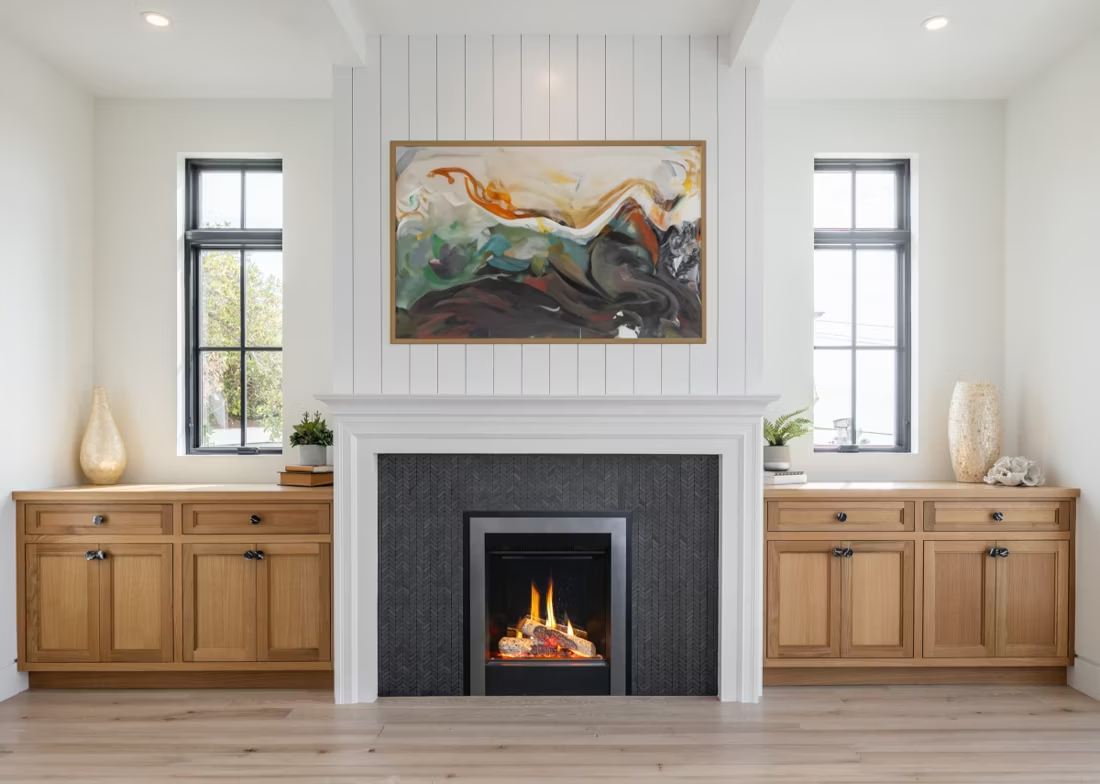
An electric fireplace is typically a wall-mounted or built-in unit designed to look like a framed hearth, often installed as the focal point of a living room. An electric insert is sized to slide into an existing masonry or metal fireplace opening, useful if a Clovis-area home has an old wood-burning firebox that's no longer used. An electric stove is a freestanding cabinet-style unit that mimics a wood stove's look and can sit anywhere near an outlet. All three plug into standard household current and produce heat the same way—the choice comes down to your room's layout and whether you're filling an existing opening or starting from a blank wall.
Do electric fireplaces put out real heat, or just look nice?
They put out real, usable heat, but it's supplemental rather than whole-home heat. A typical 1,500-watt unit is rated to comfortably warm 400 to 1,000 square feet depending on insulation and ceiling height—plenty for a bedroom, den, or single large room, which matches how most people around Cannon AFB actually use one: as backup warmth on the coldest nights (average winter lows near 26°F) or as the main heat source in a converted garage or add-on room, while central HVAC handles the rest of the house.
Can I take my electric fireplace with me when I PCS?
If it's a freestanding or wall-mounted plug-in unit, yes—that portability is one of the main reasons electric makes sense for military families. Unbolt it, pack it, and it works the same way at your next duty station regardless of local gas service or wood-burning rules. Hardwired inserts or units built into a custom surround are more permanent and generally stay with the house, so if you expect to move again soon, a plug-in model is the more practical choice.
What size electric fireplace do I need for my quarters?
For a single bedroom or den under 400 square feet, a compact 1,000 to 1,500-watt wall unit is enough. For an open living/dining area in a typical Cannon AFB-area home, a 1,500-watt unit rated for up to 1,000 square feet is the standard choice, often installed as a 40 to 50-inch wall-mount or media-console style fireplace. If you're heating a converted garage, sunroom, or larger open floor plan, look at units with a stated coverage above 1,000 square feet or plan on two smaller units zoned to the space—a local dealer can size this correctly based on your room's layout.
Electric vs. gas—which makes more sense near Cannon AFB?
Gas is a viable option here too, since natural gas and propane service both reach the Clovis area, and gas fireplaces deliver higher heat output for larger, colder rooms. But gas installation involves running a line, venting, and permitting through Curry County or the City of Clovis—real cost and lead time. Electric skips all of that, installs in an afternoon, and works in base housing where gas or solid-fuel appliances often aren't allowed. Given the area's moderate winter heating season, most homes don't need a primary heat source from either fuel—for supplemental warmth and ambiance in a rental or transient military household, electric is usually the simpler answer.
Can I put a TV above my fireplace?
Yes—with an asterisk. Fireplaces are hot and TVs don't like heat. Either put a mantel between them to deflect rising warmth, or choose a fireplace with heat-management technology that creates a cool zone on the wall above—the wall stays around 125 degrees, barely warm, while the room still gets full heat. If you like clean lines and don't want a mantel, heat management is the answer.
Does an electric fireplace need a vent or chimney?
No—that's its superpower. An electric fireplace needs a wall and an outlet, period. No vent pipe, no gas line, no clearances to design around, which is why it works in bedrooms, offices, apartments, and walls where venting a gas or wood unit would be impractical or impossible. Installation is typically the simplest and least expensive of any fireplace type.
Does a fireplace add value to my home?
On average, a fireplace adds back to the home about the same amount you spent installing it. Add the monthly savings from heating the rooms you actually use instead of the whole house—often hundreds of dollars a year—and the value case is strong before you even count what a fire does for how your family uses the room.
What is an in-home preview and do I need one?
It's a visit where a hearth professional measures your space, confirms the model you picked actually works in your home, and walks the specs—framing, gas line, venting, finish work—before anything is ordered. Some details you just can't know until you see the house. Never make a down payment without one; it's the single most-skipped step that burns buyers.
Electric Service in Cannon AFB
An electric fireplace's heater draws about 1,500 watts—pennies per hour at local rates.
Southwestern Public Service Co
Farmers Electric Coop, Inc - (Nm)
Find your electric fireplace near Cannon AFB.
Tell us about your quarters or home and we'll send a free Project Guide & Parts List—the right electric fireplace or insert for your space, plus a trusted local dealer who can get it installed correctly.
Find Your Fireplace →