
Add a Fireplace to Your Ventnor City Home Without a Chimney.
No venting, no gas line, no chimney chase cut through an elevated shore home. Find the right electric fireplace or insert and connect with a trusted local dealer.
Every Project Starts From One of These Five Situations
Built for Shore Homes, Condos, and Flood-Zone Construction.
Ventnor City sits on Absecon Island at just 5 feet of elevation, immediately south of Atlantic City, in a FEMA flood zone that requires many homes to be raised on pilings or elevated foundations with breakaway walls below base flood elevation. That kind of construction makes cutting a new chimney chase, running a gas line, or opening up a load-bearing wall for masonry work impractical in a lot of Ventnor properties—and often runs straight into local flood-zone building code. Winters here are mild by New Jersey standards: climate zone 4A, a fairly short, mild heating season, and an average winter low around 30°F, a fraction of what a place like Burlington, VT deals with each season.
That combination—flood-zone construction rules, older shore bungalows and duplexes converted to rentals, and condos with shared walls and no chimney access—is exactly where electric fireplaces earn their keep. There's no venting to size, no fuel to store, and no combustion byproducts to worry about in a home that may sit partly below flood elevation. The one real local variable is cost to run: Atlantic City Electric's residential rate of 22.57 cents per kWh is meaningfully higher than the national average, which matters if you're sizing a unit as your primary heat source versus simple ambiance and zone heat for a room.
Three steps. No salesperson until you're ready.
Tell us about your project
Your zip code, your situation, and the fuel you're leaning toward—or let the answers point you to one.
See what's actually available
The brands dealers within 100 miles genuinely carry—real options, never a catalog mirage.
Get your dealer & Project Guide
A trusted local dealer, plus the free Project Guide & Parts List that names every component of the job.
Frequently Asked Questions
How much does it cost to install an electric fireplace in Ventnor City?
A basic plug-in freestanding or wall-mount electric fireplace can run as little as $300 to $600 installed, since it typically just needs an existing outlet. Built-in wall inserts or linear units that require a dedicated 120V circuit run more, often $1,200 to $3,000, once you factor in an electrician to run new wiring—which is common in Ventnor's older shore bungalows and duplexes where panels weren't built for a 1,500-watt heating appliance on a shared circuit. Local dealers will scope the electrical work as part of an in-home estimate.
Do I need a permit for an electric fireplace in Ventnor City?
A simple plug-in unit usually needs no permit at all. A built-in insert that requires a new dedicated circuit typically needs an electrical permit through the City of Ventnor City's construction office, since a licensed electrician has to pull wire and tie into the panel. Because much of Ventnor sits in a FEMA flood zone, any project that involves modifying wall framing or work below base flood elevation can also trigger a flood-compliance review—worth a quick call to the local code office before cutting into a wall, even for something as simple as an electric insert.
Why do so many homes on Absecon Island go electric instead of wood or gas?
A lot of it comes down to construction type. Elevated flood-zone homes, condos with shared walls, and rental duplexes common throughout Ventnor City often don't have an existing chimney and aren't good candidates for cutting one in. Electric skips that problem entirely—it's an outlet or a simple circuit, not a venting project. It's also popular with landlords and vacation-property owners here who want the look and ambiance of a fireplace without fuel storage, gas lines, or annual chimney sweeps to manage between renters.
How much does it actually cost to run an electric fireplace on Atlantic City Electric rates?
At Atlantic City Electric's residential rate of 22.57 cents per kWh, a 1,500-watt unit running on full heat costs roughly 34 cents an hour, or a little over $8 for eight hours of continuous heating. That's higher than many parts of the country, so most Ventnor homeowners use electric fireplaces the way they're best suited—for ambiance and zone heat in a specific room rather than as the whole-home heat source. Running the flame effect alone, without the heater engaged, draws closer to 30-50 watts and costs pennies per hour.
Will an electric fireplace actually keep a room warm during a Ventnor City winter?
For supplemental heat, yes. A typical 1,500-watt electric fireplace can comfortably heat 400 to 1,000 square feet, which covers a living room or den in most Ventnor homes. With an average winter low around 30°F and a fairly short, mild heating season, the climate here is mild compared to harsher inland or northern locations, so electric works well as the primary heat for a room during shoulder-season cold snaps. It's not designed to replace a home's central heating system, especially in an older, exposed shore house catching wind off the bay or ocean.
What's the difference between a built-in insert, a wall-mount unit, and a freestanding electric stove?
A built-in insert sits inside a framed wall opening or an existing masonry fireplace and looks the most like a permanent fixture—it's the choice most homeowners pick when converting an old, unused fireplace. A wall-mount unit hangs flat against the wall like a TV and needs minimal structural work, popular in condos and rentals. A freestanding electric stove sits on the floor, plugs into a standard outlet, and can be moved between rooms or even between properties—a good fit for seasonal Ventnor rentals that get furnished differently year to year.
Does my electrical panel need to be upgraded for a built-in electric fireplace?
Sometimes. Many built-in electric fireplaces draw close to 1,500 watts on high heat and are supposed to run on their own dedicated 20-amp, 120V circuit rather than sharing a circuit with other outlets. Older Ventnor City bungalows and duplexes with original 1950s or 1960s-era panels sometimes don't have room for an added circuit without a subpanel or panel upgrade. A local electrician or hearth dealer will check your panel capacity during the in-home consultation before quoting the install.
Can I install an electric fireplace in a condo or rental unit in Ventnor City?
Yes, and it's one of the more common installs on the island given how much of Ventnor's housing stock is condos, duplexes, and seasonal rentals. Because there's no venting, gas line, or chimney involved, most HOAs have no objection, and simple plug-in wall-mount or freestanding units require zero modification to the unit itself. Landlords in particular like electric fireplaces for turnover properties—there's no fuel to manage between tenants and no combustion appliance to inspect each season.
Electric vs. gas—which fits my Ventnor City home better?
Gas delivers more real heat output and a more traditional flame, but it requires a gas line and proper venting—both of which are harder to add in an elevated, flood-zone home or a condo with shared walls. Electric skips both of those constraints entirely, at the cost of lower heat output and a higher per-hour running cost on Atlantic City Electric's rates if used as a primary heat source. For most Ventnor City homes, especially condos, rentals, and elevated shore properties, electric is the simpler and more code-friendly path; gas makes more sense in a standalone home with an existing gas service and room for proper venting.
Can I put a TV above my fireplace?
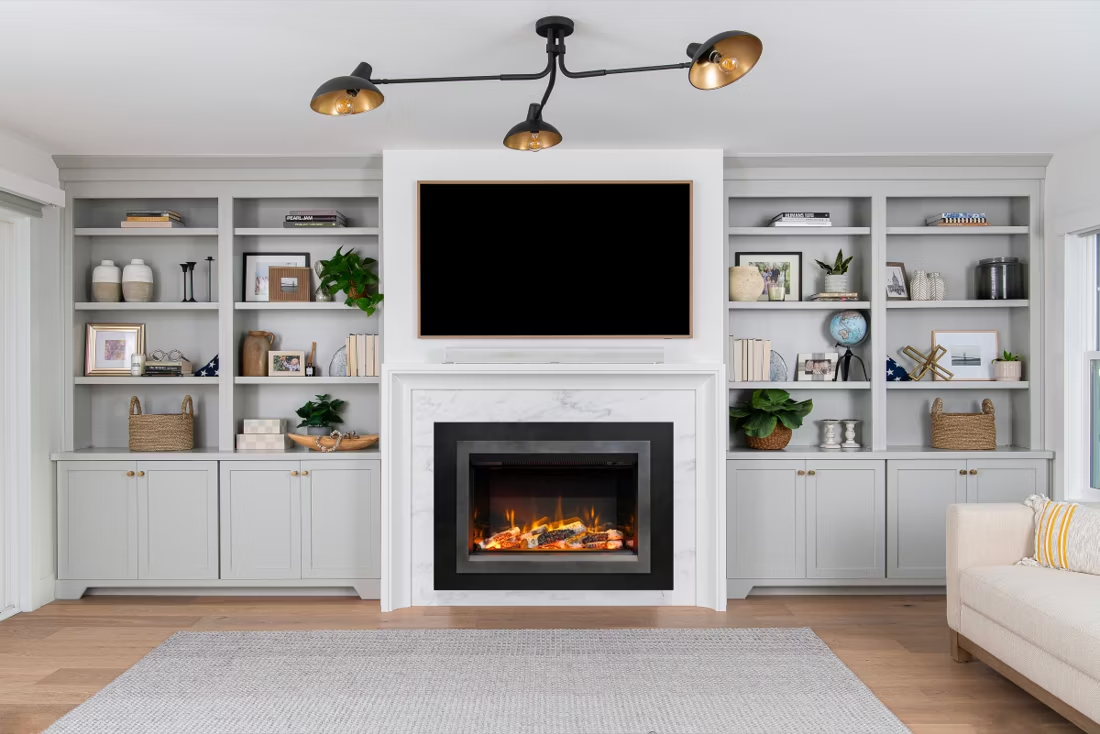
Yes—with an asterisk. Fireplaces are hot and TVs don't like heat. Either put a mantel between them to deflect rising warmth, or choose a fireplace with heat-management technology that creates a cool zone on the wall above—the wall stays around 125 degrees, barely warm, while the room still gets full heat. If you like clean lines and don't want a mantel, heat management is the answer.
Do electric fireplaces actually produce heat?
Yes—most put out around 4,800–5,000 BTUs from a standard outlet, which comfortably warms a bedroom, office, or den as a comfort-zone heater. What they won't do is carry a whole house the way wood, gas, or pellet can. Think of electric as ambiance-first with honest supplemental heat: flames on with no heat in July, flames plus warmth in January.
What is an in-home preview and do I need one?
It's a visit where a hearth professional measures your space, confirms the model you picked actually works in your home, and walks the specs—framing, gas line, venting, finish work—before anything is ordered. Some details you just can't know until you see the house. Never make a down payment without one; it's the single most-skipped step that burns buyers.
Can a fireplace actually lower my heating bill?
Yes—by creating a comfort zone. A furnace heats every square foot of the house just to warm the one room you're in; a gas fireplace on low burns roughly a sixth of the gas a typical furnace does. Set the furnace around 55–60 degrees as a baseline, then heat the rooms your family actually uses. Families who heat this way commonly save $20–$60 a month.
Nearby Dealers
Hearth shops serving Ventnor City and the surrounding area. Every listing shows whether it is a WhyFire partner, a dealer we have verified as authorized for the brands we recommend, or a local business carrying hearth products. No manufacturer pays for placement. How we verify dealers →
The Chimney Doctor Inc.
Quality Home Center
Electric Service in Ventnor City
An electric fireplace's heater draws about 1,500 watts—pennies per hour at local rates.
Atlantic City Electric Co
Find your electric fireplace in Ventnor City.
Tell us a bit about your home and we'll put together a free Project Guide & Parts List for your electric fireplace project—matched with a trusted local dealer who knows Ventnor's flood-zone construction rules.
Find Your Fireplace →