
Real warmth, no chimney required, across Sussex County.
From finished basements in Sparta to sunroom additions near Lake Hopatcong, electric fireplaces bring zone heat and real flame ambiance to Sussex County homes without venting, gas lines, or wood storage. Get matched with a local dealer who can size the right unit for your room.
Every Project Starts From One of These Five Situations
Zone heat that earns its place in a Highlands winter.
Sussex County sits in the New Jersey Highlands along the Kittatinny Ridge, home to High Point—the highest elevation in the state—and winters that run cold enough to average a 19°F overnight low and rack up nearly 5,926 heating degree days a year. That's a real cold-climate 5A zone, though nowhere near the severity of places like Burlington, VT—it's the kind of cold that makes a finished basement rec room or a sunroom addition feel chilly without help, not the kind that requires a whole-home wood-burning setup to survive.
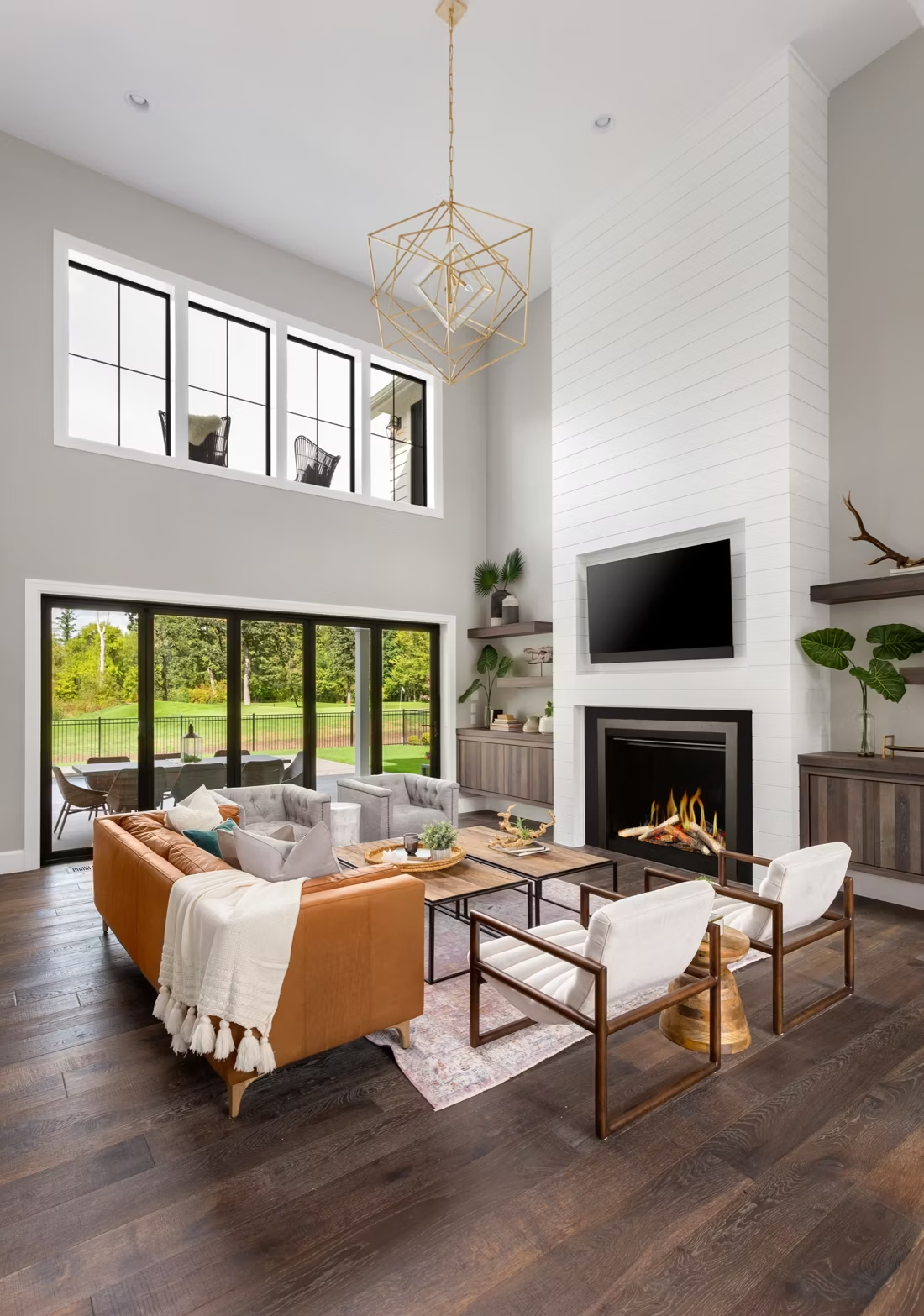
That's exactly where electric fireplaces fit into the county's housing stock. Older farmhouses in Newton and Franklin, split-levels in Sparta and Hopatcong, and condos near Mountain Creek Resort in Vernon all share the same problem: a room that's a few degrees short of comfortable and no easy way to add ductwork or a flue. An electric insert, wall-mounted linear unit, or mantel package solves that with a standard outlet or a single dedicated circuit—no permit-heavy venting project, no gas line, and no wood to split or store. Jersey Central Power & Light (JCP&L) serves most of the county, and while ice storms along the ridge can knock out power for a day or two, plenty of Sussex County homeowners pair an electric unit for daily ambiance with a wood stove for actual outage backup—oak, hickory, and maple are all readily available locally for that purpose.
Three steps. No salesperson until you're ready.
Tell us about your project
Your zip code, your situation, and the fuel you're leaning toward—or let the answers point you to one.
See what's actually available
The brands dealers within 100 miles genuinely carry—real options, never a catalog mirage.
Get your dealer & Project Guide
A trusted local dealer, plus the free Project Guide & Parts List that names every component of the job.
Frequently Asked Questions
How much does an electric fireplace installation cost in Sussex County?
Plug-in freestanding units start around $300 and need nothing more than a standard outlet. Most Sussex County homeowners land in the $1,200 to $3,500 range for a wall-mounted linear unit or a built-in insert with a custom surround, which usually includes a licensed electrician running a dedicated 20-amp circuit—common in older housing stock around Newton and Franklin where existing circuits are already loaded up. Larger mantel packages or built-ins requiring carpentry and trim work push toward the higher end. A local dealer can give you a firm number after seeing your room and your panel.
Can an electric fireplace actually heat a room, or is it just for looks?
A quality electric unit puts out real heat—typically 4,600 to 5,000 BTU on a 1,500-watt heater, enough to noticeably warm a finished basement, den, or bedroom-sized space. But with Sussex County averaging 5,926 heating degree days a year and winter lows around 19°F, running electric resistance heat as your only source through January and February gets expensive fast. Most homeowners here use electric fireplaces as zone heat for a specific room—supplementing a furnace or heat pump—rather than trying to replace central heat entirely. The flame-only mode is also popular for the shoulder-season months when you want ambiance without paying to run the heater.
Do I need a permit or an electrician to install an electric fireplace in Sussex County?
A simple plug-in unit needs neither—it's no different than plugging in a space heater. But a hardwired wall-mount, built-in insert, or any unit requiring a new dedicated circuit needs a licensed electrician, and most of Sussex County's roughly two dozen municipalities—Newton, Vernon Township, Sparta Township, Hamburg, and the rest—require an electrical permit for that circuit work through their local building department. There's no single countywide office; each municipality handles its own permitting, so your dealer or electrician will pull the permit specific to where you live.
Will my electric fireplace work if the power goes out?
No—electric fireplaces are entirely dependent on power, which matters in a county where ice storms and nor'easters along the Kittatinny Ridge can knock out JCP&L service for a day or more, especially in the more rural parts of Vernon and Frankford. That's the honest tradeoff: no venting, no fuel storage, no permit hassle, but no heat when the grid goes down. Plenty of Sussex County homes handle this by keeping a wood stove or insert as backup—local oak, hickory, and maple firewood is easy to source—while using electric for daily convenience and ambiance in rooms where running a flue isn't practical.
What's the difference between an electric insert, wall-mount, and mantel package?
An electric insert is designed to drop into an existing masonry fireplace opening, giving old farmhouse fireplaces around Sussex County a functional heat source again without touching the chimney. A wall-mounted linear unit hangs flush or recessed into a wall—popular in newer builds and condo renovations near Vernon and Hopatcong for a modern, low-profile look. A mantel package pairs an electric insert or built-in unit with a surrounding cabinet or mantel shelf, giving you a traditional fireplace look in a room that never had a chimney at all. Which one fits depends on whether you're retrofitting an old hearth or building a feature wall from scratch—a local dealer can walk you through both.
What should I look for in an electric fireplace for a Sussex County home?
Look for a unit with a real thermostat (not just high/low heat settings), separate controls for flame and heat so you can run ambiance without the heater in shoulder seasons, and a heater rated for the actual square footage of the room—undersized units run constantly and still fall short on the coldest days. Brands like Dimplex, Napoleon, and Touchstone are common choices among local dealers for their realistic flame effects and reliable heating elements. For a finished basement or addition in a county averaging 5,926 heating degree days, prioritize heat output over flame styling; for a purely decorative install in a warm room, styling can take the lead.
Electric vs. wood—which makes more sense for my Sussex County home?
Wood remains a strong choice in Sussex County—there are no local air quality restrictions on burning, and oak, hickory, and maple are all common, affordable firewood species in the area. Wood also keeps working when the power doesn't, which matters given the county's exposure to ice storms along the Highlands. Electric wins on convenience and placement flexibility: no chimney, no ash, no permit hassle, and it works in an upstairs bedroom or a condo where a flue simply isn't an option. Many Sussex County households end up with both—wood for the main living space and winter storm backup, electric for a bedroom, basement, or office where running venting doesn't make sense.
Electric vs. gas or propane—which is right for my Sussex County home?
Gas and propane fireplaces deliver more consistent, higher heat output and can be sized to genuinely offset furnace use during a cold Sussex County winter, but they require either a gas line or a propane tank and typically a professional venting installation. Electric skips all of that—plug it in or run one circuit, and you're done—but the heat output and operating cost per BTU don't compete with gas over a full heating season. If you're renovating a room from scratch and already have gas service nearby, it's worth comparing both with a local dealer. If you want a fast, low-disruption install in an existing room, electric is usually the simpler path.
Where can I find a reliable installer for an electric fireplace in Sussex County?
Look for a hearth dealer who works regularly with licensed electricians on dedicated-circuit installs—that combination matters more for electric fireplaces than people expect, since an undersized circuit is the most common reason units trip breakers or underperform. A dealer who covers Sussex County will typically also serve Newton, Sparta, Vernon, Franklin, and Hamburg without a major travel surcharge. Avoid ordering a big-box unit online without confirming your room's electrical capacity first—that's the step most DIY installs get wrong. A local match through Find My Fireplace connects you with a dealer who sizes the unit and coordinates any electrical work up front.
Can I put a TV above my fireplace?
Yes—with an asterisk. Fireplaces are hot and TVs don't like heat. Either put a mantel between them to deflect rising warmth, or choose a fireplace with heat-management technology that creates a cool zone on the wall above—the wall stays around 125 degrees, barely warm, while the room still gets full heat. If you like clean lines and don't want a mantel, heat management is the answer.
Do electric fireplaces actually produce heat?
Yes—most put out around 4,800–5,000 BTUs from a standard outlet, which comfortably warms a bedroom, office, or den as a comfort-zone heater. What they won't do is carry a whole house the way wood, gas, or pellet can. Think of electric as ambiance-first with honest supplemental heat: flames on with no heat in July, flames plus warmth in January.
What is an in-home preview and do I need one?
It's a visit where a hearth professional measures your space, confirms the model you picked actually works in your home, and walks the specs—framing, gas line, venting, finish work—before anything is ordered. Some details you just can't know until you see the house. Never make a down payment without one; it's the single most-skipped step that burns buyers.
Can a fireplace actually lower my heating bill?
Yes—by creating a comfort zone. A furnace heats every square foot of the house just to warm the one room you're in; a gas fireplace on low burns roughly a sixth of the gas a typical furnace does. Set the furnace around 55–60 degrees as a baseline, then heat the rooms your family actually uses. Families who heat this way commonly save $20–$60 a month.
Stove and Fireplace Dealers in Sussex County
Find your electric fireplace in Sussex County.
Tell us about your room and your home's electrical setup, and we'll match you with a trusted local Sussex County dealer—plus a free Project Guide & Parts List covering the right unit size, surround or mounting hardware, and what your electrician needs to know.
Find Your Fireplace →