
Warm, clean heat for the coastal edge of the Pinelands.
Instant, low-maintenance heat for the neighborhoods around Galloway Township and the Jersey Shore's coastal edge. Find the right gas fireplace or insert and connect with a trusted local dealer.
Every Project Starts From One of These Five Situations
Mild winters still call for reliable heat.
Stockton University sits in Galloway Township, Atlantic County, just inland from the Jersey Shore, at only 41 feet of elevation. Winters here are mild by national standards—the average winter low hovers around 25°F, and the area has roughly half the winter heating load of a place like Burlington, Vermont sees in a typical winter. But mild still means five months of furnace and fireplace season, coastal humidity that makes cold nights feel damp and biting, and nor'easters that occasionally knock out power along the barrier islands and inland communities alike.
Gas is the standard hearth fuel choice in this part of South Jersey. Natural gas service reaches most of the developed parts of Galloway Township through South Jersey Gas, while homes farther out toward the Pinelands preserve or on well-and-septic lots typically run on propane instead. Wood-burning stoves and pellet appliances are uncommon here—Stockton sits inside the Pinelands National Reserve, where the Comprehensive Management Plan tightly restricts private timber cutting, and much of the nearby housing is multi-family or campus-adjacent, which doesn't lend itself to chimney installations. Electric fireplaces see limited use too: Atlantic City Electric's residential rate of roughly 22.6 cents per kWh makes electric-resistance heat one of the pricier ways to warm a room, so most homeowners treat electric units as ambiance rather than primary heat. A direct-vent gas fireplace or insert threads the needle—real heat output, minimal upkeep, and a fuel that's already priced competitively for a coastal New Jersey home.
Three steps. No salesperson until you're ready.
Tell us about your project
Your zip code, your situation, and the fuel you're leaning toward—or let the answers point you to one.
See what's actually available
The brands dealers within 100 miles genuinely carry—real options, never a catalog mirage.
Get your dealer & Project Guide
A trusted local dealer, plus the free Project Guide & Parts List that names every component of the job.
Frequently Asked Questions
How much does a gas fireplace installation cost near Stockton University?
Most gas fireplace and insert installations in the Galloway Township area run $4,000 to $9,500, depending on the unit, the venting path, and whether a new gas line needs to be run. A direct-vent insert into an existing masonry fireplace with gas already plumbed to the house sits at the low end. A first-time gas line run from the street—common in some of the older homes near campus that predate natural gas service on that block—pushes the estimate toward the higher end. Homes relying on propane instead of piped natural gas may also need a tank installation, which adds to the total. A local dealer will give you a firm number after seeing your chimney, framing, and gas service.
Can I convert an old wood-burning fireplace to gas?
Yes, and it's a common project for the older homes scattered around Absecon, Galloway, and the rest of Atlantic County that still have a masonry fireplace built decades before natural gas lines reached the area. A gas insert typically installs into the existing firebox using a stainless liner run up the original chimney, so you keep the look of the fireplace without hauling oak, hickory, or maple firewood—species that are common in this part of the Pine Barrens but rarely burned locally given how few homes still have chimneys rated for wood. Conversions in this area typically run $4,000 to $8,500, with cost driven mostly by whether the home already has a gas line nearby.
Is my home on natural gas, or will I need propane?
It depends on where you sit relative to the gas main. South Jersey Gas serves most of the built-up parts of Galloway Township, including the neighborhoods closest to Stockton University's campus. Homes farther out toward the Pinelands preserve, or on larger rural lots, are often on well water and septic and rely on propane instead—either a buried tank or an above-ground tank serviced by a local propane supplier. Nearly every gas fireplace on the market can be configured for either fuel; your installer simply sets the correct orifice and regulator for whichever you have.
Will a gas fireplace still work if the power goes out?
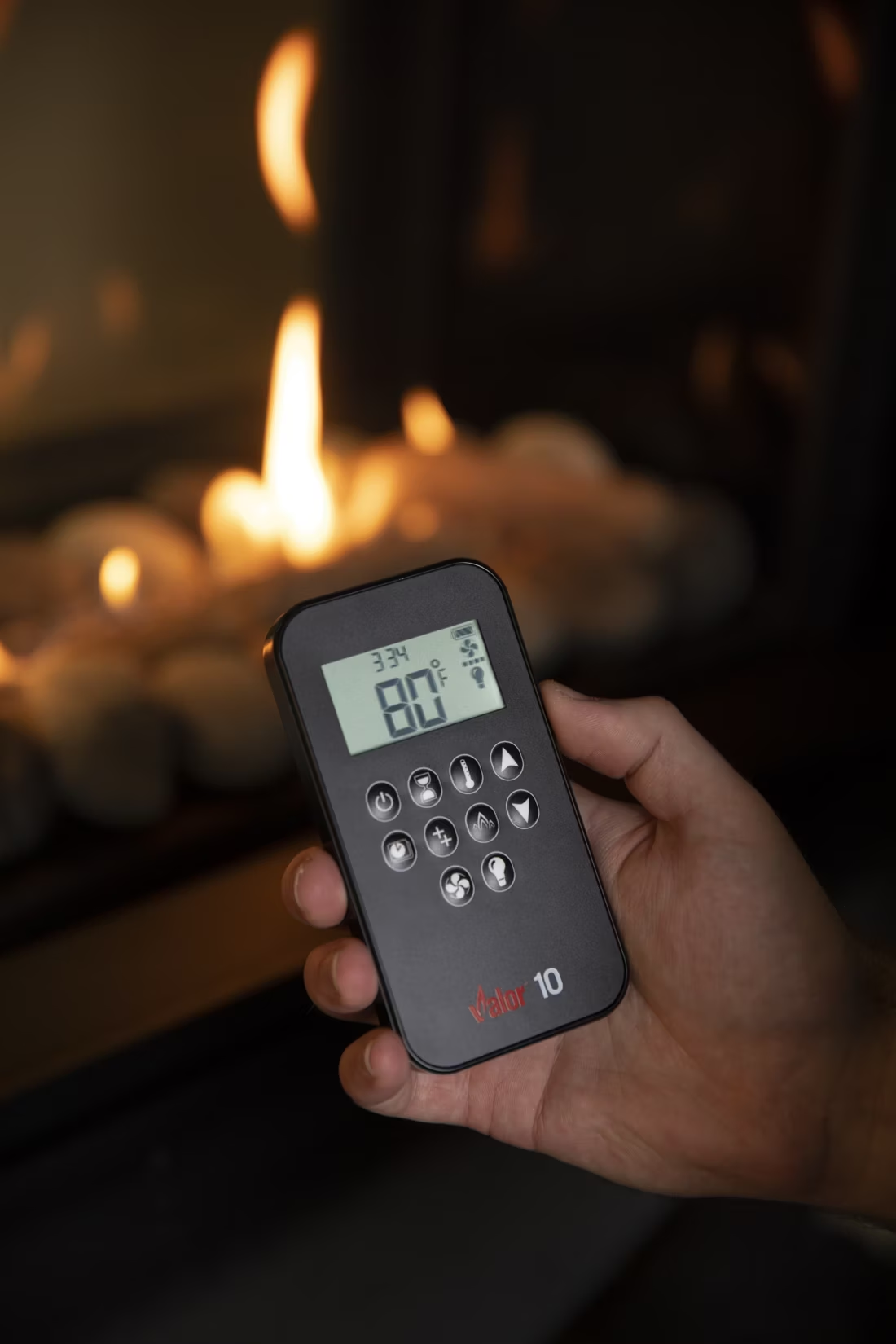
Most will, which matters here—nor'easters and late-summer tropical systems both have a track record of knocking out power along this stretch of the Jersey Shore and inland Atlantic County. Units with standing pilot or IPI (intermittent pilot ignition) run on a small battery backup that keeps the igniter working even with the grid down. Valor's gas fireplaces take a different approach: the pilot's thermocouple generates its own electricity, so there's no battery to remember to replace. If backup heat during outages is a priority for your household, ask your local dealer to point you toward battery-backup or self-powered ignition models specifically.
What's the difference between a gas fireplace, insert, and stove?
A gas fireplace is a built-in unit framed into a wall—the standard choice for new construction or a remodel that doesn't already have a chimney. A gas insert is sized to slide into an existing masonry firebox, which is the more common project among the older homes near Absecon and Galloway that already have a fireplace they want to modernize. A gas stove is a freestanding cabinet unit, similar in footprint to a wood stove, that vents through a wall or existing chimney chase. For most homes near Stockton University with an existing fireplace, an insert is the simplest upgrade; new builds or additions usually call for a built-in unit.
Do I need a permit to install a gas fireplace in Galloway Township?
Yes. Galloway Township's construction department requires both a building/mechanical permit and sign-off on the gas line work for any new gas fireplace or insert installation, consistent with the New Jersey Uniform Construction Code. The gas piping itself has to be run or verified by a licensed gas-fitter. Most hearth dealers in the area handle the permit application and inspection scheduling as part of the installation, so you're not left coordinating multiple trades yourself.
Are vent-free gas fireplaces allowed in New Jersey?
Vent-free units are permitted under New Jersey's adoption of the International Fuel Gas Code, but they come with real restrictions: a minimum room volume based on the unit's BTU output, an oxygen-depletion sensor, and in many cases a carbon monoxide detector installed in the room. Vented direct-vent units don't carry any of those restrictions—they draw combustion air from outside and exhaust it back outside through a sealed pipe, which is why they're the more common choice for homes near Stockton University and throughout Atlantic County. If you're set on a vent-free unit for a room without existing venting access, a local dealer can confirm whether your space qualifies under the sizing rules.
How often should a gas fireplace be serviced?
Once a year, ideally before the fall heating season starts. A technician checks the burner and pilot assembly, tests the gas connections for leaks, inspects the venting for blockage or corrosion—a real concern this close to the salt air off the Jersey Shore—and cleans the glass and interior. Annual service in the area typically runs $150 to $225. Coastal salt air can accelerate corrosion on exterior vent caps faster than it would inland, so it's worth having a technician check the termination point specifically if your unit vents through an exterior wall facing the water.
Why is gas so much more common here than wood, pellet, or electric heat?
It comes down to housing stock and geography. Stockton University and the surrounding Galloway Township neighborhoods sit inside the Pinelands National Reserve, where private timber cutting is tightly restricted, so there's no local culture of self-cut firewood the way there is further inland. Much of the housing near campus is also multi-family or campus-adjacent, which doesn't suit a wood stove's chimney and clearance requirements. Pellet stoves face the same housing mismatch, plus coastal humidity makes bagged pellet storage more finicky than in drier climates. Electric fireplaces work fine technically, but Atlantic City Electric's residential rate—about 22.6 cents per kWh—makes electric-resistance heat one of the pricier ways to warm a room, so most homeowners here use electric units for ambiance rather than as a real heat source. Gas splits the difference: real heat output, low maintenance, and a fuel that's already priced competitively for this part of South Jersey.
Is my gas fireplace wasting gas?
If it was installed more than 15 years ago, probably. Older gas fireplaces keep a standing pilot light burning all the time, and that little flame can cost a couple hundred dollars a year. Newer models use pilot-on-demand ignition—the pilot lights only when you use the fireplace and goes out when you turn it off.
Can I put a TV above my fireplace?
Yes—with an asterisk. Fireplaces are hot and TVs don't like heat. Either put a mantel between them to deflect rising warmth, or choose a fireplace with heat-management technology that creates a cool zone on the wall above—the wall stays around 125 degrees, barely warm, while the room still gets full heat. If you like clean lines and don't want a mantel, heat management is the answer.
What is an in-home preview and do I need one?
It's a visit where a hearth professional measures your space, confirms the model you picked actually works in your home, and walks the specs—framing, gas line, venting, finish work—before anything is ordered. Some details you just can't know until you see the house. Never make a down payment without one; it's the single most-skipped step that burns buyers.
Can I install a fireplace myself?
If you're putting a fire in your house on purpose, it's best to work with an expert. Unless you're genuinely experienced in framing, gas line, vent pipe, and the national code on clearances to combustibles, have a professional do it—and ideally the same company that sells you the fireplace, so warranty, service, and liability all live under one roof.
Nearby Dealers
Hearth shops serving Stockton University and the surrounding area. Every listing shows whether it is a WhyFire partner, a dealer we have verified as authorized for the brands we recommend, or a local business carrying hearth products. No manufacturer pays for placement. How we verify dealers →
The Chimney Doctor Inc.
Find your gas fireplace near Stockton University.
Tell us a bit about your home and we'll match you with the right gas fireplace, insert, or stove—plus a free Project Guide & Parts List with your recommended local dealer.
Find Your Fireplace →