
Warm, reliable heat for Pomona's coastal-plain winters.
Direct-vent gas fireplaces and inserts deliver instant, consistent warmth for Atlantic County homes—no cordwood, no ash, no pilot light to babysit through a damp South Jersey winter. Find the right unit and get matched with a trusted local dealer.
Every Project Starts From One of These Five Situations
Gas is the practical choice on the coastal plain.
Pomona sits low and flat on Atlantic County's coastal plain, just 56 feet above sea level, where winter lows average around 25°F and the region experiences a moderate winter heating season. That's a real heating load, but it's nowhere near what inland cold-climate towns like Burlington, VT or Duluth, MN see—and it's a big part of why wood stoves never became a fixture here the way they did further north or out west. Between the milder swings, humid coastal air, and New Jersey's dense underground gas infrastructure, most Galloway Township and Pomona homeowners simply never had a strong reason to stack cordwood.
Natural gas mains run through most of Pomona and the surrounding Galloway Township neighborhoods along Route 30 and the Route 9 corridor, making a direct-vent gas fireplace or insert a straightforward add to an existing home. For the handful of properties tucked closer to the Pine Barrens edge without a gas main nearby, propane fills the gap. Either way, gas heat tends to be the more economical option locally—Atlantic City Electric's residential rate runs about 22.6 cents per kWh, well above the national average, which makes electric resistance heat expensive to run as anything more than supplemental warmth.
Three steps. No salesperson until you're ready.
Tell us about your project
Your zip code, your situation, and the fuel you're leaning toward—or let the answers point you to one.
See what's actually available
The brands dealers within 100 miles genuinely carry—real options, never a catalog mirage.
Get your dealer & Project Guide
A trusted local dealer, plus the free Project Guide & Parts List that names every component of the job.
Frequently Asked Questions
How much does a gas fireplace installation cost in Pomona?
Most direct-vent gas fireplace or insert installations in the Pomona area run in the $4,000 to $9,000 range, with the low end covering a straightforward insert into an existing masonry firebox where a gas line is already nearby, and the higher end covering new construction or remodel installs that need fresh gas line runs and full venting through an exterior wall or roof. Older Galloway Township homes with existing wood-burning fireboxes are common candidates for the lower-cost insert route since the masonry chimney can often double as the chase for the vent liner.
Can I convert my existing wood-burning fireplace to gas?
Yes, and it's one of the more common projects local dealers see in Pomona. Many homes built in the 1970s and 80s in this part of Atlantic County came with a standard wood-burning masonry fireplace that rarely gets used—gas heat simply never had a strong reason to compete with wood indoors here, but the open masonry firebox itself is inefficient and drafty. A gas insert seals that opening, uses the existing chimney as a vent chase with a stainless liner, and turns a decorative fireplace into a real heat source. Expect the same general $4,000 to $9,000 range depending on whether the home is already on natural gas service or needs a propane setup.
Is natural gas available in Pomona, or do I need propane?
Most of Pomona and the surrounding Galloway Township neighborhoods have natural gas service available, typically through South Jersey Gas mains that run along the main corridors near Route 30 and White Horse Pike. Homes further out toward the Pine Barrens edge, on private wells and septic, sometimes sit beyond the gas main and rely on propane instead. A local dealer can check your address against the gas main map during a consultation, but either fuel works in the same fireplace models—it's just a matter of the orifice and regulator setup.
Will a gas fireplace still work if the power goes out?
Most modern gas fireplaces will, which matters in a shore-adjacent county where nor'easters and summer tropical systems both knock out power along the Atlantic City Electric grid. Units with a standing pilot or IPI (intermittent pilot ignition) system typically run on a small battery backup that keeps the unit lighting and operating even with no household power. A few brands, including Valor, use a self-powered thermocouple system that generates its own electricity from the pilot flame, so there's no battery to remember to replace. Ask your local dealer about the ignition system on any model you're considering if outage backup matters to you.
What's the difference between a gas fireplace, insert, and stove?
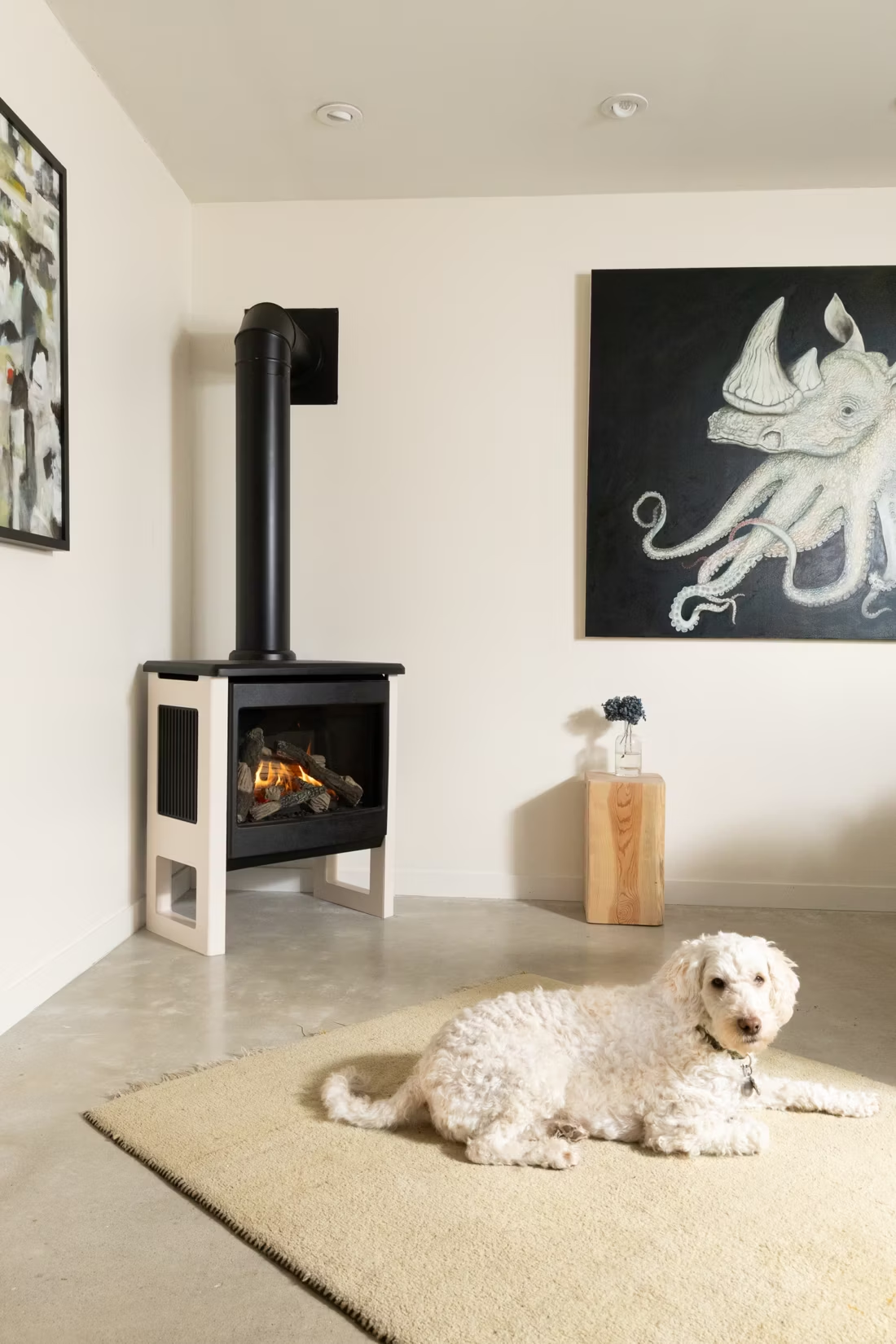
A gas fireplace is a fully built-in unit framed into a wall, typically chosen for new construction or a remodel. A gas insert is sized to slide into an existing masonry firebox, which is the common route for the older wood-burning fireplaces found in many Pomona and Galloway Township homes. A gas stove is a freestanding cabinet-style unit that sits on the floor and vents through a wall or existing chimney, similar in footprint to a wood stove. For most homeowners here who already have a fireplace opening, an insert is the simplest upgrade; homes without one usually go with a built-in unit instead.
Do I need a permit to install a gas fireplace in Pomona?
Yes. Since Pomona is unincorporated territory within Galloway Township, both the building permit and the gas line work are handled through the Galloway Township Construction Code Enforcement office, and New Jersey's Uniform Construction Code requires licensed work for any gas line modification. Most hearth dealers coordinate the permit, the gas fitter, and the final inspection as part of the installation, so homeowners typically don't have to manage separate trades or paperwork.
Are vent-free gas fireplaces allowed in New Jersey?
Vent-free (unvented) gas units are legal in New Jersey but come with real restrictions—the room has to meet a minimum cubic footage for the BTU output, and the state's building code requires a carbon monoxide detector within 10 feet of any fuel-burning appliance, including a vent-free fireplace. Vented direct-vent units, which draw combustion air from outside and exhaust it back outside through a sealed pipe, don't carry those same room-size or CO exposure concerns and are what most Pomona-area dealers install and recommend by default. It's worth discussing both with a local installer, but direct-vent is the far more common choice in this area.
How often does a gas fireplace need to be serviced?
An annual check is the standard recommendation for any gas-burning appliance, including direct-vent fireplaces and inserts. A technician will inspect the burner, pilot or ignition system, gas connections, and venting, and clean the glass and interior. In the Pomona area this typically runs $150 to $250 for a standard visit. Given the coastal humidity here, it's also worth having the technician check the venting termination on the exterior wall for salt-air corrosion, which can be more of an issue for homes closer to Atlantic City and the barrier islands than further inland.
Why is gas so much more common than wood or pellet heat in Pomona?
It comes down to climate and infrastructure. Pomona's winter heating season is moderate, and its 25°F average winter low adds up to a real but moderate heating load—not the kind of sustained deep cold that keeps wood stoves in constant use across places like Duluth, MN or Burlington, VT. At the same time, natural gas mains already reach most of Galloway Township, so there was never much practical push toward burning cordwood or running pellet hoppers here. A handful of rural properties near the Pine Barrens still keep a wood-burning setup going with local oak, hickory, or maple as backup heat, and pellet stoves using regional brands like Energex or Hamer show up occasionally, but both remain uncommon choices. For most Pomona homeowners, a direct-vent gas fireplace or insert is simply the more practical fit for the local climate and the fuel already running to the house.
What's the difference between an insert and a zero-clearance fireplace?
An insert is a fireplace that slides into a pre-existing wood-burning fireplace—if you don't have one, there's nothing to insert it into. A zero-clearance fireplace is built into a framed wall, which makes it the answer for remodels and new construction. Simple test: existing masonry fireplace means insert; blank or framed wall means zero-clearance.
Why is a fireplace insert so efficient?
An insert does two things: it seals the chimney completely, so you stop losing air you already paid to heat, and it radiates warmth into the room through the firebox and glass. Most add a heat-exchange fan that pulls cool room air underneath, wraps it around the hot firebox, and pushes it back out warm. Your home is more efficient before you've even lit the first fire.
Does a fireplace add value to my home?
On average, a fireplace adds back to the home about the same amount you spent installing it. Add the monthly savings from heating the rooms you actually use instead of the whole house—often hundreds of dollars a year—and the value case is strong before you even count what a fire does for how your family uses the room.
How much should I budget for a fireplace?
For an average home—covering the fireplace, the vent pipe, and basic installation—a budget between $3,900 and $5,500 gives you a lot of options across wood, gas, and pellet. By the time you add finish work, gas line, and electrical, the average complete installation lands between $5,000 and $12,000 all-in. In a remodel or new build, a good rule is to put about 2.5% of the total project cost toward the fireplace.
Nearby Dealers
Hearth shops serving Pomona and the surrounding area. Every listing shows whether it is a WhyFire partner, a dealer we have verified as authorized for the brands we recommend, or a local business carrying hearth products. No manufacturer pays for placement. How we verify dealers →
The Chimney Doctor Inc.
Find your gas fireplace in Pomona.
Tell us a bit about your home and we'll match you with the right gas fireplace, insert, or stove—plus a free Project Guide & Parts List with the exact parts, vent kit, and your recommended local Pomona-area dealer.
Find Your Fireplace →