
Warm, Reliable Heat Through Jersey Shore Winters.
Instant, clean heat for Neptune City's older Shore bungalows and capes—sized right, vented right, and installed by a dealer who knows the borough's codes.
Every Project Starts From One of These Five Situations
Clean heat that keeps up with the shore's damp, salty winters.
Neptune City sits at just 22 feet of elevation along the Shark River, a few blocks from Asbury Park and Belmar, in a 4A climate zone with a heating season noticeably milder than colder inland cities like Minneapolis, MN, which runs much longer and colder. Winters here average lows around 25°F, but the real challenge isn't deep cold—it's damp, salt-laden air, coastal humidity, and the nor'easters and occasional tropical systems that knock out power along the JCP&L grid for days at a time.
Most of Neptune City's small, older housing stock—bungalows, capes, and post-war ranches—sits within reach of natural gas service in this part of Monmouth County, which makes gas fireplaces and inserts a practical upgrade over drafty masonry hearths. A direct-vent gas fireplace or insert delivers instant, thermostat-controlled heat, keeps working through a power outage with the right ignition system, and doesn't require the wood storage or chimney upkeep that's harder to manage on Neptune City's tight residential lots.
Three steps. No salesperson until you're ready.
Tell us about your project
Your zip code, your situation, and the fuel you're leaning toward—or let the answers point you to one.
See what's actually available
The brands dealers within 100 miles genuinely carry—real options, never a catalog mirage.
Get your dealer & Project Guide
A trusted local dealer, plus the free Project Guide & Parts List that names every component of the job.
Frequently Asked Questions
How much does a gas fireplace installation cost in Neptune City?
Most gas fireplace and insert installations in Neptune City run $4,000 to $9,500, depending on the unit and how much venting and gas line work is involved. A gas insert dropped into an existing masonry fireplace—common in the borough's older capes and bungalows—with a gas line already nearby tends to land on the lower end. New direct-vent construction through an exterior wall, or jobs that require running a fresh gas line from the street connection, push toward the higher end. Because lots here are small and many homes are close together, your installer will also factor in exterior vent clearances from windows and property lines as part of the estimate.
Can I convert my existing wood fireplace to gas?
Yes, and it's a common request for Neptune City's older housing stock, much of which was built with a masonry wood fireplace decades before central air and modern insulation arrived. A gas insert typically slides into that existing firebox, using a stainless liner run through your current chimney for venting. Expect $4,500 to $8,500 for a straightforward conversion where the chimney is structurally sound; homes with deteriorated masonry—not unusual this close to the salt air off the Shark River and the Atlantic—may need chimney repair or relining first, which adds to the cost.
Do I need natural gas, or should I use propane?
Most of Neptune City is within New Jersey Natural Gas's service territory, and the majority of homes here already run natural gas for cooking, water heating, or furnace service, which makes adding a fireplace straightforward. Propane is really only a consideration for the rare property that's never been connected to gas service or sits on a private well/septic setup at the borough's edges. Nearly every gas fireplace or insert sold locally can be configured for either fuel—your installer sets the orifice and regulator to match.
Will my gas fireplace still work if a nor'easter knocks out power?
Most modern gas fireplaces will, which matters here—JCP&L outages tied to nor'easters and remnant tropical systems aren't rare along this stretch of the Shore. Units with IPI (intermittent pilot ignition) run on a small AA battery backup that kicks in automatically when the power drops, so the fireplace still lights on demand. Just remember to swap those batteries yearly. Valor fireplaces skip batteries entirely—their pilot generates its own current through the thermocouple, so the unit works whenever the gas is flowing, storm or no storm. Ask your local dealer which ignition system a given model uses before you buy.
What's the difference between a gas fireplace, gas insert, and gas stove?
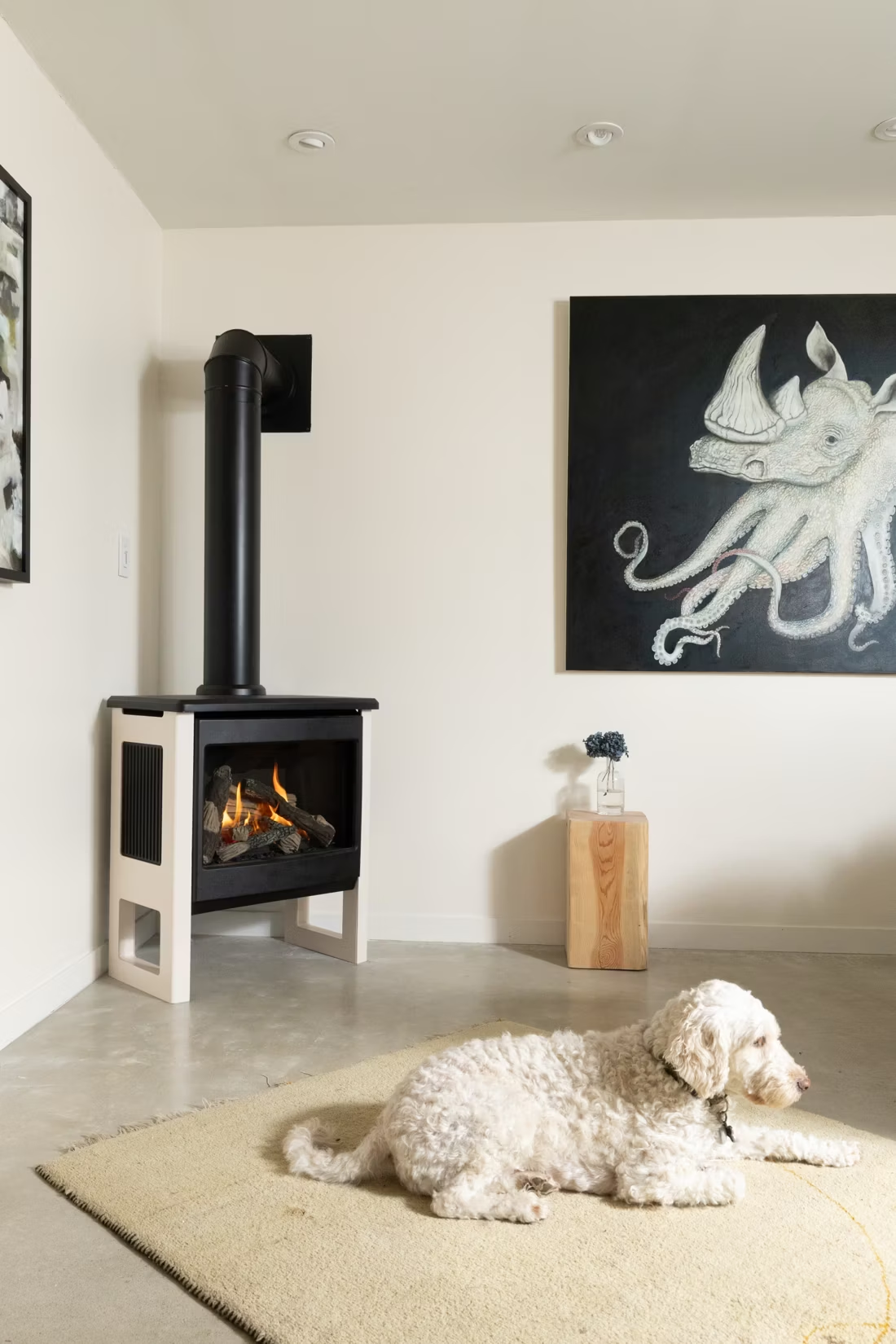
A gas fireplace is a fully built-in unit framed into a wall—typical for new construction or a full remodel. A gas insert is built to slide into an existing masonry firebox, which fits a lot of Neptune City's older homes that already have a wood-burning fireplace they no longer use. A gas stove is a freestanding cabinet unit that sits on the floor, useful in smaller rooms or additions where there's no existing fireplace opening. For most borough homeowners with an old hearth already in place, an insert is the simplest and most cost-effective path.
Do I need a permit to install a gas fireplace in Neptune City?
Yes—installations require both a construction permit through the Neptune City/Monmouth County construction code office and a gas line permit pulled by a licensed plumber or gas fitter. Most hearth dealers who work in the borough regularly handle this paperwork as part of the installation, coordinating the gas trade and the final inspection so you're not managing two separate contractors. Given how many homes here are close to property lines, expect the inspector to also confirm exterior vent termination clearances from windows, doors, and neighboring structures.
Should I get a vented or vent-free gas fireplace?
Vented (direct-vent) units draw combustion air from outside and exhaust exhaust gases back outside through a sealed pipe—they're the standard recommendation almost everywhere, including Neptune City. Vent-free units burn directly into the room and are legal in New Jersey under strict room-sizing and oxygen-depletion-sensor rules, but they also add combustion moisture to indoor air. That's a real consideration in a Shore town where humidity and salt air already push many homes toward mildew and moisture issues. Direct-vent is the more common and more universally recommended choice for houses this close to the water.
How often does a gas fireplace need to be serviced?
Plan on an annual inspection, ideally before the fall heating season starts. A technician checks the burner, pilot or ignition module, gas connections, and venting, and cleans the glass—this runs $150 to $250 in the Monmouth County area. It's a lighter lift than chimney sweeping for wood, but skipping it is still the main reason pilot assemblies fail or glass fogs prematurely, and salt-air corrosion on exterior vent caps is worth a technician's eye on any home within a mile or two of the water.
Gas vs. wood—which makes more sense for a Neptune City home?
Wood is still available locally—oak, hickory, and maple are the common regional species—and it offers real heat output plus operation during a power outage without needing batteries. But firewood storage is a genuine headache on the small lots common in this borough, and stacked wood exposed to Shore humidity seasons unevenly. Gas offers instant, thermostat-controlled heat with no ash, no chimney sweeping, and no dry storage space needed, which is why most Neptune City homeowners upgrading an old fireplace choose gas for daily use. Some households keep a wood-burning option elsewhere on the property for backup heat or ambiance and rely on gas for the main living space.
Why is a fireplace insert so efficient?
An insert does two things: it seals the chimney completely, so you stop losing air you already paid to heat, and it radiates warmth into the room through the firebox and glass. Most add a heat-exchange fan that pulls cool room air underneath, wraps it around the hot firebox, and pushes it back out warm. Your home is more efficient before you've even lit the first fire.
Is my gas fireplace wasting gas?
If it was installed more than 15 years ago, probably. Older gas fireplaces keep a standing pilot light burning all the time, and that little flame can cost a couple hundred dollars a year. Newer models use pilot-on-demand ignition—the pilot lights only when you use the fireplace and goes out when you turn it off.
What is an in-home preview and do I need one?
It's a visit where a hearth professional measures your space, confirms the model you picked actually works in your home, and walks the specs—framing, gas line, venting, finish work—before anything is ordered. Some details you just can't know until you see the house. Never make a down payment without one; it's the single most-skipped step that burns buyers.
Can I install a fireplace myself?
If you're putting a fire in your house on purpose, it's best to work with an expert. Unless you're genuinely experienced in framing, gas line, vent pipe, and the national code on clearances to combustibles, have a professional do it—and ideally the same company that sells you the fireplace, so warranty, service, and liability all live under one roof.
Nearby Dealers
Hearth shops serving Neptune City and the surrounding area. Every listing shows whether it is a WhyFire partner, a dealer we have verified as authorized for the brands we recommend, or a local business carrying hearth products. No manufacturer pays for placement. How we verify dealers →
We’ve paused dealer listings for this connection today. Enter your zip or postal code above to find dealers near you, or come back tomorrow.
Popular Gas Brands
Where each brand came from, what's inside it today, and every current model. No brand pays to be here. Not every dealer carries every brand, so enter your zip code to see what's sold near Neptune City.
Kozy Heat
Kozy Heat was founded in 1976 by Dudley Hussong in Lakefield, Minnesota, and incorporated as Hussong Manufacturing Co., Inc. in 1978.
28 gas models →Fireplace Xtrordinair
Fireplace Xtrordinair, now often called FireplaceX, is the fireplace brand of Travis Industries, Inc., of Mukilteo, Washington.
25 gas models →Town & Country
Town & Country Fireplaces is the luxury gas fireplace brand of Pacific Energy Fireplace Products Ltd., of Duncan, British Columbia.
14 gas models →Lopi
Lopi is a wood, pellet, and gas stove brand founded by Kurt Rumens in Bellevue, Washington, in 1979.
7 gas models →Forge & Flame
Forge & Flame is the stove brand Hearth & Home Technologies introduced in August 2023 to bring Vermont Castings, Harman, and Quadra-Fire under one name.
6 gas models →Vermont Castings
Vermont Castings was founded in 1975 by Duncan Syme, the designer, and his brother-in-law Murray Howell, the business partner, in Randolph, Vermont.
6 gas models →Find your gas fireplace in Neptune City.
Tell us about your home and we'll send a free Project Guide & Parts List—the right unit, the vent kit it needs, and a trusted local dealer to install it.
Find Your Fireplace →