
Real warmth for Monmouth County homes—no chimney required.
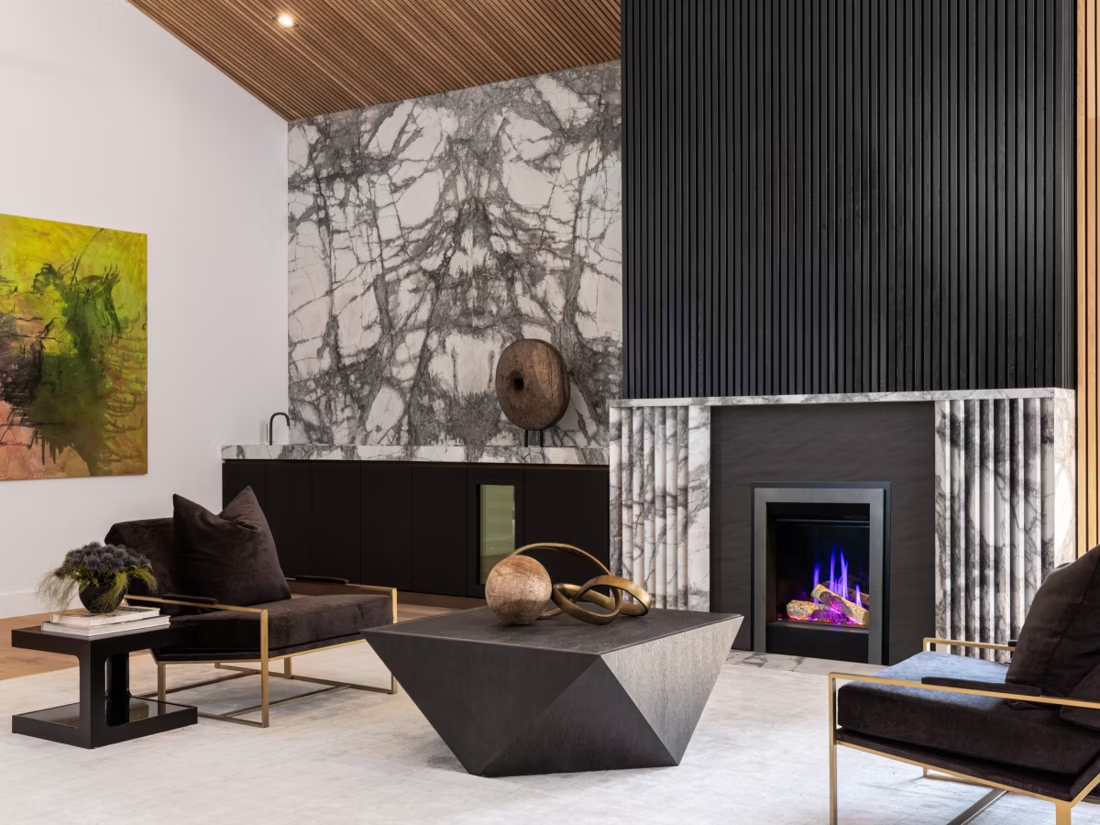
From redeveloped waterfront condos in Long Branch to raised Bayshore homes in Union Beach and historic Victorians in Rumson, electric fireplaces bring real zone heat and ambiance without venting, gas lines, or masonry work. Find the right unit and connect with a trusted local dealer.
Every Project Starts From One of These Five Situations
Electric fireplaces fit the way Monmouth County actually lives.
Monmouth County is 53 separate municipalities and a lot of different housing stock—pre-war shore bungalows in Asbury Park and Highlands, Victorian-era homes in Rumson and Spring Lake, newer subdivisions in Marlboro and Manalapan, and a wave of condo and townhome redevelopment along the Long Branch and Red Bank waterfronts. Winters here run milder than most of the country—average lows around 25°F and a moderate heating season overall—so most homes lean on central heat and use a fireplace for supplemental warmth and atmosphere rather than as a primary heat source.
That mix of housing types is exactly where electric fireplaces earn their place. Condo and townhome buyers along the Long Branch waterfront or in Red Bank's converted mill buildings often can't add a chimney or gas line at all. Homeowners on the Bayshore and barrier communities—Union Beach, Sea Bright, Highlands—built or rebuilt to post-Sandy flood elevation standards often want to avoid adding combustion appliances near grade. And in Rumson or Spring Lake, owners of century-old shore homes frequently want the look of a fire without cutting into a historic facade for new venting. A built-in electric unit runs on a dedicated circuit run by a licensed electrician through JCP&L-served power, and a plug-in freestanding model needs nothing more than an outlet—both routes skip the combustion, venting, and clearance rules that come with gas or wood.
Three steps. No salesperson until you're ready.
Tell us about your project
Your zip code, your situation, and the fuel you're leaning toward—or let the answers point you to one.
See what's actually available
The brands dealers within 100 miles genuinely carry—real options, never a catalog mirage.
Get your dealer & Project Guide
A trusted local dealer, plus the free Project Guide & Parts List that names every component of the job.
Frequently Asked Questions
How much does it cost to install an electric fireplace in Monmouth County?
A freestanding or wall-mounted plug-in electric fireplace typically runs $300 to $800 for the unit itself, with no electrician needed if it's going into a standard outlet. A built-in electric fireplace insert or linear wall unit that requires a dedicated 20-amp circuit generally runs $800 to $2,500 installed, including the electrical permit and the licensed electrician's time to run the circuit. Costs run higher in some of the county's older housing stock—parts of Asbury Park, Long Branch, and the Bayshore towns still have undersized panels or older wiring that need an upgrade before a new circuit can be added.
Do I need a permit to install an electric fireplace in Monmouth County?
It depends on the unit. A plug-in freestanding or wall-mounted electric fireplace that runs off an existing outlet generally doesn't require a permit—it's treated like any other appliance. A built-in electric insert or linear unit wired to a new dedicated circuit typically does require an electrical permit. Because Monmouth County is made up of 53 individual municipalities rather than one county-wide building authority, that permit goes through your local town's building department—Red Bank, Middletown, Wall Township, and every other municipality issues its own. The licensed electrician doing the circuit work will usually pull the permit as part of the job.
What size electric fireplace do I need for my room?
Most electric fireplace inserts and linear units are rated around 4,600 to 5,000 BTU (roughly 1,500 watts), which comfortably heats a 400 to 1,000 square foot room depending on ceiling height and insulation—plenty for supplemental heat in Monmouth County's relatively mild 4A climate, where winter lows average around 25°F. For open-concept layouts common in newer developments in Marlboro, Manalapan, and Colts Neck, a single unit may only heat the immediate seating area rather than the whole great room, so some homeowners choose a wider linear model or a second unit for a distant zone.
Electric vs. gas fireplace—which makes more sense for my Monmouth County home?
Gas remains a strong option in Monmouth County where natural gas or propane service is already in place—it puts out more real heat and can run during a power outage with the right ignition system. Electric wins on installation simplicity: no gas line, no venting, and no combustion clearances, which matters in condos and townhomes along the Long Branch and Red Bank waterfront redevelopment corridors where a flue or gas line simply isn't an option. It also matters for homes rebuilt to post-Sandy flood elevation codes on the Bayshore and barrier communities, where owners are often steering away from adding new combustion appliances near grade. If you want a fire look with zero venting or fuel logistics, electric is the simpler build; if you want real supplemental heat output and already have gas service, that's worth weighing too.
Does an electric fireplace need venting or a chimney?
No—that's the main appeal. Electric fireplaces produce no combustion byproducts, so there's no flue, no gas line, and no clearance-to-combustibles requirements the way there are with wood or gas units. That makes them the practical choice for interior rooms without exterior wall access, for condos and townhomes in the redevelopment corridors of Long Branch and Asbury Park where venting isn't physically possible, and for finished basements throughout the county's suburban towns where adding a chimney after the fact isn't realistic.
Will my electric fireplace work during a power outage?
No—electric fireplaces require power to run, so they'll go dark along with everything else if JCP&L service is interrupted. That's a real consideration on the Jersey Shore, where nor'easters and hurricanes have knocked out power across Monmouth County for days at a time—Superstorm Sandy being the obvious example. If backup heat during outages is a priority, a gas fireplace with battery-backup ignition is worth considering alongside an electric unit for everyday ambiance. Wood stoves can also provide power-independent heat, though they're uncommon in Monmouth County given lot sizes, HOA rules, and municipal restrictions in denser residential zones.
Do all electric fireplaces actually produce heat, or are some just for looks?
Both exist, and it's worth checking before you buy. Some electric units are ambiance-only—an LED flame effect with no heating element, often chosen for bedrooms or media walls where actual heat isn't wanted. Others include a genuine 1,500-watt heating element that functions like a space heater, putting out real, noticeable warmth in addition to the flame effect. If you want supplemental heat for a chilly Monmouth County basement or a drafty older shore home in Highlands or Sea Bright, make sure the model you're considering includes the heater, not just the visual effect—local dealers can point you to the right one for your goal.
Where does an electric fireplace make the most sense in a Monmouth County home?
Finished basements are a common fit throughout the county's suburban towns—Wall Township, Freehold, Howell—where a below-grade room needs supplemental warmth without venting complications. Condos and townhomes in redevelopment areas like the Long Branch waterfront or Red Bank's converted commercial buildings are another strong fit, since gas lines and chimneys usually aren't an option in shared-wall construction. And on the Bayshore and barrier communities—Union Beach, Highlands, Sea Bright—where homes have been rebuilt on raised foundations to meet post-Sandy flood elevation standards, electric avoids the combustion-appliance questions that come with adding new gas or wood equipment near grade.
Why don't more Monmouth County homes use wood or pellet stoves?
Wood and pellet stoves are genuinely uncommon here, and it's worth being upfront about why. Monmouth County's residential lots tend to be smaller and denser than rural parts of the state, many condo and HOA communities restrict solid-fuel appliances outright, and shore-town setbacks and historic-district rules in places like Rumson and Spring Lake make adding a new chimney impractical. Pellet fuel faces a similar gap—brands like Energex, Hamer, and Greene Team Pellet Fuel are available from regional suppliers, but pellets are trucked in rather than locally produced or widely stocked, and pellet stoves still need the same kind of venting and clearance work as wood units. Electric fireplaces sidestep all of that, which is a big part of why they've become the practical default for supplemental heat and ambiance across the county.
Can I put a TV above my fireplace?
Yes—with an asterisk. Fireplaces are hot and TVs don't like heat. Either put a mantel between them to deflect rising warmth, or choose a fireplace with heat-management technology that creates a cool zone on the wall above—the wall stays around 125 degrees, barely warm, while the room still gets full heat. If you like clean lines and don't want a mantel, heat management is the answer.
Does an electric fireplace need a vent or chimney?
No—that's its superpower. An electric fireplace needs a wall and an outlet, period. No vent pipe, no gas line, no clearances to design around, which is why it works in bedrooms, offices, apartments, and walls where venting a gas or wood unit would be impractical or impossible. Installation is typically the simplest and least expensive of any fireplace type.
Can I install a fireplace myself?
If you're putting a fire in your house on purpose, it's best to work with an expert. Unless you're genuinely experienced in framing, gas line, vent pipe, and the national code on clearances to combustibles, have a professional do it—and ideally the same company that sells you the fireplace, so warranty, service, and liability all live under one roof.
What is an in-home preview and do I need one?
It's a visit where a hearth professional measures your space, confirms the model you picked actually works in your home, and walks the specs—framing, gas line, venting, finish work—before anything is ordered. Some details you just can't know until you see the house. Never make a down payment without one; it's the single most-skipped step that burns buyers.
Stove and Fireplace Dealers in Monmouth County
Central Jersey Masonry & Chimney Sweep
Fireside Pros/Awning Design
Find your electric fireplace in Monmouth County.
Tell us a bit about your home—condo, shore cottage, or suburban basement—and we'll match you with the right electric fireplace or insert, plus a free Project Guide & Parts List and a trusted local dealer to install it.
Find Your Fireplace →