
Reliable Warmth Built for Life on the Shore.
Instant, clean heat for Margate City's barrier-island homes—sized right for elevated construction and salt air. Find the right unit and connect with a trusted local dealer.
Every Project Starts From One of These Five Situations
Comfort suited to barrier-island living.
Margate City sits on Absecon Island at just 5 feet of elevation, with a climate zone 4A profile and a winter heating season that stays fairly mild—a far milder heating season than inland Northeast towns like Burlington, VT or Duluth, MN, where winters are much colder and heating needs run far higher. Winter lows here average around 30°F, and much of the housing stock is either a seasonal shore cottage or a newer home elevated on pilings to meet post-Sandy flood-zone requirements.
South Jersey Gas serves the mainline communities and most year-round homes on the island, which makes gas fireplaces a practical fit for zone heating in a family room or den during shoulder-season chill, without running a full furnace cycle. Because Margate sits a few blocks from open ocean and back bay, salt air accelerates corrosion on cheap venting components, so local installers typically spec stainless steel direct-vent systems rated for coastal exposure—a detail that matters more here than it would forty miles inland.
Three steps. No salesperson until you're ready.
Tell us about your project
Your zip code, your situation, and the fuel you're leaning toward—or let the answers point you to one.
See what's actually available
The brands dealers within 100 miles genuinely carry—real options, never a catalog mirage.
Get your dealer & Project Guide
A trusted local dealer, plus the free Project Guide & Parts List that names every component of the job.
Frequently Asked Questions
How much does a gas fireplace installation cost in Margate City?
A typical gas fireplace installation in Margate City runs between roughly $5,000 and $12,000, with the spread driven mostly by venting complexity. Homes elevated on pilings often need the vent run coordinated through floor joists and an insulated chase, which adds labor beyond a standard slab-on-grade install. A direct-vent insert going into an existing masonry fireplace with a gas line already nearby sits toward the lower end; a new built-in unit in a raised-construction home with a fresh gas line run and coastal-rated stainless venting sits toward the higher end. Local installers will quote a firm number after seeing the specific structure.
Can I convert my existing fireplace to gas?
Yes, and it's common in the older beach bungalows scattered through Margate's interior blocks that still have a masonry fireplace and chimney from before the island's post-Sandy rebuild wave. A gas insert typically slides into that existing firebox, using a stainless liner run up the old chimney as the vent path. Expect $4,500 to $9,500 depending on whether South Jersey Gas service already reaches the house or whether the conversion requires a new line run from the street. Homes without an existing chimney at all are usually better candidates for a new direct-vent unit rather than a conversion.
Do I need natural gas, or should I plan on propane?
South Jersey Gas mains run through most of the developed parts of Margate City, so year-round homes with existing gas appliances can usually add a fireplace without much extra infrastructure. Some older cottages set back from the main streets, or homes closer to the bay side where service is thinner, rely on propane instead. Either fuel works in most fireplace models—your installer sets the correct orifice and regulator—but propane requires either an existing tank or a new tank installed by a regional propane supplier, which adds to the project cost and footprint on a small barrier-island lot.
Will my gas fireplace still work if the power goes out?
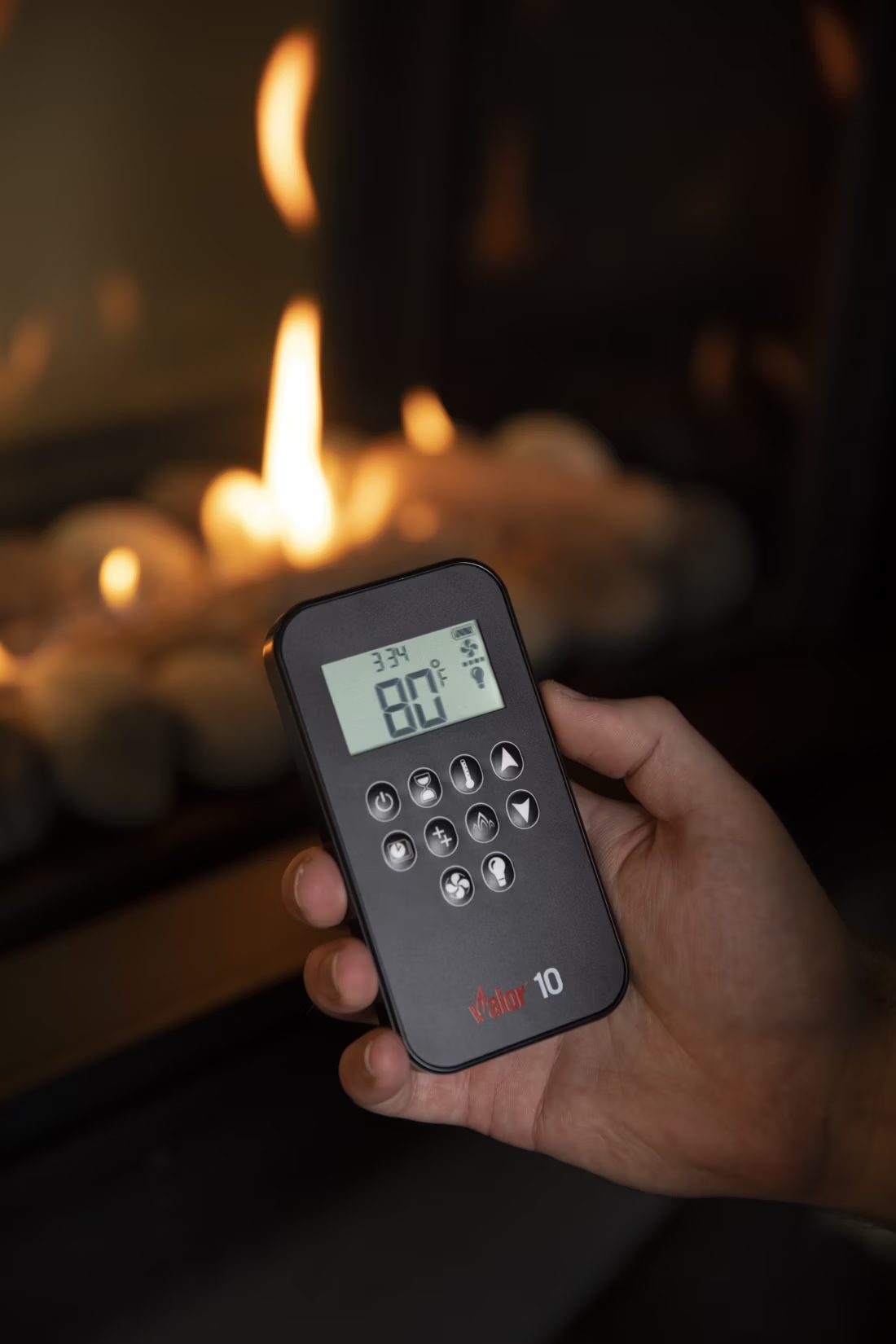
Most direct-vent gas fireplaces with intermittent pilot ignition (IPI) run on a battery backup that kicks in the moment Atlantic City Electric service drops—which matters on a barrier island where nor'easters and coastal storms can knock out power for days at a time. The fireplace lights and operates normally off the batteries; just make sure they're fresh going into storm season. Valor fireplaces skip batteries entirely—their pilot assembly generates its own electricity through a thermocouple, so the unit keeps running through an extended outage with zero maintenance. Worth asking about if storm resilience matters to you.
What's the difference between a gas fireplace, gas insert, and gas stove?
A gas fireplace is a fully built-in unit framed into a wall—the standard choice for new construction, which describes a lot of Margate's rebuilt, elevated housing stock. A gas insert drops into an existing masonry firebox and uses the current chimney as its vent path, which suits the island's older interior-block cottages. A gas stove is a freestanding cast-iron or steel unit that sits on the floor, useful in a condo or smaller shore unit where there's no fireplace opening at all. For most Margate homeowners, the choice comes down to whether you already have a working chimney to reuse.
Do I need a permit to install a gas fireplace in Margate City?
Yes—installations go through the Margate City Construction Code Office under the New Jersey Uniform Construction Code, and any new gas line work requires a licensed gas fitter in addition to the building permit. Most hearth retailers handle the permitting and inspection scheduling as part of the install, which is worth the peace of mind on an island where flood-zone rules also govern where mechanical equipment can sit relative to base flood elevation.
Should I get a vented or vent-free gas fireplace?
Vented, direct-vent units draw combustion air from outside and exhaust it back outside—they're the standard, code-friendly choice almost everywhere, including Margate. Vent-free units burn directly into the room and release some water vapor and combustion byproducts indoors; that's a harder sell in a barrier-island home that's already managing salt-air humidity and moisture intrusion near sea level. Local installers here lean heavily toward direct-vent for that reason, and it's the option most homeowners end up choosing once they weigh it against a house that already fights dampness.
How often should my gas fireplace be serviced?
Plan on an annual inspection, typically $150 to $250, covering the burner, pilot assembly, gas connections, and glass. On the barrier island, it's also worth having the technician check the exterior vent cap and termination point for salt-air corrosion—stainless components hold up well, but cheaper aluminum trim can pit and fail faster this close to the ocean than it would on the mainland.
Gas vs. wood—which makes more sense for a Margate home?
Wood is available regionally—oak, hickory, and maple are the common species sold around Atlantic County—but dry, covered wood storage is tight on most Margate lots, and many rebuilt homes on pilings simply weren't designed with a wood-burning chimney in mind. Gas fits the realities of the island better for most owners: instant on-off operation, no ash or storage hassle, and a unit that can be vented cleanly through an elevated structure. Wood still has a place in a handful of interior-block homes with existing masonry chimneys, but for new construction and most renovations, gas is the more practical call here.
What's the difference between an insert and a zero-clearance fireplace?
An insert is a fireplace that slides into a pre-existing wood-burning fireplace—if you don't have one, there's nothing to insert it into. A zero-clearance fireplace is built into a framed wall, which makes it the answer for remodels and new construction. Simple test: existing masonry fireplace means insert; blank or framed wall means zero-clearance.
Can I put a TV above my fireplace?
Yes—with an asterisk. Fireplaces are hot and TVs don't like heat. Either put a mantel between them to deflect rising warmth, or choose a fireplace with heat-management technology that creates a cool zone on the wall above—the wall stays around 125 degrees, barely warm, while the room still gets full heat. If you like clean lines and don't want a mantel, heat management is the answer.
Can a fireplace actually lower my heating bill?
Yes—by creating a comfort zone. A furnace heats every square foot of the house just to warm the one room you're in; a gas fireplace on low burns roughly a sixth of the gas a typical furnace does. Set the furnace around 55–60 degrees as a baseline, then heat the rooms your family actually uses. Families who heat this way commonly save $20–$60 a month.
How much should I budget for a fireplace?
For an average home—covering the fireplace, the vent pipe, and basic installation—a budget between $3,900 and $5,500 gives you a lot of options across wood, gas, and pellet. By the time you add finish work, gas line, and electrical, the average complete installation lands between $5,000 and $12,000 all-in. In a remodel or new build, a good rule is to put about 2.5% of the total project cost toward the fireplace.
Nearby Dealers
Hearth shops serving Margate City and the surrounding area. Every listing shows whether it is a WhyFire partner, a dealer we have verified as authorized for the brands we recommend, or a local business carrying hearth products. No manufacturer pays for placement. How we verify dealers →
The Chimney Doctor Inc.
Quality Home Center
Find your gas fireplace in Margate City.
Tell us about your home and we'll match you with a trusted local dealer and send over a free Project Guide & Parts List—the exact equipment, vent kit, and installer recommendation for your gas fireplace project in Margate City.
Find Your Fireplace →