
Clean gas heat for Jersey Shore living.
Instant, reliable heat for Manasquan's beach cottages and shore homes—even when a nor'easter takes out the power. Find the right unit and connect with a trusted local dealer.
Every Project Starts From One of These Five Situations
Warmth that keeps up with shore-town storms.
Manasquan sits at just 11 feet above sea level on Monmouth County's barrier peninsula, where winter lows average around 25°F and the heating season is real but moderate—nothing like the deep freezes of inland New England, but enough to run a fireplace most nights from November through March. Many of the borough's older beach bungalows and post-war cottages still have their original brick fireplaces, and gas is by far the most common upgrade: no cordwood to store on a tight quarter-acre lot, no chimney maintenance battling salt air, and heat at the flip of a switch.
New Jersey Natural Gas serves most of Manasquan's main grid, so homes closer to Route 71 and the borough center typically have natural gas already run to the property. Older cottages near the Manasquan Inlet or on older private lanes sometimes sit off the main distribution lines and rely on propane instead, delivered by regional suppliers like Suburban Propane or AmeriGas. Either way, the appeal is the same: a direct-vent gas fireplace or insert gives you real heat during a winter power outage—a meaningful feature on a barrier peninsula that still remembers what Sandy did to the grid in 2012.
Three steps. No salesperson until you're ready.
Tell us about your project
Your zip code, your situation, and the fuel you're leaning toward—or let the answers point you to one.
See what's actually available
The brands dealers within 100 miles genuinely carry—real options, never a catalog mirage.
Get your dealer & Project Guide
A trusted local dealer, plus the free Project Guide & Parts List that names every component of the job.
Frequently Asked Questions
How much does a gas fireplace installation cost in Manasquan?
Most gas fireplace and insert installations in Manasquan run $4,500 to $10,000, with the low end covering a direct-vent insert dropped into an existing masonry fireplace where a gas line is already nearby, and the high end covering new construction or a full built-in unit that requires framing, new venting through an exterior wall, and a gas line extension. Homes in Manasquan's FEMA flood zones sometimes carry an added cost if the hearth or gas appliance needs to be relocated above base flood elevation as part of the install—your local installer will flag this during the site visit.
Do I need natural gas, or should I use propane?
It depends on where your house sits. Homes closer to the center of Manasquan and along the main grid usually already have natural gas service through New Jersey Natural Gas, which makes adding a fireplace straightforward if you have an existing gas appliance like a water heater or range. Older cottages near the Manasquan Inlet or on some of the borough's smaller private lanes are sometimes off the main gas distribution entirely and run on propane instead, supplied by companies like Suburban Propane or AmeriGas. Nearly every gas fireplace on the market can be configured for either fuel—your installer sets the correct orifice and regulator for whichever you have.
Will my gas fireplace still work if the power goes out during a storm?
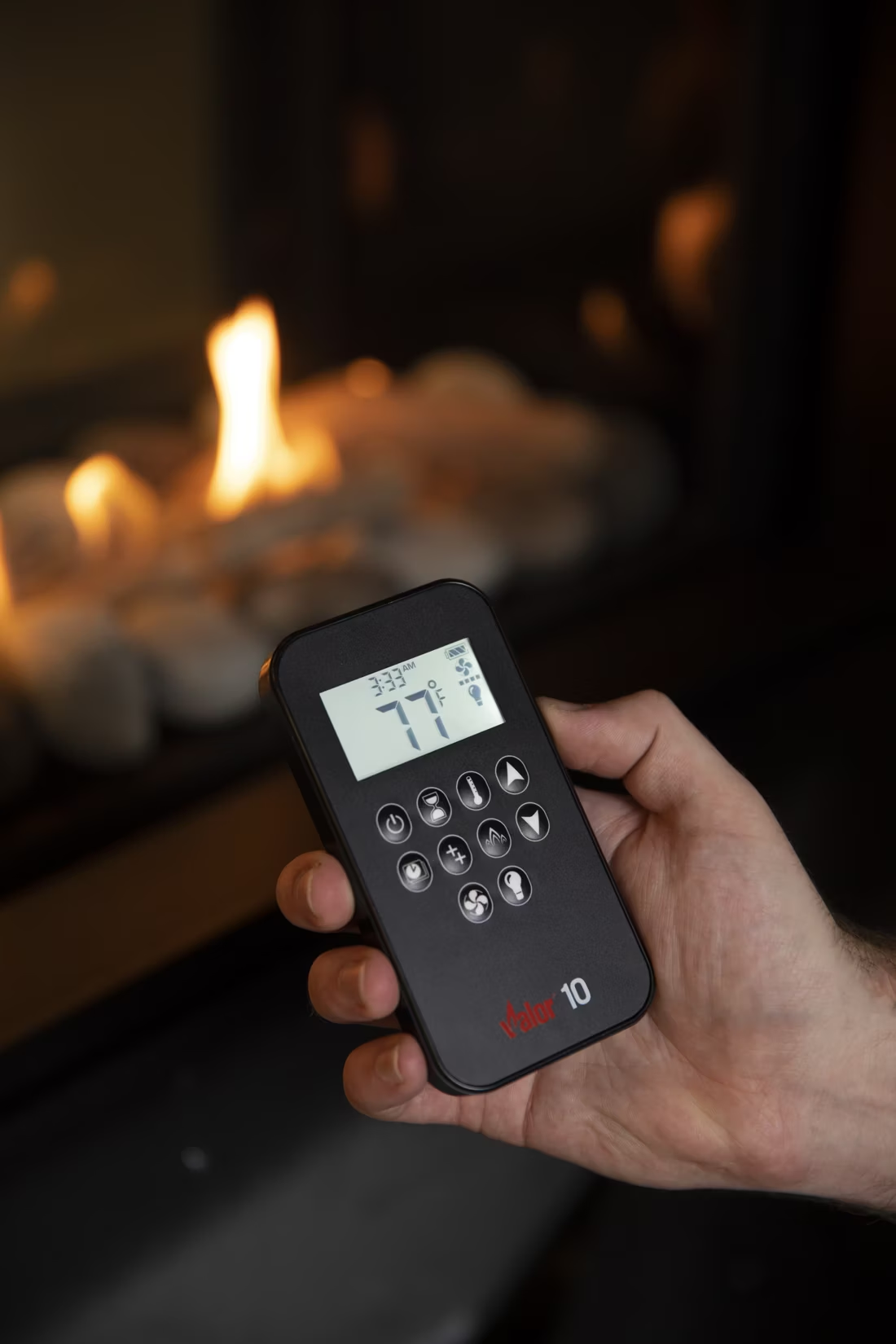
For most units, yes. Manasquan sits on a barrier peninsula that's no stranger to nor'easters and the occasional hurricane remnant, and long power outages aren't rare here—Sandy in 2012 left parts of the Jersey Shore dark for over a week. Gas fireplaces with IPI (intermittent pilot ignition) run on a battery backup that kicks in automatically when utility power drops, so the fireplace still lights on demand. Valor takes it a step further: their units generate their own electricity from the pilot's thermocouple, so there's no battery to remember to swap. If storm resilience matters to you—and on this coastline it should—ask your local dealer about the ignition system before you buy.
Wouldn't a wood stove make more sense for backup heat here?
Wood stoves are uncommon in Manasquan, and there's a practical reason: most lots here are small, homes sit close together, and there's nowhere to season and stack cords of oak or hickory without it becoming a real space problem on a quarter-acre shore lot. There's no local air quality restriction on wood burning—Manasquan isn't in a non-attainment zone—but between limited storage space and older homes with tight setbacks, gas has become the default here for both new installs and fireplace conversions. A small number of homeowners with larger inland lots or detached garages do still install wood stoves, but it's the exception rather than the rule in this borough.
Do I need a permit to install a gas fireplace in Manasquan?
Yes. Manasquan requires a construction permit through the borough's building department for any new gas fireplace or insert installation, along with a separate gas line permit if new piping is being run—that work has to be done by a licensed gas fitter. Because much of Manasquan sits within a FEMA-mapped flood zone, some installations also need to account for base flood elevation requirements, particularly if the fireplace or its gas connection is being placed low in the structure. A certified local hearth dealer will typically pull these permits and coordinate the inspection as part of the installation, rather than leaving you to manage multiple trades.
Should I get a vented or vent-free gas fireplace?
Vented (direct-vent) units draw combustion air from outside and exhaust it back outside through a sealed pipe—they're the safer, more universally recommended choice and the one most Manasquan installers default to, especially in the borough's smaller shore cottages where indoor air quality matters in a tighter floor plan. Vent-free units are legal in New Jersey under specific room-size and ventilation rules, but they release combustion byproducts into the living space, which is a tougher sell in a compact 900- to 1,500-square-foot beach house. For homes elevated on pilings or with limited wall access, a direct-vent unit with a short horizontal run through the rim joist or exterior wall is usually the simplest and most reliable path.
What size gas fireplace do I need for a typical Manasquan home?
Manasquan's housing stock skews toward smaller, older shore cottages and bungalows—often 900 to 1,800 square feet—where a gas fireplace is usually installed for zone heating in the main living area rather than as the sole heat source for the house. A mid-size direct-vent unit in the 20,000 to 30,000 BTU range comfortably heats an open living-and-dining layout typical of these homes. Larger, newer construction closer to the beach or rebuilt post-Sandy on higher pilings can support a bigger unit or a full masonry-style built-in. A local dealer will size the unit based on your actual square footage and how open or sectioned the floor plan is.
How often does a gas fireplace need servicing near the shore?
An annual inspection is recommended for any gas fireplace, and it matters a bit more in Manasquan than it would inland: salt air off the Atlantic accelerates corrosion on exterior venting caps and termination fittings faster than in a landlocked town. A yearly service call—typically $150 to $250—should include checking the burner, pilot assembly, gas connections, and a close look at the exterior vent termination for salt corrosion or debris. Homes closer to the inlet or directly on the ocean block should lean toward the more frequent end of that schedule.
Can I convert my existing brick fireplace to gas?
Yes, and it's one of the most common projects among Manasquan's older cottages and bungalows that still have their original masonry fireplace. A gas insert is fitted into the existing firebox, using a stainless steel liner run up the current chimney as the vent path—this typically runs $4,000 to $8,500 depending on whether the home already has a nearby gas line or needs new piping run to the fireplace. The conversion keeps the look of the original brick opening while eliminating the ash, smoke, and chimney maintenance that come with an open wood-burning fireplace on a small shore lot.
What's the difference between an insert and a zero-clearance fireplace?
An insert is a fireplace that slides into a pre-existing wood-burning fireplace—if you don't have one, there's nothing to insert it into. A zero-clearance fireplace is built into a framed wall, which makes it the answer for remodels and new construction. Simple test: existing masonry fireplace means insert; blank or framed wall means zero-clearance.
Is my gas fireplace wasting gas?
If it was installed more than 15 years ago, probably. Older gas fireplaces keep a standing pilot light burning all the time, and that little flame can cost a couple hundred dollars a year. Newer models use pilot-on-demand ignition—the pilot lights only when you use the fireplace and goes out when you turn it off.
What is an in-home preview and do I need one?
It's a visit where a hearth professional measures your space, confirms the model you picked actually works in your home, and walks the specs—framing, gas line, venting, finish work—before anything is ordered. Some details you just can't know until you see the house. Never make a down payment without one; it's the single most-skipped step that burns buyers.
Can a fireplace actually lower my heating bill?
Yes—by creating a comfort zone. A furnace heats every square foot of the house just to warm the one room you're in; a gas fireplace on low burns roughly a sixth of the gas a typical furnace does. Set the furnace around 55–60 degrees as a baseline, then heat the rooms your family actually uses. Families who heat this way commonly save $20–$60 a month.
Nearby Dealers
Hearth shops serving Manasquan and the surrounding area. Every listing shows whether it is a WhyFire partner, a dealer we have verified as authorized for the brands we recommend, or a local business carrying hearth products. No manufacturer pays for placement. How we verify dealers →
We’ve paused dealer listings for this connection today. Enter your zip or postal code above to find dealers near you, or come back tomorrow.
Popular Gas Brands
Where each brand came from, what's inside it today, and every current model. No brand pays to be here. Not every dealer carries every brand, so enter your zip code to see what's sold near Manasquan.
Kozy Heat
Kozy Heat was founded in 1976 by Dudley Hussong in Lakefield, Minnesota, and incorporated as Hussong Manufacturing Co., Inc. in 1978.
28 gas models →Fireplace Xtrordinair
Fireplace Xtrordinair, now often called FireplaceX, is the fireplace brand of Travis Industries, Inc., of Mukilteo, Washington.
25 gas models →Town & Country
Town & Country Fireplaces is the luxury gas fireplace brand of Pacific Energy Fireplace Products Ltd., of Duncan, British Columbia.
14 gas models →Lopi
Lopi is a wood, pellet, and gas stove brand founded by Kurt Rumens in Bellevue, Washington, in 1979.
7 gas models →Forge & Flame
Forge & Flame is the stove brand Hearth & Home Technologies introduced in August 2023 to bring Vermont Castings, Harman, and Quadra-Fire under one name.
6 gas models →Vermont Castings
Vermont Castings was founded in 1975 by Duncan Syme, the designer, and his brother-in-law Murray Howell, the business partner, in Randolph, Vermont.
6 gas models →Find your gas fireplace in Manasquan.
Tell us a bit about your home and we'll help you find the right gas fireplace or insert, plus a free Project Guide & Parts List—and help you find a trusted local dealer in Manasquan.
Find Your Fireplace →