
Clean, instant heat for your Long Branch home.
Direct-vent gas fireplaces and inserts built for Jersey Shore living—find the right unit and connect with a trusted local dealer.
Every Project Starts From One of These Five Situations
The natural fit for Jersey Shore homes.
Long Branch sits right on the Monmouth County coastline at just 25 feet above sea level, where winters run mild by Northeast standards—averaging a low of 25°F—but still rack up close to 5,000 heating degree days across a long, damp, windy season. Wood heat is not really part of the picture here: dense beachfront lots, condo and multi-family living near Pier Village and Ocean Avenue, and the absence of any nearby public-land cutting permit program make cordwood impractical for most residents. Gas has become the default choice for anyone who wants real fireplace heat without the logistics of a wood pile.
New Jersey Natural Gas serves most of Long Branch's core neighborhoods, from the high-rises near the beachfront to the older single-family streets off Broadway and Third Avenue, which means a direct-vent gas insert or fireplace can usually be installed without running new gas line to the house. For homes closer to the water, the salt air is worth mentioning to your installer—stainless steel venting holds up far better than standard galvanized pipe on oceanfront and near-oceanfront properties, and it's a small upcharge worth paying once rather than replacing corroded vent sections a few winters in.
Three steps. No salesperson until you're ready.
Tell us about your project
Your zip code, your situation, and the fuel you're leaning toward—or let the answers point you to one.
See what's actually available
The brands dealers within 100 miles genuinely carry—real options, never a catalog mirage.
Get your dealer & Project Guide
A trusted local dealer, plus the free Project Guide & Parts List that names every component of the job.
Frequently Asked Questions
How much does a gas fireplace installation cost in Long Branch?
Most gas fireplace and insert installations in Long Branch run $4,000 to $9,000, depending on the unit and the venting path. A direct-vent gas insert going into an existing masonry fireplace in a home already served by New Jersey Natural Gas sits at the lower end. New construction or a full remodel that requires framing a new fireplace enclosure, running gas line, and adding through-wall venting pushes toward the higher end. Homes on propane, or older beach cottages needing electrical or gas line upgrades to meet current code, can run higher still. A local dealer will give you a firm number after seeing the space.
Can I convert my existing wood-burning fireplace to gas?
Yes, and it's a common project in Long Branch's older housing stock, particularly in the pre-war homes near Rockwell Avenue and the streets around Broadway. A gas insert is fitted into your existing masonry firebox with a stainless steel liner run up the existing chimney, which keeps the mantel and surround you already have while eliminating ash, smoke, and the need to source firewood—something that's genuinely hard to do affordably in a dense shore town with no nearby public land for cutting. Conversion costs typically land in the $4,500 to $8,500 range depending on chimney condition and whether a gas line already reaches the fireplace location.
Do I need natural gas, or can I use propane?
Either works, but most of Long Branch has an advantage here: New Jersey Natural Gas serves the majority of the city, so if your home already has gas service for a furnace, water heater, or range, adding a fireplace is usually a straightforward tap-in rather than a new utility connection. Homes outside the main service footprint, or older cottages that were never connected, typically run on propane instead, with a tank installed by a local propane supplier. Nearly every gas fireplace and insert sold locally can be configured for either fuel—your installer sets the orifice and regulator to match.
Will my gas fireplace work during a power outage?
That depends on the ignition system, and it matters more than most homeowners realize on this stretch of coast—nor'easters and coastal storms have knocked out power in Long Branch for days at a time. Units with intermittent pilot ignition (IPI) run on a small battery backup that keeps them lighting on demand even with the power out, as long as the batteries are fresh. Valor's gas fireplaces take a different approach: the pilot's thermocouple generates the electricity the unit needs to fire, so there's no battery to maintain or forget. If storm resilience is a priority for your home, ask your local dealer specifically about the ignition type before you choose a unit.
What's the difference between a gas fireplace, gas insert, and gas stove?
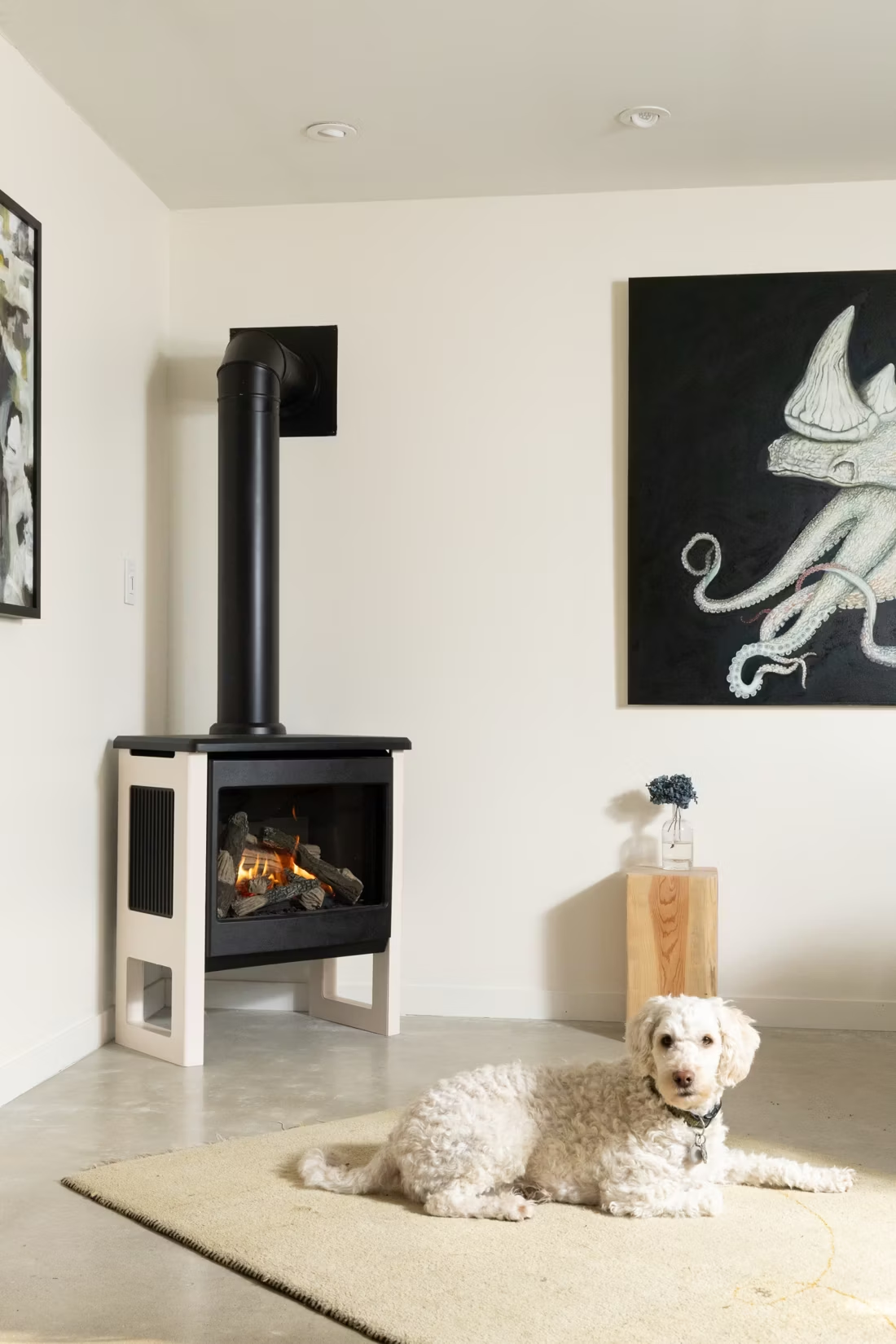
A gas fireplace is a fully built-in unit, framed into a wall or new construction—the right choice if you're finishing a renovation or building an addition without an existing chimney. A gas insert slides into an existing masonry firebox and uses the chimney as its vent path, which is the most common upgrade in Long Branch's older single-family and duplex housing. A gas stove is a freestanding cast-iron or steel unit that sits on a hearth pad, often used in smaller rooms or condo units where a full fireplace surround isn't practical. Most homeowners here with an existing fireplace go with an insert; those without one look at a built-in unit or a freestanding stove.
Do I need a permit to install a gas fireplace in Long Branch?
Yes. The City of Long Branch's construction code office requires both a building permit and a plumbing/gas permit for new gas fireplace and insert installations, and any gas line work has to be done by a licensed gas-fitter or plumber. Most local hearth dealers coordinate all of this as part of the installation—pulling the permits, scheduling the inspection, and making sure the venting clearances meet code—so you're not stuck managing separate trades yourself.
What's the difference between vented and vent-free gas fireplaces?
Vented (direct-vent) gas fireplaces draw combustion air from outside and exhaust the byproducts back outside through sealed venting—they're the standard, code-friendly choice almost everywhere, including Long Branch. Vent-free units burn without any outside venting at all, releasing some moisture and combustion byproducts into the room, and New Jersey allows them only with strict room-sizing and oxygen-depletion-sensor requirements. Given the humidity that already comes with living this close to the ocean, most local installers steer homeowners toward direct-vent units—they don't add moisture load to a house that's already dealing with salt air and damp winters.
How often should my gas fireplace be serviced?
Plan on an annual inspection, ideally in early fall before the heating season starts. A technician checks the burner, pilot assembly, venting, and gas connections, and cleans the glass and interior—quick work compared to a wood chimney sweep, but important for safety and for keeping the flame pattern and efficiency where they should be. Local gas appliance service providers typically charge $150 to $250 for this visit, and it's especially worth staying current on for homes near the water, where salt air can accelerate corrosion on vent terminations.
Gas vs. electric—which fireplace makes more sense in Long Branch?
Wood and pellet stoves are essentially not a factor here—Long Branch's dense beachfront lots, condo living, and lack of any nearby public land for cutting permits make them impractical for nearly everyone. That leaves the real choice as gas versus electric. Gas delivers genuine heat output, works during power outages with the right ignition system, and holds up well through a raw coastal winter. Electric fireplaces cost far less to install (often under $1,200) and are simple to run on Jersey Central Power & Light's residential rate of roughly 15 cents per kWh, but they produce far less real heat and won't help at all if the power is out—which happens periodically along this stretch of coast during nor'easters. For a primary living space that needs to actually warm a room, gas is usually the better fit; for ambiance in a condo or a room where code or venting access rules out gas, electric is a reasonable alternative.
What's the difference between an insert and a zero-clearance fireplace?
An insert is a fireplace that slides into a pre-existing wood-burning fireplace—if you don't have one, there's nothing to insert it into. A zero-clearance fireplace is built into a framed wall, which makes it the answer for remodels and new construction. Simple test: existing masonry fireplace means insert; blank or framed wall means zero-clearance.
Is my gas fireplace wasting gas?
If it was installed more than 15 years ago, probably. Older gas fireplaces keep a standing pilot light burning all the time, and that little flame can cost a couple hundred dollars a year. Newer models use pilot-on-demand ignition—the pilot lights only when you use the fireplace and goes out when you turn it off.
How much should I budget for a fireplace?
For an average home—covering the fireplace, the vent pipe, and basic installation—a budget between $3,900 and $5,500 gives you a lot of options across wood, gas, and pellet. By the time you add finish work, gas line, and electrical, the average complete installation lands between $5,000 and $12,000 all-in. In a remodel or new build, a good rule is to put about 2.5% of the total project cost toward the fireplace.
Can a fireplace actually lower my heating bill?
Yes—by creating a comfort zone. A furnace heats every square foot of the house just to warm the one room you're in; a gas fireplace on low burns roughly a sixth of the gas a typical furnace does. Set the furnace around 55–60 degrees as a baseline, then heat the rooms your family actually uses. Families who heat this way commonly save $20–$60 a month.
Nearby Dealers
Hearth shops serving Long Branch and the surrounding area.
Central Jersey Masonry & Chimney Sweep
Fireside Pros/Awning Design
Find your gas fireplace in Long Branch.
Tell us a bit about your home and we'll match you with a trusted local dealer and send over your free Project Guide & Parts List—the exact fireplace or insert, vent kit, and installation plan for your Long Branch home.
Find Your Fireplace →