
Gas Heat That Works the Moment You Need It.
From the rowhomes of Woodbury to the farmland around Mullica Hill, Gloucester County runs on natural gas and propane heat. Find the right fireplace, insert, or stove and connect with a trusted local dealer who can install it right.
Every Project Starts From One of These Five Situations
Reliable heat for a fast-growing suburban county.
Gloucester County sits just across the Delaware River from Philadelphia, and its climate reflects that—Zone 4A, about 4,800 heating degree days a year, and winter lows that average around 25°F. It's a real heating season, but not an extreme one; a hard freeze is normal, a week of single digits is not. What sets the county apart is its mix of dense, established suburbs like Deptford, Woodbury, and Glassboro alongside the still-rural farmland around Franklin Township, Elk Township, and Mullica Hill. That range shapes what people heat with.
Natural gas service from South Jersey Gas reaches most of the county's population centers—Woodbury, Glassboro, Washington Township, West Deptford, Sewell—making a direct-vent gas fireplace or insert an easy add to a home that likely already has gas heat and a gas water heater. In the county's more rural southern and eastern reaches, where gas mains haven't been extended, propane fills the gap. Wood-burning stoves and pellet stoves are genuinely uncommon here—Gloucester County has no public forest land or cutting permit program, lot sizes in most subdivisions don't accommodate wood storage and clearances easily, and with gas infrastructure this widespread, most homeowners simply don't reach for wood. Gas wins on convenience: flip a switch, get heat, no ash and no wood pile.
Three steps. No salesperson until you're ready.
Tell us about your project
Your zip code, your situation, and the fuel you're leaning toward—or let the answers point you to one.
See what's actually available
The brands dealers within 100 miles genuinely carry—real options, never a catalog mirage.
Get your dealer & Project Guide
A trusted local dealer, plus the free Project Guide & Parts List that names every component of the job.
Frequently Asked Questions
How much does a gas fireplace installation cost in Gloucester County?
A typical gas fireplace installation in Gloucester County runs roughly $4,000 to $10,500, depending on the unit, the venting path, and whether new gas line work is required. A direct-vent insert dropped into an existing masonry fireplace in a Woodbury or Pitman colonial—with a gas line already run to that side of the house—lands on the lower end. A new direct-vent fireplace built into a wall during a remodel in a newer Washington Township or Harrison Township home, requiring fresh venting and gas piping, sits toward the higher end. Homes relying on propane in the county's rural southern townships sometimes add a bit more if a new tank has to be set.
Can I convert my existing wood fireplace to gas?
Yes, and it's a common project in the county's older housing stock—plenty of homes in Woodbury, Glassboro, and the historic districts along Delsea Drive still have the original open masonry fireplace. A gas insert typically drops into that existing firebox and vents through the same chimney with a stainless liner, which keeps the mantel and hearth look intact while adding real, controllable heat. Expect somewhere in the $4,500 to $9,000 range locally, with the final number driven mostly by whether the home already has a gas line nearby or one needs to be run from the meter.
Do I need natural gas to install a gas fireplace, or can I use propane?
Either works fine. South Jersey Gas serves the bulk of Gloucester County's population—Deptford, Glassboro, Woodbury, Sewell, West Deptford—so if your home already has a gas furnace or gas range, adding a fireplace on the same line is usually straightforward. In the parts of the county without gas mains, particularly the more rural stretches of Franklin Township, Elk Township, and South Harrison, propane is the standard fallback, either from an existing tank or a new one set by a local propane supplier. Most gas fireplace models can be configured for either fuel; your installer sets the correct orifice and regulator for whichever you're on.
Will my gas fireplace work during a power outage?
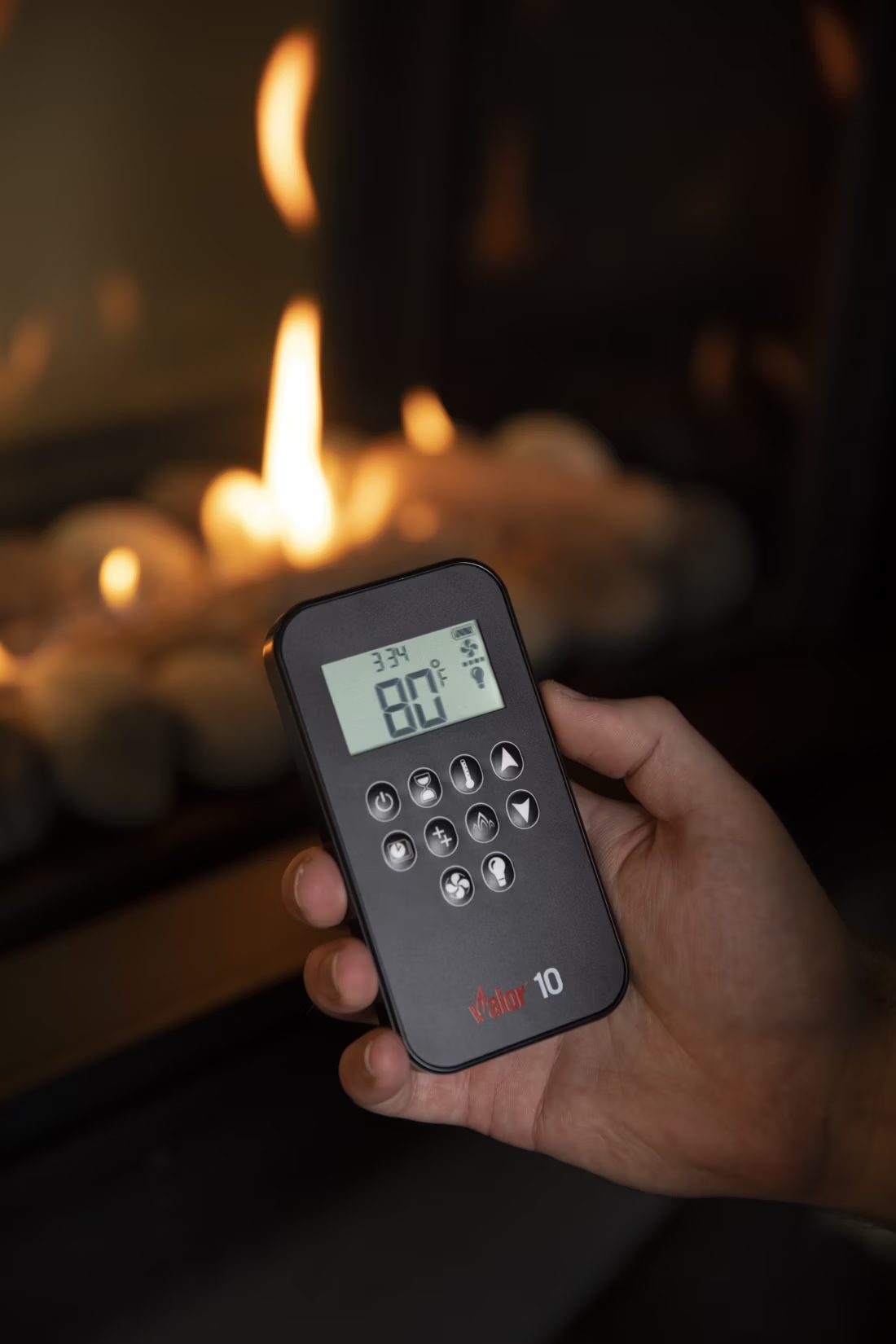
Most modern gas fireplaces will, which matters in a county that sees its share of nor'easters and summer thunderstorm outages. Units with intermittent pilot ignition (IPI) run on a small battery backup that kicks in the moment the power drops, so the fireplace still lights on demand. Valor's gas fireplaces go a step further—they generate their own electricity off the pilot's thermocouple, so there's no battery to remember at all. For a Gloucester County household that's lost power for a day or two after a bad storm, that's a genuine backup heat source, not just ambiance. Ask your installer about the ignition system on any unit you're comparing.
What's the difference between a gas fireplace, gas insert, and gas stove?
A gas fireplace is a fully built-in unit, framed into a wall—the right call for new construction or a gut remodel in a Washington Township or Mantua home. A gas insert is built to slide into an existing masonry firebox, which is why it's the most common choice in Gloucester County's older housing stock around Woodbury and Glassboro. A gas stove is a freestanding cabinet unit that sits on the floor like a wood stove but burns gas—a good fit for a room with no existing fireplace and no interest in a full-wall build-out. Most homeowners here with an existing hearth go the insert route.
Do I need a permit to install a gas fireplace in Gloucester County?
Yes. Under the New Jersey Uniform Construction Code, both a building permit and a gas line permit are required for a new gas fireplace or insert, issued through your municipality's construction office—Woodbury, Glassboro, Deptford, and the other Gloucester County towns each administer their own. The gas line portion has to be done by a licensed gas fitter, which is one reason it's worth working with an established local hearth dealer: they coordinate the gas hookup, the venting, and the inspection instead of leaving you to line up separate trades.
What's the difference between vented and vent-free gas fireplaces?
Vented gas fireplaces—direct-vent or B-vent—pull combustion air from outside and exhaust the combustion byproducts back outside through a sealed pipe. Vent-free (or "ventless") units burn directly into the room with no external venting at all, which is more efficient on paper but releases some water vapor and trace combustion gases indoors. New Jersey permits vent-free units, but with strict room-sizing rules and oxygen depletion sensors required. For Gloucester County homes, direct-vent units are by far the most common choice and the one most local dealers recommend by default—they heat well, look good, and don't require any compromise on indoor air quality. Worth raising with your dealer if you're comparing the two.
How often should my gas fireplace be serviced?
Plan on an annual inspection, ideally before the heating season starts each fall. A technician checks the burner, pilot assembly, venting, and gas connections, and cleans the glass and interior—a quick job compared to wood chimney sweeping, but not one to skip. Local gas appliance service providers in the county typically charge in the $150 to $250 range for this visit, and it's the easiest way to catch a failing thermocouple or ignition module before it leaves you without heat on a cold night.
Gas vs. wood—which is right for my home?
For most Gloucester County homes, gas is the clear fit. The county has no public forest land or cutting permit program the way more rural inland counties do, lot sizes in most developments don't leave much room for a wood pile, and with South Jersey Gas or propane already at the house, gas is simply easier to live with day to day. Wood stoves aren't unheard of—a handful of rural properties near Elk Township or Franklin Township, often on larger wooded lots with oak, hickory, or maple on the property, still run one for backup heat or ambiance. But if you're weighing the two for a typical home in Woodbury, Glassboro, or Deptford, gas wins on convenience, cleanliness, and how easily it fits into a home that's probably already got a gas line running to it.
Why is a fireplace insert so efficient?
An insert does two things: it seals the chimney completely, so you stop losing air you already paid to heat, and it radiates warmth into the room through the firebox and glass. Most add a heat-exchange fan that pulls cool room air underneath, wraps it around the hot firebox, and pushes it back out warm. Your home is more efficient before you've even lit the first fire.
Can I put a TV above my fireplace?
Yes—with an asterisk. Fireplaces are hot and TVs don't like heat. Either put a mantel between them to deflect rising warmth, or choose a fireplace with heat-management technology that creates a cool zone on the wall above—the wall stays around 125 degrees, barely warm, while the room still gets full heat. If you like clean lines and don't want a mantel, heat management is the answer.
Does a fireplace add value to my home?
On average, a fireplace adds back to the home about the same amount you spent installing it. Add the monthly savings from heating the rooms you actually use instead of the whole house—often hundreds of dollars a year—and the value case is strong before you even count what a fire does for how your family uses the room.
How much should I budget for a fireplace?
For an average home—covering the fireplace, the vent pipe, and basic installation—a budget between $3,900 and $5,500 gives you a lot of options across wood, gas, and pellet. By the time you add finish work, gas line, and electrical, the average complete installation lands between $5,000 and $12,000 all-in. In a remodel or new build, a good rule is to put about 2.5% of the total project cost toward the fireplace.
Stove and Fireplace Dealers in Gloucester County
Find your gas fireplace in Gloucester County.
Tell us a bit about your home and we'll match you with a trusted local Gloucester County dealer and send over a free Project Guide & Parts List—the exact parts, including the vent kit, for your project.
Find Your Fireplace →