
Instant Warmth for Glen Rock Winters—No Wood Pile Required.
Clean, on-demand heat for Glen Rock's older Colonials and Victorians—sized right, vented right, and installed by a trusted local dealer.
Every Project Starts From One of These Five Situations
Clean heat that fits Glen Rock's older homes.
Glen Rock sits at just 134 feet in Bergen County, a few miles from the New York border, where winter lows average around 22°F and the borough sees a heating season on the order of a real Northeast winter. That's a real Northeast winter—colder and longer than most of the mid-Atlantic sees, though nowhere near the extremes of places like Burlington, VT or Duluth, MN. Much of Glen Rock's housing stock dates to the early 1900s, a mix of Dutch Colonials and Victorians built along tree-lined streets near the train station, and a good number of them still have the original brick fireplace sitting mostly unused because it's drafty, sooty, and inefficient.
Public Service Electric & Gas (PSE&G) serves Glen Rock for both electric and natural gas, and gas mains reach nearly every block in this densely built commuter town—one reason gas has become the default upgrade path here rather than wood. A gas insert converts that old masonry firebox into real, on-demand heat without smoke drifting between the close-set lots that define streets like Rock Road and Harristown Road, and a battery-backup or self-powered ignition system means it can still function during a PSE&G outage, which matters when a nor'easter knocks out power along with the heat.
Three steps. No salesperson until you're ready.
Tell us about your project
Your zip code, your situation, and the fuel you're leaning toward—or let the answers point you to one.
See what's actually available
The brands dealers within 100 miles genuinely carry—real options, never a catalog mirage.
Get your dealer & Project Guide
A trusted local dealer, plus the free Project Guide & Parts List that names every component of the job.
Frequently Asked Questions
How much does a gas fireplace installation cost in Glen Rock?
A typical gas fireplace installation in Glen Rock runs $4,500 to $10,000, depending on whether it's a direct-vent insert going into an existing masonry firebox or a new built-in unit that requires framing and a fresh gas line run from the meter. Homes already on a PSE&G gas line are usually on the lower end; installations needing a longer gas line extension or venting through an exterior wall on a tighter Glen Rock lot can push toward the higher end. A local dealer will give you a firm number after seeing the fireplace and the gas meter location in person.
Can I convert my existing wood fireplace to gas?
Yes, and it's one of the most common projects in Glen Rock's older Dutch Colonials and Victorians, many of which have a brick fireplace that's rarely used because of smoke and heat loss. A gas insert typically runs $4,000 to $8,500 here, using your existing chimney with a stainless liner as the vent path. Homes with a PSE&G gas line already run to the kitchen or furnace tend to land on the lower end; a longer run from the street or meter adds to the cost.
Do I need natural gas, or should I consider propane?
Natural gas is the default in Glen Rock—PSE&G mains run through nearly every block of this compact, built-out borough, so most homes already have gas service for the furnace, water heater, or range. Propane is rarely necessary here the way it is in more rural parts of northern New Jersey; it's mainly an option for a detached structure or outbuilding that isn't already tied into the house's gas line. Most gas fireplace models can be set up for either fuel, but for in-town Glen Rock lots, tapping the existing PSE&G line is almost always simpler and cheaper.
Will my gas fireplace work if the power goes out?
Most modern gas fireplaces will, with the right ignition system. Units with intermittent pilot ignition (IPI) run on AA batteries that kick in automatically when PSE&G power drops, so the fireplace lights and operates normally until service is restored. Valor units go a step further—their pilot generates its own electricity through the thermocouple, so there's no battery to remember. That matters in Glen Rock, where ice storms and nor'easters have knocked out PSE&G service for a day or more in past winters. Ask your local dealer which ignition system a given unit uses.
What's the difference between a gas fireplace, gas insert, and gas stove?
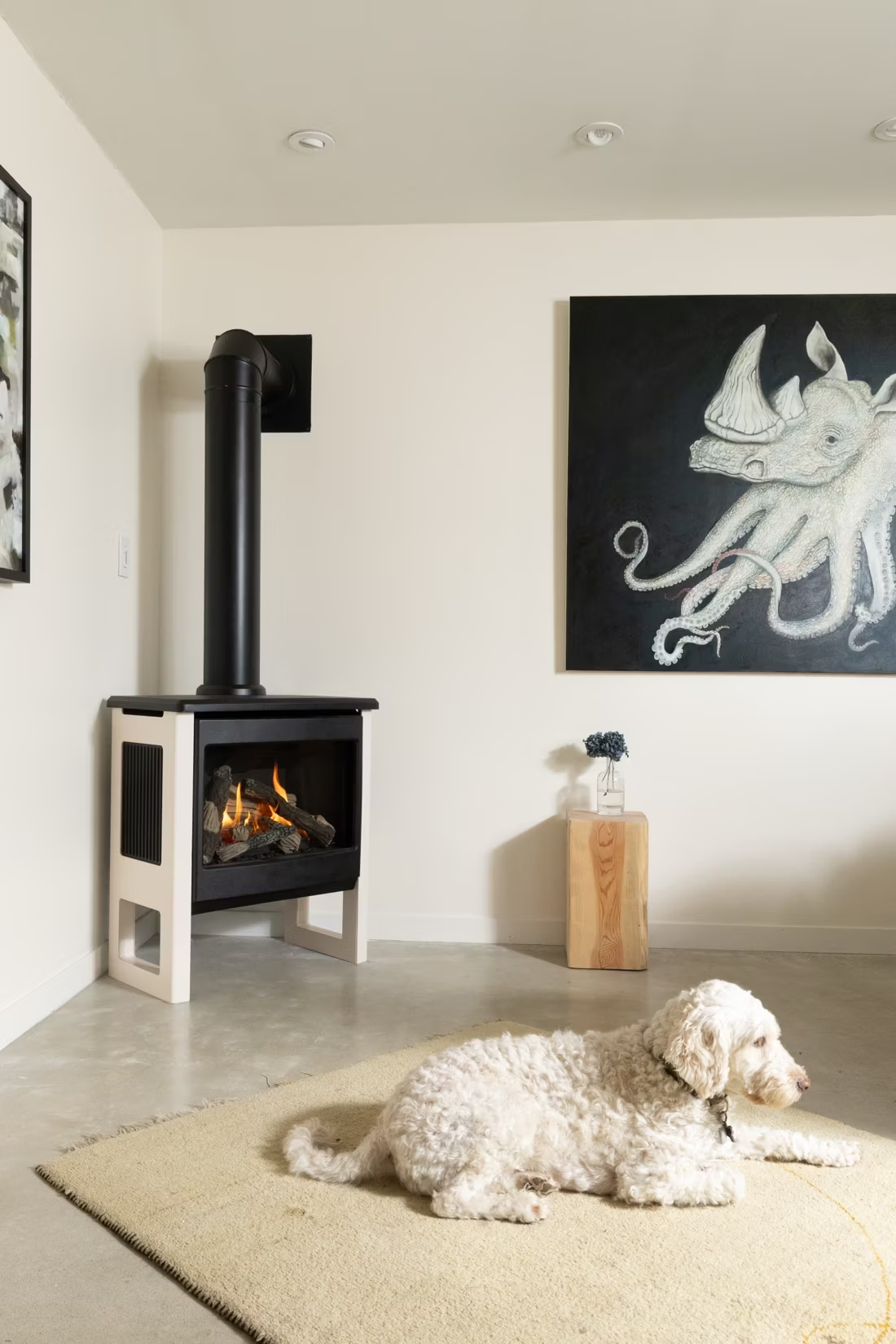
A gas fireplace is a fully built-in unit framed into a wall—common in newer construction or additions around Glen Rock. A gas insert slides into an existing masonry firebox, which describes a large share of the borough's older Colonials and Victorians, and uses the existing chimney as its vent path. A gas stove is a freestanding unit that sits on the floor, useful in a room without an existing fireplace or chimney at all. For most Glen Rock homeowners with an original brick fireplace they'd like to actually use again, an insert is the natural fit.
Do I need a permit to install a gas fireplace in Glen Rock?
Yes. The Borough of Glen Rock Construction Department requires a building permit for the fireplace installation and a separate gas permit for any gas line work, and the gas line itself has to be run or modified by a licensed gas fitter. Most local hearth dealers handle both permits as part of the job, along with scheduling the borough inspection, so you're not left coordinating separate trades yourself.
Should I get a vented or vent-free gas fireplace?
Vented (direct-vent) units draw combustion air from outside and exhaust it back outside through a sealed pipe—they're the safer, more universally recommended choice and what most Glen Rock dealers install by default. Vent-free units burn fuel directly into the room and are permitted in New Jersey under strict room-sizing and oxygen-depletion-sensor rules, but they release some water vapor and combustion byproducts into the living space. For an older Glen Rock home with normal-sized rooms and typical insulation, a direct-vent unit is almost always the better fit, and it's the option most local retailers will steer you toward.
How often should a gas fireplace be serviced?
Plan on an annual inspection, ideally in early fall before the heating season starts. A certified technician checks the burner, pilot assembly, venting, and gas connections, and cleans the glass. Local gas appliance servicers typically charge $150 to $250 for this visit—modest compared to the cost of a failed ignition system or a venting issue going unnoticed through a Glen Rock winter.
Is wood heat an option in Glen Rock, or should I stick with gas?
Wood stoves are uncommon in Glen Rock—the borough's tightly built lots, close-set neighbors, and lack of any real wood-cutting land nearby make gas and electric the practical choices for most homeowners here, and that's reflected in how few local dealers stock wood-burning equipment. A handful of older homes still have a decorative wood-burning fireplace, and oak, hickory, and maple are the species most commonly available if someone wants to burn one occasionally, but as a primary or supplemental heat source, gas fits Glen Rock's housing stock and lot sizes far better.
Why is a fireplace insert so efficient?
An insert does two things: it seals the chimney completely, so you stop losing air you already paid to heat, and it radiates warmth into the room through the firebox and glass. Most add a heat-exchange fan that pulls cool room air underneath, wraps it around the hot firebox, and pushes it back out warm. Your home is more efficient before you've even lit the first fire.
What's the difference between an insert and a zero-clearance fireplace?
An insert is a fireplace that slides into a pre-existing wood-burning fireplace—if you don't have one, there's nothing to insert it into. A zero-clearance fireplace is built into a framed wall, which makes it the answer for remodels and new construction. Simple test: existing masonry fireplace means insert; blank or framed wall means zero-clearance.
Can I install a fireplace myself?
If you're putting a fire in your house on purpose, it's best to work with an expert. Unless you're genuinely experienced in framing, gas line, vent pipe, and the national code on clearances to combustibles, have a professional do it—and ideally the same company that sells you the fireplace, so warranty, service, and liability all live under one roof.
What is an in-home preview and do I need one?
It's a visit where a hearth professional measures your space, confirms the model you picked actually works in your home, and walks the specs—framing, gas line, venting, finish work—before anything is ordered. Some details you just can't know until you see the house. Never make a down payment without one; it's the single most-skipped step that burns buyers.
Nearby Dealers
Hearth shops serving Glen Rock and the surrounding area. Every listing shows whether it is a WhyFire partner, a dealer we have verified as authorized for the brands we recommend, or a local business carrying hearth products. No manufacturer pays for placement. How we verify dealers →
Kjb Fireplaces
Mcnamara Fireplace And Stove
Flue Tech
County Woodstoves Inc
Light N Grid
Fireplaces By Design
Westchester Fireplace
Chimney Sweep Energy Barn
Big Apple Fireplaces
Fire Design
N & N Services
Harris Hearth And Home
Agi Supply Inc
Fireplace And Outdoor Living
All Shore Appliance
Hot Concepts Fireplaces
Find your gas fireplace in Glen Rock.
Tell us about your home and we'll match you with a trusted local dealer and send over a free Project Guide & Parts List—the exact parts, vent kit, and recommended installer for your Glen Rock gas fireplace project.
Find Your Fireplace →