
Warmth at the Flip of a Switch—No Woodpile Needed.
Fairview's tight rowhouse lots and PSE&G gas lines make direct-vent gas fireplaces the easiest upgrade in Bergen County. Find the right unit and get matched with a trusted local dealer.
Every Project Starts From One of These Five Situations
Built for the borough, not the backyard.
Fairview packs nearly 15,000 people into just over half a square mile of two- and three-family homes, garden apartments, and rowhouses squeezed between the Hudson River Palisades and Route 46. There's no room for a cord of oak or hickory stacked against the garage, and no forest permit office within an hour's drive—which is why wood and pellet stoves are essentially nonexistent here. Gas has been the default heating fuel in this corner of Bergen County for decades, and it still is.
At 258 feet elevation with winter lows averaging 28°F and a winter heating load well below a place like Buffalo, NY, Fairview's climate is real but moderate—nowhere near the sustained cold of a place like Buffalo, NY. That means a gas fireplace here is usually about zone heat and ambiance during cold snaps and coastal Nor'easters, not survival heat. PSE&G runs both the electric and natural gas service to nearly every block in town, so most homes already have gas plumbed in for cooking or a furnace, which keeps a fireplace conversion straightforward for a licensed installer.
Three steps. No salesperson until you're ready.
Tell us about your project
Your zip code, your situation, and the fuel you're leaning toward—or let the answers point you to one.
See what's actually available
The brands dealers within 100 miles genuinely carry—real options, never a catalog mirage.
Get your dealer & Project Guide
A trusted local dealer, plus the free Project Guide & Parts List that names every component of the job.
Frequently Asked Questions
How much does a gas fireplace installation cost in Fairview?
In the New York metro market, a direct-vent gas fireplace or insert installation in Fairview typically runs $4,500 to $12,000, with labor costs on the higher end of that range because of the borough's density and the tight attached-home construction common on streets like Anderson Avenue and Broad Avenue. A gas insert dropped into an existing masonry fireplace with a PSE&G line already nearby sits toward the lower end; a new built-in unit requiring fresh gas line work and venting through a shared wall in a two-family home pushes toward the higher end. A local installer will give you a firm number after seeing the space.
Can I convert my existing wood-burning fireplace to gas?
Yes, and it's one of the more common projects for Fairview's older housing stock—plenty of the two-family homes and colonials built before World War II still have their original brick fireplace, even if it's rarely used. A gas insert typically reuses that existing chimney with a stainless liner, so you keep the look of the original opening while gaining real, controllable heat. Expect roughly $4,000 to $8,500 depending on the insert and whether the flue needs relining, with homes already on PSE&G gas service for cooking or a furnace usually landing on the lower end.
Do I need to use propane, or is natural gas available in Fairview?
Nearly every property in Fairview sits on PSE&G's natural gas mains, since the borough is fully built out at just over half a square mile with no rural pockets to speak of. That means almost every gas fireplace installation here runs off natural gas rather than propane. Propane only comes up for a detached garage, shed, or outbuilding that isn't connected to the house's gas meter—in those rare cases, a small standalone propane tank is the workaround.
Will a gas fireplace still work if the power goes out?
Most direct-vent gas fireplaces with intermittent pilot ignition (IPI) run on a battery backup that kicks in the moment PSE&G power drops, which matters in a river-adjacent borough like Fairview where Nor'easters and remnant hurricane systems have knocked out power for days at a stretch. Just remember to swap the batteries once a year. Valor fireplaces take a different approach—their pilot generates its own electricity through the thermocouple, so there's no battery to forget at all. Ask your local dealer which ignition system is on the model you're considering.
Gas fireplace vs. gas insert vs. gas stove—which fits my Fairview home?
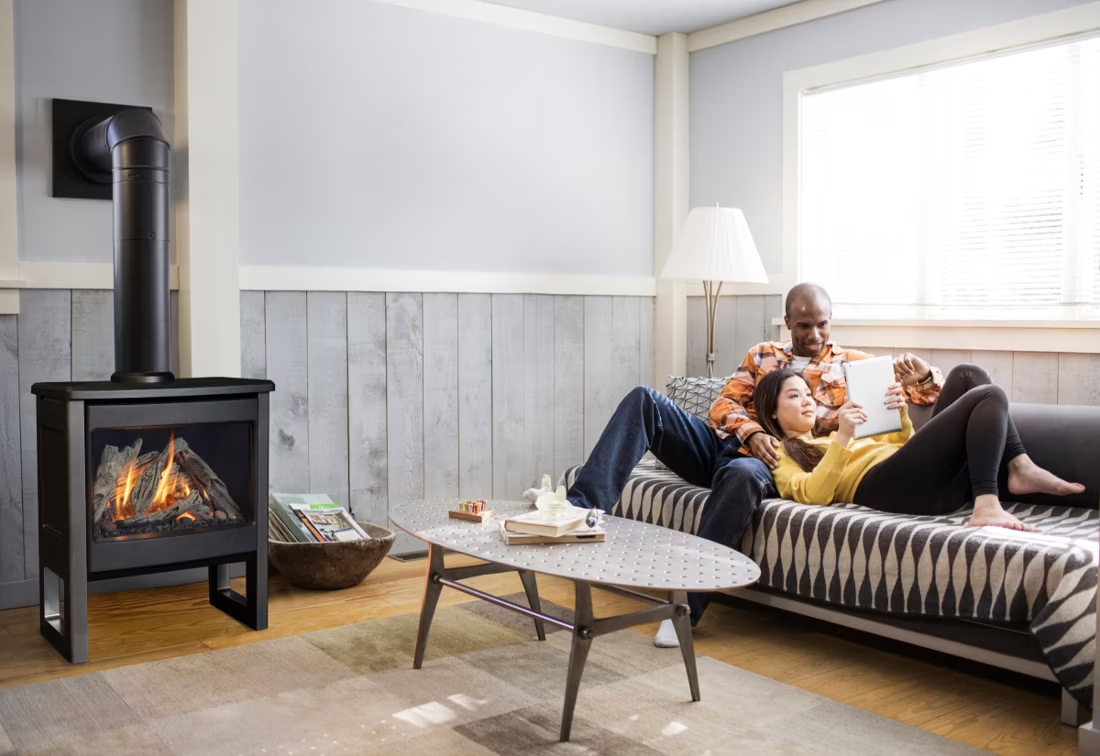
A gas insert is the right call for the borough's older homes with an existing masonry fireplace—it slides into that opening and uses the chimney you already have. A built-in gas fireplace makes more sense if you're finishing a basement, adding a family room, or doing a full renovation without an existing hearth, which comes up more in Fairview's newer construction near the Fairview Avenue corridor. A freestanding gas stove is less common here simply because most homes don't have the open floor space it needs, but it can work well in an older colonial with a front room built around a hearth.
Do I need a permit to install a gas fireplace in Fairview?
Yes. New Jersey's Uniform Construction Code requires both a construction permit and a separate gas permit for any new gas appliance, and Fairview's Building Department handles that review for the borough. The gas line itself has to be run or modified by a licensed plumber or gas fitter, and PSE&G typically needs to inspect or upgrade the meter for added load. A reputable local hearth dealer coordinates all of this—the permit, the gas trade, and the final inspection—so you're not juggling three separate contractors.
Should I get a vented or vent-free gas fireplace?
Vented (direct-vent) units draw combustion air from outside and exhaust it back outside through a sealed pipe, which is the safer, code-preferred choice everywhere including New Jersey. Vent-free units burn directly into the room and are legal in NJ under specific room-size and ventilation rules, but they're a harder sell in Fairview's attached two- and three-family construction, where shared walls and smaller room volumes make the extra humidity and combustion byproducts more noticeable. For that reason, most local dealers steer Fairview customers toward direct-vent models, and it's the option we'd recommend asking about first.
How often does a gas fireplace need service?
Plan on an annual inspection, ideally in early fall before you're relying on it. A technician checks the burner, pilot assembly, gas connections, and venting, and cleans the glass. In the NYC metro market, that visit typically runs $175 to $300—a bit above national averages, in line with the region's overall service costs. It's a quick appointment compared to wood-stove chimney sweeping, but skipping it is still how minor issues turn into no-heat calls in January.
Should I even consider a wood-burning fireplace instead of gas?
For most Fairview homes, no. Wood stoves and inserts need somewhere to store cordwood, a chimney rated for solid fuel, and realistically a source of wood—none of which fit easily into a half-square-mile borough of attached homes with no woodlot or Forest Service permit office anywhere nearby. A handful of older houses still have a decorative wood-burning fireplace, but even those owners usually convert to a gas insert rather than deal with hauling and storing oak or hickory in a driveway built for one car. Gas remains the practical, and by far the more common, choice here.
Is my gas fireplace wasting gas?
If it was installed more than 15 years ago, probably. Older gas fireplaces keep a standing pilot light burning all the time, and that little flame can cost a couple hundred dollars a year. Newer models use pilot-on-demand ignition—the pilot lights only when you use the fireplace and goes out when you turn it off.
What does it take to replace an existing fireplace?
Fireplaces are like icebergs—bigger behind the wall than in front of it. Replacement means removing the surrounding tile or stone (the finish material laps onto the fireplace face), pulling the old unit, setting the new one in the same enclosure, and re-finishing the wall. A hearth professional can determine what's behind your wall without demolition during an in-home preview.
Does a fireplace add value to my home?
On average, a fireplace adds back to the home about the same amount you spent installing it. Add the monthly savings from heating the rooms you actually use instead of the whole house—often hundreds of dollars a year—and the value case is strong before you even count what a fire does for how your family uses the room.
What is an in-home preview and do I need one?
It's a visit where a hearth professional measures your space, confirms the model you picked actually works in your home, and walks the specs—framing, gas line, venting, finish work—before anything is ordered. Some details you just can't know until you see the house. Never make a down payment without one; it's the single most-skipped step that burns buyers.
Nearby Dealers
Hearth shops serving Fairview and the surrounding area. Every listing shows whether it is a WhyFire partner, a dealer we have verified as authorized for the brands we recommend, or a local business carrying hearth products. No manufacturer pays for placement. How we verify dealers →
Big Apple Fireplaces
Flue Tech
Harris Hearth And Home
County Woodstoves Inc
D & D Design Center
All Shore Appliance
Mcnamara Fireplace And Stove
Hot Concepts Fireplaces
Kjb Fireplaces
Costello's Hearth & Spa - Garden City Park
Westchester Fireplace
Light N Grid
The Valley Fireplace
L&R Fireplace & Barbecue
Fireplaces By Design
Fireplace And Outdoor Living
Find your gas fireplace in Fairview.
Tell us about your home and we'll match you with a trusted local dealer and a free Project Guide & Parts List—the exact parts, vent kit included, for your Fairview gas fireplace project.
Find Your Fireplace →