
See what a real gas fireplace install actually looks like in Fair Lawn.
Fair Lawn winters rarely dip far below 26°F, but the damp Bergen County cold makes instant, even heat worth having. Get matched with a trusted local dealer and a free parts plan.
Every Project Starts From One of These Five Situations
A dense, established suburb where gas is the default hearth fuel.
Fair Lawn sits at just 69 feet of elevation in the Passaic River valley, with a winter heating load that adds up over the year—meaningfully milder than a place like Burlington VT, but still enough winter to make a fireplace a real utility, not just decoration. Winter lows average around 26°F, and most Fair Lawn homes were built in the postwar era with masonry fireplaces that are now prime candidates for a gas insert conversion rather than continued wood burning.
Natural gas service is standard throughout Fair Lawn's tight residential lots, and PSE&G (Public Service Electric & Gas) is the utility most homeowners are already tied into for heating and cooking. That existing infrastructure makes gas the practical choice here: no cordwood storage in a small Bergen County yard, no chimney creosote buildup to manage, and a fireplace that lights instantly on a cold, damp January evening. A local dealer can tell you quickly whether your existing masonry fireplace and flue are good candidates for a direct-vent insert.
Three steps. No salesperson until you're ready.
Tell us about your project
Your zip code, your situation, and the fuel you're leaning toward—or let the answers point you to one.
See what's actually available
The brands dealers within 100 miles genuinely carry—real options, never a catalog mirage.
Get your dealer & Project Guide
A trusted local dealer, plus the free Project Guide & Parts List that names every component of the job.
Frequently Asked Questions
How much does a gas fireplace installation cost in Fair Lawn?
Gas fireplace and insert installations in the Fair Lawn area typically run $4,500 to $11,000, with the wide range driven mostly by venting complexity. A direct-vent insert dropped into an existing masonry fireplace that already has gas service nearby sits toward the lower end. A new built-in gas fireplace for a renovation—with fresh framing, a new gas line run through a finished basement or slab, and venting through an exterior wall—lands higher. Given how many Fair Lawn homes are older postwar construction, expect your local dealer to inspect the existing chimney and gas line access before quoting a firm number.
Can I convert my existing wood-burning fireplace to gas?
Yes, and it's one of the most common requests in a town like Fair Lawn with a large stock of 1950s and 1960s brick fireplaces. A gas insert slides into the existing masonry opening, runs a vent liner up the current chimney, and connects to a new gas line tapped off your PSE&G service. Most conversions in this area run $4,500 to $9,500 depending on how far the gas line has to travel from your meter or existing gas appliances, and whether the existing chimney needs a liner replacement. It keeps the mantel and brick surround you already have while eliminating ash, creosote, and the need to source firewood on a small suburban lot.
Is natural gas or propane more common for fireplaces in Fair Lawn?
Natural gas is standard throughout Fair Lawn—PSE&G serves the borough, and the vast majority of homes already have gas service for heating, water heating, or cooking, which makes adding a fireplace a straightforward tap-in rather than a new fuel source. Propane is rarely used here except for portable or outdoor applications; it's simply not the default the way it is in more rural parts of New Jersey without gas mains. If your home already runs a gas furnace or gas range, your installer will most likely just extend that existing line to the new fireplace location.
Will my gas fireplace still work if the power goes out?
Most modern gas fireplaces will, which matters in Fair Lawn given how often Bergen County sees ice storms and nor'easters knock out PSE&G service for a day or more. Units with IPI (intermittent pilot ignition) run on AA battery backup that kicks in automatically when line power drops, so the fireplace lights on demand just like normal. Valor fireplaces take a slightly different approach—their pilot generates its own electricity through the thermocouple, so there's no battery to remember at all. Ask your local dealer which ignition system a given model uses before you decide.
What's the difference between a gas fireplace, insert, and stove?
A gas fireplace is a fully built-in unit, framed into a wall—the right call for a renovation or an addition without an existing chimney. A gas insert is built to slide into an existing masonry fireplace opening, which is the more common Fair Lawn scenario given how many homes here already have a brick hearth. A gas stove is a freestanding cast-iron or steel unit that sits out in the room on its own hearth pad, which some Fair Lawn homeowners choose for a den or finished basement where there's no existing fireplace opening at all.
Do I need a permit to install a gas fireplace in Fair Lawn?
Yes—Fair Lawn requires a building permit through the Borough of Fair Lawn Construction Department for new gas fireplace installations, and any new or modified gas line needs to be run and inspected by a licensed plumber or gas fitter. Most established local hearth dealers handle the permit filing and inspection scheduling as part of the installation, which is one of the practical reasons to go through a dealer rather than a handyman: they coordinate the gas trade, the venting, and the borough inspection as one job instead of three.
Are vent-free gas fireplaces allowed in Fair Lawn?
Vent-free (unvented) gas fireplaces are legal in New Jersey but come with strict room-sizing and oxygen-depletion-sensor requirements, and many Fair Lawn dealers steer customers toward direct-vent units instead simply because they perform better and avoid any indoor air quality trade-offs. Direct-vent fireplaces pull combustion air from outside and exhaust it back outside through a sealed pipe, so they're the more universally recommended option for a tightly built, insulated home. Ask your local dealer to walk through both if you're deciding between them for a specific room.
How often should a gas fireplace be serviced?
Plan on an annual inspection, typically before the heating season starts in fall. A certified technician checks the burner, pilot assembly, venting, and gas connections, and cleans the glass and interior—a much shorter visit than a wood chimney sweep, but not one to skip. Local gas appliance service providers in the Fair Lawn area generally charge $150 to $250 for this visit, and it's worth scheduling alongside your annual furnace tune-up since you're already thinking about PSE&G heating equipment at that time of year.
Is wood heat a realistic option in Fair Lawn, or should I stick with gas?
Wood stoves and inserts are uncommon in Fair Lawn—the borough's small residential lots leave little room for firewood storage, and with natural gas service already run to nearly every home, there's rarely a practical reason to switch. A small number of homeowners with existing masonry fireplaces do keep wood burning for occasional ambiance using local oak, hickory, or maple, but it's not treated as a primary heat source here the way it might be in a more rural part of the state. For nearly all Fair Lawn homeowners, gas is the more practical and more commonly installed choice, and that's reflected in what local dealers actually stock and service.
Can I put a TV above my fireplace?
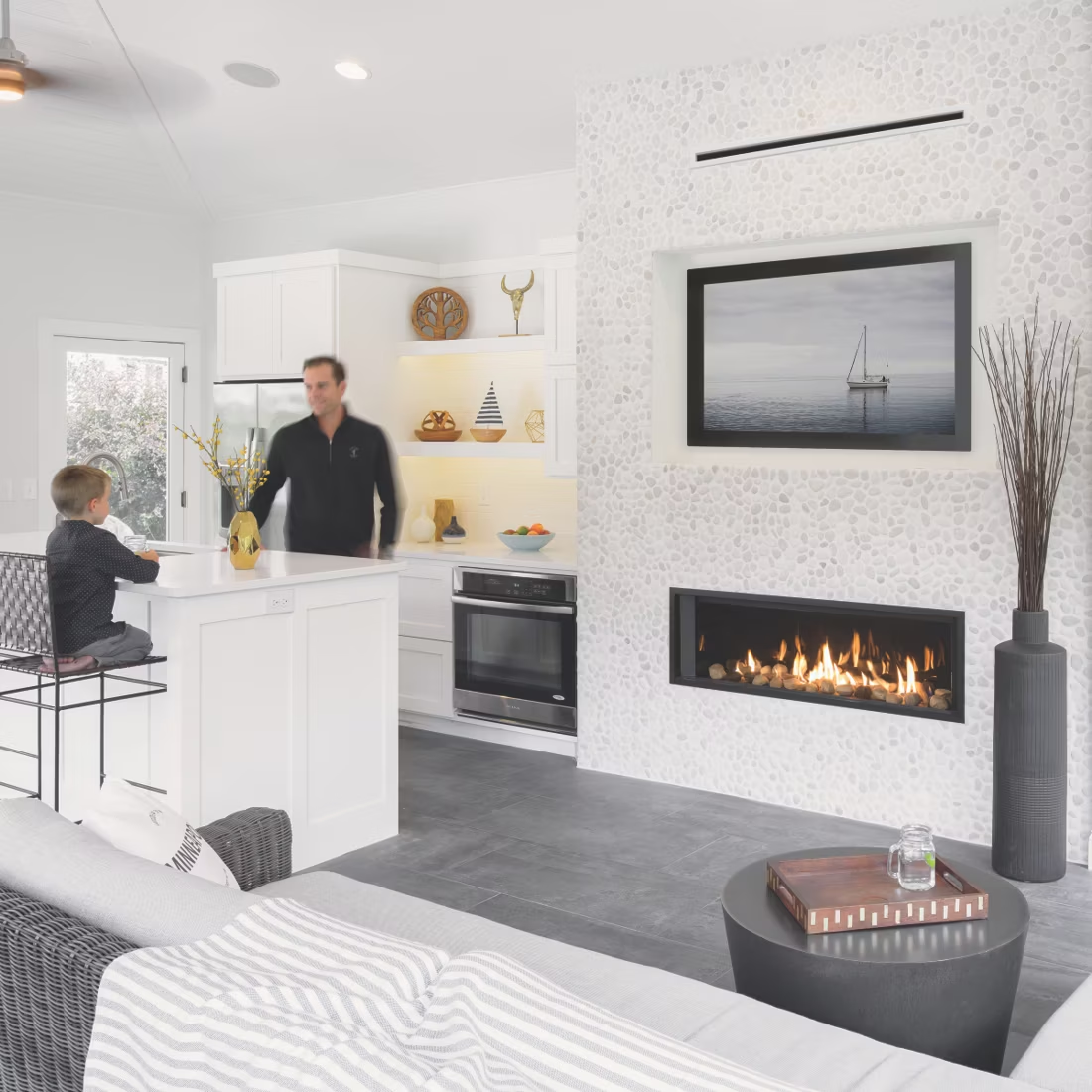
Yes—with an asterisk. Fireplaces are hot and TVs don't like heat. Either put a mantel between them to deflect rising warmth, or choose a fireplace with heat-management technology that creates a cool zone on the wall above—the wall stays around 125 degrees, barely warm, while the room still gets full heat. If you like clean lines and don't want a mantel, heat management is the answer.
What does it take to replace an existing fireplace?
Fireplaces are like icebergs—bigger behind the wall than in front of it. Replacement means removing the surrounding tile or stone (the finish material laps onto the fireplace face), pulling the old unit, setting the new one in the same enclosure, and re-finishing the wall. A hearth professional can determine what's behind your wall without demolition during an in-home preview.
Does a fireplace add value to my home?
On average, a fireplace adds back to the home about the same amount you spent installing it. Add the monthly savings from heating the rooms you actually use instead of the whole house—often hundreds of dollars a year—and the value case is strong before you even count what a fire does for how your family uses the room.
Can a fireplace actually lower my heating bill?
Yes—by creating a comfort zone. A furnace heats every square foot of the house just to warm the one room you're in; a gas fireplace on low burns roughly a sixth of the gas a typical furnace does. Set the furnace around 55–60 degrees as a baseline, then heat the rooms your family actually uses. Families who heat this way commonly save $20–$60 a month.
Nearby Dealers
Hearth shops serving Fair Lawn and the surrounding area. Every listing shows whether it is a WhyFire partner, a dealer we have verified as authorized for the brands we recommend, or a local business carrying hearth products. No manufacturer pays for placement. How we verify dealers →
Kjb Fireplaces
Flue Tech
Mcnamara Fireplace And Stove
County Woodstoves Inc
Light N Grid
Fireplaces By Design
Westchester Fireplace
Big Apple Fireplaces
Chimney Sweep Energy Barn
Fire Design
Harris Hearth And Home
N & N Services
Hot Concepts Fireplaces
All Shore Appliance
Fireplace And Outdoor Living
Agi Supply Inc
Get your Fair Lawn gas fireplace Project Guide & Parts List.
Tell us about your home and existing fireplace, and we'll match you with a trusted local Fair Lawn dealer and send a free Project Guide & Parts List—the exact parts, vent kit, and installer recommendation for your project.
Find Your Fireplace →