
Warm your Pinelands home without a flue or fuel tank.
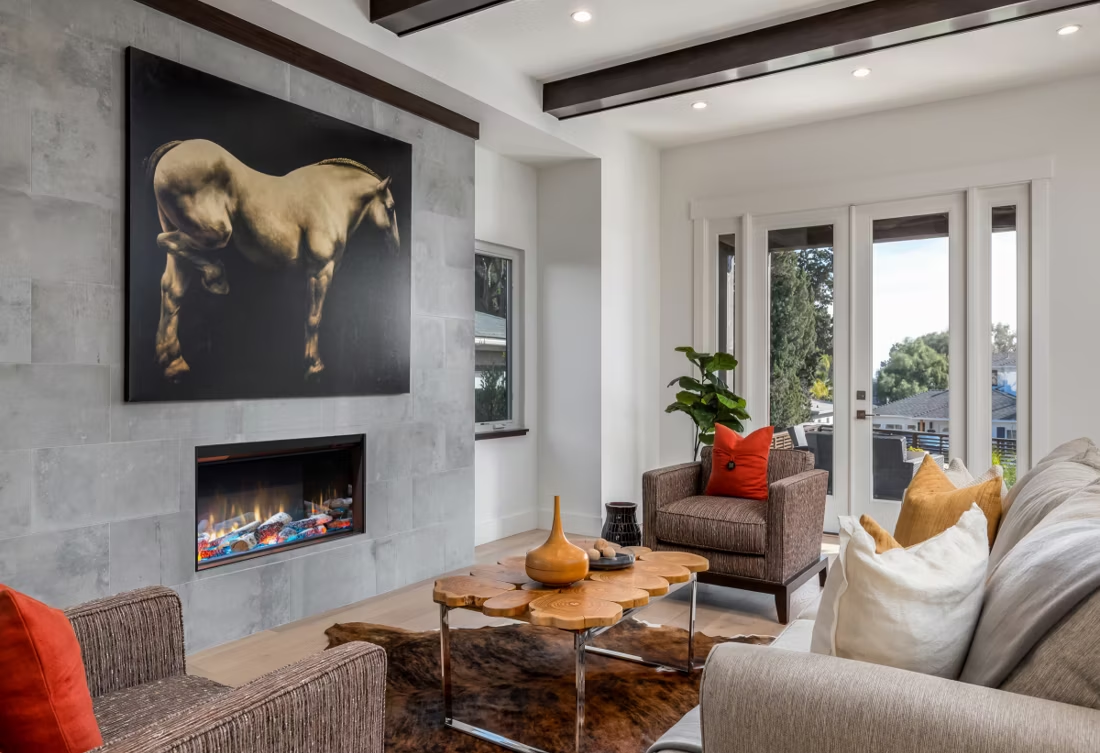
No natural gas main reaches most of Estell Manor. An electric fireplace gives you real zone heat and ambiance on the existing wiring in your home—find the right unit and a trusted local installer.
Every Project Starts From One of These Five Situations
Heat the room you're in, not the whole house.
Estell Manor sits inside the Pinelands National Reserve at just 37 feet of elevation, a rural Atlantic County town of under 1,800 people surrounded by pitch pine forest and the Great Egg Harbor and Mullica watersheds. Winters here are moderate for the Northeast—average lows around 23°F and a solid winter heating season—but there's no natural gas main serving most of the township. Homes here typically heat with propane, oil, or wood, which is where an electric fireplace earns its keep as a clean, no-fuss supplement.
Because Estell Manor falls under Pinelands Commission development review as well as township building permits, any project that touches structure—framing a built-in surround, cutting into a wall for a recessed unit—gets more scrutiny than it would in a typical suburban town. A plug-in or hardwired electric fireplace sidesteps most of that: no chimney, no gas line, no combustion venting to route through a protected forest lot. Atlantic City Electric serves the area at a residential rate of about $0.2257/kWh, which is higher than the national average, so most local homeowners use electric fireplaces the way they're built to be used—as targeted, room-by-room heat rather than a whole-house furnace replacement.
Three steps. No salesperson until you're ready.
Tell us about your project
Your zip code, your situation, and the fuel you're leaning toward—or let the answers point you to one.
See what's actually available
The brands dealers within 100 miles genuinely carry—real options, never a catalog mirage.
Get your dealer & Project Guide
A trusted local dealer, plus the free Project Guide & Parts List that names every component of the job.
Frequently Asked Questions
How much does an electric fireplace installation cost in Estell Manor?
A plug-in electric insert or freestanding unit runs $300 to $1,200 installed, and often needs nothing more than an existing outlet—no permit, no electrician required for most models. A built-in or wall-recessed unit that needs a dedicated 120V or 240V circuit runs higher, typically $1,200 to $2,800, once you factor in a licensed electrician, wall framing or drywall patching, and a mantel or surround. Because Estell Manor sits inside the Pinelands National Reserve, any project that alters exterior walls or adds square footage may also need to clear Pinelands Commission review in addition to the township building permit—your local dealer or electrician can tell you quickly whether your specific project triggers that.
Do I need a permit to install an electric fireplace in Estell Manor?
A freestanding or plug-in electric fireplace generally doesn't require a permit—it's treated like any other appliance you plug into an existing outlet. A built-in unit that requires new wiring or a dedicated circuit needs an electrical permit from the Estell Manor construction office, and a licensed electrician should pull it. If the install involves framing changes to an exterior wall, check with the Pinelands Commission first—Estell Manor is almost entirely within the Pinelands National Reserve, and structural changes here get an extra layer of review that most nearby towns skip.
Will an electric fireplace actually lower my heating bill?
It depends on how you use it. Atlantic City Electric's residential rate runs about $0.2257 per kWh, which is on the higher side for New Jersey, so running a 1,500-watt electric fireplace as your only heat source for a whole house would cost more than most people expect—often $8 to $12 a day of continuous use. Where electric fireplaces save money in Estell Manor is zone heating: closing off a bedroom or den, running the fireplace there, and turning down the propane or oil furnace for the rest of the house. Used that way, most homeowners see a real reduction in fuel oil or propane deliveries over a winter.
What size electric fireplace do I need for my home?
Most electric fireplaces top out around 5,000 to 5,200 BTUs regardless of physical size—the heating capacity doesn't scale much larger like it does with wood or gas units. As a rule of thumb, that's enough to comfortably heat a single room of 400 to 1,000 square feet, depending on your home's insulation and ceiling height. Older Estell Manor homes with less insulation, or larger open rooms, may need two units or a supplemental space heater in addition to the fireplace's flame effect. A local dealer can walk through your specific room dimensions and recommend wattage accordingly.
Will an electric fireplace work if the power goes out?
No—and this matters more in Estell Manor than in a lot of towns, since rural Atlantic County lines can take longer to restore after nor'easters or summer storms. An electric fireplace has no standalone function during an outage unless you're running it off a generator. If backup heat during power outages is a priority, many local homeowners pair an electric fireplace for everyday zone heat with a wood stove or propane heater as the outage fallback—plenty of households here already keep oak, hickory, or maple firewood on hand for exactly that reason.
Electric vs. wood—which makes more sense for my Estell Manor home?
Wood makes sense if you want real backup heat during outages and have access to local oak, hickory, or maple—common species throughout the Pinelands region. It requires a chimney or Class A venting, annual cleaning, and more day-to-day tending. Electric makes sense for supplemental warmth, ambiance, and simplicity: no venting, no ash, no fuel to stack, and none of the added Pinelands Commission review that a new chimney installation can trigger. Many homes here end up with both—a wood stove for winter storm resilience and an electric unit in a bedroom or living room for everyday comfort without lighting a fire.
Electric vs. propane—do I still need a propane heater if I add an electric fireplace?
Almost certainly yes. Since there's no natural gas main through most of Estell Manor, propane (often paired with a whole-home furnace or boiler) is the primary heat source for most households, and an electric fireplace isn't sized to replace that. Think of the electric fireplace as a way to take pressure off your propane furnace during shoulder-season evenings or in a specific room you use most—it won't replace propane deliveries, but it can meaningfully reduce how often the furnace cycles on.
How long do electric fireplaces last, and what maintenance do they need?
Most electric fireplaces last 10 to 15 years, with the LED flame components typically the first thing to need replacement—often a simple bulb or light-strip swap rather than a full unit replacement. There's no chimney to sweep, no gasket to reseal, and no annual inspection required the way there is with wood or gas units. Occasional dusting of the heating element and vents is really the only upkeep, which is part of why electric fireplaces are popular in Estell Manor rentals and vacation properties near the Pinelands where nobody wants to schedule annual service.
Are there rebates available for electric fireplaces in New Jersey?
Not typically. New Jersey's Clean Energy Program and Atlantic City Electric's efficiency rebates are generally aimed at heat pumps, insulation, and central HVAC upgrades—an electric fireplace, which is a supplemental space heater rather than a whole-home system, usually doesn't qualify. It's worth asking a local dealer or electrician whether any current promotions apply to your specific project, but budget as if the full install cost is out of pocket.
Can I put a TV above my fireplace?
Yes—with an asterisk. Fireplaces are hot and TVs don't like heat. Either put a mantel between them to deflect rising warmth, or choose a fireplace with heat-management technology that creates a cool zone on the wall above—the wall stays around 125 degrees, barely warm, while the room still gets full heat. If you like clean lines and don't want a mantel, heat management is the answer.
Does an electric fireplace need a vent or chimney?
No—that's its superpower. An electric fireplace needs a wall and an outlet, period. No vent pipe, no gas line, no clearances to design around, which is why it works in bedrooms, offices, apartments, and walls where venting a gas or wood unit would be impractical or impossible. Installation is typically the simplest and least expensive of any fireplace type.
What is an in-home preview and do I need one?
It's a visit where a hearth professional measures your space, confirms the model you picked actually works in your home, and walks the specs—framing, gas line, venting, finish work—before anything is ordered. Some details you just can't know until you see the house. Never make a down payment without one; it's the single most-skipped step that burns buyers.
Can a fireplace actually lower my heating bill?
Yes—by creating a comfort zone. A furnace heats every square foot of the house just to warm the one room you're in; a gas fireplace on low burns roughly a sixth of the gas a typical furnace does. Set the furnace around 55–60 degrees as a baseline, then heat the rooms your family actually uses. Families who heat this way commonly save $20–$60 a month.
Nearby Dealers
Hearth shops serving Estell Manor and the surrounding area. Every listing shows whether it is a WhyFire partner, a dealer we have verified as authorized for the brands we recommend, or a local business carrying hearth products. No manufacturer pays for placement. How we verify dealers →
The Chimney Doctor Inc.
Quality Home Center
Electric Service in Estell Manor
An electric fireplace's heater draws about 1,500 watts—pennies per hour at local rates.
Atlantic City Electric Co
Find your electric fireplace in Estell Manor.
Tell us about your room and your home, and we'll match you with the right electric fireplace or insert—plus a free Project Guide & Parts List and a trusted local dealer to install it.
Find Your Fireplace →