
Instant Heat for Demarest's Coldest Nights.
Skip the cordwood and the creosote. Find the right gas fireplace or insert for your Bergen County home, and connect with a trusted local dealer.
Every Project Starts From One of These Five Situations
A Gas Insert Turns a Decorative Hearth Into Real Heat.
Demarest is a small, established borough of roughly 4,900 people tucked into the Hudson Palisades corridor of Bergen County, at a modest 58 feet of elevation. Many of its Tudor and Colonial homes date to the early-to-mid 1900s and were built with masonry fireplaces meant to burn local oak, hickory, and maple. Most of those fireplaces get used a handful of times a season, if that—the draft, the ash, and the chimney upkeep don't fit how people actually live today.
Winters here bring an average low around 23°F and a real, sustained heating season comparable to towns like Hartford, Connecticut—if nowhere near the extremes of places like Burlington, Vermont or Fargo, North Dakota. Most Demarest homes already have natural gas service for cooking and central heat, which makes extending a line to the fireplace straightforward in a lot of cases. And with Rockland Electric and Orange & Rockland residential rates running north of 20 cents per kWh—among the higher electric rates in the state—a gas insert into an existing masonry fireplace often pencils out as the most efficient way to add real heat to a living room or den.
Three steps. No salesperson until you're ready.
Tell us about your project
Your zip code, your situation, and the fuel you're leaning toward—or let the answers point you to one.
See what's actually available
The brands dealers within 100 miles genuinely carry—real options, never a catalog mirage.
Get your dealer & Project Guide
A trusted local dealer, plus the free Project Guide & Parts List that names every component of the job.
Frequently Asked Questions
How much does a gas fireplace installation cost in Demarest?
For a direct-vent gas insert going into an existing masonry fireplace with a gas line already nearby, expect somewhere in the $5,500 to $9,500 range in Bergen County, including a stainless steel liner sized to the new appliance. A full built-in gas fireplace for a remodel or an addition—with framing, venting, and a new gas line run from the meter—typically lands between $9,000 and $14,000 given regional labor rates this close to New York City. Homes without any nearby gas line, or projects that need a propane tank installed, run higher. A local dealer will give you a firm number after seeing the space.
Can I convert my existing wood-burning fireplace to gas?
Yes, and it's one of the most common projects in a town like Demarest, where a lot of the older Tudor and Colonial homes still have their original masonry hearths built for burning oak and hickory. A gas insert slides into that existing firebox, and a stainless liner runs up through the existing chimney to vent it—no new masonry work required. The look of the original fireplace stays intact, but you get real, controllable heat with no ash, no cord splitting, and no chimney draft pulling warm air out of the room when it's not lit.
Do I need natural gas, or is propane an option?
Most homes in Demarest already have natural gas service for heating and cooking, so tying a fireplace into the existing line is usually the simpler and cheaper path. A smaller number of properties—particularly ones on the edges of town or homes that rely on oil or electric heat—don't have a gas main nearby, and propane is the standard fallback, either from an existing tank or a new one set by a local propane supplier. Nearly every gas fireplace and insert sold by local dealers can be configured for either fuel; it just changes the orifice and regulator setup.
Do I need a permit to install a gas fireplace in Demarest?
Yes. New gas fireplace and insert installations require a construction permit under the New Jersey Uniform Construction Code, reviewed through the Demarest Borough Building Department, along with a separate permit for any gas line work performed by a licensed gas fitter. In practice, the hearth dealer or contractor doing your install typically pulls these permits and schedules the required inspections as part of the job, so you're not coordinating multiple trades and multiple borough visits yourself.
Will my gas fireplace still work if the power goes out?
Most modern gas fireplaces will, which matters given how often storms roll through the Hudson Valley corridor and knock out power for a day or two at a time. Units with intermittent pilot ignition (IPI) run on a small battery backup that kicks in automatically when line power drops, so the fireplace still lights on demand. Valor's lineup goes a step further—their pilot assembly generates its own electricity through the thermocouple, so there's no battery to remember at all. Given that Rockland Electric and Orange & Rockland rates already run high here, having a heat source that doesn't depend on the grid is worth asking your dealer about.
Vented or vent-free—which makes more sense for a Demarest home?
Vented (direct-vent) gas fireplaces pull combustion air from outside and exhaust it back outside through sealed venting, which is why they're the standard choice almost everywhere, including here. Vent-free units burn directly into the room and are legal in New Jersey under strict room-sizing and oxygen-depletion-sensor rules, but given how many Demarest homes already have a working chimney flue from the original masonry fireplace, most homeowners end up going direct-vent anyway—it uses the venting path you already have and avoids any tradeoffs on indoor air quality.
What size gas fireplace or insert do I need?
It depends on the room and how the house is insulated, but for a typical Demarest living room or den in a 2,500 to 4,000 square foot Colonial, a mid-size insert or fireplace in the 20,000 to 35,000 BTU range is usually the right zone-heating fit—enough to make the room genuinely warm without overheating it. Larger open-concept additions or great rooms may call for something closer to 40,000 BTU. A local dealer will size the unit to your actual room during an in-home visit rather than guessing off square footage alone.
How often does a gas fireplace need to be serviced?
Plan on an annual inspection, ideally in early fall before the heating season starts. A technician checks the burner, pilot or ignition system, venting, and gas connections, and cleans the glass and interior—a much quicker job than a wood chimney sweep, but just as important for safety and for keeping the manufacturer's warranty intact. Local hearth and HVAC service providers in the area typically charge $150 to $250 for this visit.
Gas vs. wood—which fits a Demarest home better?
Wood offers a real flame and the option to burn oak, hickory, or maple sourced locally, plus heat that doesn't depend on electricity or a gas line—genuinely useful during an extended outage. Gas offers instant on-off convenience, no ash or creosote, and steady, controllable output without ever splitting or stacking anything. Demarest doesn't carry the air-quality restrictions that limit wood burning in some parts of the country, so either option is workable here. In practice, most homeowners converting an old, rarely-used masonry fireplace choose gas for the daily-use living room, and some keep a secondary wood-burning setup elsewhere for backup heat or ambiance.
Can I put a TV above my fireplace?
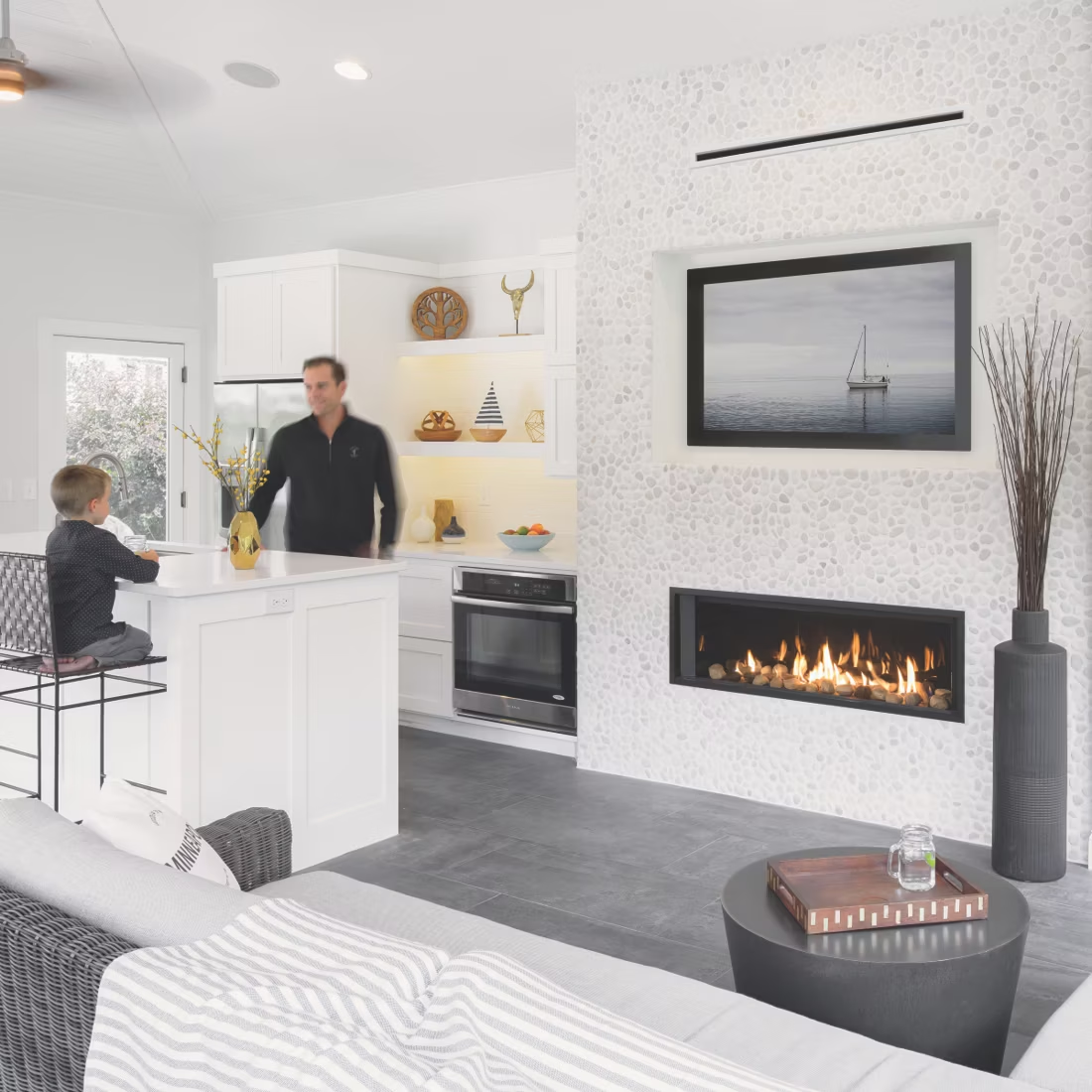
Yes—with an asterisk. Fireplaces are hot and TVs don't like heat. Either put a mantel between them to deflect rising warmth, or choose a fireplace with heat-management technology that creates a cool zone on the wall above—the wall stays around 125 degrees, barely warm, while the room still gets full heat. If you like clean lines and don't want a mantel, heat management is the answer.
Is my gas fireplace wasting gas?
If it was installed more than 15 years ago, probably. Older gas fireplaces keep a standing pilot light burning all the time, and that little flame can cost a couple hundred dollars a year. Newer models use pilot-on-demand ignition—the pilot lights only when you use the fireplace and goes out when you turn it off.
How much should I budget for a fireplace?
For an average home—covering the fireplace, the vent pipe, and basic installation—a budget between $3,900 and $5,500 gives you a lot of options across wood, gas, and pellet. By the time you add finish work, gas line, and electrical, the average complete installation lands between $5,000 and $12,000 all-in. In a remodel or new build, a good rule is to put about 2.5% of the total project cost toward the fireplace.
Can a fireplace actually lower my heating bill?
Yes—by creating a comfort zone. A furnace heats every square foot of the house just to warm the one room you're in; a gas fireplace on low burns roughly a sixth of the gas a typical furnace does. Set the furnace around 55–60 degrees as a baseline, then heat the rooms your family actually uses. Families who heat this way commonly save $20–$60 a month.
Nearby Dealers
Hearth shops serving Demarest and the surrounding area. Every listing shows whether it is a WhyFire partner, a dealer we have verified as authorized for the brands we recommend, or a local business carrying hearth products. No manufacturer pays for placement. How we verify dealers →
Flue Tech
County Woodstoves Inc
Mcnamara Fireplace And Stove
Westchester Fireplace
Kjb Fireplaces
Light N Grid
Big Apple Fireplaces
Fireplace And Outdoor Living
Fireplaces By Design
All Shore Appliance
The Valley Fireplace
Agi Supply Inc
Costello's Hearth & Spa - Garden City Park
Nordic Stove And Fireplace Center
Westfair Pool & Spa Inc
Harris Hearth And Home
Find your gas fireplace in Demarest.
Tell us about your home and your existing fireplace, and we'll match you with a trusted local Bergen County dealer and send over a free Project Guide & Parts List—the exact parts, including the vent kit, for your Demarest gas fireplace project.
Find Your Fireplace →