
Instant Warmth, No Chimney Needed, in Cliffside Park.
From Palisade-view high-rises to the borough's older rowhouses, direct-vent gas delivers real flame without the masonry work. Find the right unit and connect with a trusted local dealer.
Every Project Starts From One of These Five Situations
Built for apartment living, condo boards, and tight urban lots.
Cliffside Park packs roughly 25,500 residents into about one square mile perched on the Hudson Palisades, which makes it one of the densest municipalities in Bergen County. The housing stock reflects that density—high-rise condo towers along the cliff edge with Manhattan skyline views, plus older attached rowhouses and duplexes further inland, many of which were never built with a working masonry fireplace. At 5A climate zone with a fairly long, several-month heating season and average winter lows near 28°F, this isn't Duluth-style deep cold, but there are real stretches each winter where supplemental heat in a living room or den earns its keep.
Public Service Electric & Gas (PSE&G) already serves the vast majority of homes in Cliffside Park with natural gas for cooking and water heating, so running a line to a new fireplace is usually a modest add rather than a new utility hookup. That matters here because direct-vent gas technology sidesteps the borough's biggest obstacle to real fire: it vents through an exterior wall instead of a chimney, which makes it workable in condo units, co-ops, and rowhouses that were never plumbed for masonry venting in the first place—as long as the building or HOA signs off.
Three steps. No salesperson until you're ready.
Tell us about your project
Your zip code, your situation, and the fuel you're leaning toward—or let the answers point you to one.
See what's actually available
The brands dealers within 100 miles genuinely carry—real options, never a catalog mirage.
Get your dealer & Project Guide
A trusted local dealer, plus the free Project Guide & Parts List that names every component of the job.
Frequently Asked Questions
How much does a gas fireplace installation cost in Cliffside Park?
In the Bergen County / NYC-metro corridor, a direct-vent gas fireplace or insert typically runs $4,500 to $10,000 installed, with the wide range driven mostly by venting complexity. A gas insert dropped into an existing rowhouse masonry fireplace with a gas line already nearby sits toward the lower end. A new direct-vent unit in a high-rise condo—where the installer has to core an exterior wall, coordinate with building management, and possibly run new gas piping through shared risers—lands higher. A local dealer will give you a firm number after seeing your unit or building's layout.
I live in a high-rise condo with no fireplace—can I still install gas?
Often, yes, but it depends on your building. Many of Cliffside Park's cliffside condo towers allow direct-vent gas fireplace installations because the venting terminates through an exterior wall rather than requiring a full chimney—no roof penetration, no shared flue. The catch is approval: condo boards and co-op associations typically require sign-off before any exterior wall penetration, and some buildings restrict which floors or unit types qualify due to venting clearance from windows and walkways. Start with your building's management or board before ordering equipment; a local hearth dealer familiar with Cliffside Park's high-rises can usually tell you quickly whether your unit is a good candidate.
Do I need natural gas, or should I use propane?
Natural gas is the default answer here. PSE&G provides natural gas service throughout Cliffside Park, and since most homes already use it for cooking, water heating, or building-wide heat, adding a fireplace usually means tapping an existing line rather than starting from scratch. Propane is rarely used in the borough given how built-out the natural gas network already is, and tank placement is impractical in most condo and rowhouse settings anyway. Unless you have an unusual situation, plan on natural gas.
Will my gas fireplace still work if the power goes out?
Most modern gas fireplaces will, which matters in a coastal-adjacent area like Cliffside Park where nor'easters and summer storms can knock out power for a day or more. Units with IPI (intermittent pilot ignition) run on a battery backup that kicks in automatically when utility power drops, so the fireplace lights on demand just like normal. Valor's gas fireplaces go a step further—their pilot generates its own electricity through the thermocouple, so there's no battery to remember to replace. Ask your local dealer about the ignition system on any model you're considering, especially if backup heat during outages is part of why you're buying.
Fireplace, insert, or stove—which fits a Cliffside Park home?
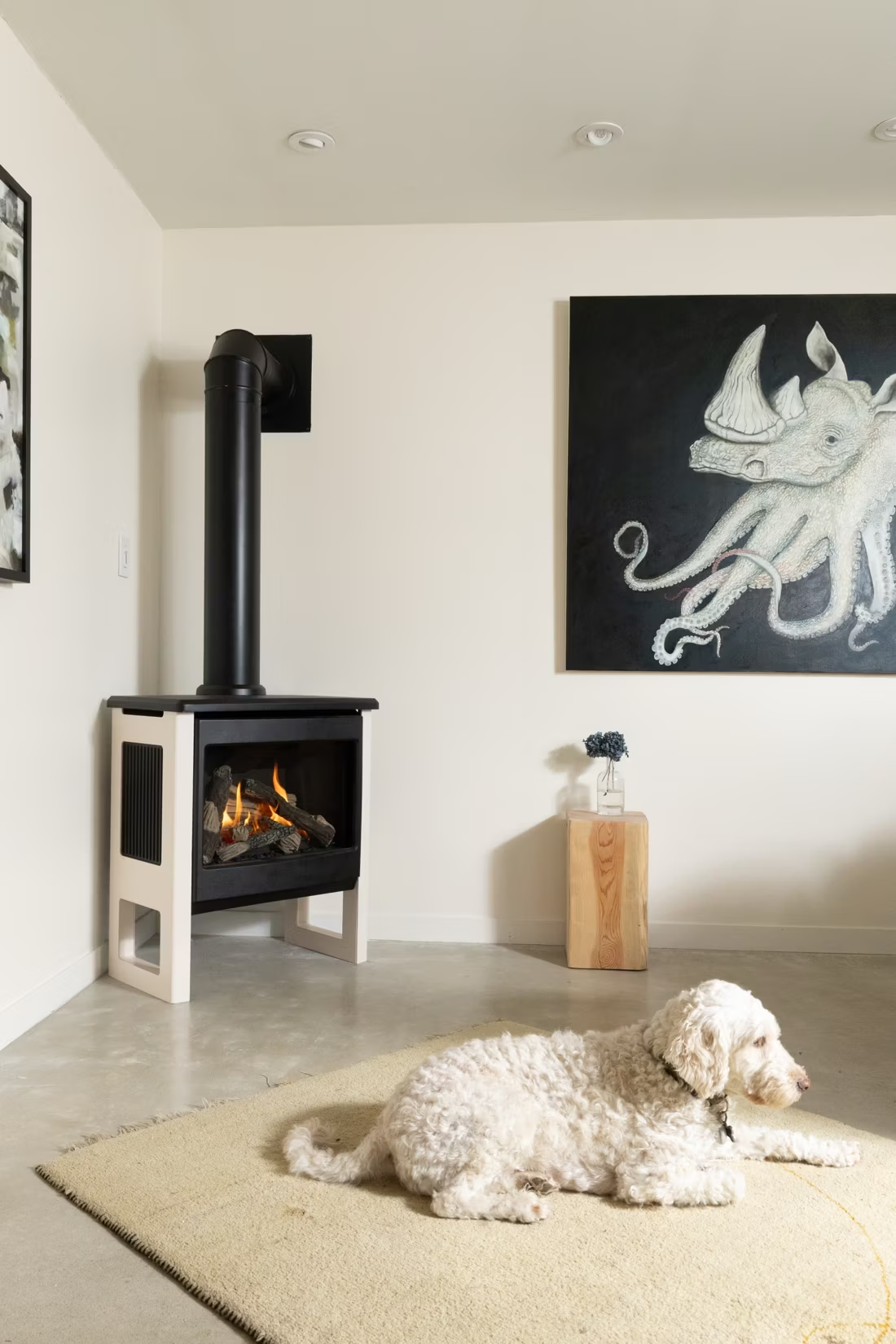
For the borough's older rowhouses with an existing masonry fireplace, a gas insert is usually the straightforward upgrade—it drops into the opening you already have and uses the chimney as the vent path. For condo units and newer construction with no fireplace opening at all, a built-in direct-vent gas fireplace is the standard choice, installed into a framed wall. Freestanding gas stoves are less common here simply because floor space is at a premium in most Cliffside Park units, though they do show up in some of the larger rowhouses further from the cliff.
Do I need a permit to install a gas fireplace in Cliffside Park?
Yes. New Jersey's Uniform Construction Code requires a construction permit for gas fireplace installations, handled through the Cliffside Park Construction Code office, along with a separate gas permit tied to any new line work—gas piping has to be run by a licensed gas fitter. If you're in a condo or co-op, plan on a second layer of approval from your building or HOA before work starts, since exterior venting typically affects a shared wall. A local hearth dealer who's done work in the borough before will usually know both processes and can walk you through them.
What's the difference between vented and vent-free gas fireplaces?
Vented (direct-vent) fireplaces draw combustion air from outside and exhaust it back outside through a sealed pipe—they're the cleanest, safest option and work in virtually any room size. Vent-free units burn gas directly into the living space with no external venting; they're legal in New Jersey but come with strict room-size minimums, oxygen depletion sensors, and restrictions against use in bedrooms. Given how compact many Cliffside Park apartments and rowhouse rooms are, meeting vent-free room-size requirements can be a real constraint—direct-vent is the more practical and more commonly installed option in the borough.
How often should a gas fireplace be serviced?
Plan on an annual inspection, ideally before the heating season starts. A certified technician checks the burner, pilot assembly, venting, and gas connections, and cleans the glass and interior—a much lighter lift than chimney sweeping for a wood unit, but still important, especially for direct-vent systems where the exterior termination can accumulate debris or get blocked by snow. Local gas appliance service providers typically charge $150 to $250 for this visit.
Should I even consider wood instead of gas in Cliffside Park?
For most homes here, no—wood-burning is genuinely uncommon in Cliffside Park. The borough's dense mix of high-rise condos and attached rowhouses leaves little room for cordwood storage, most buildings prohibit solid-fuel appliances outright, and even rowhouses with an old masonry fireplace rarely have the chimney access or yard space that wood heat depends on. Species like oak, hickory, and maple are common regionally, but sourcing and burning them practically in a one-square-mile Hudson River borough is a different proposition than in a more rural part of North Jersey. Gas remains the far more workable choice for nearly every home type in Cliffside Park.
Why is my open fireplace making my house colder?
Open fireplaces suck—literally. As the fire burns, it consumes air your furnace already paid to heat and pulls it out through the chimney, so the house is actually colder after the fire goes out than before you lit it. An insert fixes this: it seals the chimney, puts fixed glass across the front, and turns that hole in your house into a real heat source.
Why is a fireplace insert so efficient?
An insert does two things: it seals the chimney completely, so you stop losing air you already paid to heat, and it radiates warmth into the room through the firebox and glass. Most add a heat-exchange fan that pulls cool room air underneath, wraps it around the hot firebox, and pushes it back out warm. Your home is more efficient before you've even lit the first fire.
Can I install a fireplace myself?
If you're putting a fire in your house on purpose, it's best to work with an expert. Unless you're genuinely experienced in framing, gas line, vent pipe, and the national code on clearances to combustibles, have a professional do it—and ideally the same company that sells you the fireplace, so warranty, service, and liability all live under one roof.
What is an in-home preview and do I need one?
It's a visit where a hearth professional measures your space, confirms the model you picked actually works in your home, and walks the specs—framing, gas line, venting, finish work—before anything is ordered. Some details you just can't know until you see the house. Never make a down payment without one; it's the single most-skipped step that burns buyers.
Nearby Dealers
Hearth shops serving Cliffside Park and the surrounding area. Every listing shows whether it is a WhyFire partner, a dealer we have verified as authorized for the brands we recommend, or a local business carrying hearth products. No manufacturer pays for placement. How we verify dealers →
Big Apple Fireplaces
Flue Tech
County Woodstoves Inc
Harris Hearth And Home
All Shore Appliance
D & D Design Center
Mcnamara Fireplace And Stove
Costello's Hearth & Spa - Garden City Park
Hot Concepts Fireplaces
Kjb Fireplaces
Westchester Fireplace
The Valley Fireplace
Light N Grid
L&R Fireplace & Barbecue
Fireplace And Outdoor Living
Fireplaces By Design
Find your gas fireplace in Cliffside Park.
Tell us about your home or building and we'll put together a free Project Guide & Parts List—the right unit, the vent kit it needs, and a trusted local Cliffside Park dealer to install it.
Find Your Fireplace →