
Gas heat that holds up on a barrier island in Brigantine.
Dependable, storm-ready gas heat for Brigantine's shore homes and second homes. Find the right fireplace or insert and connect with a trusted local dealer.
Every Project Starts From One of These Five Situations
Built for salt air, storms, and second homes.
Brigantine sits on a barrier island in Atlantic County, just north of Atlantic City, at an elevation of about 4 feet above sea level. Winters here are mild by national standards—an average low of 30°F and a moderate overall heating season spread across the colder months, nothing like the sub-zero stretches homeowners deal with in Duluth, MN. But mild doesn't mean simple: salt-laden ocean air, humidity, and the real possibility of extended power outages after a Nor'easter or hurricane create heating challenges that inland New Jersey towns don't face.
Wood and pellet heat are essentially nonexistent in Brigantine—tight barrier-island lot sizes, a large share of seasonal and second homes without wood storage, and no nearby forest land or cutting permits make cordwood or hopper-fed pellet stoves impractical for most residents. Gas fills that gap well: it lights instantly for a weekend owner arriving to a cold house, doesn't require anyone to be present to keep a fire fed, and—installed with stainless steel venting rated for marine air—holds up to the corrosion that standard chimney hardware can't survive a block from the beach.
Three steps. No salesperson until you're ready.
Tell us about your project
Your zip code, your situation, and the fuel you're leaning toward—or let the answers point you to one.
See what's actually available
The brands dealers within 100 miles genuinely carry—real options, never a catalog mirage.
Get your dealer & Project Guide
A trusted local dealer, plus the free Project Guide & Parts List that names every component of the job.
Frequently Asked Questions
How much does a gas fireplace installation cost in Brigantine?
Most Brigantine gas fireplace or insert installations run $4,500 to $10,000, with the higher end driven by two shore-specific factors: 316L stainless steel venting (standard aluminum vent pipe corrodes faster in salt air) and any structural work needed to mount equipment above base flood elevation on homes built on pilings. A straightforward insert into an existing chimney with gas already run to the house lands toward the lower end; new gas line work, a fresh direct-vent unit, and elevated mechanical platforms push toward the higher end. Local dealers who work the island regularly will know which streets typically need the upgraded venting.
Is natural gas available in Brigantine, or do I need propane?
South Jersey Gas serves much of Atlantic County, including many streets on the island, but like other barrier-island communities, some blocks—particularly older bayside sections farther from the main distribution lines—don't have natural gas access and rely on propane instead. Check your existing water heater or range for a gas line before assuming service is available. If it's not, a propane tank installation is a routine part of many Brigantine fireplace projects, and most units can be configured for either fuel.
Do I need a permit to install a gas fireplace in Brigantine?
Yes—the City of Brigantine Construction Office requires a building permit and a separate gas line permit pulled by a licensed gas-fitter. Because much of the island falls within FEMA-mapped AE or VE flood zones, your home's elevation certificate matters here in a way it wouldn't inland: mechanical equipment sometimes needs to sit above base flood elevation, which can affect where venting terminates on homes built on pilings. A local installer familiar with Brigantine's flood zone rules will check this before finalizing your install plan.
Will my gas fireplace still work during a Nor'easter or storm-related outage?
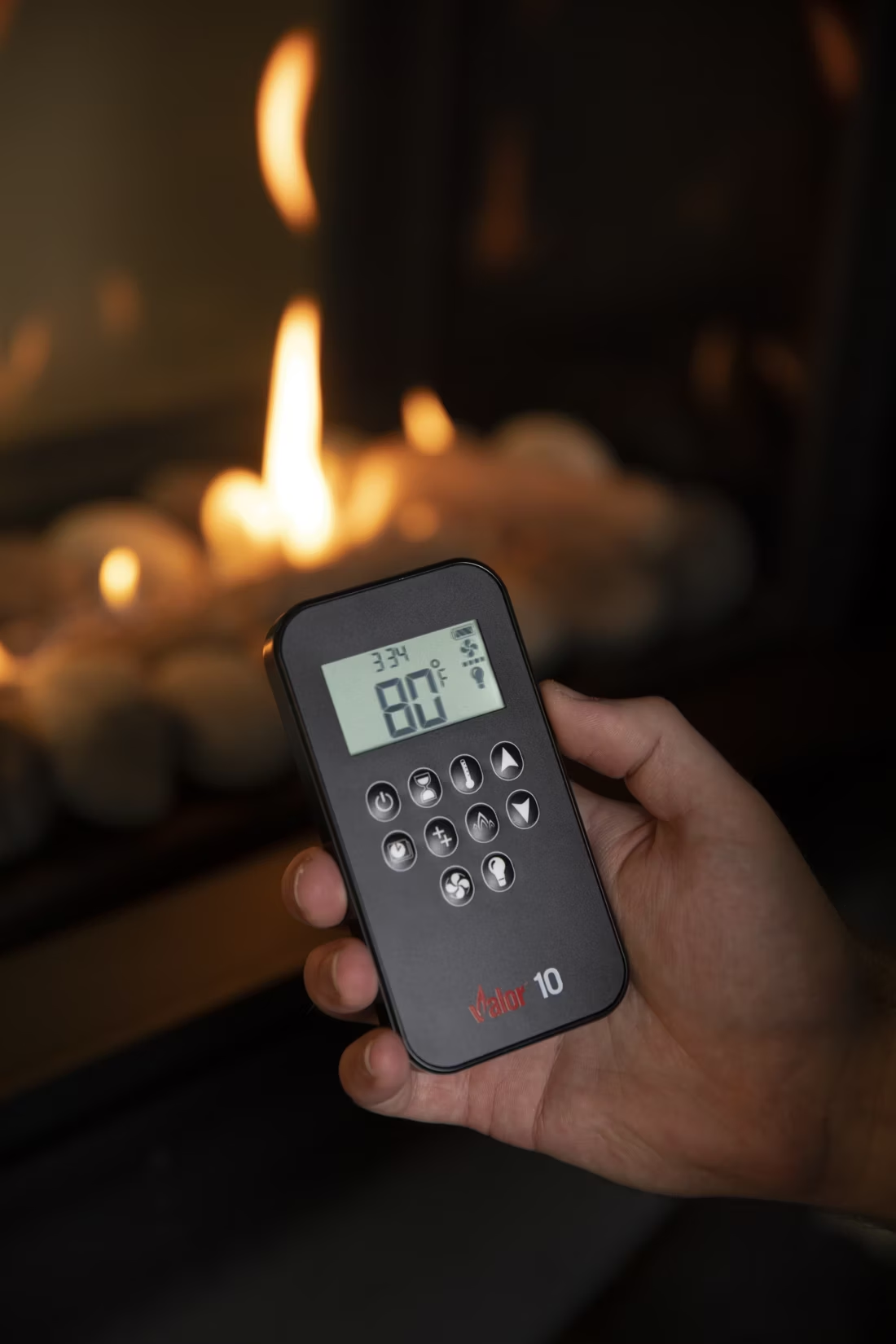
Most modern gas fireplaces use IPI (intermittent pilot ignition) with a battery backup that kicks in automatically when the power drops, so the unit lights on demand just like normal. Given how often Brigantine sees extended outages during Nor'easters and hurricane season, that's worth having. Valor takes it a step further—their units generate their own electricity through the pilot's thermocouple and never need batteries at all. For a barrier-island home where outages can stretch for days, that's a meaningful upgrade over standing-pilot models with no backup.
Can I convert an existing wood-burning fireplace to gas in Brigantine?
Many of the island's older Cape Cod-style and beach bungalow homes still have original masonry wood fireplaces, but wood heat sees almost no real use here—there's no nearby cutting land, and most lots don't have room to store cordwood. A gas insert conversion typically runs $4,000 to $8,500 depending on chimney condition. Because decades of salt-laden humidity can deteriorate old mortar and flue liners faster than in inland homes, plan on a full chimney inspection before the conversion; a stainless liner is usually part of the job either way.
Should I choose a vented or vent-free gas fireplace for a shore home?
Direct-vent (vented) units are the strong recommendation for Brigantine. Vent-free fireplaces are legal in New Jersey but push combustion byproducts and added humidity into the living space—the last thing a home already dealing with ocean-driven moisture needs. On top of that, exposed metal components corrode faster in salt air, so local dealers typically spec sealed, direct-vent stainless steel systems with corrosion-resistant terminations for anything within a mile or two of the beach.
How often should a gas fireplace be serviced in Brigantine's coastal climate?
An annual inspection is the baseline for any gas appliance, running roughly $150 to $250 locally. But salt air accelerates corrosion on burner components and vent caps faster than it would in an inland NJ home, so some Brigantine service techs recommend a visual check on ocean-facing vent terminations every 12 to 18 months regardless of full-service scheduling—catching pitted vent caps or corroded screens before they become a bigger repair.
I only use my Brigantine home part of the year—does that change what fireplace I should get?
It does. With so much of Brigantine made up of seasonal and second homes, an electronic-ignition (IPI) unit is generally the better choice over a standing-pilot model—there's no small flame burning continuously in an empty house for weeks at a time. Several current fireplace lines also offer app or remote start, which lets weekend owners warm the house before they arrive rather than waiting out a cold living room on a Friday night. Ask your local dealer about ignition type specifically if the home sits vacant much of the winter.
Gas vs. electric fireplace—which makes more sense in Brigantine?
Atlantic City Electric's residential rate runs about $0.2257 per kWh, noticeably higher than the national average, which makes electric fireplaces a better fit for supplemental ambiance or zone heat than for serious winter heating. Gas delivers more real heat per dollar and handles the shoulder-season chill better, which is why it's the default choice for anyone wanting actual warmth rather than just a flame effect. Electric units still make sense in condos or rentals where venting isn't possible. With wood and pellet options largely unavailable on the island, gas and electric are really the two practical paths for most Brigantine homes.
Why is a fireplace insert so efficient?
An insert does two things: it seals the chimney completely, so you stop losing air you already paid to heat, and it radiates warmth into the room through the firebox and glass. Most add a heat-exchange fan that pulls cool room air underneath, wraps it around the hot firebox, and pushes it back out warm. Your home is more efficient before you've even lit the first fire.
Is my gas fireplace wasting gas?
If it was installed more than 15 years ago, probably. Older gas fireplaces keep a standing pilot light burning all the time, and that little flame can cost a couple hundred dollars a year. Newer models use pilot-on-demand ignition—the pilot lights only when you use the fireplace and goes out when you turn it off.
Does a fireplace add value to my home?
On average, a fireplace adds back to the home about the same amount you spent installing it. Add the monthly savings from heating the rooms you actually use instead of the whole house—often hundreds of dollars a year—and the value case is strong before you even count what a fire does for how your family uses the room.
Can I install a fireplace myself?
If you're putting a fire in your house on purpose, it's best to work with an expert. Unless you're genuinely experienced in framing, gas line, vent pipe, and the national code on clearances to combustibles, have a professional do it—and ideally the same company that sells you the fireplace, so warranty, service, and liability all live under one roof.
Nearby Dealers
Hearth shops serving Brigantine and the surrounding area. Every listing shows whether it is a WhyFire partner, a dealer we have verified as authorized for the brands we recommend, or a local business carrying hearth products. No manufacturer pays for placement. How we verify dealers →
The Chimney Doctor Inc.
Find your gas fireplace in Brigantine.
Tell us about your Brigantine home and we'll match you with a trusted local dealer and send you a free Project Guide & Parts List—the exact parts, salt-air-rated vent kit, and recommended installer for your gas fireplace project.
Find Your Fireplace →