
Instant Warmth Built for Bogota's Bergen County Winters.
No wood pile, no chimney sweeping schedule—just clean, on-demand heat for Bogota's capes, colonials, and two-family homes. Find the right unit and connect with a trusted local dealer.
Every Project Starts From One of These Five Situations
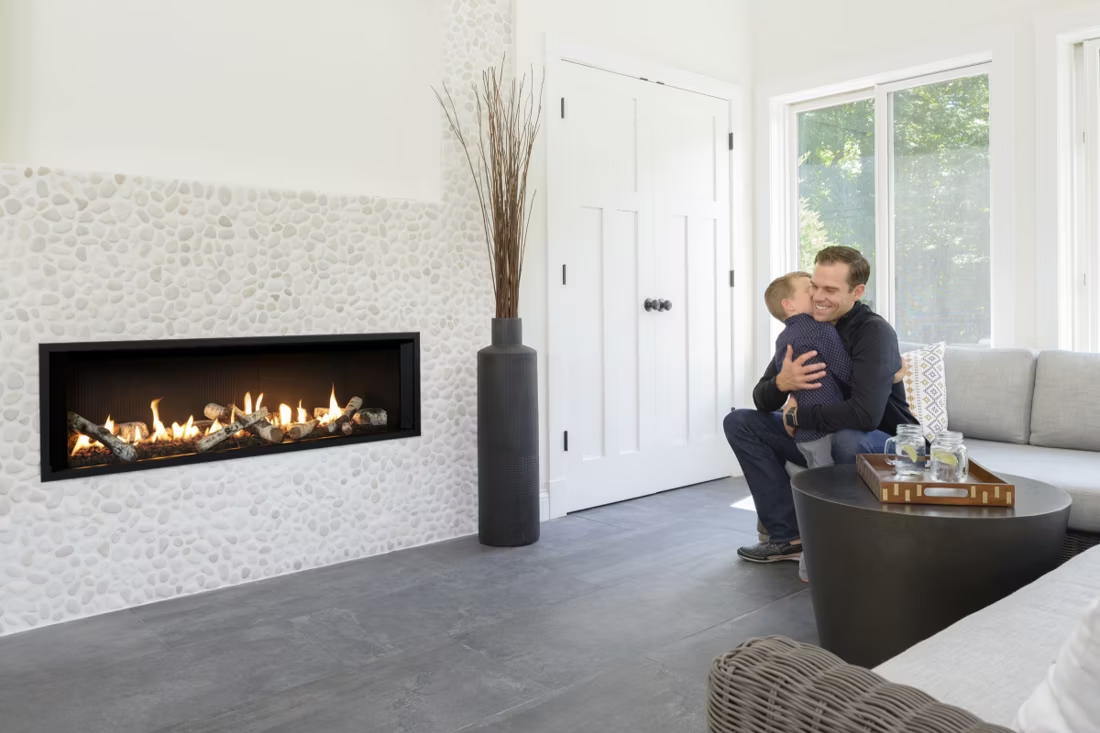
Reliable heat, without the hassle of wood.
Bogota is a compact, one-square-mile borough packed with early-and-mid-20th-century capes, colonials, and two-family homes on narrow lots—the kind of dense residential grid you find across Bergen County. Winters here are moderate-cold: a solid, multi-month heating season and an average winter low near 26°F, colder than the coast but nowhere near what a place like Burlington, VT or Duluth, MN sees. That climate profile, combined with tight lot sizes, attached and close-set housing, and no meaningful access to forest land for cutting or storing cordwood, is why wood stoves are essentially a non-factor here—homeowners in Bogota heat with gas, and increasingly, electric.
Public Service Electric & Gas (PSE&G) serves virtually every home in Bogota with both electric and natural gas, which makes adding a gas fireplace or insert a straightforward project—no propane tank, no fuel deliveries, no seasonal wood stacking in a yard that doesn't have room for it. Many of the borough's older capes and colonials still have their original masonry fireplace, and converting that fireplace to a direct-vent gas insert is one of the most common upgrades local hearth dealers see: it keeps the original opening and mantel while delivering real, controllable heat with the flip of a switch.
Three steps. No salesperson until you're ready.
Tell us about your project
Your zip code, your situation, and the fuel you're leaning toward—or let the answers point you to one.
See what's actually available
The brands dealers within 100 miles genuinely carry—real options, never a catalog mirage.
Get your dealer & Project Guide
A trusted local dealer, plus the free Project Guide & Parts List that names every component of the job.
Frequently Asked Questions
How much does a gas fireplace installation cost in Bogota?
In Bergen County, a gas fireplace or insert installation typically runs $5,000 to $12,000, with the spread driven mostly by venting complexity and gas line work. A direct-vent insert dropped into an existing masonry fireplace with a gas line already nearby sits toward the lower end. A new built-in gas fireplace in a remodeled family room—especially in Bogota's older homes where a fresh gas line has to be run from the meter—lands in the middle to upper end. Add borough permit fees and licensed gas-fitter labor, and a full job with new line work can approach the top of that range. A local dealer will confirm exact numbers after seeing your home.
Can I convert my existing wood-burning fireplace to gas?
Yes, and it's the most common gas project in Bogota's older housing stock. Many of the borough's capes and colonials built in the 1920s through 1950s still have their original brick fireplace and chimney. A gas insert with a stainless steel liner run up the existing flue lets you keep that fireplace opening and mantel while converting to push-button gas heat. Costs typically fall between $5,000 and $9,500 depending on the insert and whether the home already has gas service nearby—and since PSE&G already runs gas to nearly every block in Bogota, most homes are close to an existing line.
Does my Bogota home have natural gas, or would I need propane?
Nearly every home in Bogota is already served by PSE&G natural gas, which is the near-universal fuel source here rather than propane. If you already have a gas stove, water heater, or furnace, running a line to a new fireplace location is a relatively small addition for a licensed plumber. Propane is rarely used in Bogota proper—it tends to show up only in unusual situations, like a detached structure far from the gas meter. Your dealer can confirm your home's existing gas service during the in-home consult.
Will a gas fireplace still work if the power goes out?
Most direct-vent gas fireplaces with IPI (intermittent pilot ignition) run on a small battery backup that kicks in automatically when PSE&G power drops—useful during the nor'easters and summer storms that periodically knock out power in Bergen County. Valor units take a different approach: the pilot's thermocouple generates its own electricity, so there are no batteries to remember or replace, ever. If backup heat during outages matters to you, ask your local dealer about the ignition system before you buy—it varies by brand and even by model line.
Gas fireplace, insert, or gas stove—which fits my house?
A gas insert fits into an existing masonry fireplace opening, which suits Bogota's older capes and colonials that already have a hearth. A built-in gas fireplace is framed into a wall and works best for a remodel or an addition without an existing chimney. A freestanding gas stove sits on a small hearth pad and needs less structural work, which can be a good fit for a smaller family room or a two-family home's ground-floor unit where floor space and venting runs are tight. A local dealer can walk your specific room and tell you which option actually fits the space and existing structure.
Do I need a permit to install a gas fireplace in Bogota?
Yes—the Bogota Borough Construction Department requires a construction permit for gas fireplace installations under the New Jersey Uniform Construction Code, and any new or modified gas line needs to be run by a licensed NJ plumber or gas fitter with its own inspection. Most established hearth dealers coordinate the permit application, the gas line trade, and the final inspection as part of the installation price, so you're not left managing separate contractors and paperwork yourself.
Should I get a vented or vent-free gas fireplace?
Direct-vent units draw combustion air from outside and exhaust it back outside through a sealed pipe—they're the standard choice and the one most Bogota installers recommend by default. Vent-free (unvented) units are permitted in New Jersey under code, but they carry minimum room-volume requirements to safely dilute combustion byproducts, and a lot of Bogota's smaller capes and two-family units don't have a room large enough to comfortably clear that threshold. For most homes in the borough, a direct-vent unit ends up being both the safer and the more practical installation once room size is factored in.
How often does a gas fireplace need to be serviced?
Plan on an annual inspection, ideally before heating season starts in the fall. A technician checks the burner, pilot assembly, venting, and gas connections, and cleans the glass and interior—a much lighter job than chimney sweeping but still important, since a dirty pilot or degraded gasket is the most common cause of a fireplace that won't light reliably. Expect to pay roughly $150 to $250 for a standard annual service call in the Bergen County area.
Gas fireplace vs. electric fireplace—which makes sense in Bogota?
Gas delivers real flame, real heat output, and can supplement your home's heating bill during Bogota's colder months, but it requires venting and gas line work. Electric fireplaces need only a standard outlet, install in an afternoon with zero venting, and work well in a two-family home's second unit or a finished basement where running a gas line isn't practical. The tradeoff is running cost: PSE&G's residential electric rate is around 19.8 cents per kWh, so an electric unit used for real supplemental heat costs more to run than a comparable gas fireplace. For a primary family room, most Bogota homeowners lean gas; for a secondary space or a rental unit, electric is often the simpler call.
Can I put a TV above my fireplace?
Yes—with an asterisk. Fireplaces are hot and TVs don't like heat. Either put a mantel between them to deflect rising warmth, or choose a fireplace with heat-management technology that creates a cool zone on the wall above—the wall stays around 125 degrees, barely warm, while the room still gets full heat. If you like clean lines and don't want a mantel, heat management is the answer.
What's the difference between an insert and a zero-clearance fireplace?
An insert is a fireplace that slides into a pre-existing wood-burning fireplace—if you don't have one, there's nothing to insert it into. A zero-clearance fireplace is built into a framed wall, which makes it the answer for remodels and new construction. Simple test: existing masonry fireplace means insert; blank or framed wall means zero-clearance.
Can a fireplace actually lower my heating bill?
Yes—by creating a comfort zone. A furnace heats every square foot of the house just to warm the one room you're in; a gas fireplace on low burns roughly a sixth of the gas a typical furnace does. Set the furnace around 55–60 degrees as a baseline, then heat the rooms your family actually uses. Families who heat this way commonly save $20–$60 a month.
What is an in-home preview and do I need one?
It's a visit where a hearth professional measures your space, confirms the model you picked actually works in your home, and walks the specs—framing, gas line, venting, finish work—before anything is ordered. Some details you just can't know until you see the house. Never make a down payment without one; it's the single most-skipped step that burns buyers.
Nearby Dealers
Hearth shops serving Bogota and the surrounding area. Every listing shows whether it is a WhyFire partner, a dealer we have verified as authorized for the brands we recommend, or a local business carrying hearth products. No manufacturer pays for placement. How we verify dealers →
Flue Tech
Big Apple Fireplaces
County Woodstoves Inc
Mcnamara Fireplace And Stove
Kjb Fireplaces
Light N Grid
Westchester Fireplace
Harris Hearth And Home
All Shore Appliance
Fireplaces By Design
D & D Design Center
Hot Concepts Fireplaces
Costello's Hearth & Spa - Garden City Park
Fireplace And Outdoor Living
The Valley Fireplace
Fire Design
Find your gas fireplace in Bogota.
Tell us about your home and we'll match you with a trusted local Bergen County dealer and send over a free Project Guide & Parts List—the exact parts, vent kit, and installer recommendation for your gas fireplace project.
Find Your Fireplace →