
Warm Up Fast Without the Woodpile.
With a long, cold winter season and coastal nor'easters that knock out power, Portsmouth homeowners want heat that's fast, clean, and dependable. Find the right gas unit and connect with a trusted local dealer.
Every Project Starts From One of These Five Situations
Reliable heat that fits Portsmouth's historic core.
Portsmouth sits at just 60 feet above sea level on the Piscataqua River, but its long, cold winters and average winter lows near 15°F put it in the same cold-climate territory as Burlington, Vermont. Between the raw seacoast wind and a housing stock heavy with 18th- and 19th-century brick rowhouses, Federal-era homes, and downtown condos, keeping a home warm here is a real engineering problem—and one where a chimney full of split maple isn't always practical or even permitted.
That's part of why gas has become the default upgrade path for Portsmouth homeowners. Much of the downtown, South End, and North End is served by natural gas through Unitil, while homes further out toward the city limits and unincorporated pockets near 03801-03804 more often run on propane. Either way, a direct-vent gas fireplace or insert delivers instant heat at the flip of a switch, works during the outages that seacoast storms regularly cause, and—critically for Portsmouth's historic properties—can often be installed without the masonry chimney work or exterior alterations that trigger a Historic District Commission review.
Three steps. No salesperson until you're ready.
Tell us about your project
Your zip code, your situation, and the fuel you're leaning toward—or let the answers point you to one.
See what's actually available
The brands dealers within 100 miles genuinely carry—real options, never a catalog mirage.
Get your dealer & Project Guide
A trusted local dealer, plus the free Project Guide & Parts List that names every component of the job.
Frequently Asked Questions
How much does a gas fireplace installation cost in Portsmouth?
Most gas fireplace and insert installations in Portsmouth run $4,500 to $10,000, with the spread driven by whether you're installing into an existing masonry fireplace, running new gas line, or dealing with venting placement on a home inside the historic overlay. A gas insert into an existing chimney with gas already run to the house sits at the lower end. Homes needing a new gas line from the street, or properties in the downtown historic district where exterior vent terminations require Historic District Commission sign-off before work can proceed, tend to land toward the higher end. A local hearth retailer will walk your specific property before quoting a firm number.
Can I convert my existing wood fireplace to gas?
Yes, and it's a common project in Portsmouth's older housing stock—plenty of Federal and Colonial-era homes in the South End and downtown still have their original brick fireboxes. A gas insert typically slides into that existing masonry opening with a stainless liner run up the flue, preserving the mantel and surround while eliminating ash, creosote, and chimney maintenance. Expect $4,500 to $9,000 depending on the insert and whether gas service already reaches the house. Homes on Unitil's natural gas lines are usually the more straightforward and less expensive conversion; homes relying on propane need a tank sited and connected first.
Do I need natural gas, or is propane an option in Portsmouth?
Both are used in Portsmouth. Unitil provides natural gas service through much of downtown, the South End, and North End, so if your home already has gas heat or a gas range, adding a fireplace is generally a simple tie-in. Outside those mains—including some outlying pockets within the 03801-03804 zips—propane is the standard substitute, delivered and stored in an above- or below-ground tank. Nearly every gas fireplace and insert sold locally can be configured for either fuel; your installer sets the orifice and regulator to match whichever you have.
Will my gas fireplace still work if the power goes out?
Most will, which matters on the Seacoast where nor'easters and coastal wind events regularly take down power for days at a time. Units with intermittent pilot ignition (IPI) run on AA battery backup that kicks in the moment the power drops, so the fireplace lights normally off the batteries. Valor's gas fireplaces go a step further—the pilot's thermocouple generates the small amount of electricity the unit needs, so there's no battery to remember or replace. Ask your local dealer about the ignition system on any model you're considering if outage performance matters to you.
What's the difference between a gas fireplace, gas insert, and gas stove?
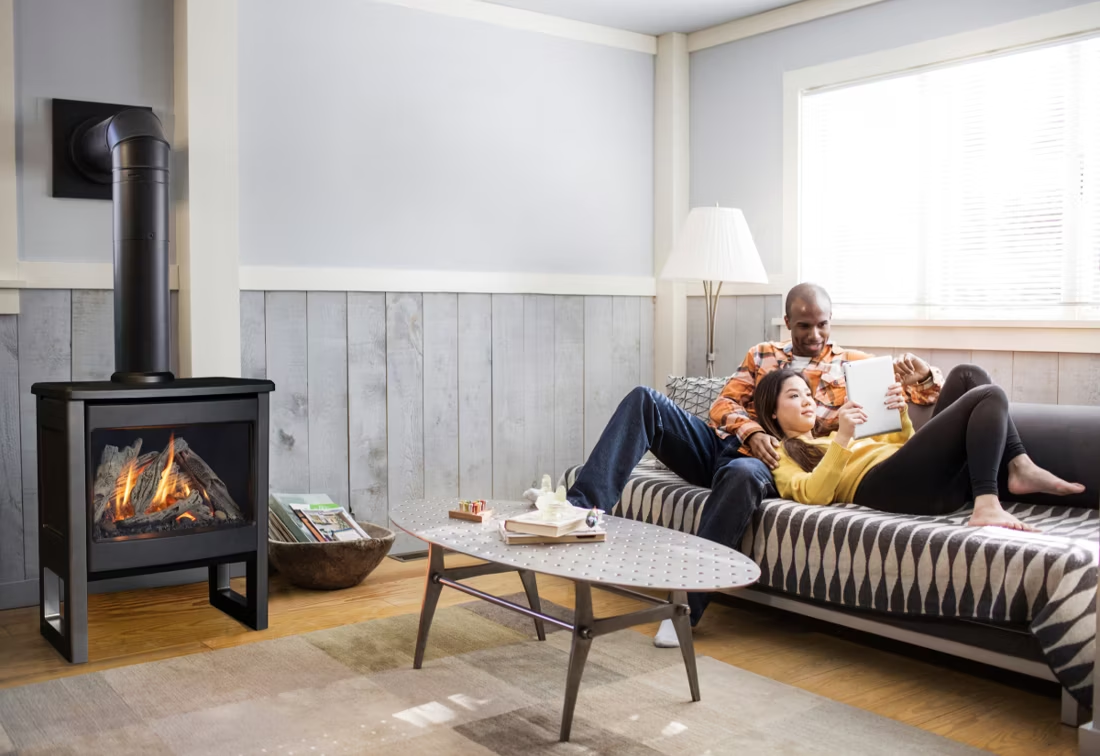
A gas fireplace is a fully framed-in, built-in unit—the right call for new construction or a gut remodel. A gas insert is built to drop into an existing masonry firebox, using your current chimney as the vent path, which is why it's the go-to choice for Portsmouth's older homes with original fireplaces. A gas stove is freestanding, sitting on the floor on its own hearth pad, and works well in rooms without any existing fireplace opening—a smaller condo or an addition, for example. Most homeowners here with a historic fireplace already in place go with an insert.
Do I need a permit to install a gas fireplace in Portsmouth?
Yes—the City of Portsmouth requires a building permit and a separate gas permit pulled by a licensed gas-fitter for any new gas fireplace or insert installation. If your property sits within the downtown historic district, exterior vent terminations visible from the street may also need review by the Historic District Commission before the permit is finalized. Most established hearth retailers coordinate all of this—building permit, gas permit, and historic review where applicable—as part of the installation, so you're not left managing three separate approvals yourself.
Vented vs. vent-free gas fireplaces—what should I know?
Vented (direct-vent) units draw combustion air from outside and exhaust the byproducts back outside through a sealed pipe—they're the cleanest, safest option and the standard choice for Portsmouth installs. Vent-free units burn without any exterior venting at all, releasing water vapor and small amounts of combustion byproducts directly into the room. New Hampshire permits vent-free units, but they come with strict room-size and ventilation requirements, and they're a harder sell in a tight, well-sealed historic home where indoor air quality matters. For nearly every Portsmouth property, a direct-vent unit is the recommendation, especially where a masonry chimney is already available to route the vent.
How often does a gas fireplace need to be serviced?
Plan on an annual inspection, ideally in early fall before the heating season kicks in. A technician checks the burner, pilot assembly, venting, and gas connections, and cleans the glass and firebox interior. This is a much shorter visit than a wood-chimney sweep, but it's what keeps the unit safe and under warranty. Local gas appliance service providers typically charge $150 to $250 for this visit, and it's worth asking whether NHSaves has any current rebate for high-efficiency gas equipment when you're shopping for a new unit.
Why isn't wood or pellet heat more common in Portsmouth?
Wood and pellet stoves are genuinely uncommon inside the city—not because the winters are mild (Portsmouth's long, cold winters put it firmly in cold-climate territory) but because the housing stock works against them. Much of downtown and the South End is dense brick rowhouses, condos, and historic properties with tight lot lines, where the clearances, chimney work, and fuel storage a wood stove needs are hard to fit, and where local maple, birch, beech, and oak firewood has nowhere practical to be stacked. Pellet brands like Lignetics, New England Wood Pellet, and Maine Woods Pellet Co. supply the broader Seacoast region, but pellet stoves see little uptake within city limits for the same space reasons. Gas sidesteps all of it—no wood storage, no chimney sweep, and venting that fits cleanly into a historic building envelope.
What's the difference between an insert and a zero-clearance fireplace?
An insert is a fireplace that slides into a pre-existing wood-burning fireplace—if you don't have one, there's nothing to insert it into. A zero-clearance fireplace is built into a framed wall, which makes it the answer for remodels and new construction. Simple test: existing masonry fireplace means insert; blank or framed wall means zero-clearance.
Why is a fireplace insert so efficient?
An insert does two things: it seals the chimney completely, so you stop losing air you already paid to heat, and it radiates warmth into the room through the firebox and glass. Most add a heat-exchange fan that pulls cool room air underneath, wraps it around the hot firebox, and pushes it back out warm. Your home is more efficient before you've even lit the first fire.
How much should I budget for a fireplace?
For an average home—covering the fireplace, the vent pipe, and basic installation—a budget between $3,900 and $5,500 gives you a lot of options across wood, gas, and pellet. By the time you add finish work, gas line, and electrical, the average complete installation lands between $5,000 and $12,000 all-in. In a remodel or new build, a good rule is to put about 2.5% of the total project cost toward the fireplace.
What is an in-home preview and do I need one?
It's a visit where a hearth professional measures your space, confirms the model you picked actually works in your home, and walks the specs—framing, gas line, venting, finish work—before anything is ordered. Some details you just can't know until you see the house. Never make a down payment without one; it's the single most-skipped step that burns buyers.
Nearby Dealers
Hearth shops serving Portsmouth and the surrounding area. Every listing shows whether it is a WhyFire partner, a dealer we have verified as authorized for the brands we recommend, or a local business carrying hearth products. No manufacturer pays for placement. How we verify dealers →
Drogold Dba A Merrie Sweepe Chimney Service
Northeast Distribution
Home & Hearth
Jackson Fireplace
The Stove Shoppe & Fences
Somersworth Stove Shop
The Fireplace Center
Architectural Fireplaces
Advantage Fireplace, Inc
Find your gas fireplace in Portsmouth.
Tell us a bit about your home and we'll match you with the right gas fireplace, insert, or stove—plus a free Project Guide & Parts List and a trusted local dealer to install it.
Find Your Fireplace →