
No chimney, no venting—heat where you actually sit in Nashua.
With a long, nearly six-month heating season and winter lows averaging 14°F, most Nashua homes lean on gas, oil, or wood for whole-house heat. An electric fireplace fills a different gap: instant ambiance and zone heat in the room you actually use, without a flue. I'll match you with a local dealer who knows the wiring and the permit rules.
Every Project Starts From One of These Five Situations
A supplement to your furnace, not a replacement for it.
Nashua sits low in the Merrimack Valley at 191 feet, but climate zone 5A and a heating season that runs nearly six months put it closer in feel to Burlington, Vermont than to anywhere south of it—winter lows average 14°F, and single-digit nights aren't rare. That's a heating load most electric fireplaces simply aren't built to carry alone; they're rated for zone heat in the 400-1,500 square foot range, not a whole Nashua colonial or split-level through a six-month season. What they're genuinely good at is heating the room you're actually in—a converted den, a finished basement, a bedroom over an unheated garage—while your furnace or boiler keeps carrying the rest of the house.
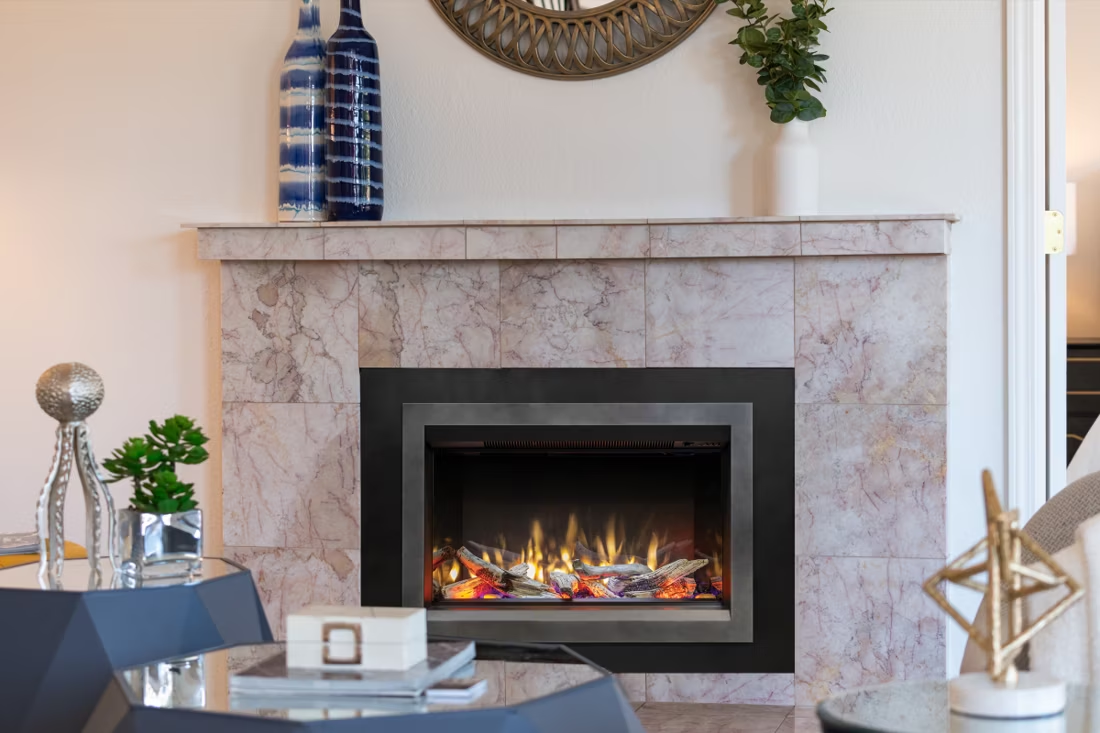
Electric service in Nashua splits between Liberty Utilities (Granite State Electric) and Eversource, formerly Public Service Co of NH, depending on which part of the city you're in, and both carry residential rates around 18.7 to 19.1 cents per kWh—noticeably above the national average. That rate matters more for a unit you'd run for hours as primary heat than for one you run for a few hours of evening ambiance and supplemental warmth, which is how most Nashua households actually use them. It's also why an electric insert dropped into an old masonry fireplace—the kind that used to burn local maple, birch, beech, or oak—is such a common retrofit here: no chimney sweep, no wood storage, no combustion byproducts, just a plug or a dedicated circuit.
Three steps. No salesperson until you're ready.
Tell us about your project
Your zip code, your situation, and the fuel you're leaning toward—or let the answers point you to one.
See what's actually available
The brands dealers within 100 miles genuinely carry—real options, never a catalog mirage.
Get your dealer & Project Guide
A trusted local dealer, plus the free Project Guide & Parts List that names every component of the job.
Frequently Asked Questions
How much does an electric fireplace installation cost in Nashua?
A plug-in electric insert or freestanding unit can run $300 to $1,200 installed, and if your existing outlet can handle the draw, there's often no electrical work involved beyond mounting. A built-in wall unit or a larger insert that needs a dedicated 20-amp circuit runs higher—typically $800 to $2,500 once you include an electrician's time to run new wire, especially in older Nashua homes near downtown where panel capacity can be tight. A local dealer will tell you within a few minutes whether your panel has room or needs an upgrade first.
Can an electric fireplace actually heat a Nashua home through the winter?
Not on its own. With winter lows averaging 14°F and a long, nearly six-month heating season, Nashua's heating load is well beyond what a 1,500-watt electric heater element can carry for a whole house. Most units top out around 5,000-9,000 BTU, enough to comfortably heat a single room or open living area, but not a multi-room colonial through a New Hampshire winter. Homeowners here typically use them for zone heat—taking the edge off a chilly room so the furnace or boiler doesn't have to work as hard—rather than as the primary heat source.
What does it cost per hour to run an electric fireplace in Nashua?
At Nashua's residential rates—18.7 to 19.1 cents per kWh depending on whether Eversource or Liberty Utilities (Granite State Electric) serves your address—a typical 1,500-watt unit on high costs roughly 28 to 29 cents an hour to run. Left on for a full evening, that's under a dollar. It's a modest add to the bill for the ambiance and zone warmth, but running one as all-day primary heat through a Nashua winter would add up fast compared to gas or a well-stocked wood stove.
Do I need a permit to install an electric fireplace in Nashua?
A simple plug-in unit generally doesn't need a permit since no wiring changes. If your installation calls for a new dedicated circuit—common with built-in wall units and larger inserts—that electrical work requires a permit and inspection through the City of Nashua, and it needs to be pulled by a licensed electrician. Most established local dealers coordinate this as part of the installation rather than leaving you to schedule the inspection yourself.
Can I convert my old wood-burning fireplace to electric in Nashua?
Yes, and it's one of the more popular projects we hear about from Nashua homeowners with older masonry fireplaces that originally burned local maple, birch, or oak but have sat unused for years. An electric insert slides into the existing firebox opening with no chimney liner, no venting, and no combustion byproducts to manage—just a nearby outlet or a new circuit if the unit calls for one. It's a straightforward way to get a working, code-simple fireplace back without touching the chimney structure at all.
Which electric utility serves my part of Nashua?
It depends on your address. Eversource, formerly Public Service Co of NH, and Liberty Utilities under the Granite State Electric brand both serve customers in and around Nashua, with coverage split by neighborhood rather than a single citywide provider. Both carry residential rates in the same general range—around 18.7 to 19.1 cents per kWh—so it doesn't meaningfully change your running costs either way, but it's worth checking your bill before budgeting for a larger unit that needs a new circuit, since rebate programs sometimes differ by utility.
Electric vs. gas vs. wood—what makes sense for a Nashua home?
Given Nashua's long, nearly six-month heating season, most households here rely on gas or oil for primary heat and choose among wood, gas, and electric for a secondary fireplace based on what they actually want out of it. Wood, split from local maple, birch, beech, or oak, gives you real heat output and works without power during an outage—a real consideration in a region that sees ice storms. Gas gives instant heat with a flip of a switch, at higher install cost but lower running cost than electric resistance heat. Electric is the simplest and cheapest to install, with zero venting and no fuel to manage, but it's purely a supplemental or ambiance choice—it won't help if the power's out, and it costs more per hour of real heat than the alternatives.
Will an electric fireplace work as backup heat if the power goes out?
No—this is the honest tradeoff with electric units. They need grid power to run the heating element and the flame-effect display, so during a Nashua winter power outage from an ice storm, an electric fireplace goes dark along with everything else. If backup heat during outages is a real priority for your household, a wood stove or a vented gas unit with battery-backed ignition is the better fit; save the electric fireplace for everyday ambiance and zone heat when the grid is up, which is most of the time.
What size electric fireplace do I need for my Nashua living room?
For a typical 300-400 square foot living or family room, a 1,500-watt unit rated around 5,000 BTU is usually enough to noticeably warm the space as supplemental heat, especially paired with your existing furnace or boiler running in the background. Larger open-concept spaces, common in some of Nashua's newer construction on the south side of the city, may do better with a 40-50 inch built-in unit spanning more wall length for even heat distribution, though the wattage—and therefore the actual heat output—caps out at the same 1,500 watts on most residential models regardless of size.
Do electric fireplaces actually produce heat?
Yes—most put out around 4,800–5,000 BTUs from a standard outlet, which comfortably warms a bedroom, office, or den as a comfort-zone heater. What they won't do is carry a whole house the way wood, gas, or pellet can. Think of electric as ambiance-first with honest supplemental heat: flames on with no heat in July, flames plus warmth in January.
Does an electric fireplace need a vent or chimney?
No—that's its superpower. An electric fireplace needs a wall and an outlet, period. No vent pipe, no gas line, no clearances to design around, which is why it works in bedrooms, offices, apartments, and walls where venting a gas or wood unit would be impractical or impossible. Installation is typically the simplest and least expensive of any fireplace type.
Can I install a fireplace myself?
If you're putting a fire in your house on purpose, it's best to work with an expert. Unless you're genuinely experienced in framing, gas line, vent pipe, and the national code on clearances to combustibles, have a professional do it—and ideally the same company that sells you the fireplace, so warranty, service, and liability all live under one roof.
How much should I budget for a fireplace?
For an average home—covering the fireplace, the vent pipe, and basic installation—a budget between $3,900 and $5,500 gives you a lot of options across wood, gas, and pellet. By the time you add finish work, gas line, and electrical, the average complete installation lands between $5,000 and $12,000 all-in. In a remodel or new build, a good rule is to put about 2.5% of the total project cost toward the fireplace.
Nearby Dealers
Hearth shops serving Nashua and the surrounding area. Every listing shows whether it is a WhyFire partner, a dealer we have verified as authorized for the brands we recommend, or a local business carrying hearth products. No manufacturer pays for placement. How we verify dealers →
All Basics Stove Shop
Stove Keepers
Sweepnman Fireplace Center
The Stove Shoppe & Fences Unlimited
The Stove Shoppe-Windham
Green Mountain Stove Shoppe
Fireside Living- Bedford
The Stove Shoppe- Manchester
Armstrong
Architectural Fireplaces
Advantage Fireplace, Inc
On Duty Chimney Masonry Stove
M & M Chimney
The Fireplace Center
Electric Service in Nashua
An electric fireplace's heater draws about 1,500 watts—pennies per hour at local rates.
Liberty Utilities (Granite State Electri
Public Service Co Of Nh
Get your free Project Guide & Parts List for an electric fireplace in Nashua.
Tell me about your room, your panel, and which utility—Eversource or Liberty—serves your address, and I'll match you with a trusted local dealer and send a free Project Guide & Parts List with the exact unit and circuit requirements your project needs.a
Find Your Fireplace →