
Warm Up Your Hampton Beach Home in Minutes, Not Hours.
Instant heat for beach cottages and year-round homes along Ocean Boulevard. Find the right gas or propane fireplace and get matched with a trusted local dealer.
Every Project Starts From One of These Five Situations
Reliable heat without piped natural gas.
Hampton Beach sits right at sea level along the Rockingham County coast, part of the Town of Hampton, with a year-round population of roughly 2,650 that multiplies many times over each summer as vacationers fill the cottages and rentals along Ocean Boulevard. Winters here still bring real cold: average lows near 16°F and a winter heating load comparable to inland New England cities like Burlington, VT, even though the ocean takes some of the edge off the harshest cold snaps.
Because the beachfront was built up as a seasonal resort rather than served by a citywide natural gas main, most local gas fireplace installations here run on propane rather than piped natural gas. Electric service is split across several providers depending on which side of town you're on—Unitil Energy Systems, Liberty Utilities (Granite State Electric), and Public Service Co of NH all cover overlapping parts of Rockingham County, with residential rates running roughly 18.5 to 19 cents per kWh. For owners who split time between Hampton Beach and elsewhere, or who rent cottages out seasonally, a propane fireplace is appealing precisely because a renter or caretaker can flip a switch for real heat without tending a fire or hauling wood.
Three steps. No salesperson until you're ready.
Tell us about your project
Your zip code, your situation, and the fuel you're leaning toward—or let the answers point you to one.
See what's actually available
The brands dealers within 100 miles genuinely carry—real options, never a catalog mirage.
Get your dealer & Project Guide
A trusted local dealer, plus the free Project Guide & Parts List that names every component of the job.
Frequently Asked Questions
How much does a gas or propane fireplace installation cost in Hampton Beach?
Most propane fireplace installations in Hampton Beach run between $4,500 and $10,000, with the low end covering a direct-vent insert dropped into an existing masonry fireplace where a propane tank is already on the property, and the high end covering new construction or cottage renovations that need fresh gas line runs, a new tank, and full venting. Salt-air coastal homes sometimes need stainless steel venting components rather than standard aluminum, which adds a modest premium but pays off in corrosion resistance a few blocks from the ocean.
Can I convert my existing wood fireplace to gas in an older Hampton Beach cottage?
Yes, and it's a common project in the older beach cottages along the Hampton Beach shoreline. A propane insert is fitted into the existing masonry firebox with a stainless steel liner run up the chimney, which holds up far better than standard galvanized venting in a salt-air environment. Expect $4,500 to $9,000 depending on chimney condition, whether the flue needs relining from top to bottom, and whether a new propane tank needs to be sited on the property—which in flood-prone areas near the beach sometimes means elevating the tank per FEMA guidelines.
Is natural gas available in Hampton Beach, or is it all propane?
There's no natural gas utility serving the Hampton Beach zip code, so propane is the standard fuel for gas fireplaces here. Local propane suppliers deliver and maintain tanks for both seasonal cottages and year-round homes, and most hearth dealers in the area are set up to install and service propane units by default rather than natural gas. If you're coming from a part of the country with piped gas, the main adjustment is planning for a tank—either buried, aboveground, or elevated depending on your property's flood zone.
Will my gas fireplace work during a power outage?
Most modern gas fireplaces will, which matters in a town that sees its share of nor'easters and coastal storm outages. Units with IPI (intermittent pilot ignition) run on battery backup—typically a few AA batteries inside the unit—that keeps the fireplace lighting on demand even with the power out. Valor fireplaces take a different approach: their pilot assembly generates its own electricity through the thermocouple, so there's no battery to remember or replace, ever. For a shoreline home that might lose power for a few days after a bad storm, that's worth asking your local dealer about directly.
What's the difference between a gas fireplace, gas insert, and gas stove?
A gas fireplace is a fully built-in unit framed into a wall—the usual choice for new construction or a full cottage remodel. A gas insert drops into an existing masonry firebox and uses the chimney as the vent path, which is the more common upgrade in Hampton Beach's older shorefront cottages. A gas stove is a freestanding unit that sits on the floor like a wood stove but runs on propane, a good fit for a small seasonal cottage without an existing fireplace. Most Hampton Beach homeowners with an old masonry fireplace start with an insert.
Do I need a permit to install a gas fireplace in Hampton Beach?
Yes—as part of the Town of Hampton, Hampton Beach properties need a building permit and gas-fitting permit through the Town of Hampton Building Department for any new gas fireplace or propane tank installation. Because much of the beachfront sits in a coastal flood zone, propane tank placement is also subject to FEMA elevation requirements, so your installer may need to mount or elevate the tank rather than set it directly on grade. A licensed gas-fitter has to sign off on the propane line work regardless, which is one more reason to go through an established local dealer rather than a general contractor.
Should I choose a vented or vent-free gas fireplace this close to the ocean?
Vented (direct-vent) units draw combustion air from outside and exhaust it back outside through sealed venting—the standard, code-compliant choice everywhere, including New Hampshire. Vent-free units burn fuel directly into the room and are legal in NH under specific room-sizing and ventilation rules, but they add moisture to indoor air, which is already a concern in a humid, salt-air coastal climate prone to condensation and mold in older cottages. For Hampton Beach homes, direct-vent units are the more common and more sensible choice, and using stainless steel venting components rather than standard galvanized steel will noticeably extend the system's life against salt air corrosion.
How often should a gas fireplace be serviced in a coastal town like Hampton Beach?
An annual inspection is standard for any gas appliance, but coastal salt air accelerates corrosion on vent caps, termination fittings, and burner components faster than it would inland—so Hampton Beach homeowners, especially those a block or two from the water, are often better served by having the venting checked every year without skipping seasons. A technician will inspect the burner, pilot assembly, gas connections, and exterior vent termination, and most local service calls run $150 to $250 for a standard annual visit.
Gas vs. wood—which makes more sense for a Hampton Beach home?
Wood is still workable here—maple, birch, beech, and oak are the common local species, and a wood stove or insert gives you heat that doesn't depend on the power grid, useful during storm-related outages. But for a town built around seasonal rentals and part-time residents, propane gas fireplaces tend to make more sense: a renter or caretaker can turn on real heat with a switch, there's no wood storage or ash cleanup in a small cottage, and the unit sits ready even in a home that's empty for weeks at a stretch. Many year-round Hampton Beach homes end up with both—gas in the main living space for daily convenience, and wood or pellet as backup heat for extended outages.
Can I put a TV above my fireplace?
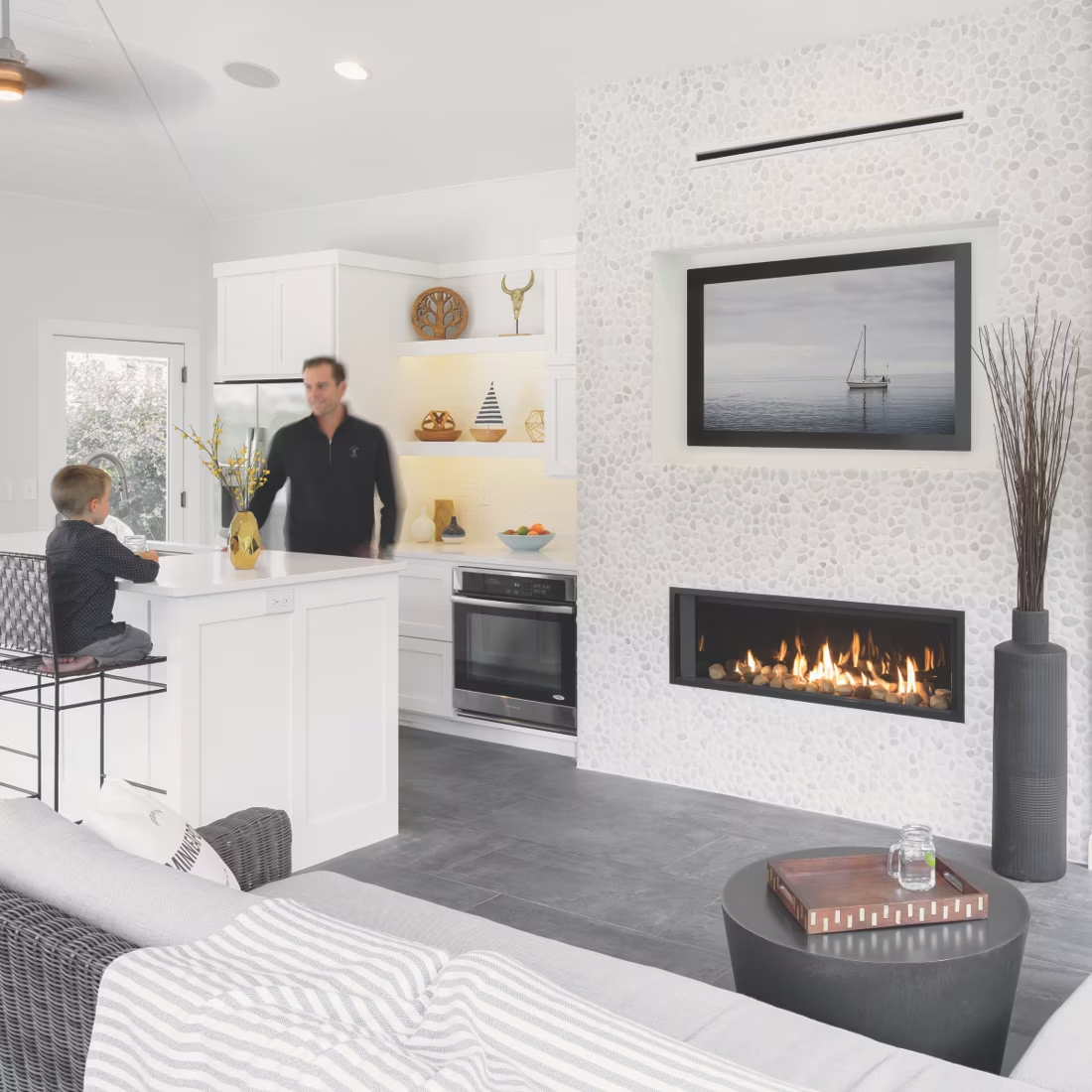
Yes—with an asterisk. Fireplaces are hot and TVs don't like heat. Either put a mantel between them to deflect rising warmth, or choose a fireplace with heat-management technology that creates a cool zone on the wall above—the wall stays around 125 degrees, barely warm, while the room still gets full heat. If you like clean lines and don't want a mantel, heat management is the answer.
What's the difference between an insert and a zero-clearance fireplace?
An insert is a fireplace that slides into a pre-existing wood-burning fireplace—if you don't have one, there's nothing to insert it into. A zero-clearance fireplace is built into a framed wall, which makes it the answer for remodels and new construction. Simple test: existing masonry fireplace means insert; blank or framed wall means zero-clearance.
Does a fireplace add value to my home?
On average, a fireplace adds back to the home about the same amount you spent installing it. Add the monthly savings from heating the rooms you actually use instead of the whole house—often hundreds of dollars a year—and the value case is strong before you even count what a fire does for how your family uses the room.
What is an in-home preview and do I need one?
It's a visit where a hearth professional measures your space, confirms the model you picked actually works in your home, and walks the specs—framing, gas line, venting, finish work—before anything is ordered. Some details you just can't know until you see the house. Never make a down payment without one; it's the single most-skipped step that burns buyers.
Nearby Dealers
Hearth shops serving Hampton Beach and the surrounding area. Every listing shows whether it is a WhyFire partner, a dealer we have verified as authorized for the brands we recommend, or a local business carrying hearth products. No manufacturer pays for placement. How we verify dealers →
Home & Hearth
Jackson Fireplace
Drogold Dba A Merrie Sweepe Chimney Service
Northeast Distribution
The Fireplace Center
The Stove Shoppe & Fences
Advantage Fireplace, Inc
Architectural Fireplaces
Get matched with a gas fireplace dealer in Hampton Beach.
Tell us about your Hampton Beach home or cottage and we'll match you with a trusted local dealer, plus send you a free Project Guide & Parts List—the exact parts, including the vent kit, for your propane or gas fireplace project.
Find Your Fireplace →