
Clean, instant heat for East Merrimack's long winters.
No chimney, no venting, no gas line—just flip-a-switch warmth for one room at a time in a Hillsborough County winter. Find the right unit and connect with a trusted local dealer.
Every Project Starts From One of These Five Situations
The no-chimney way to add heat where you need it.
East Merrimack sits along the Merrimack River in Hillsborough County at just 93 feet of elevation, but the climate here is genuine New England cold-climate territory—Climate Zone 5A, winter lows averaging 17°F, and a long, demanding heating season, putting East Merrimack's winters in the same general range as Burlington, Vermont. Most homes in town heat primarily with oil or propane forced hot water systems, or increasingly with ductless heat pumps, supplemented by wood from the maple, birch, beech, and oak that fill the surrounding woodlots. Electric fireplaces fit into that picture as zone heat and ambiance, not a replacement for the furnace.
That framing matters because residential electric rates here run high by national standards—Liberty Utilities (Granite State Electric) bills around $0.1908 per kWh and Eversource (Public Service Co. of NH) around $0.1874 per kWh, both well above the national average. Running an electric fireplace as your only heat for a whole house would get expensive fast. Where they earn their keep is in a finished basement, a bedroom addition without ductwork, a home office, or an older Merrimack River-area home with a disused masonry fireplace that never needs to see a chimney sweep again.
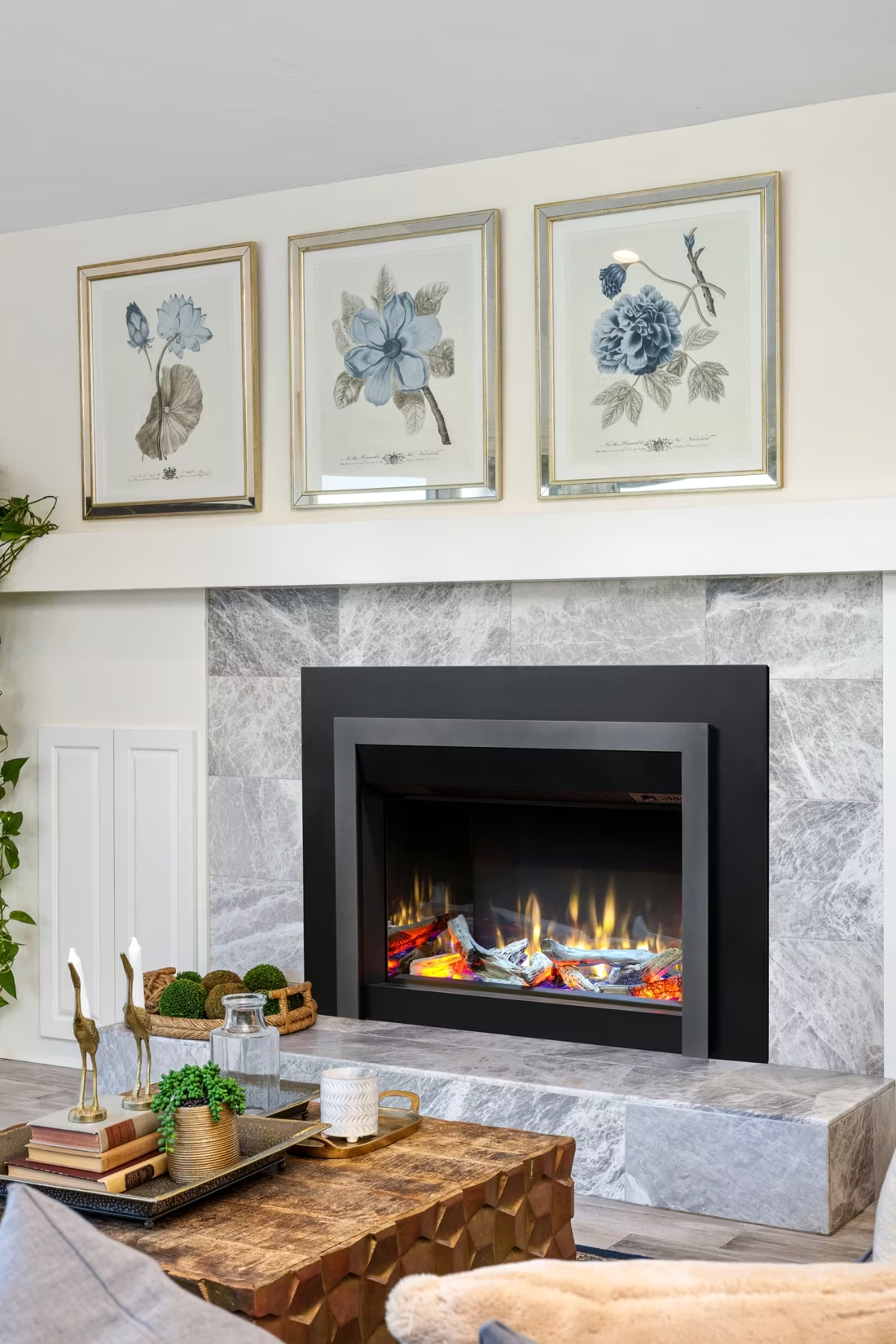
Three steps. No salesperson until you're ready.
Tell us about your project
Your zip code, your situation, and the fuel you're leaning toward—or let the answers point you to one.
See what's actually available
The brands dealers within 100 miles genuinely carry—real options, never a catalog mirage.
Get your dealer & Project Guide
A trusted local dealer, plus the free Project Guide & Parts List that names every component of the job.
Frequently Asked Questions
How much does it cost to install an electric fireplace in East Merrimack?
A plug-in wall-mount or freestanding electric unit typically runs $300 to $1,200 installed, since there's no venting, gas line, or chimney work involved—often it's literally an outlet and a bracket. A built-in insert that requires a licensed electrician to run a dedicated 20-amp circuit, plus a trim kit to finish the opening, generally runs $1,500 to $4,000. If you're converting an existing masonry wood fireplace to electric, you're usually on the lower end of that range because the firebox opening is already there to work with.
Can an electric fireplace heat my whole house in East Merrimack's winters?
No, and any honest dealer will tell you that up front. Most electric fireplace inserts top out around 4,600 to 5,000 BTU, or roughly 1,500 watts—enough to noticeably warm a single room, not a whole house. With East Merrimack facing a long, demanding heating season and winter lows around 17°F, comparable to a place like Burlington, Vermont, the homes here that stay warm through January rely on oil or propane systems, or a heat pump, as primary heat. Electric fireplaces are best treated as zone heat for the room you're actually sitting in.
What does it cost to run an electric fireplace at New Hampshire's electric rates?
At Liberty Utilities' rate of about $0.1908 per kWh or Eversource's roughly $0.1874 per kWh—both on the higher end for New England—a typical 1,500-watt heater element run for 8 hours a day costs somewhere around $2.25 to $2.30 per day, or roughly $60 to $70 a month with steady evening use. That's a reasonable cost for supplemental heat in one room, but it's a poor value if you're trying to use it as a substitute for your furnace or heat pump on the coldest nights of the year.
Electric vs. wood—which makes more sense for my East Merrimack home?
Wood has real advantages here: Hillsborough County has plenty of maple, birch, beech, and oak available locally, wood burns hot enough to serve as genuine primary or backup heat, and it works with zero electricity during an outage—which matters in a region that loses power to ice storms and nor'easters most winters. Electric has none of that heat capacity, but it also needs no chimney, no clearances, no ash cleanup, and no annual sweep. For a condo, a rental, or a room where installing a masonry-vented appliance isn't practical, electric is the clear answer. For a household that wants real backup heat, wood usually wins.
Electric vs. pellet—which is the better fit?
Pellet stoves burning New England Wood Pellet (milled in Jaffrey, NH), Lignetics, or Maine Woods Pellet Co. bags deliver real whole-room heat output—enough to serve as primary heat in a well-insulated space—but they still require electricity to run the auger and combustion blower, so they offer no advantage over electric fireplaces during a power outage unless paired with a battery backup. Electric fireplaces need no venting or fuel storage at all, which makes them simpler for a condo or a room where a pellet stove's exterior vent isn't an option. If you want meaningful heat output, pellet is the stronger choice; if you want simplicity and ambiance, electric wins.
Do I need a permit for an electric fireplace in East Merrimack?
A plug-in unit generally needs no permit at all—it's treated like any other appliance. If your installation requires a new dedicated circuit or wall modification, the Town of Merrimack Building Department typically requires an electrical permit pulled by a licensed electrician, which most installers handle as part of the job. Because there's no combustion and no exhaust, you'll never need the mechanical or chimney permits that a wood or gas installation requires.
Will my electric fireplace work during a power outage?
No. Unlike a wood stove or a gas fireplace with battery-backed ignition, an electric fireplace's heater element, blower, and flame-effect motor all require grid power to operate. In a town where ice storms and nor'easters routinely knock out power for a day or more each winter, an electric fireplace should be treated as everyday supplemental heat, not emergency backup. Many East Merrimack households pair one for daily ambiance with a wood stove or a generator for when the power actually goes down.
What styles of electric fireplace work in an East Merrimack home?
Wall-mount linear units suit modern renovations and additions. Freestanding stove-style units mimic the look of a classic New England wood stove without any venting requirement—a popular choice for a den or finished basement. Insert units are built to slide into an existing masonry firebox opening, which is common in older homes near the Merrimack River that still have a brick fireplace no longer used for burning wood. A local dealer can measure your specific opening or wall space to tell you which format fits.
What's a good electric fireplace brand for East Merrimack's climate?
Look at brands like Dimplex, Napoleon, or Touchstone, which use real infrared heating elements rather than basic resistance coils—they deliver more usable supplemental heat per watt, which matters given the area's above-average electric rates. For an insert into an existing masonry opening, prioritize a model with an adjustable trim kit, since firebox openings in older Hillsborough County homes vary quite a bit in size. A local retailer can match a unit to your actual opening rather than guessing from an online listing.
Does an electric fireplace need a vent or chimney?
No—that's its superpower. An electric fireplace needs a wall and an outlet, period. No vent pipe, no gas line, no clearances to design around, which is why it works in bedrooms, offices, apartments, and walls where venting a gas or wood unit would be impractical or impossible. Installation is typically the simplest and least expensive of any fireplace type.
Can I put a TV above my fireplace?
Yes—with an asterisk. Fireplaces are hot and TVs don't like heat. Either put a mantel between them to deflect rising warmth, or choose a fireplace with heat-management technology that creates a cool zone on the wall above—the wall stays around 125 degrees, barely warm, while the room still gets full heat. If you like clean lines and don't want a mantel, heat management is the answer.
Can a fireplace actually lower my heating bill?
Yes—by creating a comfort zone. A furnace heats every square foot of the house just to warm the one room you're in; a gas fireplace on low burns roughly a sixth of the gas a typical furnace does. Set the furnace around 55–60 degrees as a baseline, then heat the rooms your family actually uses. Families who heat this way commonly save $20–$60 a month.
Can I install a fireplace myself?
If you're putting a fire in your house on purpose, it's best to work with an expert. Unless you're genuinely experienced in framing, gas line, vent pipe, and the national code on clearances to combustibles, have a professional do it—and ideally the same company that sells you the fireplace, so warranty, service, and liability all live under one roof.
Nearby Dealers
Hearth shops serving East Merrimack and the surrounding area. Every listing shows whether it is a WhyFire partner, a dealer we have verified as authorized for the brands we recommend, or a local business carrying hearth products. No manufacturer pays for placement. How we verify dealers →
All Basics Stove Shop
Fireside Living- Bedford
Stove Keepers
The Stove Shoppe- Manchester
Green Mountain Stove Shoppe
Armstrong
The Stove Shoppe & Fences Unlimited
The Stove Shoppe-Windham
Sweepnman Fireplace Center
Architectural Fireplaces
The Fireplace Center
Advantage Fireplace, Inc
The Stove Shoppe & Fences
Electric Service in East Merrimack
An electric fireplace's heater draws about 1,500 watts—pennies per hour at local rates.
Liberty Utilities (Granite State Electri
Public Service Co Of Nh
Find your electric fireplace in East Merrimack.
Tell us about your home and we'll match you with a trusted local dealer, plus a free Project Guide & Parts List—sized to your room, with the right unit and any electrical work spelled out, so there's no guesswork before a single wire gets pulled.
Find Your Fireplace →