
Warm, instant heat built for the Mount Washington Valley's long winters.
From the ski towns around North Conway to the lake camps on Winnipesaukee and Ossipee, gas delivers heat at the flip of a switch—no wood to split, no fire to tend before you've even taken your coat off. Find the right unit and connect with a trusted local dealer.
Every Project Starts From One of These Five Situations
Instant heat when the valley drops below zero.
Carroll County sits entirely within climate zone 6A, with roughly 7,500 heating degree days a year—on par with Burlington, Vermont—and average winter lows around 10°F across the valley floor, colder still up toward Mount Washington and the higher passes. Winter here runs long, from the first frost in October through mud season in April, and the county's year-round population of under 5,000 swells dramatically with ski-season visitors and summer lake residents around North Conway, Jackson, and the Ossipee and Winnipesaukee shorelines. Wood heat has deep roots here—the White Mountain National Forest issues cutting permits at $20 a cord from May through October, and maple, birch, beech, and oak are all common in local woodlots—but for second homes, rental cabins, and busy families, gas has become the practical choice for reliable, hands-off heat.
Most of Carroll County runs on propane rather than piped natural gas—the mountainous, low-density terrain outside a handful of village centers doesn't support gas mains, so regional suppliers like Eastern Propane & Oil deliver and maintain tanks throughout the county. That makes direct-vent propane fireplaces and inserts especially useful for camps and condos that sit empty midweek: a homeowner or property manager can bring a cold building up to temperature in minutes with a remote, without anyone needing to lay a fire first.
Three steps. No salesperson until you're ready.
Tell us about your project
Your zip code, your situation, and the fuel you're leaning toward—or let the answers point you to one.
See what's actually available
The brands dealers within 100 miles genuinely carry—real options, never a catalog mirage.
Get your dealer & Project Guide
A trusted local dealer, plus the free Project Guide & Parts List that names every component of the job.
Frequently Asked Questions
How much does a gas fireplace installation cost in Carroll County?
Most gas fireplace and insert installations in Carroll County run roughly $4,000 to $10,000, depending on the unit, the venting path, and whether new gas line or propane tank work is needed. A direct-vent insert dropped into an existing masonry fireplace with a propane line already run to the hearth sits toward the lower end. A new built-in fireplace for a remodel or a vacation-home build-out—with framing, venting, and a fresh propane line—lands in the middle to upper range. Homes without an existing propane tank, or camps requiring a longer line run from the tank to the house, will run higher. A local retailer can give you a firm number after an in-home consultation.
Can I convert my existing wood fireplace to gas?
Yes, and it's a common project in Carroll County's older farmhouses and lake camps, many of which still have the original masonry fireplace built decades ago. A gas insert typically slides into that existing opening, using a stainless liner run up the same chimney for venting. Since natural gas isn't available in most of the county, this almost always means sizing the insert for propane and coordinating a tank or line run with a propane supplier—your installer will handle both the venting and the fuel setup together.
Do I need natural gas, or does my home run on propane?
For the large majority of Carroll County, it's propane. Outside of a few village centers, there's no piped natural gas infrastructure across the county's spread-out, mountainous towns—Conway, Wolfeboro, Tamworth, Jackson, and the lake communities all rely on propane delivered by regional suppliers like Eastern Propane & Oil. Nearly every gas fireplace on the market can be configured for propane with the correct orifice and regulator, so fuel availability shouldn't limit which fireplace you choose—it just determines whether you need a tank installed or an existing one tapped.
Will my gas fireplace work during a power outage?
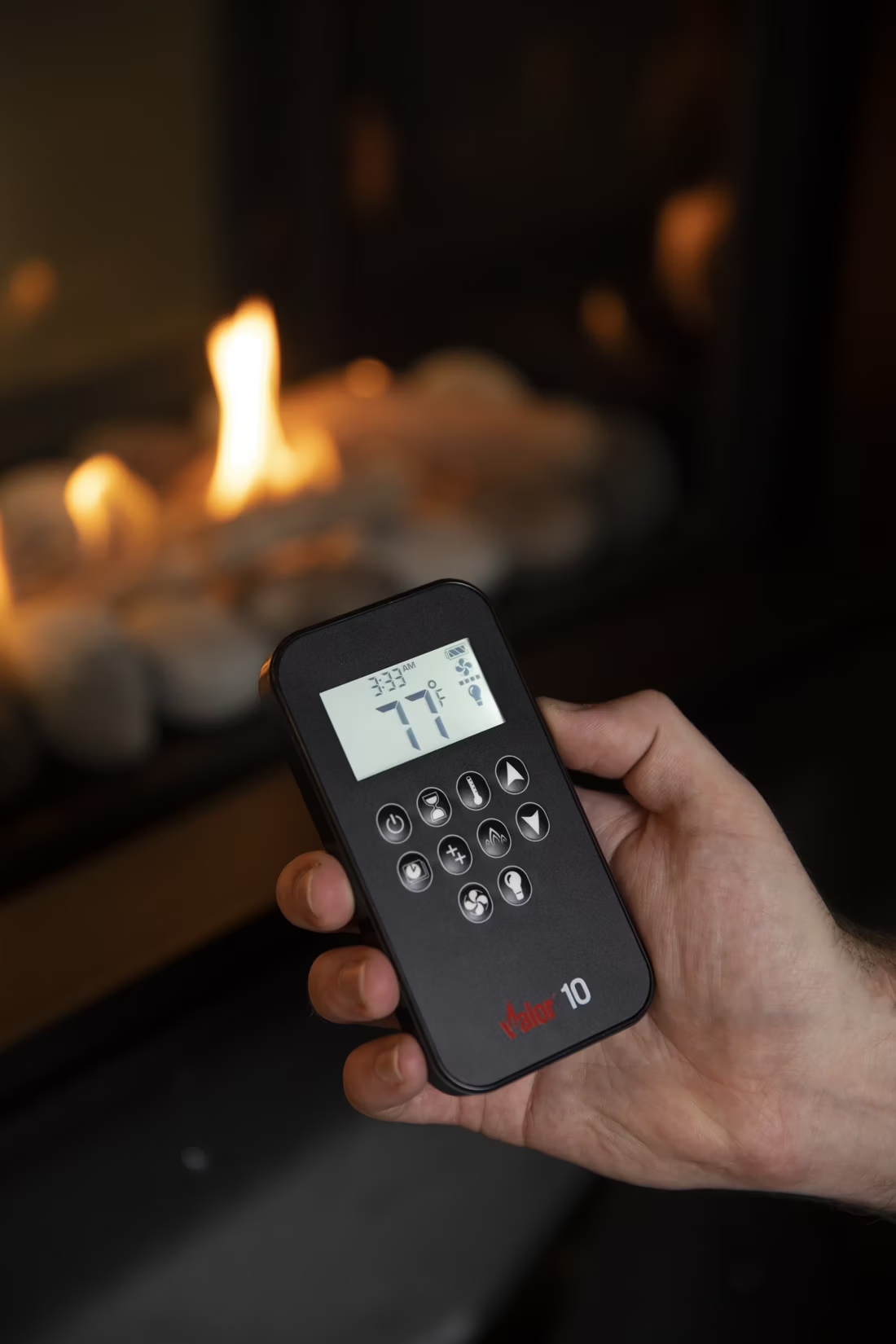
Most modern gas fireplaces will, which matters in a county that sees regular ice storms and nor'easters knock out power for days at a time. Units with intermittent pilot ignition (IPI) run on AA batteries that kick in automatically when the grid drops, lighting the fireplace on demand just as it would normally. Valor fireplaces take a different approach: their pilot's thermocouple generates the small amount of electricity the unit needs, so there's no battery to remember to replace, ever. For camps and second homes that sit unattended for stretches, that self-powered design is worth asking about specifically.
What's the difference between a gas fireplace, gas insert, and gas stove?
A gas fireplace is a fully built-in unit framed into a wall—the right choice for new construction or a major remodel. A gas insert is sized to slide into an existing masonry fireplace opening, sealing it up and venting through the original chimney with a liner—the most common upgrade for the older homes and camps common around Carroll County. A gas stove is a freestanding cast-iron or steel unit that sits on the floor, similar in footprint to a wood stove but burning propane. For most existing fireplaces here, an insert is the straightforward answer; for rooms with no chimney at all, a built-in fireplace or freestanding stove works instead.
Do I need a permit to install a gas fireplace in Carroll County?
Yes—a building permit is required for new gas fireplace installations, issued through your town's building department rather than a single county office, since Carroll County towns each handle their own permitting (Conway, Wolfeboro, and Tamworth each have their own process). Any propane line work also requires a licensed gas-fitter. Most established hearth retailers coordinate the permit, the gas-fitter, and the final inspection as part of the installation, so you're not left juggling separate trades on your own.
What's the difference between vented and vent-free gas fireplaces?
Vented (direct-vent) gas fireplaces draw combustion air from outside and exhaust it back outside through a sealed pipe—they're the cleanest, safest option and the standard choice in cold climates. Vent-free units burn fuel directly into the room with no external venting; they're technically more fuel-efficient but release some moisture and combustion byproducts into the living space, which matters more in a tightly sealed, well-insulated house built for a 7,500-heating-degree-day climate like Carroll County's. Vent-free models are legal in New Hampshire with proper room-sizing and oxygen-depletion sensors, but for camps, primary homes, and anywhere you want real heat output without air-quality tradeoffs, direct-vent is what most local installers recommend.
How often should my gas fireplace be serviced?
Plan on an annual inspection, ideally before ski season ramps up in November. A technician checks the burner, pilot assembly, gas connections, and venting, and cleans the glass and interior—a quicker job than a wood chimney sweep but just as important, especially for units in camps that run unattended for stretches. Expect to pay around $150 to $250 for a standard annual service call from a local hearth or propane technician.
Gas vs. wood—which is right for my Carroll County home?
Wood remains a strong option here: maple, birch, beech, and oak are all locally abundant, White Mountain National Forest cutting permits run just $20 a cord from May through October, and a wood stove keeps working through an extended power outage without any battery or propane dependency. Gas trades that self-sufficiency for convenience—instant on-off heat, no ash or wood handling, and reliable warmth in a camp or condo that sits empty most of the week. Many households here split the difference: wood in a primary living space for cold-snap backup heat, and a gas insert or stove in a guest space, rental unit, or lake house where hands-off operation matters more than the ritual of a fire.
Why is my open fireplace making my house colder?
Open fireplaces suck—literally. As the fire burns, it consumes air your furnace already paid to heat and pulls it out through the chimney, so the house is actually colder after the fire goes out than before you lit it. An insert fixes this: it seals the chimney, puts fixed glass across the front, and turns that hole in your house into a real heat source.
What's the difference between an insert and a zero-clearance fireplace?
An insert is a fireplace that slides into a pre-existing wood-burning fireplace—if you don't have one, there's nothing to insert it into. A zero-clearance fireplace is built into a framed wall, which makes it the answer for remodels and new construction. Simple test: existing masonry fireplace means insert; blank or framed wall means zero-clearance.
Can I install a fireplace myself?
If you're putting a fire in your house on purpose, it's best to work with an expert. Unless you're genuinely experienced in framing, gas line, vent pipe, and the national code on clearances to combustibles, have a professional do it—and ideally the same company that sells you the fireplace, so warranty, service, and liability all live under one roof.
Does a fireplace add value to my home?
On average, a fireplace adds back to the home about the same amount you spent installing it. Add the monthly savings from heating the rooms you actually use instead of the whole house—often hundreds of dollars a year—and the value case is strong before you even count what a fire does for how your family uses the room.
Stove and Fireplace Dealers in Carroll County
Find your gas fireplace in Carroll County.
Tell us a bit about your home and we'll match you with the right gas fireplace, insert, or stove—plus a free Project Guide & Parts List with the exact parts, including the vent kit, and a trusted local dealer to install it.
Find Your Fireplace →