
Real warmth, no chimney, no heritage headaches.
Saint Andrews' winter lows average -12.3°C, milder than most of inland New Brunswick thanks to Passamaquoddy Bay, but a heat source that runs without venting or masonry still matters in a town full of century-old homes. We'll help you find a trusted local dealer who knows what your circuit can handle and what the historic district allows.
Every Project Starts From One of These Five Situations
The simplest upgrade for a National Historic District.
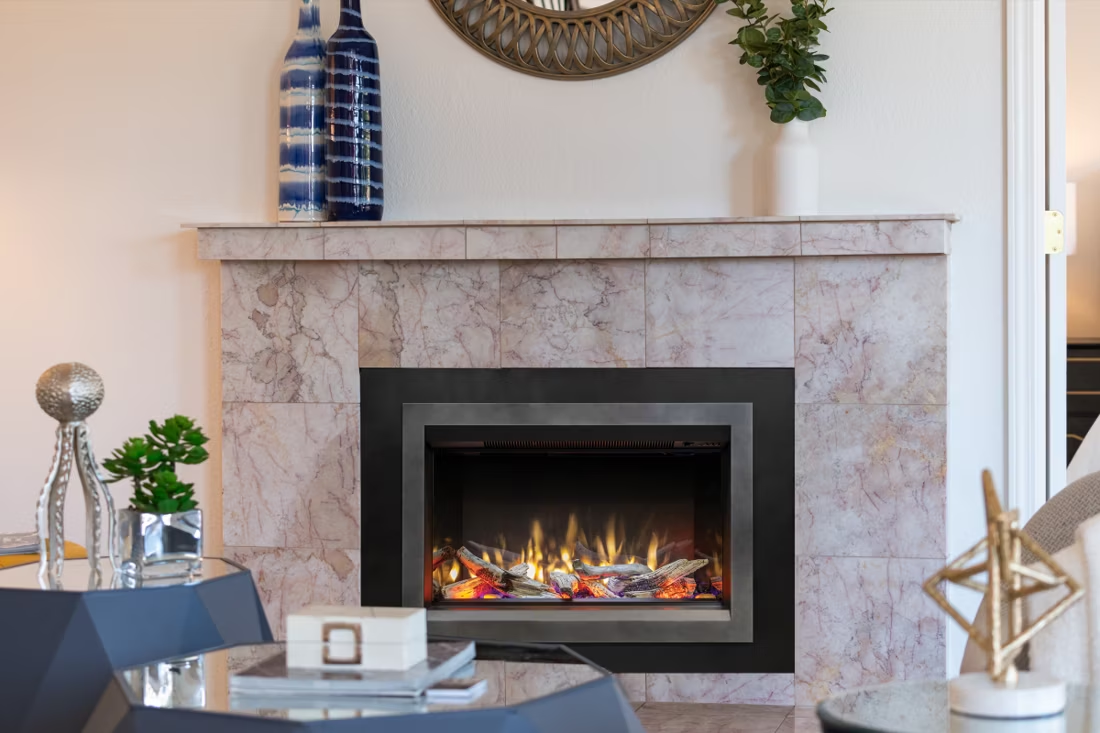
Saint Andrews by-the-Sea carries a National Historic District designation, and a good share of its housing stock—clapboard capes and Georgian-style homes near the waterfront, plus the inns and bed-and-breakfasts that keep the town's tourism economy going—predates modern chimney codes. Cutting a new masonry flue or running gas line through a heritage-designated exterior wall can mean a conversation with the municipal building department that a wood or gas project simply doesn't need. An electric fireplace or insert sidesteps that: no venting, no combustion air intake, no change to the roofline, and it still delivers real supplemental heat on the shoulder-season nights when the wind off Passamaquoddy Bay cuts through an old sash window.
Winters here run milder than inland Charlotte region towns—the Bay of Fundy's tides keep Saint Andrews a few degrees warmer than places like Fredericton on a given January night—but an average low of -12.3°C is still real cold, and most homes lean on NB Power-fed heat pumps or baseboard heat as the primary system. At roughly 14.6 cents per kWh, an electric fireplace or insert makes sense as a zoned supplement: heat the room you're sitting in without running the whole house's heat pump harder. Installed cost typically runs $500 to $1,600 CAD, a fraction of the $6,000-$15,000 a gas project or $6,000-$12,000 a wood stove project can run once venting and chimney work are priced in.
Three steps. No salesperson until you're ready.
Tell us about your project
Your postal code, your situation, and the fuel you're leaning toward—or let the answers point you to one.
See what's actually available
The brands dealers within 100 miles genuinely carry—real options, never a catalog mirage.
Get your dealer & Project Guide
A trusted local dealer, plus the free Project Guide & Parts List that names every component of the job.
Frequently Asked Questions
How much does an electric fireplace installation cost in Saint Andrews?
Most electric fireplace and insert installs here run $500 to $1,600 CAD. A plug-in unit dropping into an existing masonry firebox—common in the older homes around King and Water Streets—sits at the low end, since there's no venting or gas line to run. A wall-mounted linear unit that needs a dedicated circuit and some drywall or built-in carpentry work costs more, but it still lands well under what a gas or wood project runs once you account for venting and a WETT inspection on the wood side.
Can an electric fireplace actually heat a Saint Andrews home through winter?
Not as the sole source, and no reputable local dealer will sell it to you that way. With winter lows averaging -12.3°C, most Saint Andrews homes run NB Power-fed heat pumps or baseboard heat as the primary system, and an electric fireplace works as a zoned supplement—most units put out around 5,000 BTU, enough to noticeably warm a living room or a converted sunroom facing the water, but not a whole heritage home with high ceilings and older windows.
Do I need a permit to install an electric fireplace in Saint Andrews?
A straightforward plug-in unit on an existing outlet typically doesn't need a permit. A built-in or wall-mounted unit that requires a new dedicated circuit does need an electrical permit through the municipal building department, and a licensed electrician has to do the wiring regardless. If your home sits within the Saint Andrews National Historic District and the install changes anything visible from the street, it's worth a quick check with the town before your dealer schedules the work.
Electric or gas—which fits better in an older Saint Andrews home?
Liberty Utilities (Gas NB) does serve Saint Andrews, so gas is a real option, but running a new gas line and venting through the wall or roof of a heritage-designated building often means more coordination with the town than homeowners expect. Electric skips that entirely—no combustion air, no exterior vent termination, no gas-fitter permit—which is why it's the more common retrofit choice in the century-old homes clustered near the waterfront. If you're doing a full renovation and already have gas plumbed to the kitchen, a gas fireplace insert is worth pricing against electric; otherwise electric is usually the faster, less invasive path.
What's the best electric fireplace for a seasonal cottage or rental near Katy's Cove?
For inns, B&Bs, and seasonal rentals—a real segment of the housing stock here given Saint Andrews' tourism economy—a wall-mounted linear unit with a remote or app-based thermostat is the practical choice. Guests can turn it up without touching a wood stack or worrying about a pilot light, and owners can set a timer or lockout for the off-season when the cottage sits empty and the heat pump is doing all the work. It also avoids leaving an open flame unattended between bookings, which matters for insurance on a short-term rental.
What does it cost to run an electric fireplace at local electricity rates?
At NB Power's residential rate of about 14.6 cents per kWh, a typical 1,500-watt electric fireplace costs roughly 22 cents an hour to run on high. Left on for a few hours most winter evenings, that's a modest addition to a monthly bill—far less than heating an entire drafty heritage home with electric baseboards alone, which is exactly why most Saint Andrews owners use the fireplace to zone-heat one room rather than push the whole-house heat pump harder.
With cheap firewood permits, why would anyone choose electric over wood in New Brunswick?
New Brunswick's cutting permits are genuinely inexpensive—about $6.10 per cubic metre through DNRED district offices, with a full household allotment of up to 14 cubic metres running around $85—and sugar maple, yellow birch, and red maple all season well and burn hot. Plenty of Saint Andrews homes still burn wood for that reason. But wood means a chimney, annual WETT inspections for insurance, and stacking and hauling—real work that not every heritage homeowner or seasonal cottage owner wants. Electric trades the cheap fuel for a maintenance-free install that's done in an afternoon, which is why the two fuels tend to coexist here rather than compete directly.
Does installing an electric fireplace require an electrician in Saint Andrews?
Small plug-in units just need a standard grounded outlet, so no electrician is required. Anything larger—a built-in linear unit or an insert drawing more power—typically needs its own dedicated circuit, which means a licensed electrician and, in most cases, a permit through the municipal building department. Your local dealer will spec out the electrical requirement before quoting the project, since an older Saint Andrews home's panel may need a look before adding a new circuit.
How much maintenance does an electric fireplace need?
Very little compared to wood or gas. There's no chimney to sweep and no burner or pilot to service—mostly dusting the unit, occasionally replacing an LED module or the flame-effect bulb after a few years, and checking that the dedicated circuit's breaker hasn't tripped. For a seasonal property that sits empty over the shoulder months, it's about as low-upkeep a heat source as exists, which is a real advantage for owners who aren't in town to manage a wood stack or arrange an annual gas inspection.
How much does an electric fireplace cost to run?
With the heater on, a typical unit draws about 1,500 watts—at average electric rates that's roughly 20 cents an hour. Run the flame effect alone and it costs pennies; the flames are LED-driven and use about as much power as a light bulb. There's no pilot light, no fuel delivery, and essentially no maintenance.
What fireplace styles should I know before shopping?
Four cover most of the market: screen-front traditional (mesh front, open feel, fits craftsman homes), traditional door set (the classic look you grew up with), modern linear (wide, low, the statement piece for entertaining), and clean face contemporary (no trim—your tile or stone runs right to the fire's edge). Walk in knowing those four terms and you're ahead of most buyers.
Can I put a TV above my fireplace?
Yes—with an asterisk. Fireplaces are hot and TVs don't like heat. Either put a mantel between them to deflect rising warmth, or choose a fireplace with heat-management technology that creates a cool zone on the wall above—the wall stays around 125 degrees, barely warm, while the room still gets full heat. If you like clean lines and don't want a mantel, heat management is the answer.
Do electric fireplaces actually produce heat?
Yes—most put out around 4,800–5,000 BTUs from a standard outlet, which comfortably warms a bedroom, office, or den as a comfort-zone heater. What they won't do is carry a whole house the way wood, gas, or pellet can. Think of electric as ambiance-first with honest supplemental heat: flames on with no heat in July, flames plus warmth in January.
Nearby Dealers
Hearth shops serving Saint Andrews and the surrounding area. Every listing shows whether it is a WhyFire partner, a dealer we have verified as authorized for the brands we recommend, or a local business carrying hearth products. No manufacturer pays for placement. How we verify dealers →
Electric Service in Saint Andrews
An electric fireplace's heater draws about 1,500 watts—pennies per hour at local rates.
Nb Power
Get your free Project Guide & Parts List for a Saint Andrews electric fireplace.
Tell us about your home—heritage district or not, full-time residence or seasonal rental—and we'll help you find a trusted local dealer and send a free Project Guide & Parts List with the exact unit, circuit requirements, and parts your project needs.
Find Your Fireplace →