
Plug-in warmth for the Fundy coast, no venting required.
From St. Andrews to Grand Manan, Charlotte's coastal towns and island camps run on a mix of oil, wood, and electric heat. An electric fireplace adds real zone heat to any room in an afternoon, with none of the chimney work or gas lines a wood or gas project demands. We'll help you find a trusted local dealer and send a free Project Guide & Parts List for your space.
Every Project Starts From One of These Five Situations
Zone heat that suits old Maritime homes and island camps alike.
Charlotte stretches along the Bay of Fundy and Passamaquoddy Bay, taking in St. Andrews, St. Stephen, St. George, Blacks Harbour, and the ferry-served islands of Grand Manan, Deer Island, and Campobello. With about 20,184 residents spread across that coastline, this is climate zone 6A territory, and winter lows average around -12.3°C—cold enough for a real heating season, though the Fundy tides temper the extremes you'd see further inland toward Fredericton or Edmundston. Wood heat runs deep here, with sugar maple, yellow birch, red maple, and white spruce cut under New Brunswick Natural Resources permits (up to 14 cubic metres a year, about $85 for a full household allotment), and plenty of homes still burn oil. Electricity itself has local roots too: NB Power's Point Lepreau Nuclear Generating Station sits right here in Charlotte, feeding the provincial grid that every electric fireplace in the region ultimately draws from.
That local grid connection is part of why electric fireplaces make sense as an add-on here. A typical install runs $500 to $1,600, a fraction of the $6,000 to $12,000 wood systems or $6,000 to $15,000 gas systems can run, and it skips the municipal building permit, CSA B365 code review, and WETT inspection that wood and gas installations in Charlotte require. For a rental unit in St. Stephen, a heritage home in St. Andrews with a fireplace opening that's seen better days, or a seasonal camp on Grand Manan where propane has to come over on the ferry, an electric insert or built-in unit gives you real supplemental heat without touching the chimney, the gas line, or the fuel supply chain.
Three steps. No salesperson until you're ready.
Tell us about your project
Your postal code, your situation, and the fuel you're leaning toward—or let the answers point you to one.
See what's actually available
The brands dealers within 100 miles genuinely carry—real options, never a catalog mirage.
Get your dealer & Project Guide
A trusted local dealer, plus the free Project Guide & Parts List that names every component of the job.
Frequently Asked Questions
How much does an electric fireplace installation cost in Charlotte?
Most electric fireplace and insert projects in Charlotte land in the $500 to $1,600 CAD range. A freestanding plug-in unit sits at the low end since it uses an existing outlet. A built-in wall unit or an insert that replaces the firebox in an older St. Andrews or St. George home costs more if it needs a dedicated 240-volt circuit, which can mean an electrician opening up a panel that's decades old in some of the region's heritage housing stock. Either way, it's well under the $6,000-plus a wood or gas project typically runs once permits, venting, and hearth work are factored in.
Do I need a permit to install an electric fireplace in Charlotte?
Usually not for the fireplace itself. Municipal building departments in Charlotte require permits and CSA B365 compliance for wood and gas systems, and a WETT inspection is commonly needed to keep wood appliance insurance valid, but a plug-in or hardwired electric unit doesn't trigger that process in most cases. If your installer is adding a new dedicated circuit, that electrical work should be done by a licensed electrician, and larger municipalities like St. Stephen may want that specific circuit permitted separately. Ask your dealer to confirm what your municipality requires before work starts.
Is an electric fireplace enough heat for a Charlotte winter, or do I need something else?
It depends on the room and the rest of the house. With winter lows averaging around -12.3°C and a real heating season running from November into April, most Charlotte homes still lean on an oil furnace, heat pump, or wood stove as the primary heat source, with an electric fireplace handling zone heat in a bedroom, sunroom, or living room where you spend evenings. It's a strong standalone option for a small camp or an addition, but for a full house through a Fundy coast winter, plan on it as a supplement rather than the only heat source.
What happens to my electric fireplace during a power outage?
It goes dark along with everything else on the circuit. Charlotte's coastal position means nor'easters and ice storms off the Bay of Fundy can knock out power for a day or more, and that's true even though the electricity itself is generated close by at NB Power's Point Lepreau station—the transmission lines out to Grand Manan and Deer Island are just as exposed to weather as anywhere else on the grid. If you're relying on heat through a multi-day outage, a wood stove burning local sugar maple or yellow birch is the more resilient backup; the electric unit is best thought of as everyday convenience heat, not storm insurance.
Are electric fireplaces a good fit for camps and cottages on Grand Manan or Deer Island?
Often, yes. Both islands are ferry-served, which makes propane tank delivery and refills more of a scheduling exercise than it is on the mainland, and firewood storage at a seasonal camp isn't always practical. An electric fireplace or insert runs off the camp's existing wiring, needs no fuel storage, and can be shut off completely when the place is closed up for the season, with no tank to drain and no chimney to cap. It won't help during a power outage, but for a camp that's already on the grid, it's a low-fuss way to take the chill off a spring or fall weekend.
What size electric fireplace do I need for my room?
Electric units are rated in watts rather than by chimney draw, and a standard 1,500-watt unit comfortably heats a room in the 300 to 400 square foot range with normal ceiling height. Older homes around St. Andrews with high ceilings, plaster walls, and single-pane windows lose heat faster, so a sunroom or front parlour in one of those houses may need the higher end of that wattage, or a second unit in an adjoining room rather than expecting one fireplace to carry the whole main floor. Your dealer can walk the space and size it against your actual insulation, not just square footage on paper.
Can I put an electric insert into my existing wood fireplace?
Yes, and it's a common project in Charlotte's older housing stock. If a wood-burning fireplace in a St. George or St. Andrews home has an aging firebox, a chimney that needs expensive relining, or an owner who'd rather skip the annual cutting permit and wood supply, an electric insert slides into that same opening and runs off a nearby outlet or a new circuit. You'll typically cap or seal the existing flue to stop cold air infiltration, but there's no need to touch the masonry itself.
What does it cost to run an electric fireplace on NB Power rates?
A typical 1,500-watt electric fireplace run for three or four hours a night draws roughly 4.5 to 6 kilowatt-hours, which adds a modest amount to a monthly NB Power bill compared to running an oil furnace continuously through a Charlotte winter. Most homeowners here use the fireplace to zone-heat one room in the evening while keeping the whole-house system turned down, which is where the real savings show up, rather than expecting the fireplace itself to cut the total heating bill on its own.
Should I choose electric or gas for a fireplace in Charlotte?
It often comes down to what's already running to your house. Natural gas service exists in New Brunswick, but Charlotte's towns, including St. George and Blacks Harbour, sit largely outside the main gas corridors, so a gas fireplace here usually means a propane setup rather than a mains hookup. Electric skips that question entirely: no gas line, no tank, no fuel delivery, just an outlet or a circuit. For a rental unit in St. Stephen or a straightforward zone-heat upgrade anywhere in the region, electric is usually the simpler and cheaper path; if you specifically want the look and heat output of a live flame on demand, a propane-fed gas insert is worth comparing against the $6,000-$15,000 typical install range.
How much does an electric fireplace cost to run?
With the heater on, a typical unit draws about 1,500 watts—at average electric rates that's roughly 20 cents an hour. Run the flame effect alone and it costs pennies; the flames are LED-driven and use about as much power as a light bulb. There's no pilot light, no fuel delivery, and essentially no maintenance.
What fireplace styles should I know before shopping?
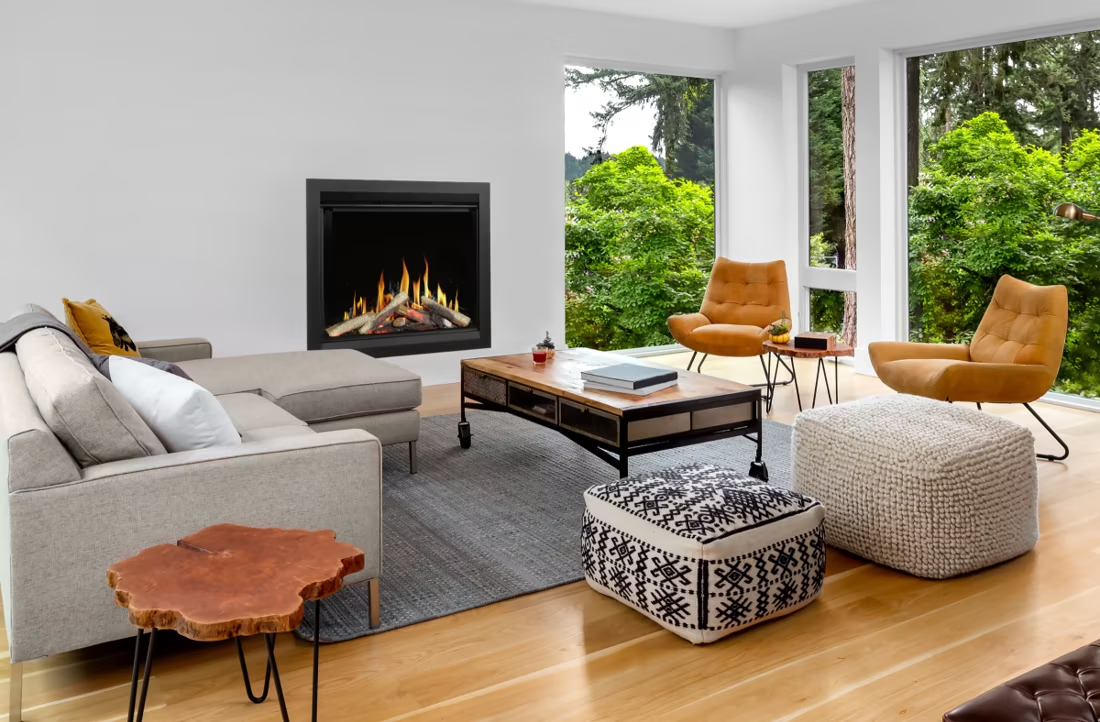
Four cover most of the market: screen-front traditional (mesh front, open feel, fits craftsman homes), traditional door set (the classic look you grew up with), modern linear (wide, low, the statement piece for entertaining), and clean face contemporary (no trim—your tile or stone runs right to the fire's edge). Walk in knowing those four terms and you're ahead of most buyers.
Do electric fireplaces actually produce heat?
Yes—most put out around 4,800–5,000 BTUs from a standard outlet, which comfortably warms a bedroom, office, or den as a comfort-zone heater. What they won't do is carry a whole house the way wood, gas, or pellet can. Think of electric as ambiance-first with honest supplemental heat: flames on with no heat in July, flames plus warmth in January.
Does an electric fireplace need a vent or chimney?
No—that's its superpower. An electric fireplace needs a wall and an outlet, period. No vent pipe, no gas line, no clearances to design around, which is why it works in bedrooms, offices, apartments, and walls where venting a gas or wood unit would be impractical or impossible. Installation is typically the simplest and least expensive of any fireplace type.
Stove and Fireplace Dealers in Charlotte
Listings include WhyFire partner dealers, dealers we have verified as authorized for the brands we recommend, and established local businesses that carry hearth products. Every listing shows which one it is. The ones marked Preferred run on WhyFire's software, so they can show you real pricing and book your appointment right here. No manufacturer pays for placement. How we verify dealers →
Electric Service in Charlotte
An electric fireplace's heater draws about 1,500 watts—pennies per hour at local rates.
Nb Power
Get your free Charlotte electric fireplace Project Guide & Parts List.
Tell us about your home or camp, from a St. Andrews heritage property to a Grand Manan cottage, and we'll help you find a trusted local Charlotte dealer and send over a free Project Guide & Parts List—the exact unit, circuit needs, and recommended installer for your electric fireplace project.
Find Your Fireplace →