
Instant Heat for Stagecoach's High Desert Nights.
Reliable, on-demand warmth for a town that runs on propane, not piped gas. Find the right unit and connect with a trusted local dealer.
Every Project Starts From One of These Five Situations
Propane power for a town without a gas main.
Stagecoach is a small unincorporated community of under 2,000 people in Lyon County, Nevada, sitting at 4,296 feet in the high desert basin near the Pine Nut Mountains. Winter lows average 27°F and the area sees a real, sustained heating season that runs a good chunk of the year, though less severe than places like Bozeman or Helena, Montana. Wildfire smoke from surrounding forest and BLM land is the area's main air quality concern, which pushes some homeowners toward cleaner-burning appliances for daily use rather than relying solely on wood.
Stagecoach has no natural gas utility running through it, so a 'gas fireplace' here almost always means propane—fed by an above-ground or buried tank rather than a municipal line. That's a normal setup across rural Lyon County, and local dealers who work this area are used to sizing tanks and running propane lines as part of the install. Sierra Pacific Power handles electric service (residential rates run about 14.5¢/kWh), so a propane unit with battery-backup ignition also gives Stagecoach homes a heat source that keeps working through the wind-driven outages that hit this stretch of the Great Basin.
Three steps. No salesperson until you're ready.
Tell us about your project
Your zip code, your situation, and the fuel you're leaning toward—or let the answers point you to one.
See what's actually available
The brands dealers within 100 miles genuinely carry—real options, never a catalog mirage.
Get your dealer & Project Guide
A trusted local dealer, plus the free Project Guide & Parts List that names every component of the job.
Frequently Asked Questions
How much does a gas fireplace installation cost in Stagecoach?
Most propane fireplace or insert installations in Stagecoach run $4,500 to $10,500, with the spread driven mainly by whether you already have a propane tank and line in place. Converting an existing wood-burning fireplace to a propane insert using your current chimney tends to land on the lower end. Installing a new freestanding gas fireplace or unit in a home without existing propane service—which means running new gas line and possibly setting a new tank—pushes toward the higher end. Because Stagecoach isn't on a natural gas main, budget for the tank and delivery setup as part of the project, not as an afterthought.
Does Stagecoach have natural gas, or is it all propane?
Stagecoach is not served by a natural gas utility—there's no municipal gas main reaching homes here, which is typical for unincorporated communities in this part of Lyon County. Nearly every 'gas fireplace' installed in town actually runs on propane, supplied by a local delivery company and stored in a tank on your property. The good news is that virtually every gas fireplace, insert, or stove on the market today can be configured for propane instead of natural gas—your installer sets the correct orifice and regulator for the fuel you have. If you're relocating from a natural-gas market, expect a slightly different fuel-supply conversation, not a different appliance.
Can I convert my existing wood fireplace to gas?
Yes, and it's a common project for older Stagecoach homes originally built around a wood-burning fireplace fed by local pinyon and juniper. A propane insert can typically be installed into your existing masonry firebox using a stainless liner run through the current chimney, which keeps the exterior look of the fireplace while eliminating the wood-hauling and ash cleanup. Because there's no gas main here, this conversion also means adding or connecting to a propane tank if you don't already have one for another appliance like a water heater or range.
Will my propane fireplace still work during a power outage?
Most modern propane fireplaces will, which matters in Stagecoach where wind events can knock out Sierra Pacific Power service for hours at a time. Units with IPI (intermittent pilot ignition) run on a small battery backup that kicks in the moment the power drops, so the fireplace lights on demand just like normal. Standing-pilot models work through outages by default since they don't rely on electronic ignition at all. If backup heat during outages is a priority, ask your local dealer specifically about the ignition system and battery setup before you buy—it's a detail that's easy to overlook until the power actually goes out.
What's the difference between a gas fireplace, gas insert, and gas stove?
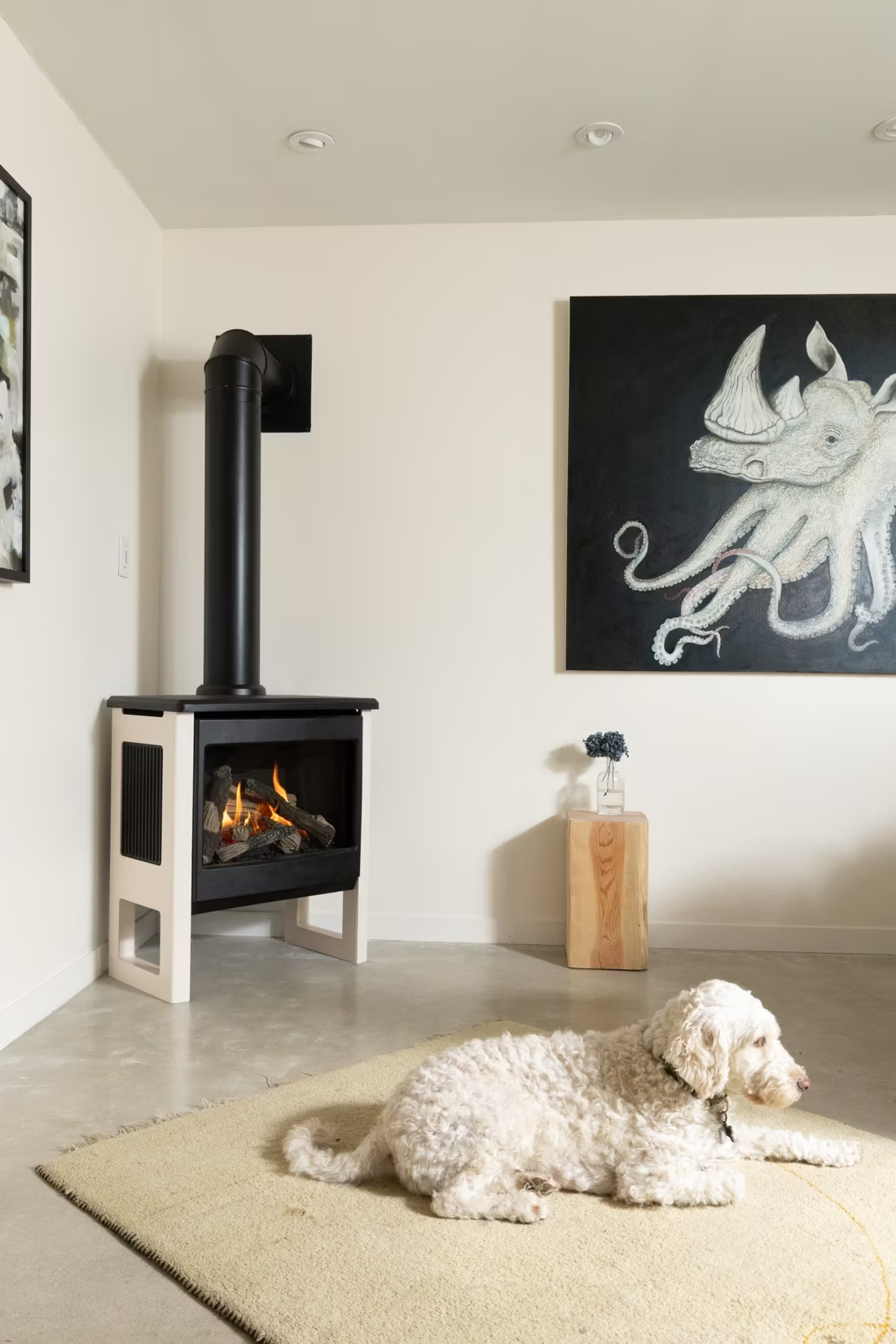
A gas fireplace is a fully built-in unit framed into a wall—the right call for new construction or a remodel without an existing hearth. A gas insert slides into an existing masonry fireplace opening and uses the chimney as its vent path, which fits many of Stagecoach's older wood-hearth homes. A gas stove is a freestanding cabinet unit that sits on the floor on its own hearth pad, similar in footprint to a wood stove but running on propane. For homes on larger rural lots without a finished fireplace, a freestanding stove is often the simplest install since it doesn't require existing masonry.
Do I need a permit to install a gas fireplace in Stagecoach?
Yes—as an unincorporated Lyon County community, gas and propane fireplace installations in Stagecoach go through the Lyon County Building Department, and propane tank placement has its own setback and clearance requirements from structures and property lines. A licensed gas-fitter is required for the line work itself. Most local hearth dealers coordinate the building permit, the gas-fitter, and the propane supplier together, which is worth asking about up front since juggling three separate contractors on your own adds time and risk of a failed inspection.
What's the difference between vented and vent-free gas fireplaces?
Vented (direct-vent) gas fireplaces pull combustion air from outside and exhaust it back outside through a sealed pipe—they're the cleanest and most universally code-approved option, and they're what most Stagecoach installers recommend by default. Vent-free propane units burn without any outside venting, releasing some moisture and combustion byproducts into the room; Nevada permits them, but they come with strict room-size and ventilation rules, and they're not a great fit for smaller, tightly sealed manufactured or modular homes, which are common in this area. For a primary heat source in a Stagecoach home, a direct-vent unit is usually the safer, more efficient choice.
How often should my propane fireplace be serviced?
Plan on an annual inspection, ideally before the first cold snap in late fall. A technician checks the burner, pilot assembly, propane line connections, and venting, and cleans the glass and interior—quicker and less involved than a wood chimney sweep, but just as important for safe operation. Because Stagecoach runs on tank-fed propane rather than piped gas, it's also worth having your propane supplier check the regulator and tank fittings at the same time, since those components see more wear in a bulk-delivery system than in a municipal gas hookup.
Gas vs. wood—which makes more sense for a Stagecoach home?
Wood has a real cost advantage here: pinyon, juniper, and sagebrush are all locally available, and cutting permits through Humboldt-Toiyabe National Forest or the BLM Nevada State Office run as little as $5 to $20 per cord during the spring-through-fall permit season. Wood also keeps working without any electricity or delivered fuel. Propane gas, on the other hand, means no hauling or splitting wood, no ash, and instant on-off heat at the flip of a switch—a real advantage for daily-use rooms or anyone who isn't set up to process their own firewood. Given the wildfire smoke concerns some seasons bring to this part of Lyon County, a number of Stagecoach households end up with both: propane for convenient everyday heat, wood as backup and for the ambiance of a real fire.
Can I put a TV above my fireplace?
Yes—with an asterisk. Fireplaces are hot and TVs don't like heat. Either put a mantel between them to deflect rising warmth, or choose a fireplace with heat-management technology that creates a cool zone on the wall above—the wall stays around 125 degrees, barely warm, while the room still gets full heat. If you like clean lines and don't want a mantel, heat management is the answer.
What's the difference between an insert and a zero-clearance fireplace?
An insert is a fireplace that slides into a pre-existing wood-burning fireplace—if you don't have one, there's nothing to insert it into. A zero-clearance fireplace is built into a framed wall, which makes it the answer for remodels and new construction. Simple test: existing masonry fireplace means insert; blank or framed wall means zero-clearance.
Can I install a fireplace myself?
If you're putting a fire in your house on purpose, it's best to work with an expert. Unless you're genuinely experienced in framing, gas line, vent pipe, and the national code on clearances to combustibles, have a professional do it—and ideally the same company that sells you the fireplace, so warranty, service, and liability all live under one roof.
Can a fireplace actually lower my heating bill?
Yes—by creating a comfort zone. A furnace heats every square foot of the house just to warm the one room you're in; a gas fireplace on low burns roughly a sixth of the gas a typical furnace does. Set the furnace around 55–60 degrees as a baseline, then heat the rooms your family actually uses. Families who heat this way commonly save $20–$60 a month.
Nearby Dealers
Hearth shops serving Stagecoach and the surrounding area. Every listing shows whether it is a WhyFire partner, a dealer we have verified as authorized for the brands we recommend, or a local business carrying hearth products. No manufacturer pays for placement. How we verify dealers →
Louie's Home Center- Dayton
Big R - Fernley
Home Energy Experts
Find your gas fireplace in Stagecoach.
Tell us about your home and propane setup, and we'll match you with the right gas fireplace, insert, or stove—plus a Project Guide & Parts List from a trusted local dealer.
Find Your Fireplace →