
Clean, instant heat for Lyon County homes.
From Yerington to Dayton, Fernley, Silver Springs, and Smith Valley—electric heat with no chimney, no venting, and no wood-smoke tradeoffs during Lyon County's wildfire smoke season. Find the right unit and connect with a trusted local dealer.
Every Project Starts From One of These Five Situations
Heat that works when the air doesn't.
Lyon County sits in the high desert of western Nevada, spread across the Walker River and Carson River valleys at elevations around 4,300 to 4,600 feet, in climate zone 5B. With winter lows averaging 25°F and a winter heating load of roughly 4,521 on the standard scale used to compare climates, the cold here is real but moderate—nothing close to the winters of Helena, Montana or Fargo, North Dakota, which see well over 7,000 on that same scale. That's exactly the profile where electric fireplaces make the most sense: strong zone heat for a bedroom, den, or manufactured home in Silver Springs or Smith Valley, without the overkill of a whole-house wood-burning setup running around the clock.
Wildfire smoke is the other piece of the picture. Lyon County deals with real air quality impacts from regional wildfire smoke, and during those stretches, adding wood smoke to the mix isn't appealing to a lot of homeowners. An electric fireplace produces zero emissions indoors or out—no smoke, no ash, no cutting permits through Humboldt-Toiyabe National Forest or the BLM Nevada State Office required. It's also the simplest option for the county's many manufactured and mobile homes, rentals, and HOA-restricted properties where running a chimney or gas line isn't practical. Power comes through NV Energy, and for supplemental heat and ambiance, that's all an electric unit needs.
Three steps. No salesperson until you're ready.
Tell us about your project
Your zip code, your situation, and the fuel you're leaning toward—or let the answers point you to one.
See what's actually available
The brands dealers within 100 miles genuinely carry—real options, never a catalog mirage.
Get your dealer & Project Guide
A trusted local dealer, plus the free Project Guide & Parts List that names every component of the job.
Frequently Asked Questions
How much does it cost to install an electric fireplace in Lyon County?
Electric fireplaces are typically the least expensive fireplace project available, since there's no chimney, gas line, or masonry work involved. A plug-in freestanding unit or a slide-in insert can often be installed by simply plugging into an existing outlet—no permit needed. Built-in wall units that require a new dedicated circuit are a bigger job: a licensed electrician runs the wiring, and depending on your home's electrical panel and the distance to the install location, that adds labor cost on top of the unit itself. Local dealers can walk you through both paths and give you a firm number after seeing your space.
Do I need a permit to install an electric fireplace in Lyon County?
In most cases, no. A freestanding or plug-in electric fireplace doesn't require a permit because it's treated like any other plug-in appliance. If you're installing a built-in unit that needs new wiring or a dedicated circuit, that electrical work does require a permit through the Lyon County Building Department, and it should be pulled by the licensed electrician doing the work. This is one of the simplest permitting paths of any fireplace fuel type in the county—no chimney inspection, no venting sign-off, no cutting permit paperwork.
Will an electric fireplace work during a power outage?
No—electric fireplaces run entirely on household power, so they won't function during an outage. That's the main tradeoff compared to wood, which keeps working when the grid doesn't. For most Lyon County homes, that's an acceptable tradeoff since electric units are usually installed as supplemental or ambiance heat rather than the sole heat source for a home in the Yerington or Fernley area. If backup heat during storms is a priority, some homeowners pair an electric fireplace in the main living space with a wood stove or propane heater as a true off-grid backup.
What size electric fireplace do I need for my home?
Electric fireplaces are almost always sized for a single room rather than whole-home heating—think 400 to 1,500 watts of supplemental heat for a bedroom, den, or living room. Given Lyon County's moderate winters (25°F average lows, a winter heating load of around 4,500 on the standard scale used to compare climates), an electric unit rarely needs to carry the full heating load the way it might in a much colder climate. Most homeowners size for the specific room they want warm and comfortable, then let their existing furnace or heat pump handle the rest of the house. A local dealer can help match wattage and BTU output to your room's square footage and insulation.
Electric vs. wood—which makes more sense in Lyon County?
Wood has deep roots here—pinyon, juniper, and sagebrush wood are all common local fuel, and cutting permits through Humboldt-Toiyabe National Forest and the BLM Nevada State Office run as little as $5 to $20 per cord during the spring-through-fall cutting season. But wood also means smoke, and Lyon County's wildfire smoke seasons already strain local air quality—some homeowners would rather not add to it, or want a clean option for the months when outdoor burning feels like the wrong call. Electric fireplaces skip that tradeoff entirely: no smoke, no ash, no permit, and instant on-off heat. For homes that want fire ambiance and quick supplemental warmth without the upkeep, electric is often the simpler choice—especially in manufactured homes or rentals where a chimney isn't an option.
Can an electric fireplace heat my whole house?
Generally not, and it isn't designed to. Electric fireplaces are built for zone heating—warming the room they're in—rather than replacing a central furnace or heat pump. In Lyon County's climate, where winter lows average around 25°F rather than the deep sub-zero stretches of a place like Duluth, Minnesota, that zone-heating approach works well: run the electric fireplace in your main living space during the evening and let it take the load off your central system, rather than expecting it to heat a 2,000-square-foot home on its own.
Can I install an electric fireplace in a manufactured or rental home?
Yes, and this is one of the biggest reasons electric fireplaces are popular across Lyon County's manufactured and mobile home communities in places like Silver Springs and Smith Valley. Because there's no chimney, gas line, or combustion venting required, electric units are typically allowed by landlords and HOAs where a wood stove or gas insert would be restricted or require significant modification. Freestanding and insert-style units can often go in with minimal changes to the home's structure.
How much maintenance does an electric fireplace need?
Very little. There's no chimney to sweep, no creosote buildup, and no annual gas line inspection. Maintenance is mostly dusting the unit, occasionally cleaning the glass front, and eventually replacing an LED light module or heating element after years of regular use—most units are rated for tens of thousands of hours of use. This low-maintenance profile is part of why electric fireplaces are a popular secondary heat source across Lyon County, where a full-time wood stove or gas insert may be overkill for a moderate climate.
How much does it cost to run an electric fireplace?
Running cost depends on wattage and how many hours a day you use it. A typical 1,500-watt electric fireplace on high uses roughly the same power as a space heater—check your NV Energy bill for your household rate to estimate exact cost, but most homeowners find it's a fraction of what a propane heater or several cords of pinyon and juniper firewood would run for the same supplemental heat. Because it's used as zone heat rather than a whole-home heat source in Lyon County's moderate winters, most owners run it selectively—evenings, cold snaps, or smoke-advisory days—rather than continuously.
Can I put a TV above my fireplace?
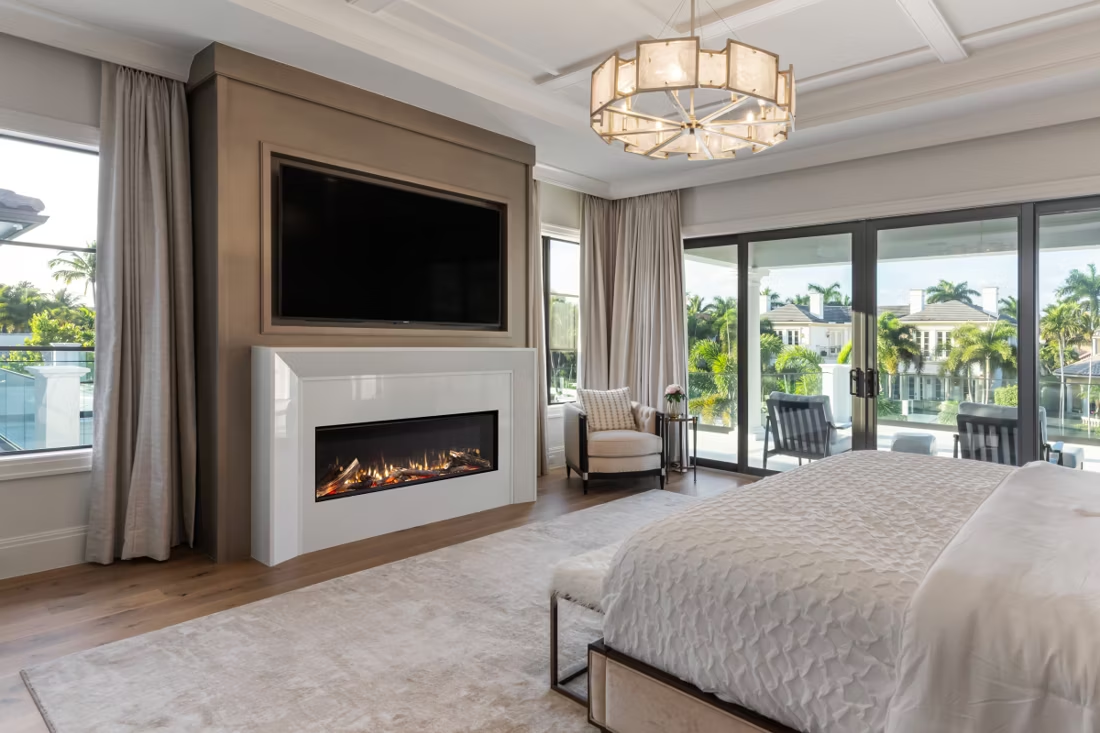
Yes—with an asterisk. Fireplaces are hot and TVs don't like heat. Either put a mantel between them to deflect rising warmth, or choose a fireplace with heat-management technology that creates a cool zone on the wall above—the wall stays around 125 degrees, barely warm, while the room still gets full heat. If you like clean lines and don't want a mantel, heat management is the answer.
Does an electric fireplace need a vent or chimney?
No—that's its superpower. An electric fireplace needs a wall and an outlet, period. No vent pipe, no gas line, no clearances to design around, which is why it works in bedrooms, offices, apartments, and walls where venting a gas or wood unit would be impractical or impossible. Installation is typically the simplest and least expensive of any fireplace type.
What is an in-home preview and do I need one?
It's a visit where a hearth professional measures your space, confirms the model you picked actually works in your home, and walks the specs—framing, gas line, venting, finish work—before anything is ordered. Some details you just can't know until you see the house. Never make a down payment without one; it's the single most-skipped step that burns buyers.
Does a fireplace add value to my home?
On average, a fireplace adds back to the home about the same amount you spent installing it. Add the monthly savings from heating the rooms you actually use instead of the whole house—often hundreds of dollars a year—and the value case is strong before you even count what a fire does for how your family uses the room.
Stove and Fireplace Dealers in Lyon County
Listings include WhyFire partner dealers, dealers we have verified as authorized for the brands we recommend, and established local businesses that carry hearth products. Every listing shows which one it is. The ones marked Preferred run on WhyFire's software, so they can show you real pricing and book your appointment right here. No manufacturer pays for placement. How we verify dealers →
Louie's Home Center- Dayton
Big R - Fernley
Big R
Louies Home Center
Home Energy Experts
Woodstove Dist Inc
Fireplace Distributors Of Nv
Find your electric fireplace in Lyon County.
Tell us a bit about your home and we'll match you with a trusted local dealer and send over your free Project Guide & Parts List—a clear plan for your electric fireplace project in Lyon County, right down to the parts and the pro who can install it.
Find Your Fireplace →