
Real Flame for Las Vegas Nights, On Demand.
With mild desert winters and builder-standard great rooms across the valley, gas is the default fireplace fuel here. Find the right unit and connect with a trusted local dealer.
Every Project Starts From One of These Five Situations
Built for desert evenings, ready for the cold snap.
Las Vegas sits at 2,356 feet in the Mojave Desert, in climate zone 3B, with an average winter low around 39°F and a winter heating load that's just a fraction of what cold-climate cities like Bismarck, ND or Duluth, MN see in a single month. Wood heat never took root here the way it did in mountain and forest regions: the native pinyon, juniper, and sagebrush around the valley are more associated with desert campfires than home heating, and there's no local cutting-permit infrastructure to speak of. Gas fills that space instead, valued less for survival heat and more for instant ambiance, occasional supplemental warmth during December-through-February cool snaps, and a real flame that pairs naturally with the valley's indoor-outdoor living style.
Southwest Gas Corporation serves nearly the entire Las Vegas Valley, from the Strip corridor out through Summerlin, Henderson, North Las Vegas, and Mountain's Edge, which is why so many production-built homes in these master-planned communities came standard with a direct-vent gas fireplace in the great room. Outside the developed valley—in more rural pockets of unincorporated Clark County—propane fills in where natural gas lines don't reach. Either way, a properly sized gas fireplace or insert gives Las Vegas homeowners the flip-a-switch flame they want most nights of the year, with real heat output in reserve for the handful of nights each winter when it actually gets cold.
Three steps. No salesperson until you're ready.
Tell us about your project
Your zip code, your situation, and the fuel you're leaning toward—or let the answers point you to one.
See what's actually available
The brands dealers within 100 miles genuinely carry—real options, never a catalog mirage.
Get your dealer & Project Guide
A trusted local dealer, plus the free Project Guide & Parts List that names every component of the job.
Frequently Asked Questions
How much does a gas fireplace installation cost in Las Vegas?
For a direct-vent gas fireplace or insert added to an existing wall or masonry opening in a Summerlin, Henderson, or North Las Vegas tract home, expect roughly $3,500 to $9,000, depending on the unit and whether a new gas line run is needed. Custom linear or see-through gas fireplaces installed during a remodel—with new framing, venting through an exterior wall or roof, and finish work—run higher, often $8,000 to $15,000. Because so much of the valley's housing stock is single-story stucco construction with straightforward exterior venting paths, Las Vegas installs tend to run on the more affordable end of national ranges. A local installer will confirm the number after seeing your specific opening and gas line access.
Can I convert my existing fireplace to gas?
It depends on what you have. Many Las Vegas homes, especially those built from the 1990s onward, already came with a builder-installed gas log set or direct-vent gas fireplace, so there's often nothing to convert—just an upgrade to a more efficient unit. Older homes in neighborhoods like the Scotch 80s or Rancho Charleston that have a true masonry wood-burning fireplace can be converted with a gas insert and a stainless liner run up the existing chimney, typically $4,000 to $8,500 depending on the insert and whether the flue needs relining. Given how rarely wood is actually burned in the valley, most of these conversions are driven by wanting real heat output and code-compliant venting rather than replacing an active wood-heating habit.
Do I need natural gas, or is propane an option?
Almost every incorporated part of the Las Vegas Valley—the City of Las Vegas, Henderson, North Las Vegas, and most of unincorporated Clark County—has natural gas service through Southwest Gas, so a fireplace addition usually just taps into your existing gas meter. Propane comes into play mainly in outlying desert communities like Sandy Valley, Blue Diamond, or other pockets beyond the Southwest Gas distribution footprint. If you're outside the natural gas service area, your installer will spec the fireplace for propane and coordinate tank placement, but for the vast majority of valley zip codes, natural gas is the simpler and cheaper path.
Will my gas fireplace work if the power goes out?
Most direct-vent gas fireplaces with intermittent pilot ignition (IPI) run on a small battery backup that keeps the unit operational during a power outage—worth checking since Nevada Power (NV Energy) territory covers most of the valley at roughly 15.3 cents per kWh, and a handful of outlying zip codes near the California and Colorado River areas fall under Southern California Edison or the Colorado River Commission of Nevada, where rates and reliability can differ. Valor fireplaces take a different approach: their pilot assembly generates its own electricity through a thermocouple, so there's no battery to remember. For a city where summer grid strain occasionally causes brief outages, either option keeps the fireplace usable without mains power—ask your local dealer which ignition system is on the unit you're considering.
What's the difference between a gas fireplace, gas insert, and gas stove?
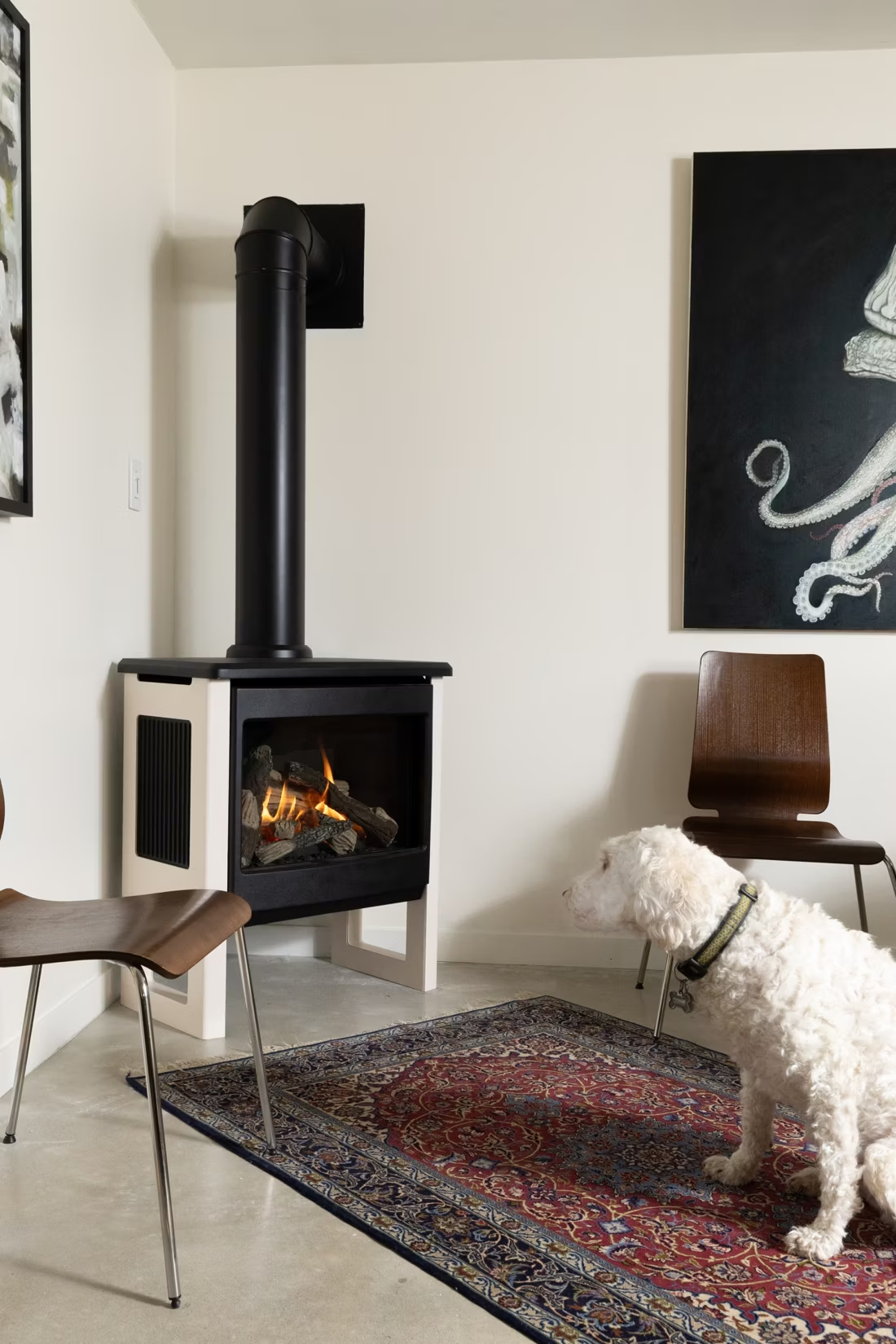
A gas fireplace is a fully built-in unit framed into a wall—the standard choice in new construction and the great rooms of most Summerlin and Henderson production homes. A gas insert drops into an existing masonry fireplace opening, useful for the valley's older homes with a true wood-burning firebox that's rarely, if ever, used. A gas stove is a freestanding cabinet-style unit that vents like a fireplace but sits on the floor—less common in Las Vegas but occasionally used in casitas or smaller secondary living spaces. For most valley homeowners upgrading a builder-grade unit, a direct-vent gas fireplace insert or replacement is the right call.
Do I need a permit to install a gas fireplace in Las Vegas?
Yes, and which office handles it depends on where you live: the City of Las Vegas Building Department, City of Henderson Building & Fire Safety Department, City of North Las Vegas Building Department, or Clark County Building Department for unincorporated areas. All require a mechanical or building permit for gas fireplace installation, and gas line work has to be done or signed off by a licensed gas-fitter. A local hearth retailer who regularly pulls permits in your specific jurisdiction will save you the back-and-forth of figuring out which department covers your address.
What's the difference between vented and vent-free gas fireplaces?
Vented (direct-vent) gas fireplaces draw combustion air from outside and exhaust it back outside through a sealed pipe—they're the standard, code-friendly choice and what you'll find in most Las Vegas homes. Vent-free units burn gas directly into the room with no exterior venting; they're permitted in most Clark County jurisdictions under the adopted mechanical code, but only within strict room-size and BTU limits, and they release some combustion byproducts into the living space. Given how many Las Vegas homes run central air conditioning and are sealed tight for summer efficiency, most local retailers steer homeowners toward direct-vent units for better indoor air quality—ask about both if you're weighing the choice.
How often should my gas fireplace be serviced in Las Vegas?
An annual inspection before the cool season—typically October or November—is the standard recommendation, and it matters more here than the mild winters might suggest. Fine desert dust and sand infiltrate pilot assemblies and burner ports year-round, and units that sit unused all summer sometimes need the pilot cleaned or relit before the first cold night. A certified technician will check the burner, venting, and glass seal, and clean out any dust buildup. Local gas appliance service providers typically charge $150 to $250 for this visit.
Should I get a gas or electric fireplace in Las Vegas?
Gas is the standard choice for most single-family homes in the valley, offering real flame, more heat output, and compatibility with the direct-vent gas fireplaces already built into many Summerlin and Henderson houses. Electric fireplaces matter more in one specific segment of the market: high-rise condo towers along the Strip and downtown—buildings like Turnberry Towers or Veer Towers—often prohibit open-flame gas units entirely, making electric the only realistic option for a fireplace feature. Wood, by contrast, is essentially a non-factor here; the desert climate, wildfire smoke concerns, and lack of any real cutting-permit infrastructure mean almost nobody in Las Vegas heats with wood. For anyone in a single-family home with gas already at the meter, gas remains the easiest and most authentic option.
Why is my open fireplace making my house colder?
Open fireplaces suck—literally. As the fire burns, it consumes air your furnace already paid to heat and pulls it out through the chimney, so the house is actually colder after the fire goes out than before you lit it. An insert fixes this: it seals the chimney, puts fixed glass across the front, and turns that hole in your house into a real heat source.
What's the difference between radiant and convective fireplace heat?
Most fireplaces are a thin metal box—they heat fine, but you rely on the fan to move the warmth into the room. Radiant models use a thick cast-ceramic firebox, about an inch and a quarter thick, that soaks up the fire's heat and radiates roughly 25–30% more warmth into the room with no fan running. If you watch TV in the same room or want heat in a power outage, radiant is worth asking about.
What is an in-home preview and do I need one?
It's a visit where a hearth professional measures your space, confirms the model you picked actually works in your home, and walks the specs—framing, gas line, venting, finish work—before anything is ordered. Some details you just can't know until you see the house. Never make a down payment without one; it's the single most-skipped step that burns buyers.
How much should I budget for a fireplace?
For an average home—covering the fireplace, the vent pipe, and basic installation—a budget between $3,900 and $5,500 gives you a lot of options across wood, gas, and pellet. By the time you add finish work, gas line, and electrical, the average complete installation lands between $5,000 and $12,000 all-in. In a remodel or new build, a good rule is to put about 2.5% of the total project cost toward the fireplace.
Nearby Dealers
Hearth shops serving Las Vegas and the surrounding area. Every listing shows whether it is a WhyFire partner, a dealer we have verified as authorized for the brands we recommend, or a local business carrying hearth products. No manufacturer pays for placement. How we verify dealers →
Sunshield Awning Co.
Proficient Patios & Backyard Designs
Penguin Fireplace & Design
Silver State Specialties, LLC
Premier Bbq & Fire
Vista Bbq Outfitters
Southwest Plumbing Supply- Mesquite
Get matched with your Las Vegas gas fireplace dealer.
Tell us about your home and we'll match you with a trusted local dealer and send you a free Project Guide & Parts List—the exact parts, vent kit, and recommended dealer for your Las Vegas gas fireplace project.
Find Your Fireplace →